

This story is part of ICT’s series on the 250th anniversary of the United States of America, a nation built on the backs of enslaved people, genocide, and stolen land.
Kevin Abourezk
ICT
LINCOLN, Neb. – Lincoln is a very common place name in America with dozens of cities and towns named after the country’s 16th president. Abraham Lincoln, as every grade-schooler knows, reunified the country and freed the slaves.
But few people know that Lincoln also ordered the largest mass execution in U.S. history when he sent to the gallows 38 Dakota men who fought to regain their homelands and save their people from starvation in the winter of 1862.
This is intentional. Colonization almost always involves the erasure of the history of the colonized people.
As America prepares to honor the 250th anniversary of its founding, historians and Indigenous people are working to remind this nation of its dealings with Native people and of the contributions that Native people have made to this country’s establishment.
Perhaps one of the most important contributions Native people have made to America is providing a framework for this country’s governmental structure.
“They say ‘Greek and Roman’ and talk about all the influences, but the Founding Fathers had never seen a working confederacy of nations ever, ever, ever. They had dreamt about it. They had heard about it,” said Suzan Shown Harjo, Cheyenne and Hodulgee Muscogee. “Nothing had been like that in Europe. It had never happened, and the first confederacy of Native nations they met and experienced they did in this country, and in our country, in our territories, and that was everyone from the Haudenosaunee, the Six Nations, Iroquois Confederacy, to the Anishinaabe Confederacy, the Muskogee Confederacy.”

Harjo holds her own place in American history, having spent a lifetime as both a teller of Native stories and an activist who has worked to empower Native voices, most notably leading the effort to get the Washington professional football team to change its offensive Native nickname. She has both made and explained history and said while life for Native people has improved over the past 250 years – a period marked by epidemics, warfare, broken treaties, stolen land, stolen children, and erasure – America still has much work to do to address its sordid history.
“There are places I could go in the United States where I couldn’t go when I was a girl because of the racism and fear of being beaten up and … maybe killed,” she told ICT. “Those are very real things that I grew up with.”
Step one: Break their spirit
So where does one begin when trying to fill in the missing chapters of American history?
It’s fair to say that Native American history began long before the signing of the Declaration of Independence on July 4, 1776.
Hundreds of tribes and millions of Indigenous people called America home long before Columbus’s landing in 1492. They inhabited the land upon which this country’s cities and villages were later built. They lived in the valleys and mountains, forests and ocean fronts that Americans continue to enjoy today, as well as those scenic lands that were bulldozed by the actions of this country’s capitalist institutions and people and misguided political leaders.
But historians and others have struggled to describe just how many Native people called this land home and how many died as the result of sickness, war and starvation. Most concede that millions died.
Colin Calloway is a professor of history and Native American studies at Dartmouth College and has worked to document the Native American population loss as a result of colonization. And even he said he dares not describe himself as an expert on the topic.
“When we’re looking at North America, estimates of population pre-contact … most people would say it’s somewhere between 5 to 10 million,” he said. “So, if we, for instance, take for the sake of argument that the Native population of what became the United States was, let’s say, 5 million in 1500, right? And that’s a guess. By 1900, the United States Census recorded a population of around 237,000 [Native people].”
“That’s a major decline of population at a time when the population of people of European descent coming to America and living in America is rising dramatically,” Calloway said.
He said the most effective and ruthless killer of Native people was disease, and not just smallpox, though that is often the disease most often associated with Native population decline. Diseases like the measles, flu and even the common cold also led to countless Native deaths.
“The diseases take this sickening toll,” Calloway said. “Looking at Lakota winter counts, for instance, you can see these torsos of human figures speckled red, indicating disease.”
Those diseases and the deaths they caused also paved the way for colonial expansion as tribes often no longer had enough people to withstand unrelenting colonial violence. Natives were forced west and removed from their homelands, often to Indian Territory, today known as Oklahoma, which became a dumping ground for unwanted Indigenous nations.
Many of those nations were forced to march for hundreds of miles to Oklahoma and lost thousands of their people along the way. Collectively, those marches became known as trails of tears – the most widely known being the Cherokee Trail of Tears.
Calloway described the 1830 Indian Removal Act – which forced tribes to move from the eastern United States to lands west of the Mississippi River, including Oklahoma and Kansas – as an “ethnic cleansing national policy.” Nearly 4,000 of 16,000 Cherokees died on their trail of tears alone.
The U.S. military also suffered many casualties in its war of forced Indigenous removal, being defeated at places like Fort Recovery, Ohio, in 1791, where as many as 800 soldiers were killed by one of the largest assemblies of Native warriors (as many as 1,500 warriors from nine tribes), and near the Little Bighorn River in south-central Montana in 1876, where 268 soldiers of the 7th Cavalry under the command of Lt. Col. George Armstrong Custer were wiped out by nearly 1,800 Lakota and Cheyenne warriors.
This year, as the nation commemorates its 250th anniversary, Indigenous people plan to gather June 25-27 at the site of the Battle of the Little Bighorn to honor the 150th anniversary of that event.
Calloway said those military defeats and others suffered at the hands of shrewd Indigenous war leaders forced the federal government to shift its approach to removing tribes from their ancestral homelands. That shift included starving tribes by burning cornfields and slaughtering nearly all of the buffalo on the Great Plains that fed tribes like the Lakota and Cheyenne – the two tribes that “rubbed out” Custer and his contingent.
“It’s usually not a great idea to send an army into Indian Country looking to meet Native people, Native warriors in battle,” he said. “So you destroy food supply and you destroy villages, and that leaves people, warriors, whose wives and children and old people are cold and hungry and exposed and have little choice but to come in.”
Harjo said removal of Native people from their homelands wasn’t just about making room for non-Native settlers. It was an effort born of fear, hatred and jealousy and is the reason tribal nations are absent from some states altogether.
“Removal wasn’t just a land transaction,” she said. “It was an effort to break the spirit of Native people all over the country … because it didn’t just happen to the Cherokees. It didn’t just happen to the Muskogee Creeks. It didn’t just happen to Choctaws and Seminoles and Alabama-Coushattas and Chickasaws and so forth.”
“The reason that there are no tribes in Indiana is the [President Andrew] Jackson removal policy,” Harjo said.
Step two: Assimilate them
The late 1800s saw the last of the free tribal nations forced to leave their homelands or risk annihilation. A series of massacres in places like Sand Creek in 1864 in now-Colorado and Wounded Knee in 1890 in South Dakota marked the U.S. military’s final efforts to force tribes to leave their homelands.
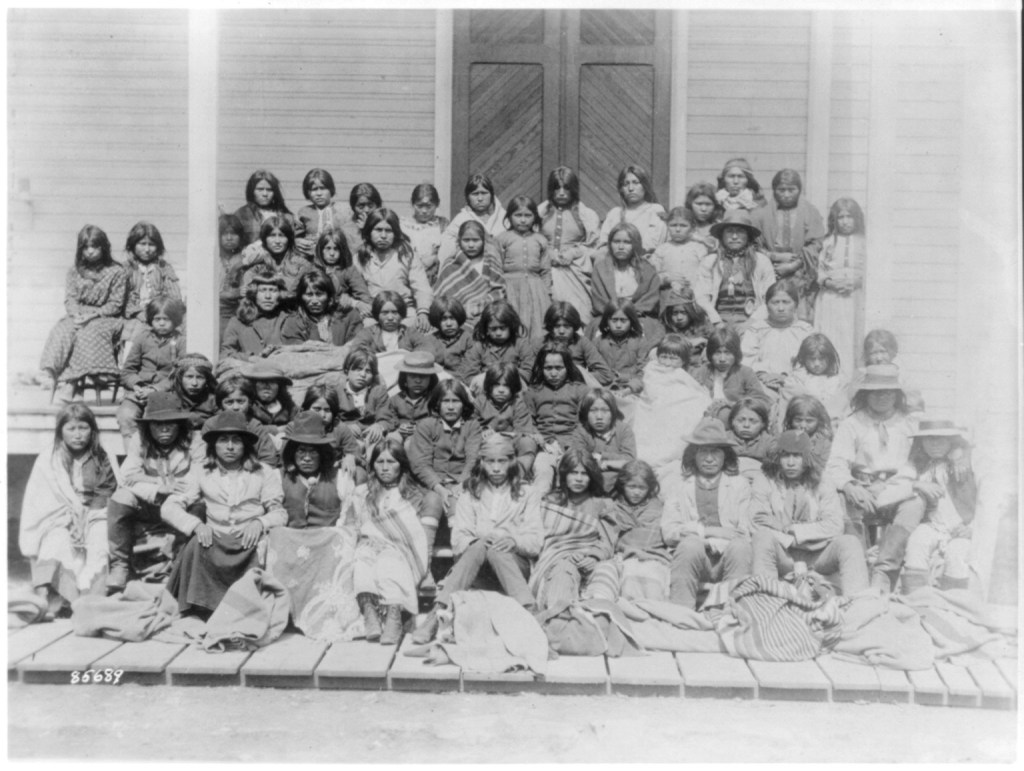
One of the next chapters of America’s efforts to assimilate Native people involved removing Native children from their families and putting them in boarding schools where they were punished and abused for speaking their Indigenous languages and practicing their customs.
The boarding school era began in the 1800s and continued into the 20th century and involved tens of thousands of Native children being forcibly removed from their families to attend any one of more than 400 boarding schools run by the federal government and churches. The schools operated under a policy of forced assimilation that kept the children isolated from their families, culture and language. Those children endured many horrors, including having their hair cut and being abused psychologically, physically and sexually. Many never made it home. Those who did often struggled to fit into their tribal communities and even faced challenges speaking to their relatives after losing some or all of their ability to speak their Indigenous languages and converse with the relatives they had been forced to leave behind.
Dan Lewerenz, Iowa Tribe of Kansas and Nebraska and an assistant professor of law at the University of North Dakota, said the massive loss of Indigenous languages that tribes face today began in earnest during the boarding school era.
“Sending children away from their communities at the very time they should be learning the language and then prohibiting them from using it, making them use another language, is really the beginning of the decline,” he said.
As part of a 20th century federal policy shift today known as the self-determination era, federal policies and laws granted tribes greater control over their own affairs and allowed them to generate money through their own economic development efforts, Lewerenz said. Those economic development efforts have allowed many tribes to begin funding language restoration efforts.
“The statutes and the policies of this self-determination era certainly are not cure-alls,” he said. “There’s too much damage that has been done for any one statute or any one constellation of statutes to fix everything. I think they’re beginning to give tribes the tools to assess some of those long-term harms.”
Despite the efforts of well-intentioned federal lawmakers to provide tribes greater control over their affairs, the effects of the boarding school era have led to generations of Indigenous people struggling to overcome the trauma inflicted on boarding school survivors, who often returned home unable to reintegrate into their communities and who saw little value in continuing traditional customs or preserving their tribal languages after becoming convinced by their boarding school educations that those ways would only leave them unable to assimilate effectively into American society, Calloway said.
Today, many Indigenous languages are dying because few young people can speak their Native languages. Calloway said celebrations of America’s founding 250 years ago should also address the violence inflicted on Native Americans and the ongoing trauma that still affect their families, communities and Indigenous nations today.
“It can’t just be a celebration,” Calloway said. “I think it should be a patriotic duty for citizens so that we have a full sense of our history and how we got to this 250th anniversary.”
Step three: Take their lands
For Lewerenz, one of the least understood congressional acts were a series of bills passed between 1790 and 1834 known as the Trade and Intercourse Acts, which prevented Indian lands from being sold, traded or given away without the approval of the federal government. Those acts effectively designated the federal government as the only entity allowed to take or buy Indian lands.
They were meant to prevent unscrupulous purchasers from taking advantage of impoverished Native landholders, but it also allowed the federal government to decide how much it wanted to pay tribes for their lands, with little to no regard for what the land was actually worth. And it allowed the federal government to decide how tribal lands that it considered “surplus” would be distributed, Lewerenz said.
“It means that the federal government is going to get a good price because they never have to bid against anyone,” he said. “That means, historically, Indian lands have been undervalued because there’s only one buyer.”
By preventing tribal lands from being sold, traded or given away without federal approval, the Trade and Intercourse Acts also effectively prevented tribes from using their lands as collateral in order to get loans to fund economic development programs. That’s because banks or other potential lenders wouldn’t be able to take ownership of tribal lands should those tribes fail to pay off loans, Lewerenz said.
“So Indian people trying to build a house on their lands or Indian tribes trying to build, say, an economic development opportunity, a fish farm, a casino, a convenience store on their lands, have to find some other way of financing it, and those other ways are often more complicated and more expensive,” he said.
“If we could go back in time and fix that, I think that our reservation communities would look very, very different today. I’m sure that some of them would be struggling, but many others I think would be thriving communities,” Lewerenz told ICT.
But it would be a later congressional act that would ultimately have the greatest impact on obstructing tribes from improving their economies, creating jobs for their citizens and lifting their people out of poverty, Lewerenz said.
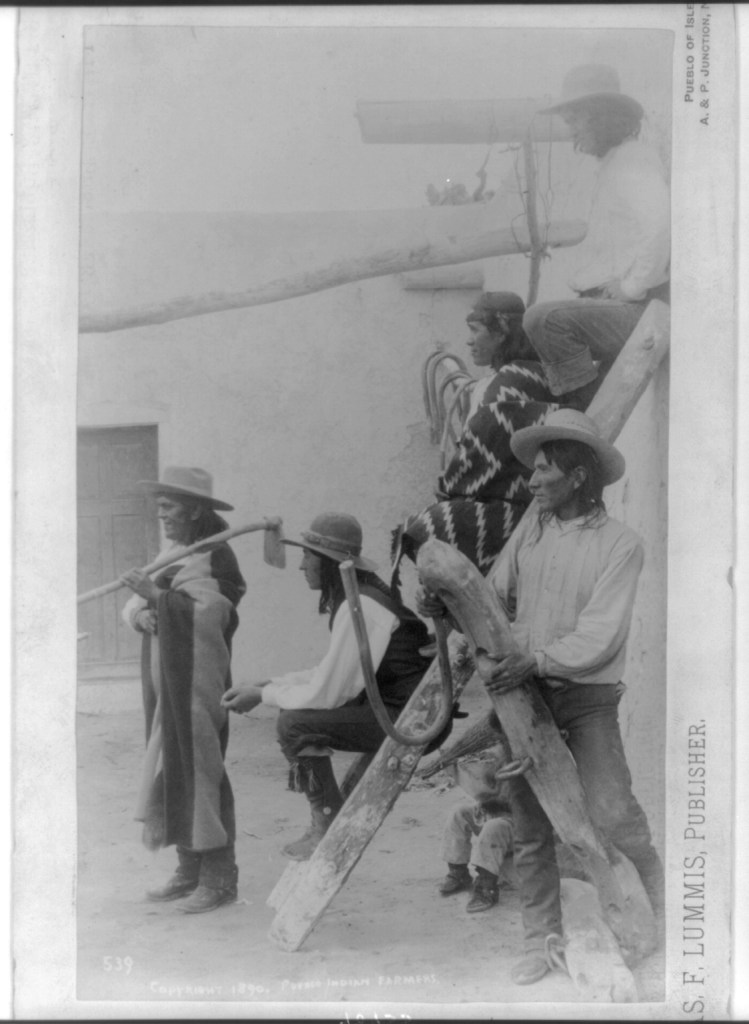
He said one of the most destructive pieces of federal legislation was the 1887 Dawes Act, also known as the General Allotment Act, which led to the federal government taking tribal lands and dividing them among individual tribal citizens. The act led to the loss of nearly two-thirds of reservation land, or more than 90 million acres of tribal lands. Much of that land was later sold by individual Natives, who couldn’t afford farming equipment or land taxes, to non-Natives.
“Together, allotment and the boarding school policy were kind of the mortar and pestle of Congress’s effort to assimilate Indians, to get Indians away from their tribal communities, to force them to give up their traditional ways of subsistence and ways of living, their economic systems, their family structures, and to assimilate to Western ways of living,” Lewerenz said. “But the one through-line in congressional policy from the very beginning up until today was a desire to spend less money on Indians.”
Calloway said the primary aim of federal Indian policy into the mid-20th century was the seizure of Indigenous lands through any means necessary.
“Land, I think, lies at the core of it all because the United States is a nation built on Indian land,” he said. “That’s not some kind of radical reinterpretation of American history, that’s just a foundational fact.”
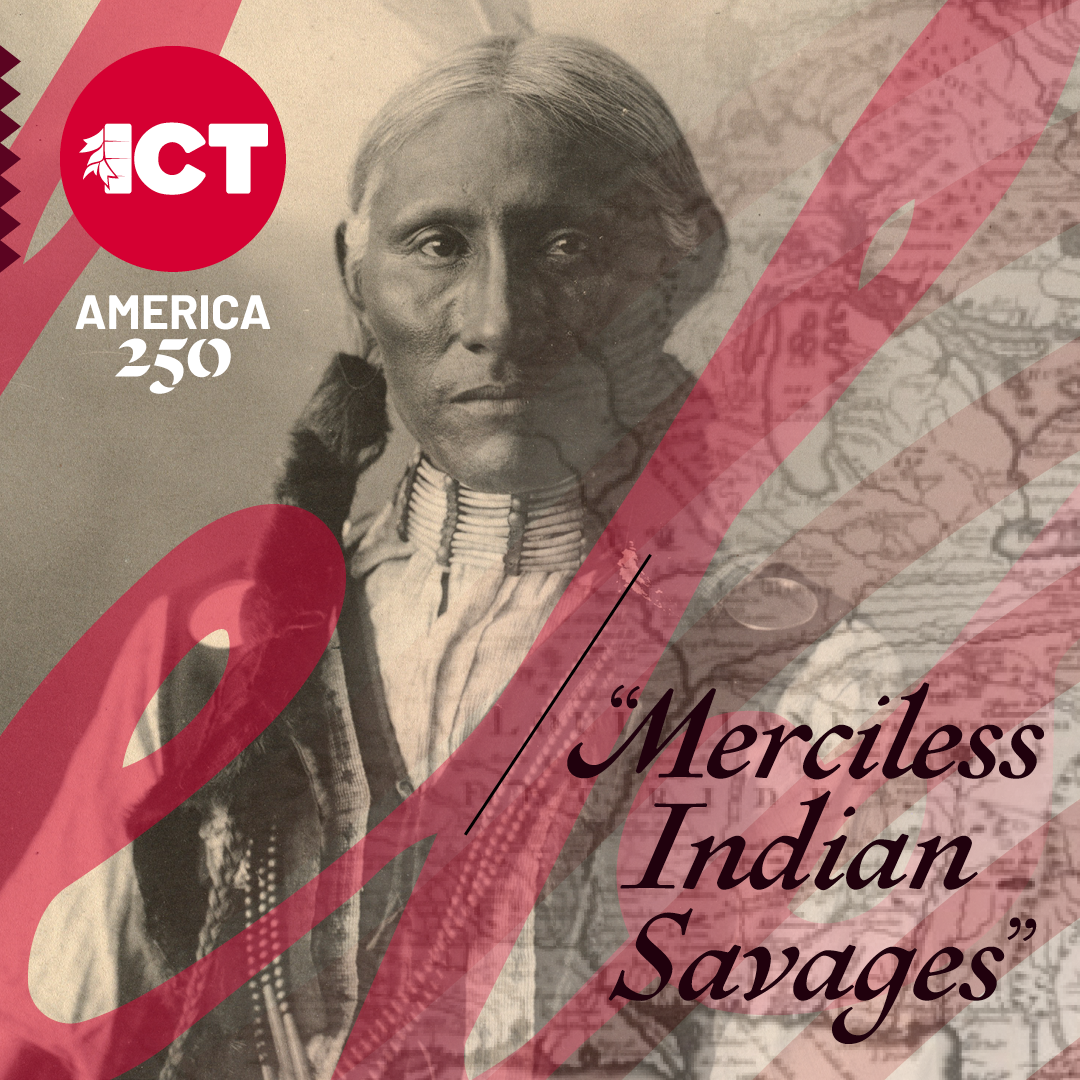
Indeed, the grievances section of the Declaration of Independence lays out the founders’ frustration with the British government’s unwillingness to grant western lands owned by tribes to frontier settlers: “He [King George III] has excited domestic insurrections amongst us, and has endeavoured to bring on the inhabitants of our frontiers, the merciless Indian Savages, whose known rule of warfare, is an undistinguished destruction of all ages, sexes and conditions.”
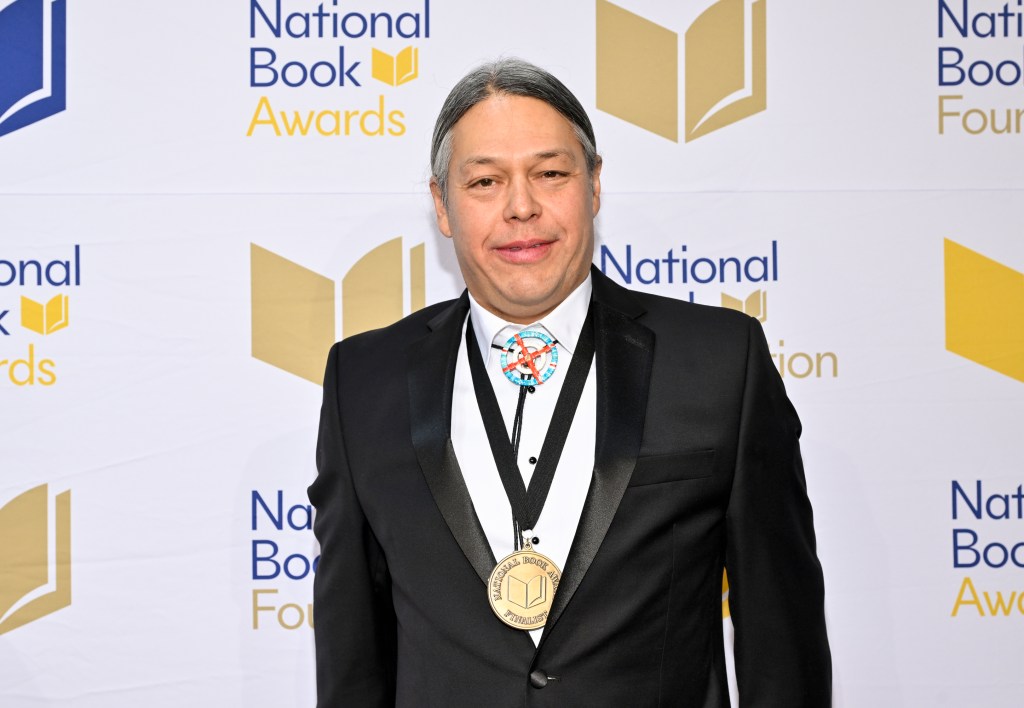
Yale history professor Ned Blackhawk, Western Shoshone, argued in his book, “The Rediscovery of America,” that it was colonial resentment toward the British Crown’s efforts to contain western colonial expansion to lands not controlled by tribes that led to the Revolutionary War. The British government’s decision to protect Indian lands angered colonialists even more than frustration over having to pay taxes to England while not being granted political representation, according to Blackhawk.
Lewerenz said allotment resulted in many Native landholders losing their lands and often leaving their tribal communities and relocating to non-Native towns and cities seeking jobs and other economic opportunities, which drained tribes of people and brainpower.
Allotment also led to many non-Native people owning land within the borders of their reservations, a reality that complicates efforts today by tribes to hold non-Native people within their borders accountable for their criminal actions because of court decisions and federal acts that have restricted tribes’ legal authority over non-Indians.
The impacts of the Dawes Act continue to reverberate within Indian Country as tribes continue to struggle to regain lands lost to allotment and sovereignty over the residents within their reservation boundaries, Lewerenz said.
“It was probably the greatest single blow to Indian economic conditions in this country’s history and its effects continue today, 150 years after that policy was first implemented,” he said.
Step 4: Take away their rights
Just as federal lawmakers grappled with policies to assimilate Native people, the federal courts in America wrestled with a series of cases that challenged the ability of tribes to govern themselves and those who lived on their lands.
Lewerenz said the legal framework that underpins much of federal and state governments’ dealings with tribes has its roots in a series of cases involving challenges to tribal sovereignty that led to very mixed results for tribes.
The first of those was an 1830 case involving the planned execution by the state of Georgia of a Cherokee tribal citizen, George “Corn” Tassel, who had murdered another Cherokee citizen on Cherokee tribal land. State judges in Georgia had decided that the state had full criminal and civil jurisdiction over tribes within its borders, but Tassel’s attorneys appealed to the U.S. Supreme Court, which agreed to hear the case, but before the court could hear the case, the state of Georgia executed Tassel in defiance of the high court’s decision.
While the Supreme Court never got to consider Tassel’s appeal, the state of Georgia’s decision to defy its decision set a non-binding but nevertheless powerful precedent by demonstrating to the high court that its decisions would only hold power if states and federal officials enforced those decisions.
“What Corn Tassel’s case told the Supreme Court was that it had to be careful about what relief it was prepared to offer in Indian Country because the states may not go along and the rest of the federal government may not back it up,” Lewerenz said. “And so in a case that was never actually heard at the court, where the court never issued an opinion, I think it still is one of the most important and influential cases in our history.”
In 1831, the Supreme Court ruled in Cherokee Nation v. Georgia that tribes are not foreign nations or foreign states but are instead domestic dependent nations and compared the tribe’s relationship with the U.S. as that of a ward to its guardian. The ruling granted the federal government the ultimate authority as it relates to tribal relations.
“This is the beginning of the exercise of what is sometimes called plenary power, of what the federal government says is the authority to do whatever it wants in Indian Country without any constitutional limits, and that doctrine underlies many of the very worst decisions in federal Indian law,” Lewerenz said.
In 1832, the Supreme Court ruled in Worcester v. Georgia that states did not have jurisdiction over Native people on tribal lands and that tribes had the power to govern their own people and territories. The case involved Samuel Worcester, a non-Native friend to the Cherokee who the state of Georgia had tried to force to leave Cherokee territory and later imprisoned after Worcester refused to leave Cherokee lands.
But while the case seemed like a victory for the Cherokee Nation, Chief Justice John Marshall never ordered the state of Georgia to release Worcester.
“I think he didn’t because he was afraid of the state of Georgia simply defying him the way that the state of Georgia had defied them in Corn Tassel’s case,” Lewerenz said.
More than a century later, the Supreme Court decided several cases that involved further challenges to tribal sovereignty, and while the court has at times ruled in favor of tribes over the past 50 years, those cases have rarely, if ever, granted greater authority to tribes to govern themselves but rather only preserved the rights that tribes already had, Lewerenz said.
But at least one case served as a significant setback to tribal sovereignty.
In the 1978 Oliphant v. Suquamish Indian Tribe case, the high court stripped tribes of their authority to prosecute non-Indians on their reservations. Later cases served to further limit tribes’ civil jurisdiction on their lands. In 1981, the Supreme Court ruled in Montana v. United States that tribes had no regulatory authority over non-Natives on non-tribal lands owned by non-Native people within their tribal boundaries.
Tribes celebrated a victory in 2023 with the high court’s decision in Haaland v. Brackeen in which it upheld the constitutionality of the Indian Child Welfare Act. The court rejected challenges to the federal law that governs the adoption and foster care of Native American children.
“What Haaland v. Brackeen did was to preserve the idea that Congress has power to enact the Indian Child Welfare Act,” Lewerenz said. “It didn’t give Indian Country anything it didn’t have beforehand. It simply prevented those plaintiffs from taking away something that Indian Country had.”
He said even the court’s decision in McGirt v. Oklahoma in which it ruled that eastern Oklahoma remains a federally recognized Native reservation only preserved a condition that already existed. Tribes can now prosecute non-federal crimes committed by or against tribal citizens on those lands.
“It simply preserved the idea that those reservations in Oklahoma continue to exist,” Lewerenz said. “We find ourselves in Indian law playing defense in the courts because when we try to play offense, we lose, and we have won a lot of defensive games, but that means we’re just holding on.”
And once tribes lose something, they rarely get it back, Lewerenz said.
One notable exception has been the ability of some tribes to regain federal recognition after having it stripped from them, a reality that many faced following Congress’s passage of the Indian Relocation Act of 1956 and several subsequent resolutions that together removed federal protections for tribes and offered incentives to tribal citizens to move to urban areas. While many of those tribes that were terminated managed to regain their federal status, such as Menominee Indian Tribe of Wisconsin and Ponca Tribe of Nebraska, many did not, and many tribes also continue to work to address the impacts of federal Indian relocation efforts.
Today, more than 70 percent of American Indian and Alaska Native people live in urban areas away from their tribal homelands, according to the National Council of Urban Indian Health’s analysis of the 2020 Census, compared with 45 percent in 1970 and 8 percent in 1940.
In exchange for leaving their tribal communities, tribal citizens were promised jobs, training programs, vocations and education – but often the federal government failed to fulfill those promises, leaving many Native people destitute in cities that offered few economic opportunities for them but also lacking access to services they once enjoyed in their tribal communities, including free healthcare and housing, said Kyle T. Mays, Black and Saginaw Chippewa and a history professor at the University of California, Los Angeles.
As a result, “urban Indians,” as they are known by many today, were forced to try to create their own opportunities by establishing American Indian centers in places like Chicago, New York City, Detroit, Phoenix and Minneapolis – some of which remain today. Those centers provided job training and poverty assistance programs. But despite such programs, urban Indians continued to face racism from their landlords and over-policing of their neighborhoods, leading many of them to become activists, a phenomenon that eventually led to the Red Power Movement in which Native people began advocating for their rights through protests meant to gain public attention for the obstacles they faced.
“It sort of went into reservation spaces and so forth, but it really emerged in various places, Minneapolis, Minnesota, Denver, Cleveland, et cetera,” Mays said. “So that sort of activism in the 1960s is a direct result of urban migration as well.”
Around the same time, tribes in the Pacific Northwest began fighting to reclaim treaty guaranteed fishing rights on ancestral lands, efforts that, at times, led to violent clashes with state and federal authorities and non-Native fishers. In other places, Native activists fought to regain treaty lands through a variety of illegal occupations in places like Alcatraz Island in the San Francisco Bay in 1969, the Bureau of Indian Affairs headquarters in Washington in 1972 and Wounded Knee village in South Dakota in 1973. Formed in 1968, the American Indian Movement led many of those protests and occupations.
“So you have all these examples of Native people fighting,” Mays said. “Again, I don’t think it’s that radical, but it’s simply for the United States to honor the treaties and stop the oppression of Native peoples.”
The last 50 years have seen federal lawmakers finally begin to look to tribes for solutions to improving the lives of their citizens, Lewerenz said. Some call this period the Self-Determination Era, and it has included congressional passage of laws such as the Indian Child Welfare Act of 1978, which governs the out-of-home and adoption of Native children, granting tribes greater agency in deciding the fate of its children, as well as the American Indian Religious Freedom Act of 1978, which allowed Native people to openly practice their traditional religious rights and cultural practices that had been previously criminalized by the federal government.
But even those handful of congressional actions have failed to address ongoing threats to Native sacred sites and lands.
The Red Power Movement in many ways continues to today with occupations and resistance efforts in places like Standing Rock in 2016, where treaty defenders fought to protect tribal lands from construction of the Dakota Access pipeline, and resistance efforts in the Black Hills of South Dakota, where Native people have continued to fight to protect sacred places from mining, and in Minnesota, where water protectors have opposed pipeline construction projects, including Enbridge’s Line 3 and Line 5 pipelines.
Step 5: Erase their history
As America prepares to celebrate its 250th anniversary, it must continue to address its ongoing failure to restore tribal treaty rights, lost languages and lost tribal lands and to fulfill the pledges of the relocation era in which it promised economic assistance and job opportunities to urban Indians, Mays said.
“I’m really concerned about the celebration, the 250th anniversary, and we saw this in the bicentennial in 1976, the celebration of Columbus Day in 1992,” Mays said. “So it’s like the same narrative of Native erasure and ignoring that the foundation of the United States was based on settler colonization and slavery, the genocide against Native peoples and the enslavement of Black peoples.”
He said Americans must never forget the crimes their ancestors committed against Native people and the many broken promises they failed to fulfill.
“There are still people who are the living evidence of it having happened and who carry that history of knowing it happened,” Mays said.
One step forward came last year on Oct. 25, when former president Joe Biden issued a formal apology to Native people for the boarding school era and its many disastrous impacts.
Speaking on the Gila River Indian Community in Arizona, he called the government’s assimilation policy “a sin on our soul.”
But despite Biden’s words, Lewerenz said, America faces a long road ahead in improving the lives of Native people. He said a good start would be to support tribal economic development and language restoration efforts and restoring to tribes full jurisdiction over their lands.
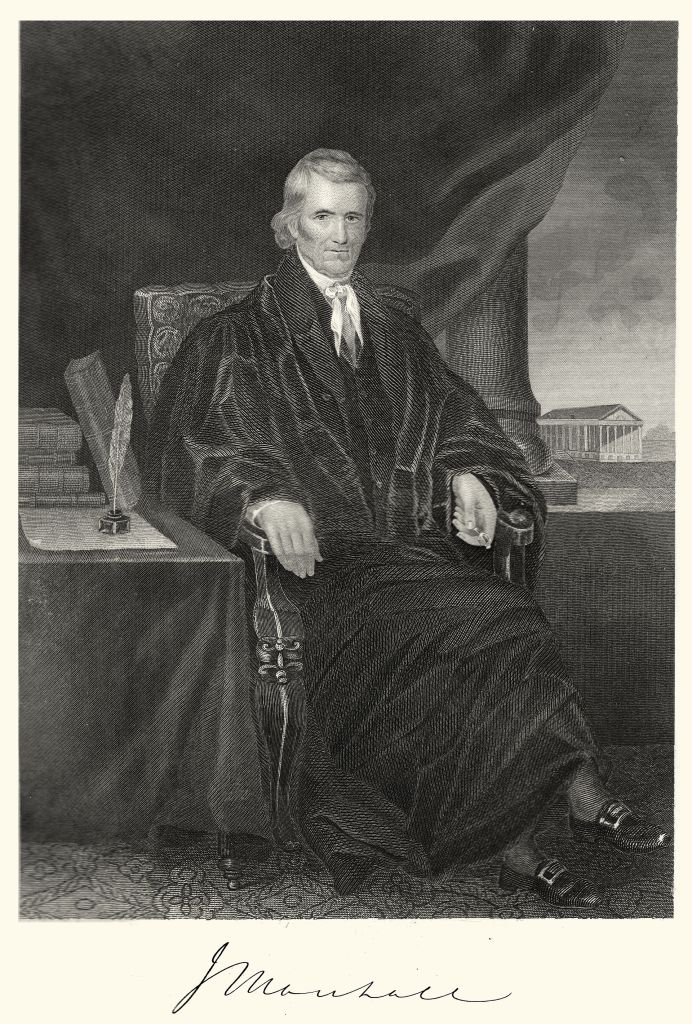
“I don’t know that there’s any one solution that could solve all of the problems that the federal government has created over these past 250 years, but Congress taking up the Supreme Court’s invitation and reauthorizing tribal power would be a tremendous first start toward improving conditions in Indian Country,” Lewerenz said, referring to former Chief Justice John Marshall’s decisions in the Marshall Trilogy that gave way to the framework for federal Indian law in the U.S.
Harjo said recent years have seen a rise in anti-Indian sentiment as organizations and federal elected leaders have begun concerted efforts to roll back what progress America has made in fulfilling its many broken promises to tribal nations.
“So all of these efforts are gigantic social movements against us, and we’ve withstood every one of them but it’s been a tremendous hardship,” she said. “Who knows where we would have been today as Native peoples if we had had just the families that we started out with in 1776.”

