
Dan Ninham
Special to ICT
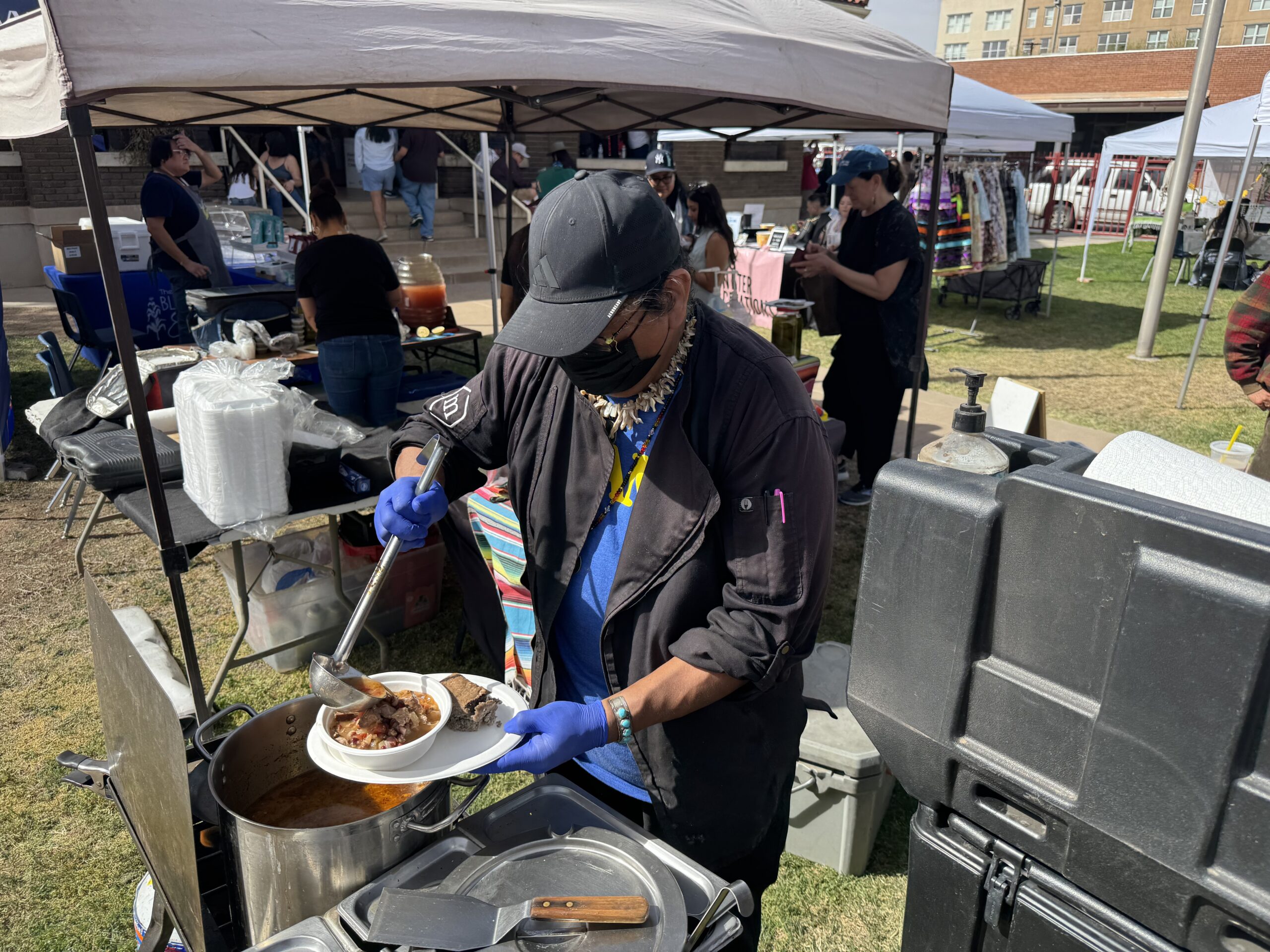
One Indigenous chef has become part of the fabric of downtown Phoenix.
The Labriola National American Indian Data Center in the Hayden Library on the Arizona State University campus recently hosted two Diné poets, Amber McCrary and Kinsale Drake. Both are recognized as distinguished publishers of books of poetry.
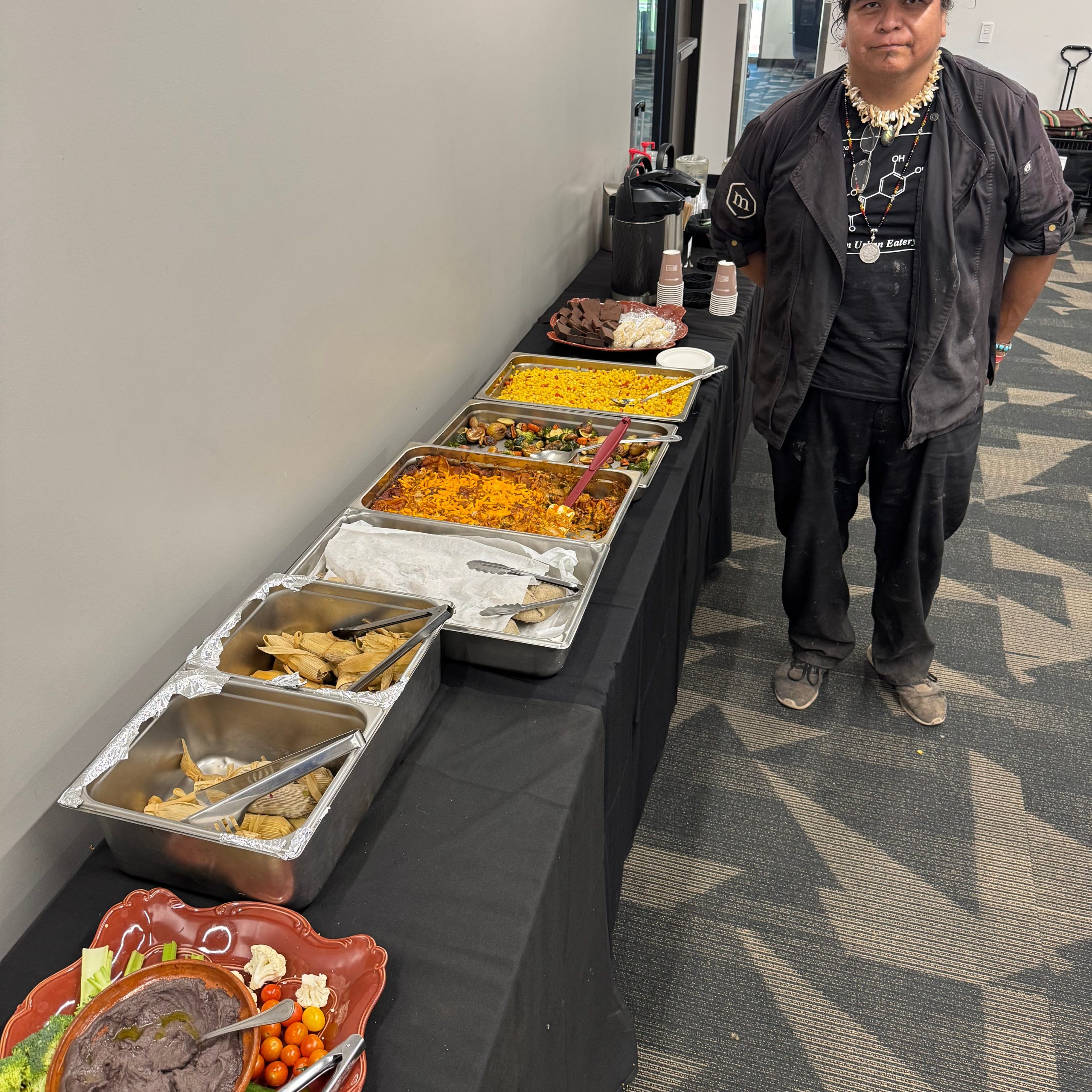
The event was catered by Renetto-Mario Etsitty, commonly referred to as Mario and he is a citizen of the Diné (Navajo).
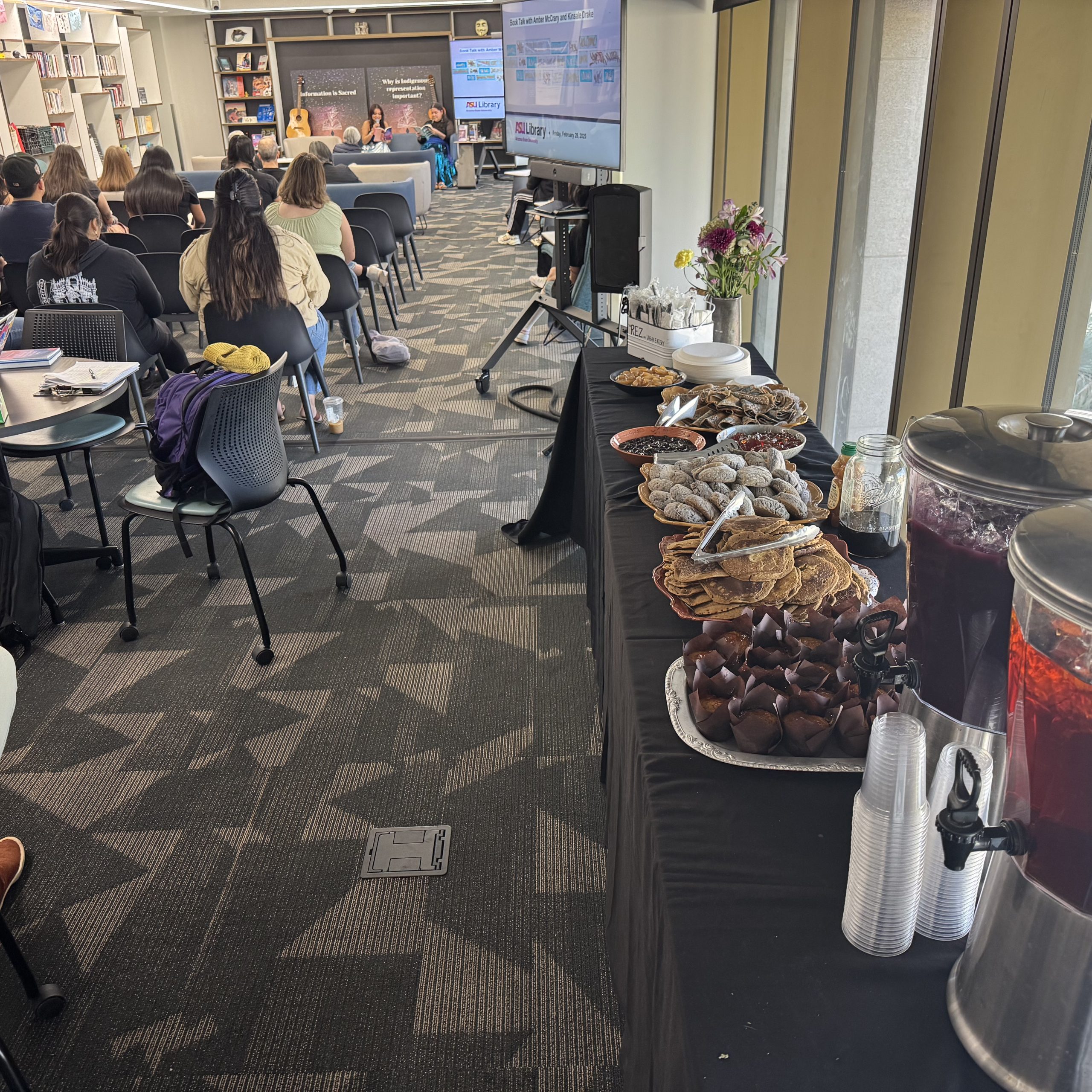
Etsitty is the business owner of The REZ an Urban Eatery, a catering and pop up of traditional and vegan and world fusion Navajo cuisine in Phoenix, Arizona.
In a review in the Phoenix New Times, it stated: “If you spot the sign for the The Rez, an Urban Eatery, out in the wild, reach for your cash and head for this roaming restaurant. You can sometimes find The Rez in downtown Phoenix during the late hours, even till 4 a.m. on weekends, or possibly at a festival, farmers market, or special event where food vendors are crammed into neat little rows. The Rez offers Navajo cuisine, food stand-style, served by Renetto-Mario Etsitty — whose resumé includes Tertio Wine Bar chef and ASU fine arts graduate, among other things.”
Etsitty has extensive training and work experience with Indigenous food. He started from an early age and has led him to where he is now.
“During my childhood while other kids my age were playing, I became a caretaker for my grandfather,” Etsitty told ICT. “I learned to prepare traditional foods for my grandfather. I’ve learned to make them by observing and helping my grandmother, and aunts.”
“My grandmother had a chuck wagon business selling Diné foods at the local flea markets. During the summers after the school year I would spend time with my grandparents. They lived in separate houses. My grandfather built his own house a few yards next to the family house, because my grandmother would be weaving at odd times of the day and night,” added Etsitty.
“During the daytime I followed my grandmother to forage and gather plants and vegetables around the family homestead,” said Etsitty. “Some plants were for medicine, some for dying wool, others to eat or flavor our foods.”
Indigenous chefs hold distinct philosophies with Indigenous food preparation and cooking.
“There’s a new trend of ‘decolonization’ of foods so there are cooks and chefs rejecting fry bread and ‘old world’ ingredients,” said Etsitty. “I find it funny that they do that but then they’re searing or sautéing and using colonial methods of food preparation in the process.”
“Part of my advocacy of understanding traditional foods is the need to allow the natural process of change and adaptation. On a global level Indigenous foods has changed the cuisines of every culture the world over. However Indigenous peoples in the Americas have different experiences with colonization, we are slow to catch up to the rest of the world with directions of our cuisines,” added Etsitty.
“Having an understanding and appreciation of our ties to these Indigenous ingredients is the first step to expand upon our repertoire,” said Etsitty.
Etsitty knows his strengths and continually works on areas to improve on. Especially when it comes to flavor.
“It what’s most important, you can have high end ingredients but they can be easily ruined if you don’t know how to balance the flavors,” he said. “Some ingredients meld well together and most things have been done before. In general people don’t know what they want, they remember what they had, as chefs there is some trust in what you have to offer.”
“The idea of veganism in Indigenous communities is somewhat foreign as the English they all speak now. Our strength is presenting the traditional plant base foods of our ancestors and how accessible it is. Being healthy and having access to healthy foods is difficult for many of our communities since we became wards of the state. This is one of our main focus,” added Etsitty.
Being a small business, Etsitty says there are still many hurdles to overcome. This includes increasing the visibility to both the Indigenous and non-Indigenous communities.
“Luckily we do have various support that keeps us growing,” Etsitty said.
When it comes to Indigenous cooking, the mentor relationship is significant to guide the best practice with Indigenous foods preparation, cooking, and delivery.
Etsitty has worked with Cindy Gentry, founder of the downtown Phoenix Public Market and says she has been key in his approach to maintaining his business.
“Her goal to make produce and local foods accessible to the common folks is in line with the goals we have set for our business,” Etsitty said. “She worked tirelessly in maintaining a presence in the downtown Phoenix area to promote local farmers and facilitated a market that also features local producers.”
Gentry said they met more than 20 years ago when Etsitty began volunteering at the Phoenix Public Market and made himself available to do whatever needed to be done.
“Mario is a renaissance man with an amazingly versatile palate, amazing palette as an artist, and is devoted to family and friends. When the market opened an adjacent store and café, he started working his magic in the kitchen. I confided one day that, embarrassing as it was, since I was involved with so many farmers and their produce, I had a distaste for celery,” Gentry said.
Gentry continued to talk about her professional relationship with Etsitty, recalling a moment where he gave her a chartreuse-colored drink and said, “give it a try.”
“It was delicious,” she said. “It turns out the secret ingredients were celery and green apple. I became an instant fan, and Mario launched an ever-changing line of frescas that he offered daily at the market café. Customers came in just for them. They had a prominent place on the front counter of the café, featuring fresh and local seasonal produce from the market farmers.”
“During that time, Mario continued to impress all of us with his wide range of culinary skills,” said Gentry. “At the Wednesday night markets, he would be outside grilling burgers for folks. He made sure to celebrate Diwali, the Hindu festival of lights, each year by making a cake decorated with edible gold glitter – which he sent me to fetch, thereby introducing me to a baker’s specialty shop in central Phoenix. He found a company in north central AZ that had a wide range of bulk spices and began ordering them to expand the flavor profiles of the café’s dishes. His food is often vegan, and gluten-free and people flocked in for it.”
“We had planted some grape vines on the café’s patio. One time my husband was outside trimming them and Mario asked him to save him the trimmings. He did, and we found Mario in the kitchen brining the grape leaves and, in a few days, handmade dolmas were on the menu,” added Gentry.
Over time, Gentry said Etsitty has honed and expanded his skills.
“And that is the thing – I don’t know how he knows all these things to do. He has honed his cooking skills with care and love; and his curiosity and intuition take him down some true paths of excellence,” Gentry said.
As he has grown his culinary skills, Gentry said he has also created lively events where people gather to taste his food, play music and talk; keeping the night and energy going until dawn.
His food has gone from being featured in bars to taking awards at the city’s premier culinary event, Devour Phoenix.
Etsitty even catered Gentry’s wedding.
“I feel glad and fortunate to have him in my life. He is part of the fabric of downtown Phoenix,” Gentry said. “He is strong in keeping connected to his family and Navajo ways – and by being who he is, has taught me countless things over the years. The food he makes takes him many places and will continue to do so. He is soon opening a brick and mortar space for Rez Bot – which will expand and fill a gap for the very special taste of Arizona that he creates.”
CATERING OF ALL KINDS
Kimber Landing of Devour Culinary Classic and Devour the World, Phoenix, AZ had Mario cater her event. She called him an incredible chef who “brings the flavors of Navajo Nation to life through both food and beverage.”
“We were proud to offer him top medals at both the 2024 and 2025 Devour Culinary Classic for his outstanding use of heritage and grains,” Landing said. “Mario‘s journey to elevate Indigenous foods shines a light on his ancestral knowledge and gives us a glimpse into Navajo traditions.”
At another event during the summer of 2024 Etsitty catered at Mesa Community College in Mesa.
Mona Scott Figueroa of Indigenous Representation Matters, The Power of Indigenous Identity led at the event and raved about Etsitty and his food. The event was for Indigenous high school students and their families and the menu included pumpkin tamales, gluten-free fry bread, Colorado beef stew chili, and Navajo tea sweetened with peaches.
It was during his undergraduate studies at Arizona State University where Etsitty noticed the lack of Indigenous rooted foods.
“Just about everything was pizzas and wings,” Etsitty said. “So the idea of sharing a meal with bison meat, blue corn, hatch chilies, or sumac berries was unheard of. Now however as a registered vendor with ASU we provide a number of Indigenous ingredients and foods.”
Etsitty finished his undergraduate studies in fine arts with drawing/sculpture at ASU in 2000. He still delves in art but also made the connection with fine arts to culinary arts.
Various forms of catering happened since 2002 when there were weekly ASU art showings.
“Once in a while a friend would want some catering so I would make a few items for their show,” said Etsitty. “Then Phoenix First Friday started and I had more frequent events. We would make omelettes and crêpes at the trunk space on First Fridays. That eventually became a fry bread stand.”
“In 2012 after the closing of the Phoenix public market urban grocery and wine bar we started the rezbot an urban eatery focusing on native and particularly Navajo foods. We had a spot on 5th Street doing late night fry bread house next to the Jobot coffee shop,” added Etsitty.
Etsitty continued to talk about the evolution of the Indigenous culinary arts into catering business.
“After many months we left the building and went into the occasional pop up business. [In] 2015 we got our license that started the next steps into officiating the business,” he said. “We have a regular pop up at a local tiki dive bar that prompted the process.”
Etsitty is empowered by the gift of the monster hunger food and storytelling.
“Within our Diné history there was a time when ‘monsters’ roamed the earth and they killed many of our people, they were defeated by the warrior twins, but their mother changing woman is the one that saved us all,” said Etsitty. “However after the destruction of the monsters there remained a few hidden, they survived the holocaust, sleep, poverty, lice, old age, and hunger.”
“As the twins tried to kill them they pleaded for their lives citing how they would benefit humanity. Hunger said without me how will people be healthy, how will they be strong if they only bear once and never again? With me around I will gnaw at their bellies to remind them to eat and they will be healthy. They will find new ways to make food, new food to forage or plant,” added Etsitty.
“Our taste buds are attributed to the monster hunger so that we will always find ways to survive.”

Our stories are worth telling. Our stories are worth sharing. Our stories are worth your support. Contribute $5 or $10 today to help ICT carry out its critical mission. Sign up for ICT’s free newsletter.

