
Help ICT make strides in 2024. Our goal is to raise $150,000 by the end of the year with generous contributions from funding partners and collaborators like you. We’re thankful for your support, and we’re thriving because of it. DONATE TODAY!
Miles Morrisseau
ICT
It was an historic year for Indigenous peoples in Canada, highlighted by the election of the first-ever First Nations provincial premier.
Former rapper and bestselling author Wab Kinew led his New Democratic Party to a majority victory over the governing conservatives to lead the province of Manitoba, a position similar to a state governorship in the United States.
But the year was marred by the reality of climate change, as wildfires raced across much of northern Canada, choking the skies across much of the continental U.S. and displacing tens of thousands of Indigenous people. The road back will be hard and will not be complete before fire seasons begins again.
And protests continued over Indigenous calls for searching two Manitoba landfills where the bodies of Indigenous women linked to a serial killer are believed to have been dumped.
There were other losses, as well. Music icon Robbie Robertson, Six Nations of the Grand River, died at the age of 80, but not before leaving one more indelible and uniquely Indigenous musical creation.
But for Canadians, there’s always hockey to brighten the winter months. Highlights of the year for Indigenous hockey fans — of which there are many in Canada — were the 2023 National Hockey League’s Stanley Cup tournament and the World Championships.
The Stanley Cup tournament was an historic tournament for Indigenous players. Zach Whitecloud, playing defense for the Vegas Golden Knights, would become the first member of the Sioux Valley Dakota Nation to hoist the cup, and Brandon Montour, Mohawk/Six Nations of the Grand River, led an upstart Florida Panthers team with a record-setting performance for the ages.
Women’s hockey continued to make history, as well, with the launch of the Professional Women’s Hockey League near the end of the year, with three key players — Abby Roque, Ojibway; Jocelyne Laroque, Metis; and Jamie Lee Rattray, Metis — each signing to different teams in the new league. But first there would be another World Championship to settle.
Before the year was out, however, the fractured Assembly of First Nations — divided by turmoil and stunned by a report documenting a predatory culture within the organization — held a special election in December to replace RoseAnne Archibald, who was booted out earlier in the year after being elected the assembly’s first woman national chief.
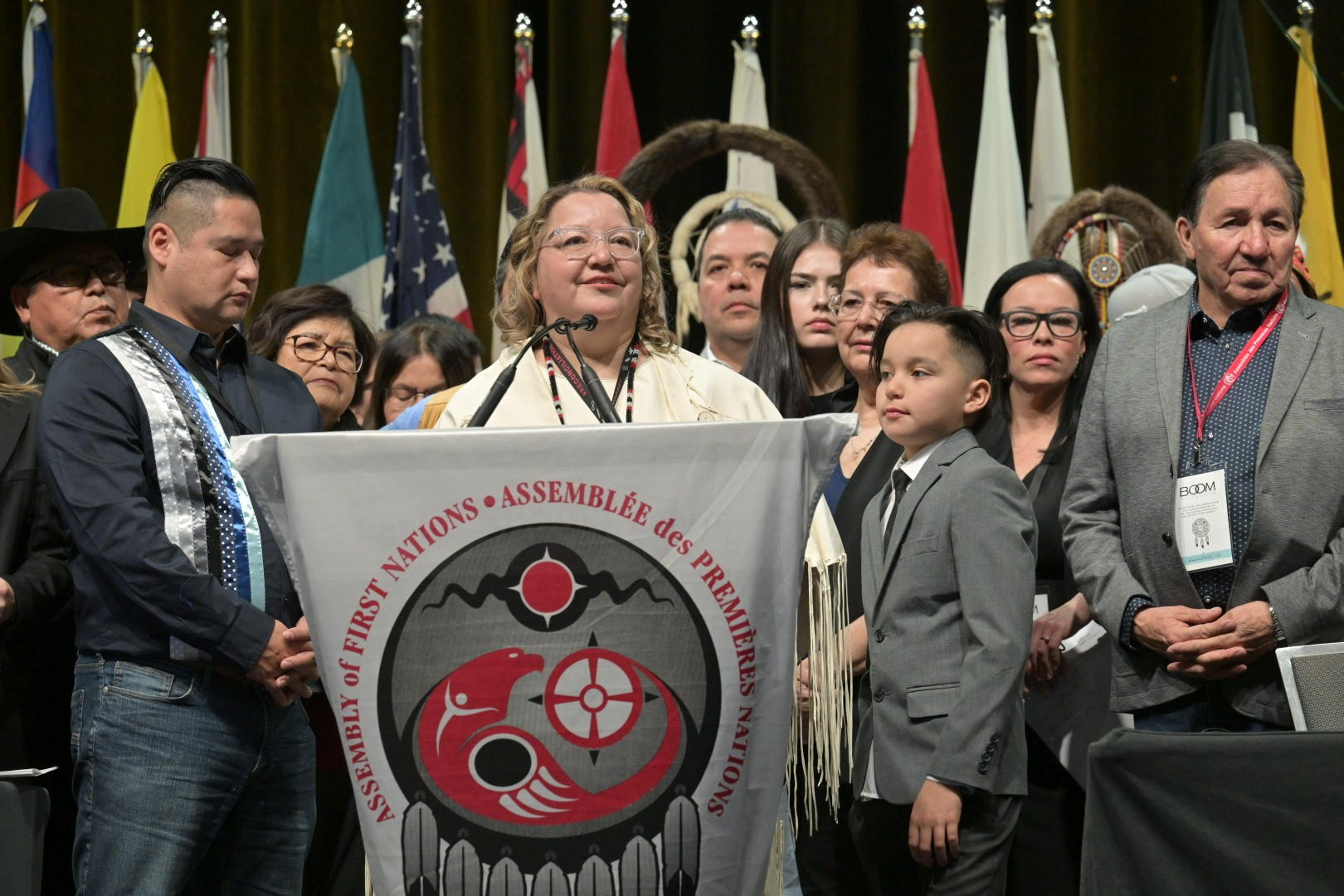
The voting would become a marathon session that stretched over two days, but in the end, Cindy Woodhouse, the regional chief of the Manitoba member, Pinaymootang First Nation, garnered enough votes to be elected.
Here are the top stories of 2023 from north of the border.
#SearchtheLandfill for MMIW
The city of Winnipeg, Manitoba, entered the new year on a dark note that reflected the national and global tragedy of missing and murdered Indigenous women and girls.
Even as news spread that the remains of Indigenous women targeted by a serial killer were believed to have been dumped in two municipal landfills in or near Winnipeg, officials made no attempt to follow up on the evidence and give some kind of closure to the victim’s families.
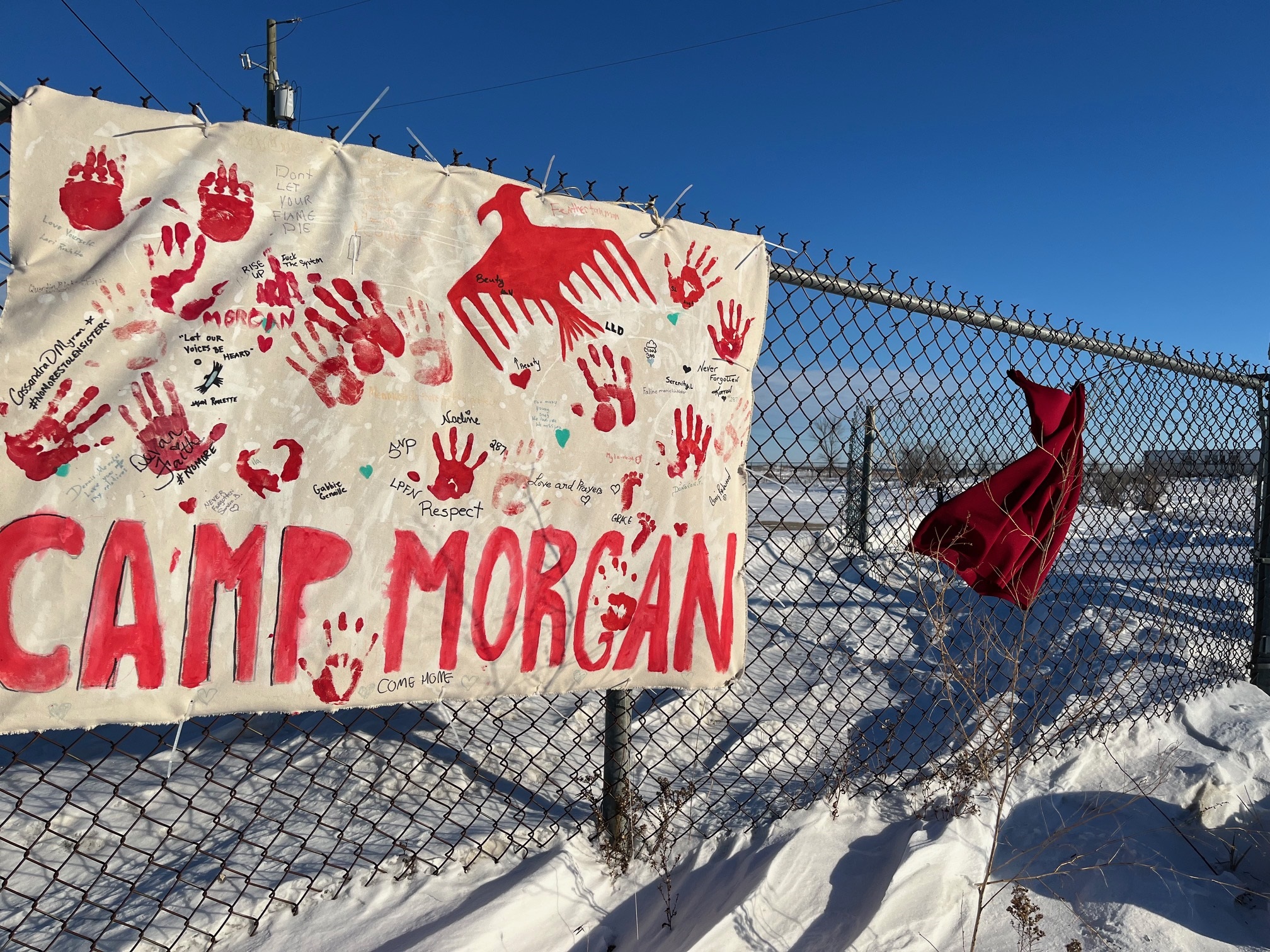
Family members, with the support of a group called the First Nations Warriors, first erected a blockade at the Brady Landfill, then set up a camp named Camp Morgan, named for Morgan Harris, who is believed to be one of the women whose remains may be in the landfill.
Related stories:
—Serial killer targeted Indigenous women in Winnipeg
—Waiting for answers: Are serial killer’s victims in a Winnipeg landfill?
—Another Indigenous woman’s remains found at Winnipeg landfill
—First Nations chief challenges Winnipeg police to do ‘proper investigation’
Harris’ daughter, Cambria Harris, has been an outspoken advocate for her late mother and other Indigenous women and families.
“It’s heartbreaking,” Harris told ICT. “It just makes me so angry for myself, for the younger generations, who are going to have to put up this fight as well. And for any Indigenous woman … Growing up as a young Indigenous girl, I grew up in fear.”
The issue also became central to the historic campaign for premier of Manitoba. The ruling Progressive Conservatives had apparently hoped to use the landfill search as a wedge issue to draw out their supporters, but their plan seemed to backfire as the election saw a huge early voter turnout dubbed an “Orange Wave” for the high numbers of Native voters.
Camp Morgan marked its first anniversary on Dec. 18 amid discussions with family members and Indigenous leaders, but a search had not yet begun as the year drew to a close.
Wildfires spread
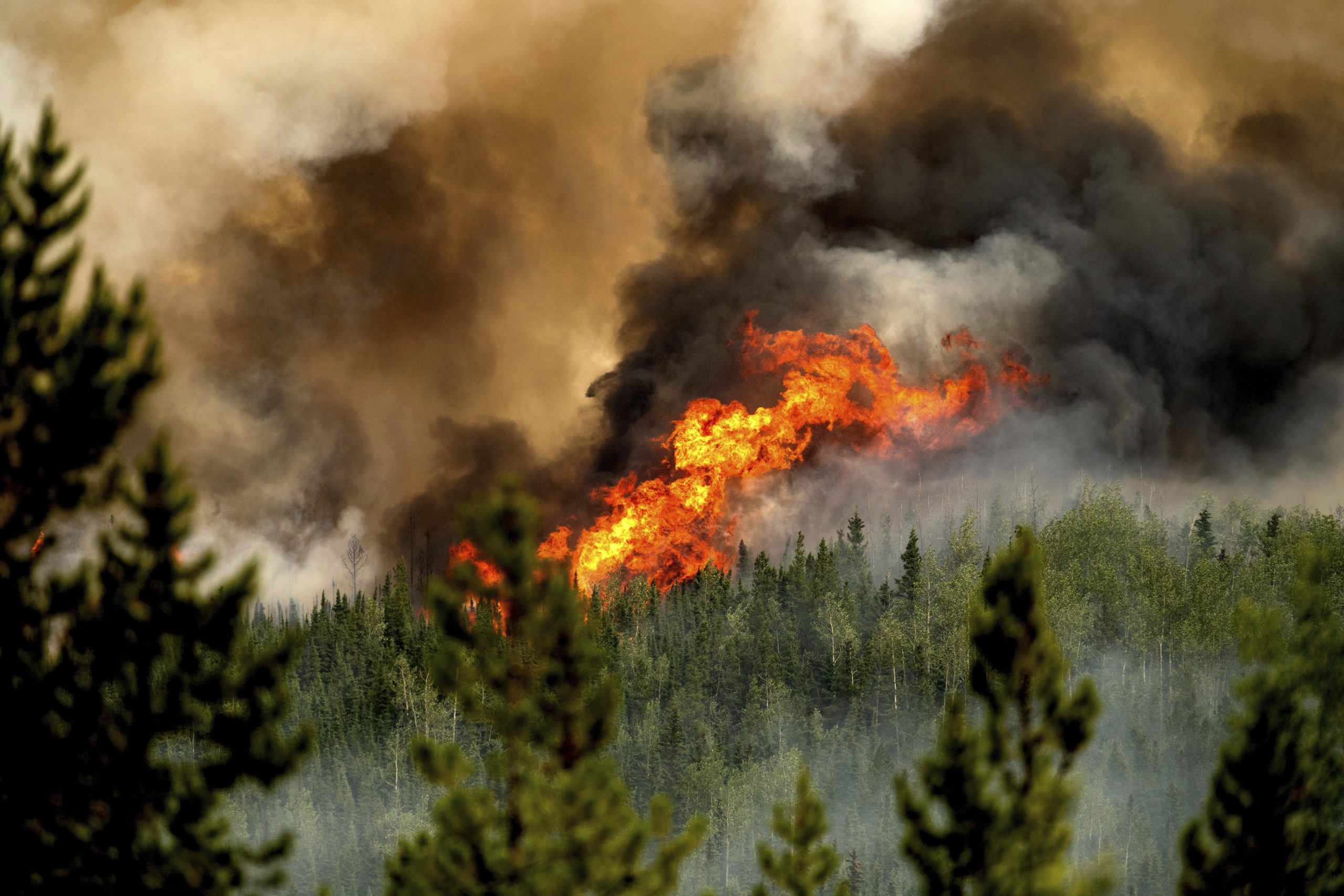
In an unprecedented wildfire season, fires raged across millions of acres of northern Canada and filled the skies with noxious smoke that made air unbreathable for some and unbearable to most in many cities across the East Coast and as far southwest as Texas.
Read more:
—Canadian smoke impacting US tribes
—Indigenous people forced to flee Canadian fires
“We know that First Nations continue to be on the frontline of climate change. Communities are not only devastated from the effects of wildfires in their own communities, but also many are surrounded by forests that provide the economy that many members work in,” Indigenous Service Minister Patty Hajdu said, following emergency debate in Canada’s House of Commons.
“We’ll be with communities as they begin that hard work of assessing what it will take to rebuild. In the case of communities that have damaged infrastructure, we’ll be there to support communities as they help their members in extraordinarily difficult evacuation situations.
”By the end of September, as the wildfire season began to cool down, Indigenous Services Canada announced that more than 27,000 people on-reserve in more than 90 First Nations had been affected by orders to evacuate their homes because of wildfires. The numbers do not include Inuit and Métis communities such as the East Prairie Métis Settlement, which lost more than 40 homes in the wildfires.
All hockey, all the time
Indigenous hockey players led their teams to success on the world stage, starting with the World Hockey Championships in April.
Related stories:
—USA women beat Canada for hockey gold
—Zach Whitecloud, Vegas Golden Knights win Stanley Cup
Abby Rocque, Ojibway from Wanahpitae First Nation who grew up in Michigan, played for Team USA in its bid to take back gold from rival Team Canada, led on defense by Jocelyne Larocque and up front by Jamie Lee Rattray, both Métis.
Team USA doubled up their northern nemesis with a decisive 6-3 victory.

Roque was a key part of the victory and was able to bring home her first gold medal since joining the U.S. national team. It marks the 10th international championship gold medal for the Americans and the first in four years against rival Canada.
Then came the Stanley Cup, with Whitecloud bringing the cup home to Dakota Nation and Montour making history.
The Stanley Cup is considered one of the hardest national championships to win in professional sports with the winner required to win 16 games. The 2023 Stanley Cup final combatants each had Indigenous players making a big impact on their teams’ success. In fact, it is likely the Florida Panthers would not have made it into the contest or out of the first round without the contribution of Mohawk defenseman Montour.
During the Panthers’ run, Montour set a couple of franchise records, ending the season with the franchise record for goals by a defensemen, including a handful of game-tiers or game-winners that got them into the playoffs.
He also set franchise records for goals by a defenseman in a series, in the playoffs and in the Stanley Cup finals series.
One of the biggest moments in the tournament, though, and one that will likely earn its place in the history of the game, happened off the ice. ESPN broadcaster John Anderson made fun of Whitecloud’s last name and the clip was soon shared online and quickly went viral, with many questioning the appropriateness of the race-based bit of low-brow humor.
The next day, Whitecloud met with the press and told them that he had accepted the announcer’s apology and had used it as an opportunity to share the teachings he was brought up with around forgiveness and “moving forward in a positive direction.”
He also shared his great pride in carrying his family name.
“I’m proud of where I come from, where I was raised, who I was raised by,” he said. “I carry my grandfather’s last name and nothing makes me more proud to be able to do that. In our culture we are raised to be the first ones to reach out and offer our help, so that’s why I reached out to John this morning. I wanted to make sure that he understood that I understood people make mistakes.”
AFN turmoil, ‘predatory’ culture
The reign of Canada’s first female national chief of the Assembly of First Nations came to a quick and ignoble end.
RoseAnne Archibald, who was elected on July 8, 2021 to become the first woman in the position, overcame an attempt to oust her in 2022. But she was suspended by the executive community on June 17, 2023, and ousted on June 28 on a Zoom call.
Related stories:
—Assembly of First Nations elects national chief in a marathon vote
—Canada’s first female national chief ousted over Zoom
—Investigations finds ‘predatory culture’ in Assembly of First Nations
Officials said she was removed after a human resources report found evidence of “bullying,” although no details were presented. Supporters, however, believe Archibald was targeted because she was a woman.
The day after her removal, the assembly released a damning report that detailed a “predatory culture” at the national office where young women were warned to avoid certain leaders and elders.
Officials vowed to address the problems, and required officials to sign a code of conduct, but no other steps appear to have been taken.
After Archibald’s removal, an interim chief, Joanna Barnard, was appointed, and in December the assembly gathered to formally elect a new chief. After rounds of voting — with no candidate getting the necessary 60 percent of the vote — a deal was struck privately to let the top vote-getter, Cindy Woodhouse, take the position after rival David Platt, Muscowpetung First Nation, conceded.
Indigenous music
It was a year of incredible highs and lows for Indigenous music icons.
Robbie Robertson, the lead songwriter and guitarist for The Band and a celebrated producer of film soundtracks and contemporary Indigenous music, died Aug. 9, 2023, at the age of 80. The Band was considered one of the most influential rock groups in history and are acknowledged as creators of the genre known as Americana.
Related story:
—Indigenous rocker Robbie Robertson dies at 80
Robertson’s final project released in his lifetime was also his last with longtime friend and collaborator, Martin Scorsese. Robertson composed the soundtrack for the acclaimed film, “Killers of the Flower Moon,” directed by Scorsese, who dedicated the film to his memory.
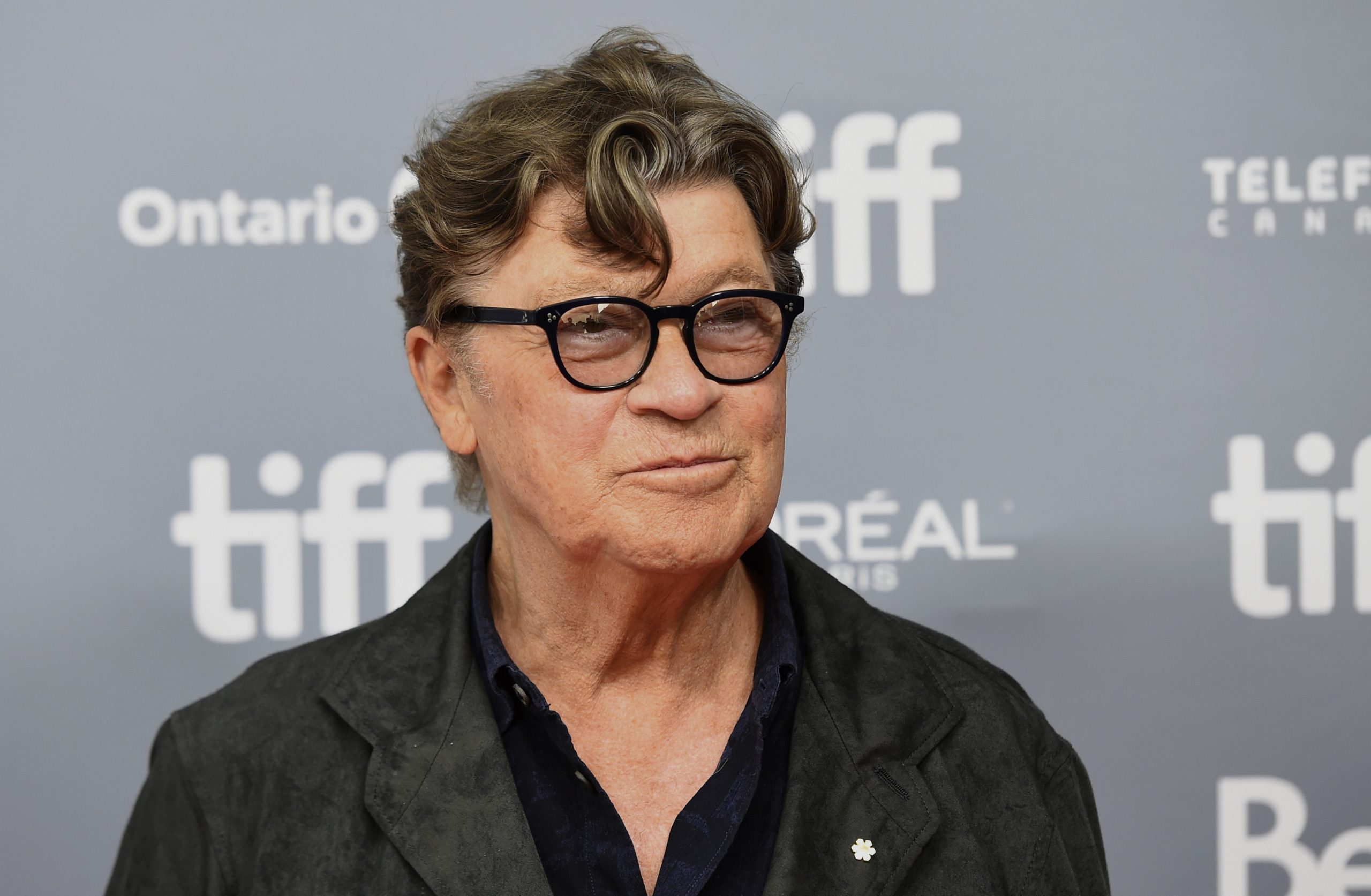
In a statement released posthumously, Robertson said the project brought his life full circle.
“I feel that the score is unexpected in many ways and authentic to the heart of the story,” he said in the statement. “For me, it’s kind of perfection, to be able to go all the way around this big circle. Starting at Six Nations when music comes along in my life, and then to my history with Martin Scorsese and all the movies leading up to ‘Killers of the Flower Moon.’ The fact that we’re getting to do a Western in our own way, you really couldn’t have written this.”
Scorsese also released a statement.
“The Band’s music and Robbie’s own later solo music seemed to come from the deepest place at the heart of this continent – its traditions and tragedies and joys,” Scorsese said. “It goes without saying that he was a giant, that his effect on the art form was profound and lasting. There’s never enough time with anyone you love. And I loved Robbie.”
Kinew makes history again at swearing in
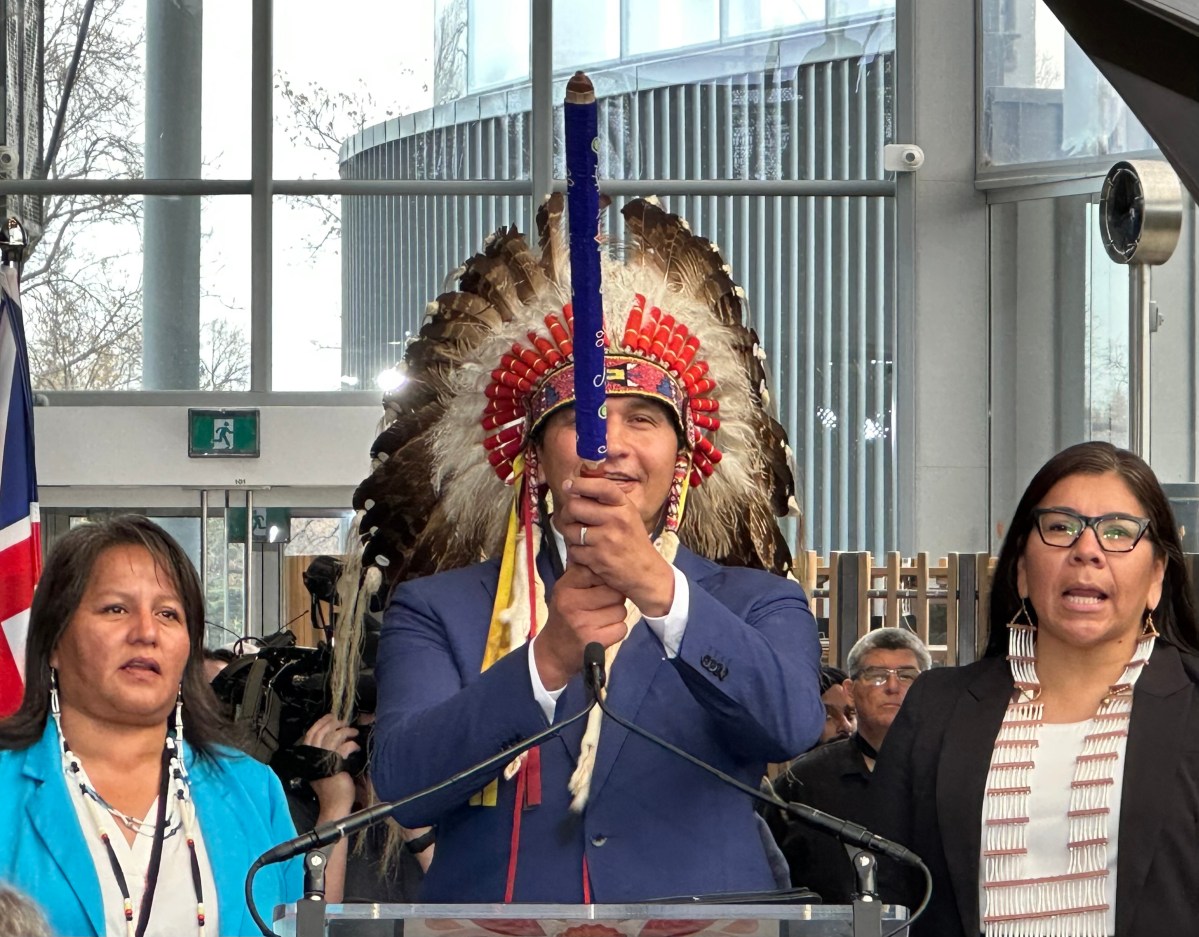
After winning election to become Manitoba’s premier, Kinew was sworn into office in late October with a cabinet that also made history. He brought the first Indigenous women into the cabinet and appointed the first Black deputy premier of the province.
“In our province, today, a new era begins,” Kinew said, following his oath of allegiance, wearing a ceremonial headdress in Winnipeg’s Assiniboine Park. “And today, we get to work for you, the people of Manitoba.”
Related story
—Wab Kinew sworn in as 1st First Nations premier
—’Orange wave’ elects Canada’s first-ever First Nations provincial premier
A national poll in December found that Kinew was the most popular premier in the country with an approval rating of 57 percent. It may be the stereotypical honeymoon high, but it was a good way to end the year.
Ending with a laugh
But perhaps it’s best to end the year with a laugh. The Indigenous TV series, “Acting Good,” based on the life of Anishinaabe comedian Paul Rabliauskas, is now the top-rated show on Canada’s top-rated comedy channel, CTV Comedy.
Related story:
—‘Acting Good’ is Canada’s funniest TV show. Get in on the joke.
The show is drawing rave reviews and laughs among Indigenous viewers with its look at a fictional community known as Grouse Lake set in northern Manitoba.
According to a Bell Media release on Dec. 5, “Acting Good” is now the number one reason CTV Comedy is the top-rated entertainment speciality channel in Canada for the fifth consecutive year in the coveted demographic ages 25-54.
It breaks the record previously held by Discovery for the longest a channel has been the most-watched.
“Acting Good” is looking good.

Our stories are worth telling. Our stories are worth sharing. Our stories are worth your support. Contribute $5 or $10 today to help ICT carry out its critical mission. Sign up for ICT’s free newsletter.

