
Miles Morrisseau
ICT
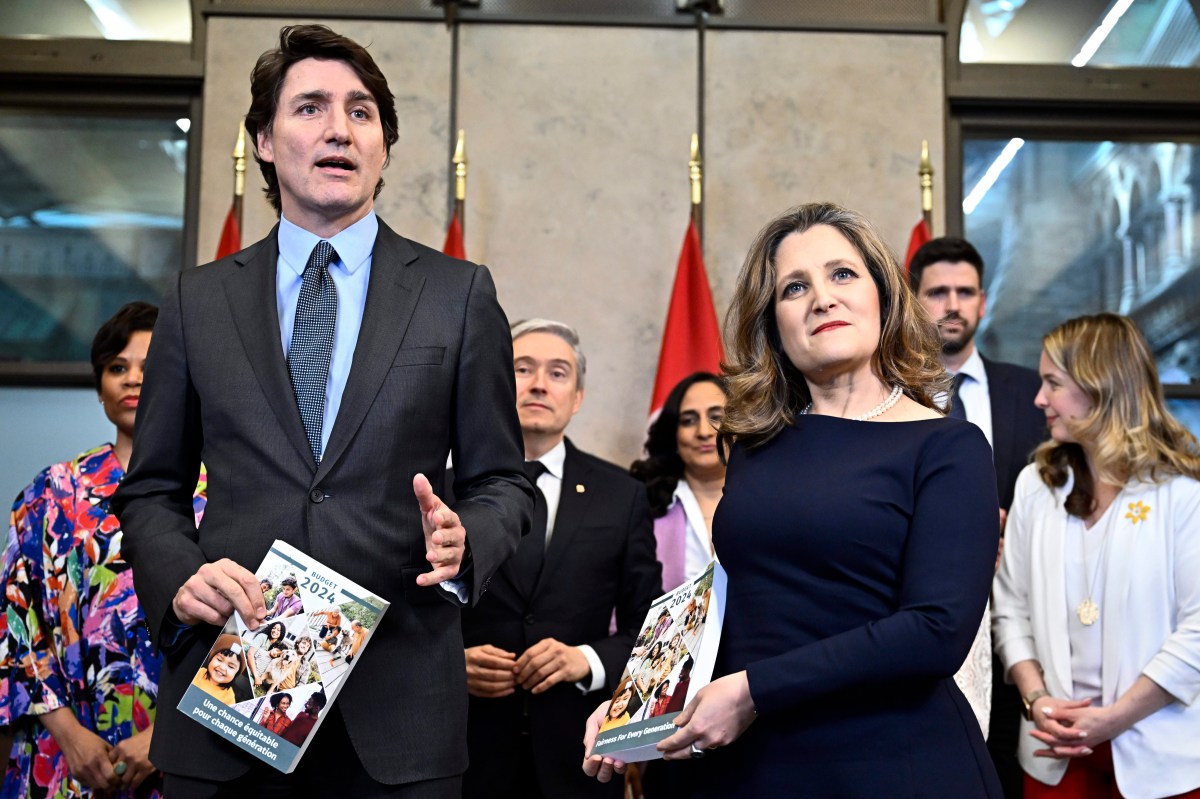
Prime Minister Justin Trudeau and the governing Liberal party released Canada’s 2024 federal budget on Tuesday, April 16, under the title “Fairness for Every Generation,” including a $2.4 billion investment in Artificial Intelligence and $1 billion toward the launch of a national school food program.
The budget, announced in the House of Commons by Deputy Prime Minister and Minister of Finance Chrystia Freeland, received a mixed response from Canada’s three national Indigenous organizations – the Assembly of First Nations, the Inuit Tapiriit Kanatami and the Métis National Council.
SUPPORT INDIGENOUS JOURNALISM. CONTRIBUTE TODAY.
The biggest line items in this year’s budget for Indigenous peoples were nearly $2 billion in health funding and $1.8 billion to support Indigenous communities’ efforts to reduce the number of children in foster care.
Other notable investments include more than $240 million toward post-secondary education for First Nations, Inuit and Métis students. This is on top of the $487.5 million over 10 years invested in Inuit and Métis post-secondary education strategies in the 2019 budget.
The budget also includes a significant investment in Indigenous languages and culture, including more than $290 million toward Indigenous-led efforts to reclaim, revitalize, and strengthen Indigenous cultures and languages.
In addressing some of the realities of the changing climate, the budget also includes investments in response to climate change emergencies and food security, adding another $175 million for First Nations Emergency Management and Preparedness to combat increasingly frequent climate disasters, particularly wildfires, in addition to $260 million provided in the government’s 2023 Fall Economic Statement.
Food security was addressed with $124 million to support Nutrition North Canada and the Inuit Nunangat Food Security Strategy, which prioritizes local food production and community food programs. The budget also includes $40 million to support access to traditional foods and help eradicate food insecurity.
Another $388 million is budgeted to support Indigenous entrepreneurship and tourism, to unlock new clean energy opportunities and to support the Strategic Partnerships Initiative, a national strategy that provides a way for federal partners to coordinate their efforts, reduce administrative burden and pool resources in support of Indigenous communities.
Funding ‘not fair’
The Assembly of First Nations held a press conference in Ottawa on Wednesday, April 17, the day after release of the budget, with regional and community chiefs joining National Chief Cindy Woodhouse Nepinak to talk about the funding.
“We welcome and appreciate new investments proposed for First Nations health, children, education, and for the new business loan guarantees program for large projects,” Woodhouse Nepinak said. “However, analyzing the budget proposals for housing, policing, roads, and water fall far short of closing the long-standing infrastructure gaps that create so many difficulties for First Nations people.”
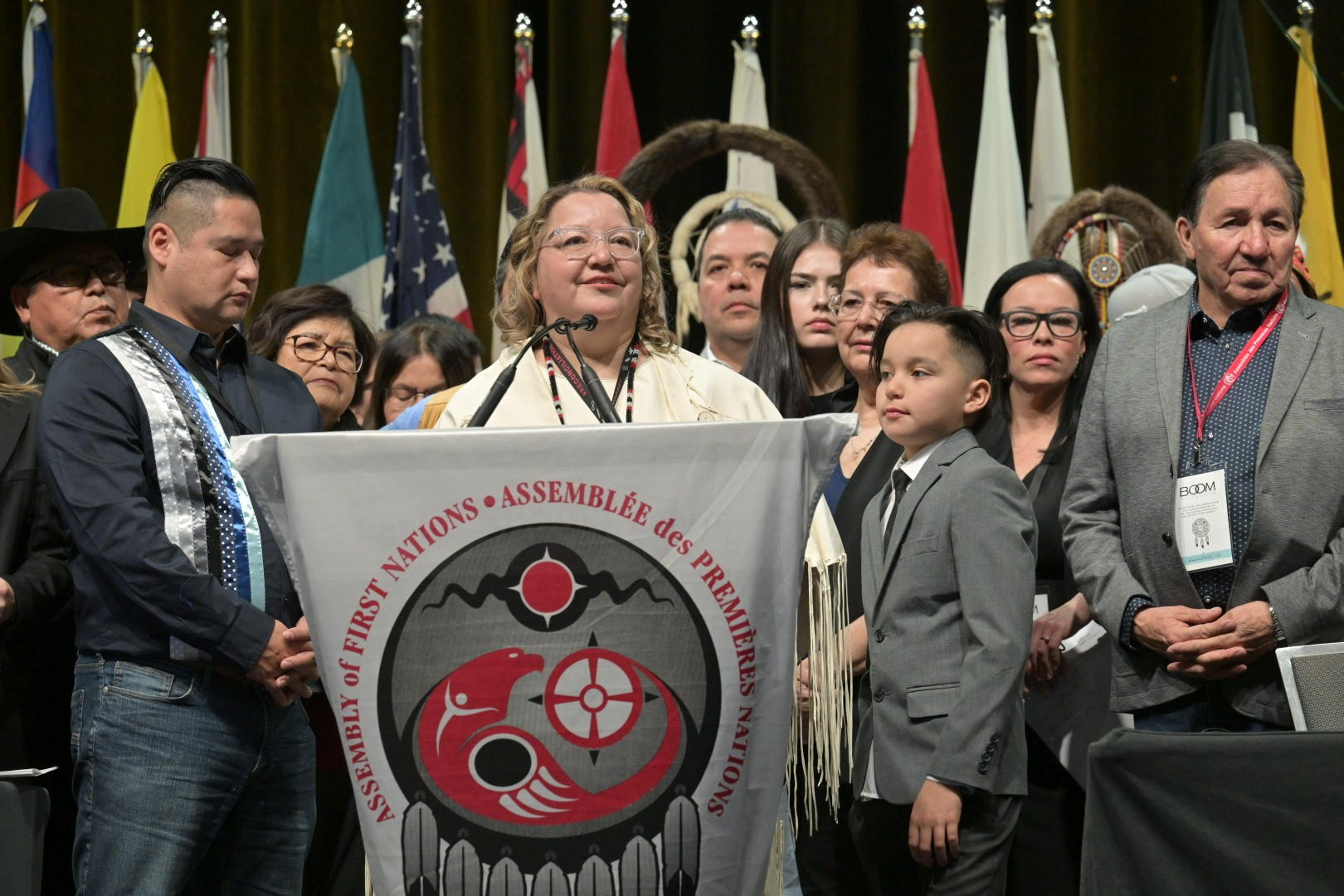
Chief David Monias of the Pimicikamak Cree Nation, said the budget was not fair for First Nations.
“We were told yesterday that there will be good news and there will be bad news — good news for Canada, bad news for the First Nations,” Monias said. “We didn’t cover homelessness, lack of housing, lack of health care, lack of infrastructure, a lack of educational resources for people to continue to get the resources that they need. That didn’t happen. … I wish it would have been better news for us.”
Monias said the limited resources will put communities in competition.
“The money that’s been set aside is, right now, going to be put on a table slightly out of our reach,” Monias said. “And we’re going to fight as First Nations, fight amongst each other for that scrap of money that’s there.”
The Inuit Tapiriit Kanatami issued a statement that responded positively to the new budget on numerous fronts. ITK applauded the $370 million for housing and infrastructure funding in Inuit Nunangat, a shared priority of the Inuit Crown Partnership Committee that builds on housing funding of $84.5 million committed in the 2022 budget. But this year’s budget does not fulfill the call for $75 billion over 35 years for infrastructure in the Inuit Tapiriit Kanatami’s pre-budget submission.
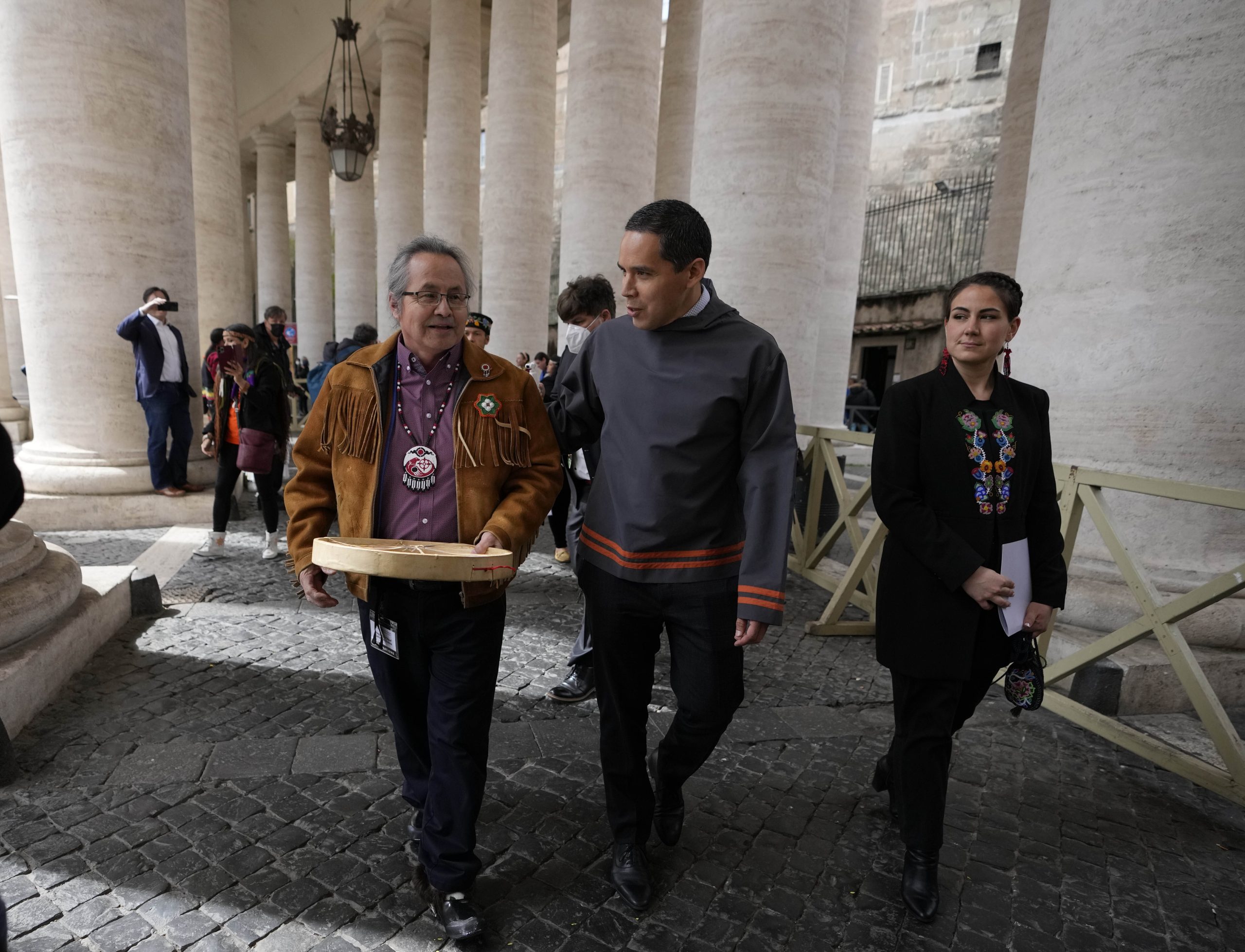
The Inuit have been dealing with an unprecedented tuberculosis crisis, and President Natan Obed was disappointed by the notable absence of funding to eliminate tuberculosis by 2030, a shared commitment of Inuit and the Government of Canada since 2017. The ITK pre-budget submission for 2024 called for $131.6 million over seven years to eliminate tuberculosis.
“ITK works with the federal government through the Inuit Crown Partnership Committee to advance Inuit priorities,” Obed said “We are encouraged to see some of our joint efforts reflected in Budget 2024. But our shared commitment toward TB elimination cannot be achieved without significant resources.”
According to the Public Health Agency of Canada, it is estimated that this highly infectious, debilitating and dangerous disease affects Inuit at a rate 290 times that for the average Canadian-born, non-Indigenous person.
The Métis National Council released a statement saying the government investment in economic development in the Métis Nation is a win for everyone.
“This year’s budget invests in the Métis economy which, in turn, supports Canada’s economy. This is a step in the right direction and takes a positive stride toward economic reconciliation,” said council President Cassidy Caron.
“We are also pleased to see distinction-based funding for our Métis governments in housing and infrastructure,” Caron said. “Although Budget 2024 does not fully address the pressing needs of Métis citizens and governments across the Homeland, including in the areas of health and emergency management, the Métis National Council applauds Canada’s attentiveness to the needs and priorities for which the Métis Nation has been advocating.”
Variety of programs
Economic development is also a key part of this year’s budget with the launch of the Indigenous Loan Guarantee Program, which will offer up to $5 billion in loan guarantees to unlock access to capital for Indigenous communities. The program is aimed at enabling those communities to share in the benefits of natural resource and energy projects in their territories and on their own terms.
The budget also included two specific investments regarding the missing and murdered Indigenous peoples crisis. The government will put $1.3 million to co-develop with Indigenous partners, on a priority first phase, a regional Red Dress Alert system.
The budget also confirms what had been announced earlier this year – that the government is contributing $20 million towards searching the Prairie Green Landfill, in partnership with the Government of Manitoba, Indigenous partners, and impacted families, to bring closure to Indigenous families whose loved ones’ remains are believed to be in the Winnipeg landfill.
Health is another major investment, with nearly $2 billion including $630 million for mental health services and $168 million to address anti-Indigenous racism in the healthcare system.
Support for Indigenous justice programming is also included, to address the overrepresentation of Indigenous people and discrimination within the justice system, including $87 million to support programming and advance the Indigenous Justice Strategy.
It also includes $467 million to address needs with First Nations and Inuit-led policing.
Glaring omission
But tensions remain.
The Grand Chief of Manitoba Cathy Merrick talked about the failure of the federal government to involve First Nations in the budget process.
“Canada’s budgetary process must recognize and honor its treaty obligations to all our people,” Merrick said.
Abram Benedict, grand chief of the Akwesasne Mohawk Nation, said the current investment is not bridging the gap in infrastructure between First Nations and the rest of the country. “We see some new spending in different areas. But we know that the infrastructure in our communities continues to crumble. Overcrowding continues to be a reality for a number of our communities. In our remote communities, it’s even worse. [And] access to clean drinking water continues to be a priority for our communities.”
One or the main issues regarding funding gaps is that the provinces put all funding demands on the federal government when it comes to First Nations, despite funding that is supposed to support all Canadians.
“When we see announcements that don’t include us, there’s no carve-outs for us,” Benedict said. “The province doesn’t always come to the table, at least in Ontario around housing, around clean drinking water.
Benedict said that means the programs that are designed to partner between the federal government and the provincial government don’t include First Nations, Benedict said.
Merrick presented an alternative federal budget that would address long standing shortfalls, and Indigenous leaders noted that Freeland, the finance minister, never spoke about Indigenous peoples or reconciliation during her budget speech.
“It’s alarming because I think that we’ve been working in good faith all these years,” national chief, Woodhouse Nepinak, said when asked about the omission. “We continue to stand here, we continue to try our best to work with governments, work with officials to try and get action.”

Our stories are worth telling. Our stories are worth sharing. Our stories are worth your support. Contribute $5 or $10 today to help ICT carry out its critical mission. Sign up for ICT’s free newsletter.
