
Miles Morrisseau
ICT
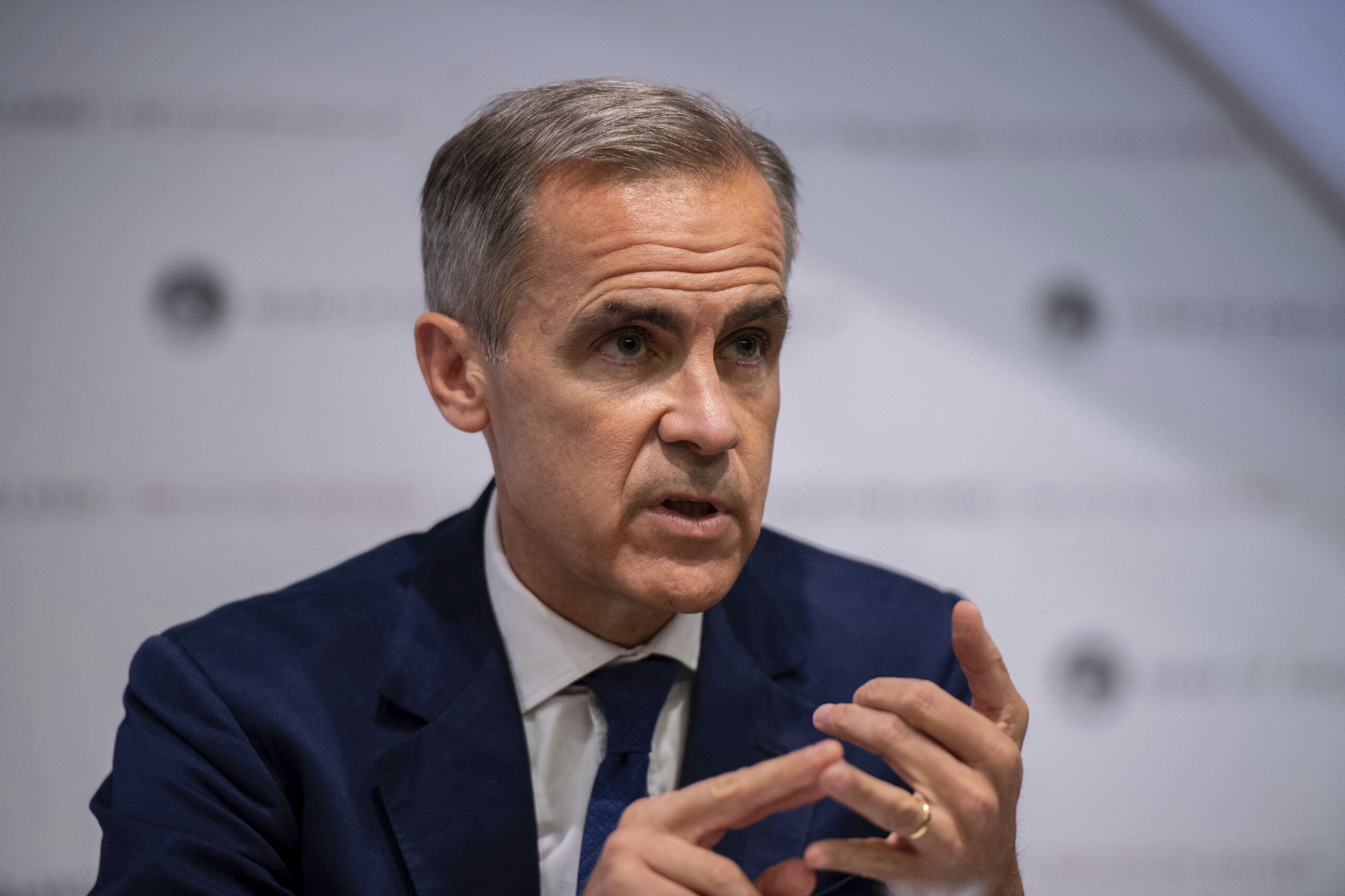
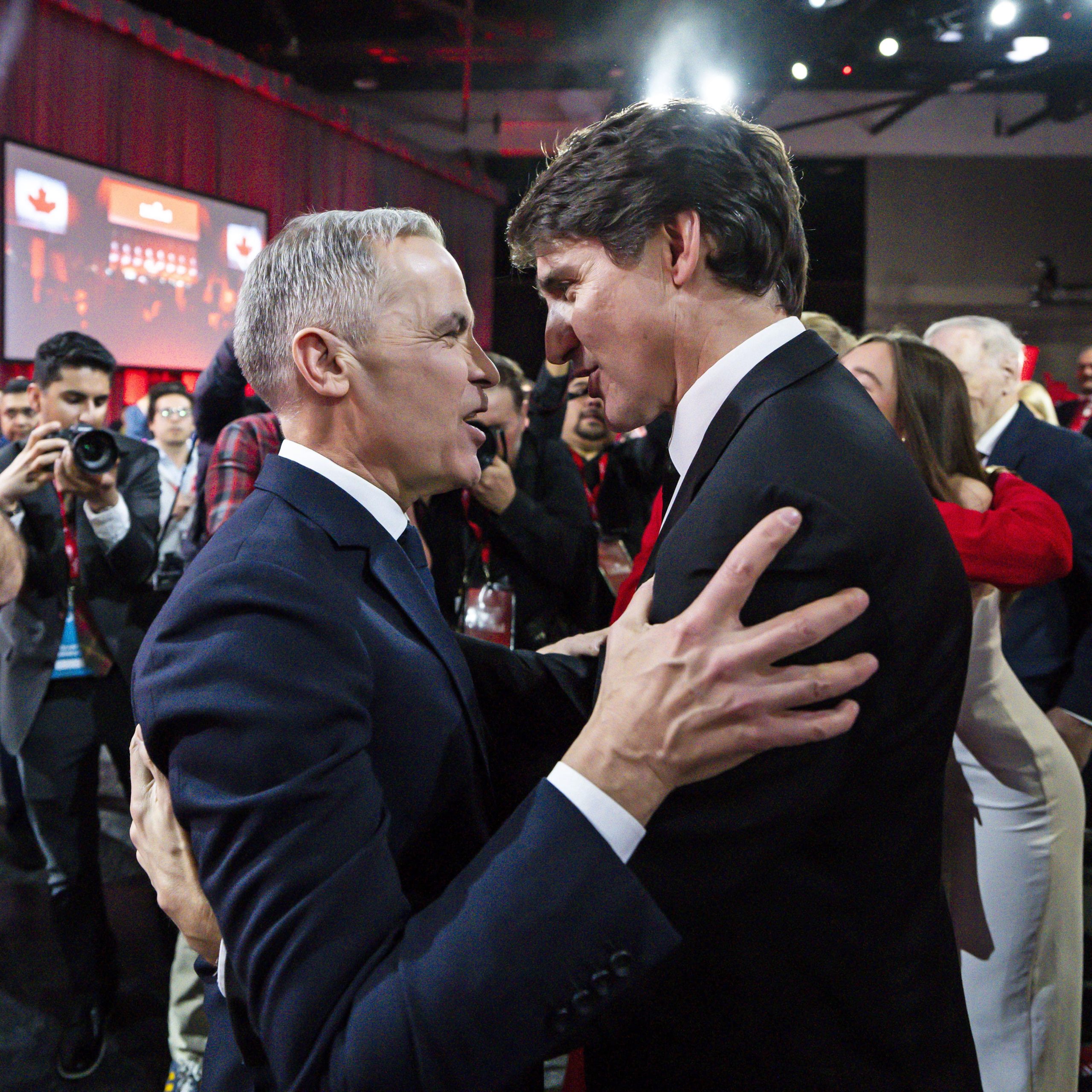
Canada’s new prime minister came out swinging against U.S. President Donald Trump and his tariffs in a victory speech after winning his party’s election on Sunday, March 9, to replace outgoing Prime Minister Justin Trudeau.
Former central banker Mark Carney, 59, won a landslide vote within the governing Liberal Party to step in after Trudeau officially resigns in the next few days. Carney vowed to continue the retaliatory tariffs imposed on the U.S. as a trade war looms.
“Americans should make no mistake,” said Carney, who is considered the prime minister-designate until he is officially sworn into office. “In trade, as in hockey, Canada will win.”
It is one of the peculiarities of the Canadian parliamentary system that a party can choose a ruler for the country until a special election can be held — a move that has happened at least eight times in Canadian history.
SUPPORT INDIGENOUS JOURNALISM. CONTRIBUTE TODAY.
Only registered members of the Liberal Party voted, and Carney was the overwhelming choice with nearly 86 percent of the 151,899 votes cast.
“My government will keep the tariffs on until the Americans show us respect,” Carney said to cheers from the crowd. “We can give ourselves far, far more than Donald Trump can ever take away. … We will do it for the common good. So that everyone benefits.”
Carney made repeated references to a threat from south of the border.
“The Americans want our resources, our water, our land, our country,” he told those assembled later. “Think about it. If they succeed they will destroy our way of life. I know that these are dark days. Dark days brought on by a country we can no longer trust. We are getting over the shock; but we cannot forget the lessons. We have to look after ourselves.”
He was born in a northern community with a large Indigenous population with a dynamic Indigenous culture and history, and he has proposed several programs aimed at helping the First Nations, Métis and Inuit communities.
Carney is taking over an invigorated Liberal Party that was badly trailing in the polls when Trudeau announced in January he would be resigning. The party has bounced back, however, since Trump began a campaign of anti-Canadian rhetoric, threats of tariffs and potential annexation of the entire country as a 51st state.
The Assembly of First Nations offered congratulations to the incoming prime minister.
“We congratulate Mark Carney on his successful campaign to become the leader of the Liberal Party of Canada. We lift up all candidates for putting their names forward to serve at this critically important time for First Nations and Canada,” said National Chief Cindy Woodhouse-Nepinak.
“Our futures are deeply intertwined,” she said. “First Nations leadership will have much to discuss with the new prime minister and all federal party leaders as Canada approaches an imminent federal election.”
Conservative leader Pierre Poilievre took to X to comment on the new selection with a focus on the impending election.
“Liberals are trying to trick Canadians into electing them for a fourth term by replacing Trudeau with his economic advisor, Mark Carney,” posted Poilievre. “It is the same Liberal team that drove up taxes, housing costs, and food prices, while Carney personally profited from moving billions of dollars and thousands of jobs out of Canada to the United States.”
Seeking Indigenous perspectives
Carney set out a plan for the future of the country based on economic growth and investment, including some Indigenous-specific promises in his platform.
Under the category labeled Build Big Projects, Carney’s plan committed to ensuring “that reviews are conducted and Indigenous consultations held within clear, predictable, and competitive timelines.”
Carney also included an economic Pillars for Change.
“My government will embed meaningful reconciliation and partnership with Indigenous communities throughout our economic policy, ensuring that their leadership and perspectives are integral to building a thriving, inclusive economy,” according to the plan.
Also under these proclaimed pillars, Carney said, “We will harness our vast capabilities to become a clean energy superpower, supporting projects that protect the environment while honouring the rights and prosperity of Indigenous peoples.”
Carney also included plans for Indigenous people under the goal of making Canada secure in the north by working closely with Indigenous leadership.
“We will fortify the Arctic against incursions by strengthening our year-round land, air, and sea presence with targeted investments in dual-use infrastructure such as deepwater ports and runways,” according to the plan. “An enhanced Arctic focus will improve our military readiness, drive economic growth, and empower communities.”
The campaign for leadership and the plan for an impending election to deal with the housing crisis includes a commitment to address “the housing needs — and advance the self-determination — of First Nations, Inuit and Métis peoples.”
His plan’s proposals for climate and spending including nothing specific for Indigenous peoples.
Economic elite
Carney was born March 16, 1965, in Fort Smith, Northwest Territory, a remote community built upon a traditional site for camping, harvesting and crossing for Indigenous people along the south side of the Slave River.
It had been travelled by Slavey, Chipeywyan and Dene people, and when the fur trade was in full swing, the Hudson Bay Company established a permanent post and fort. Today, there is a large Métis population in the town, and it serves as home for the offices of the Northwest Territory Métis Nation, the Fort Smith Métis Council and the Thebeca Leadership Council.
Educated at Harvard and Oxford universities, Carney has been among the world’s economic elite for most of his career beginning with Goldman Sachs in 1988, where he worked in a variety of roles for 15 years.
He was the governor of the Bank of Canada for six years, from 2007-2013, and followed that up with seven years as the governor of the Bank of England.
He served as finance advisor to the British Prime Minister from 2020 until he declared his candidacy for the Liberal Leadership. He also quit roles as chair and head of transition investing for Bloomfield Investment Group and as a United Nations Special Envoy on Climate Change and Finance.
He also stepped down from numerous boards including Bloomberg Philanthropies, Stripe, PIMCO and the World Economic Forum, where he had served more than 15 years as a board member.
An uncommon predicament
Becoming prime minister without facing a general election is another significant difference between the Canadian parliamentary system and other democracies. There is much more power in the hands of the incumbent, and there are no term limits.
Trudeau had already been elected three times and served nearly 10 years. His father, Pierre Trudeau, came to power as prime minister as an appointment when he replaced Lester B. Pearson as Liberal Party leader in 1968. The elder Trudeau won four elections and served more than 15 years.
There is no set election day, and the prime minister can call an election at any time, just as Trudeau called a snap election in 2021. This extends to provincial elections and was invoked this year when the Doug Ford government called an early election in Canada’s largest and most populous province of Ontario. Ford was asking for a new mandate so his government could take on Trump and the tariff threat.
It’s unclear how long Carney will hold the title of prime minister-designate before having to face a general election. The next day set for an election is Oct. 20, 2025. Carney will have the power to dissolve the government and call an election without the support of anyone, including his own party.
If he chooses to fulfill the remainder of Trudeau’s mandate, it would be up to the discretion of the opposition parties. There could be a non-confidence motion supported by the majority of the opposition parties led by the Conservatives with votes from the New Democratic Party and the Bloc Quebecois. That would also trigger an election.
It’s not a common predicament for a prime minister. Most recently, in 2003, Paul Martin became prime minister when he replaced Prime Minister Jean Chretien as party leader. In 1993, Kim Campbell became Canada’s first woman prime minister with her appointment to the title. She was elected leader of the Conservative Party when Brian Mulroney stepped down as party leader and prime minister.
In recent history, the prime minister-designate has not fared well in a general election. In 1984, Liberal John Turner lost to Conservative Brian Mulroney, who formed a majority and went on to rule for nearly 10 years.
Cambell would lose to Chretien who would herald in a fifteen year Liberal dynasty. Martin would win a minority victory and then be turfed out less than a year into his mandate with a vote of non-confidence.
This article contains material from The Associated Press.
Our stories are worth telling. Our stories are worth sharing. Our stories are worth your support. Contribute $5 or $10 today to help ICT carry out its critical mission. Sign up for ICT’s free newsletter.
