

Felix Clary
ICT + Tulsa World
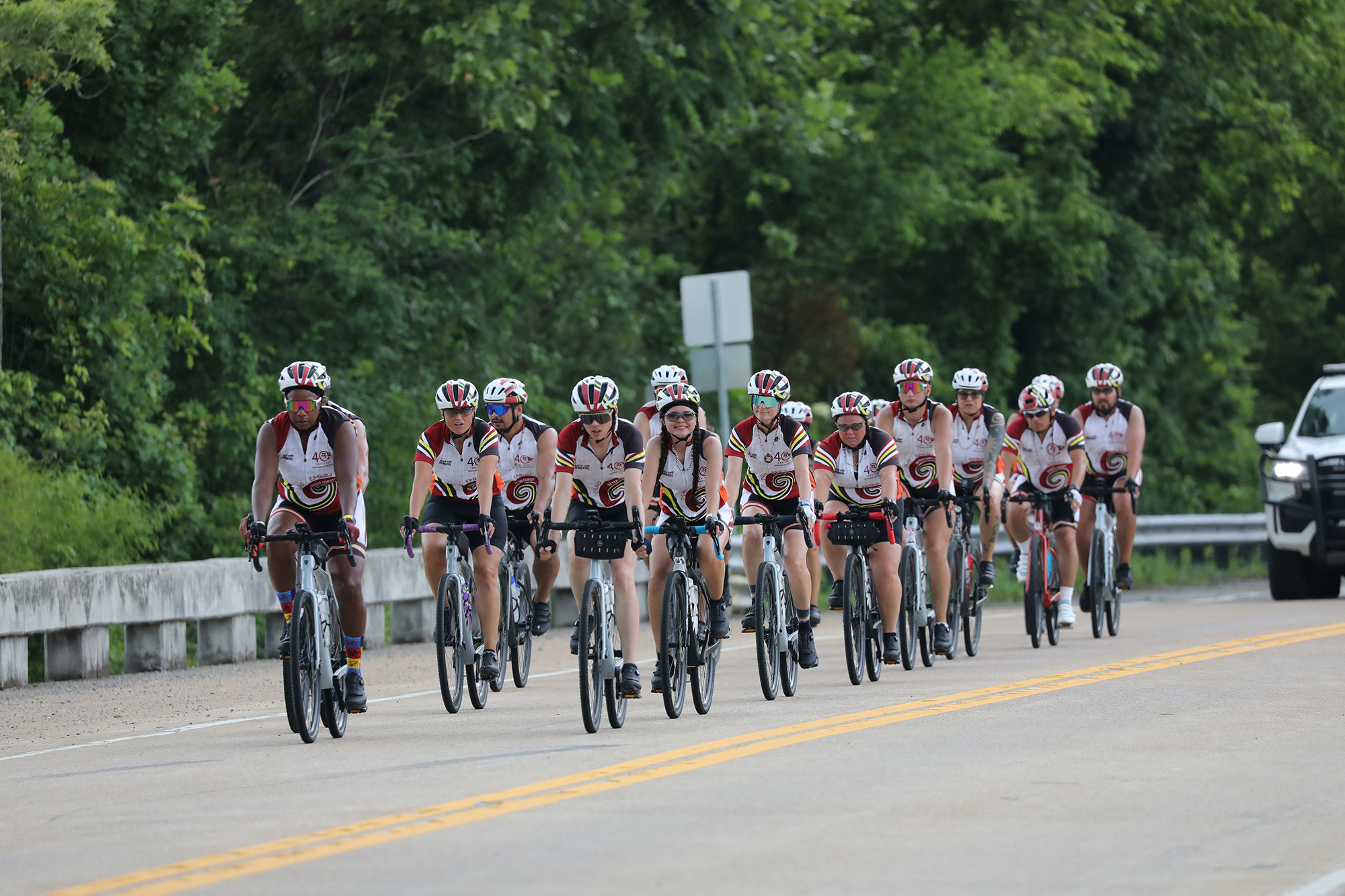
TAHLEQUAH, Okla. — After three weeks on the pavement in the beating sun alternating with rainy weather, the Remember the Removal bike riders were relieved to end their journey Friday morning.
The 950-mile route they took traced the forced removal and Trail of Tears of the Cherokee and Eastern Band of Cherokee ancestors from their homelands to reservations.
Starting in Georgia, the riders crossed through North Carolina, where the Eastern Band of Cherokees were relocated. They continued to Tahlequah, where the Cherokee Nation was historically re-established in Oklahoma. Of the estimated 16,000 who began the march on the Trail of Tears, about 4,000 died due to exposure, starvation and disease.
Tulsan Shawna Baker, 46, was among those participating on the 40th anniversary of the Remember the Removal Bike Ride. As they visited historic sites from the Trail of Tears, Baker told the Tulsa World from the road earlier this month, it made her feel the weight her ancestors carried.
On Friday, Baker told the crowd of 50-plus people at the Cherokee Nation Peace Pavilion that resiliency “seeped through our pores on those hot, long, hilly days in Missouri. It’s a gift from our ancestors that’s been passed down.”
Baker, a member of the LGBTQ+ community who serves as a Cherokee Nation Supreme Court justice, also remarked on the diversity of this year’s cohort.
“We had nine women and eight men. … We are by blood, and we are freedmen,” Baker said. “We are gay and we are straight.”
Baker said her role on the bike ride was to mentor the younger people in the cohort who ranged from 18 to 50 years old.
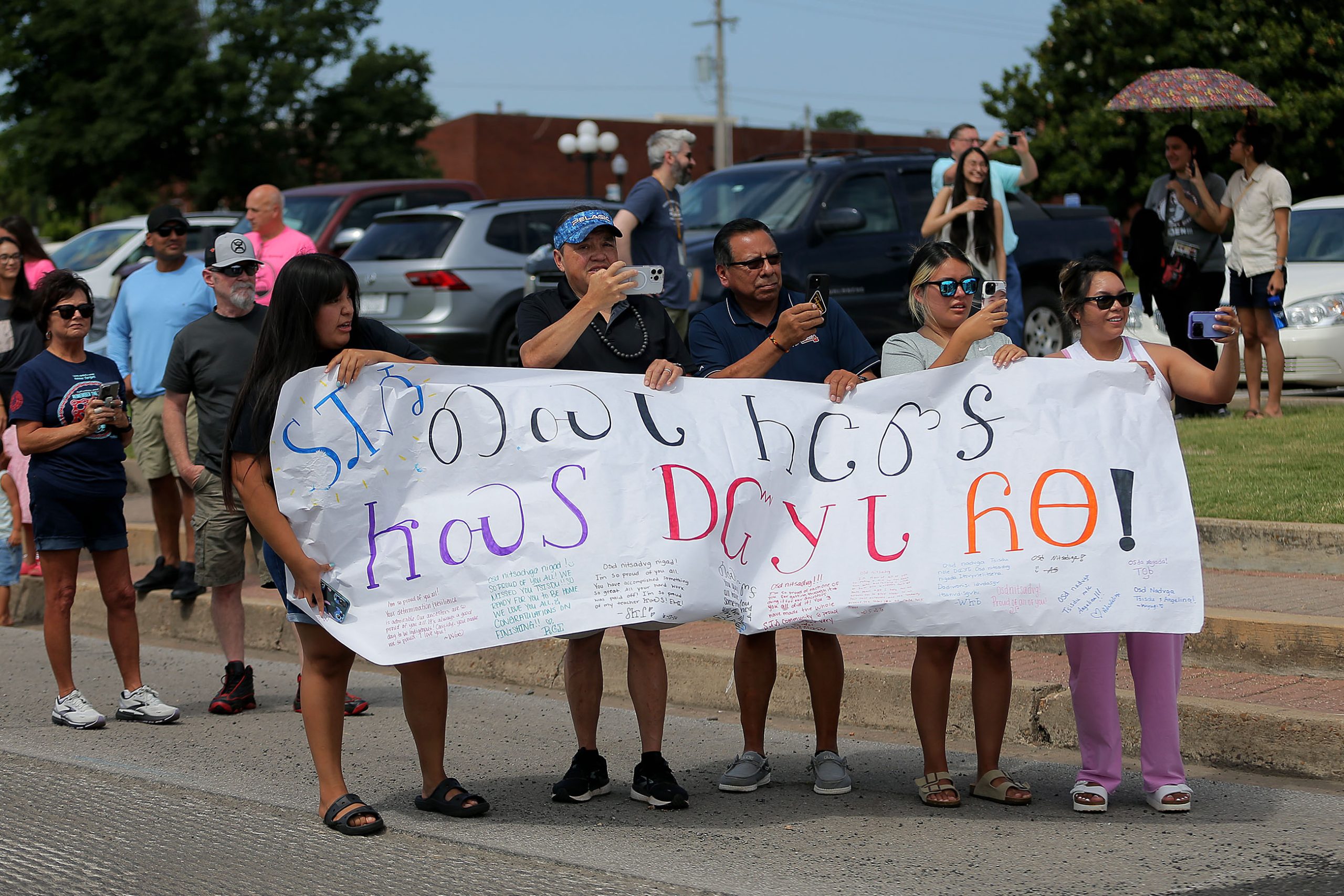
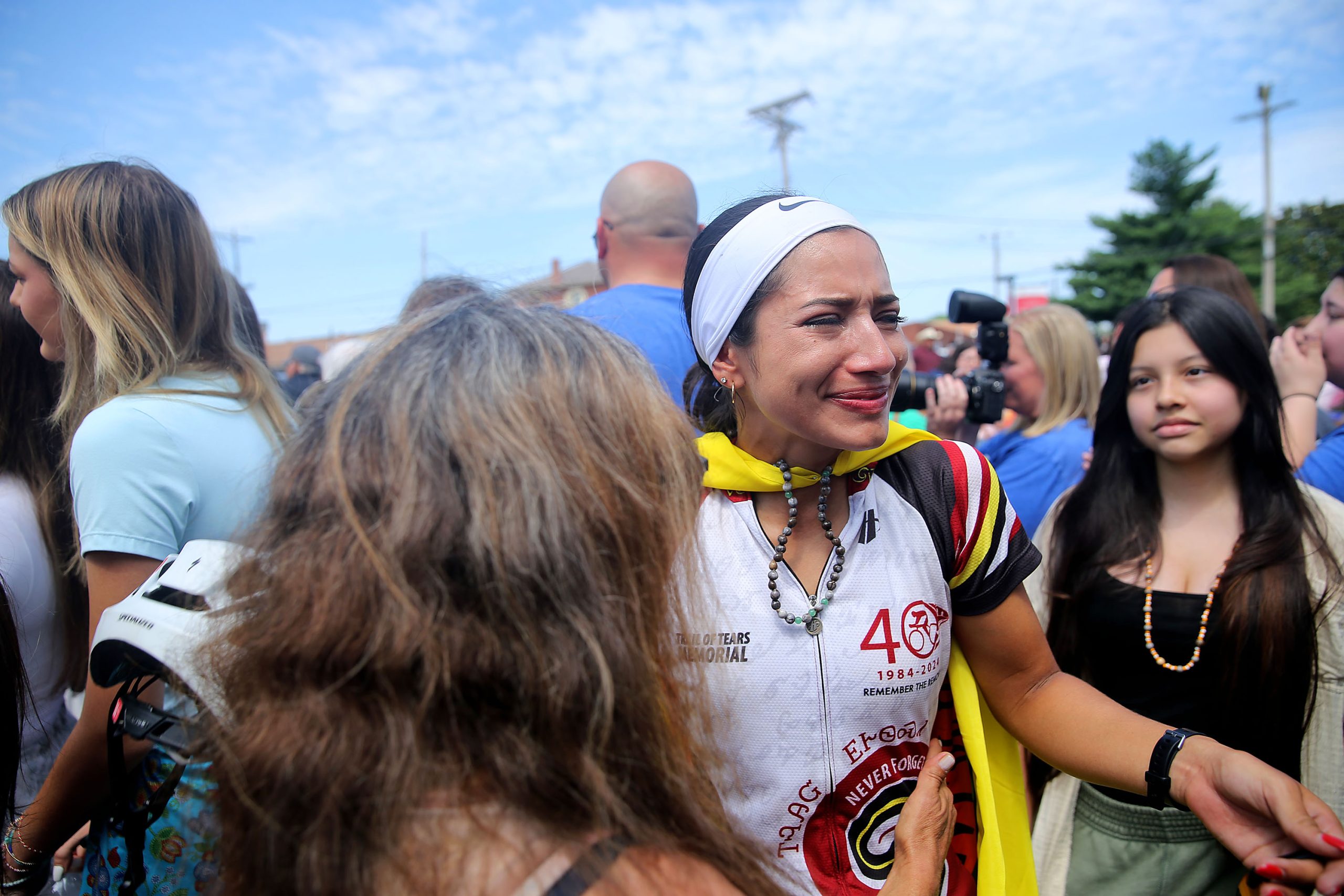
Cyclist Jasmine Goodman, 23, was greeted at the pavilion Friday by her mother, Sabrina Ragsdale, and her husband, Dylan Goodman.
“I feel like this will bring her closer to her heritage,” Ragsdale said.
Dylan Goodman said his wife gained a lot of self-confidence by participating on the weekslong journey.
“She was determined to do this bike ride, and she made it the whole way, and I’m very proud of her,” he said. “I think she’s going to be a different woman.”
Bailey James was at the pavilion early Friday to greet her brother Camerin Fite-James, 24, and mother, Heather Fite, 46, as they arrived back from the ride.
“The waiting process and just knowing that they’re on a really hard journey, both physically and mentally exhausting, does take a toll on me because I am so close to them,” Bailey said. “Feeling that their ancestors are there with them I feel has been very positive and helped them get through it.”
Chief Chuck Hoskin Jr. addressed the crowd Friday to remind them that there were 2,000 Black people also on the Trail of Tears who were enslaved by the Cherokee Nation.
“Our ancestors are not infallible,” he said. “I think it is a measure of progress that, here in 2024, … a descendant of one of those slaves proudly joined the rest of the riders.”
Ashawna Miles of Tahlequah is the first of the Cherokee freedmen descendants to participate in the Remember the Removal Bike Ride.
“My presence here is a powerful statement that will continue to honor the legacy of those who came before us and to keep pushing forward,” she said. “This makes a profound moment in our shared history, a history marked by both suffering and resilience on this ride.”

This story is co-published by the Tulsa World and ICT, a news partnership that covers Indigenous communities in the Oklahoma area.
Our stories are worth telling. Our stories are worth sharing. Our stories are worth your support. Contribute $5 or $10 today to help ICT carry out its critical mission. Sign up for ICT’s free newsletter.

