
Nika Bartoo-Smith
Underscore Native News + ICT
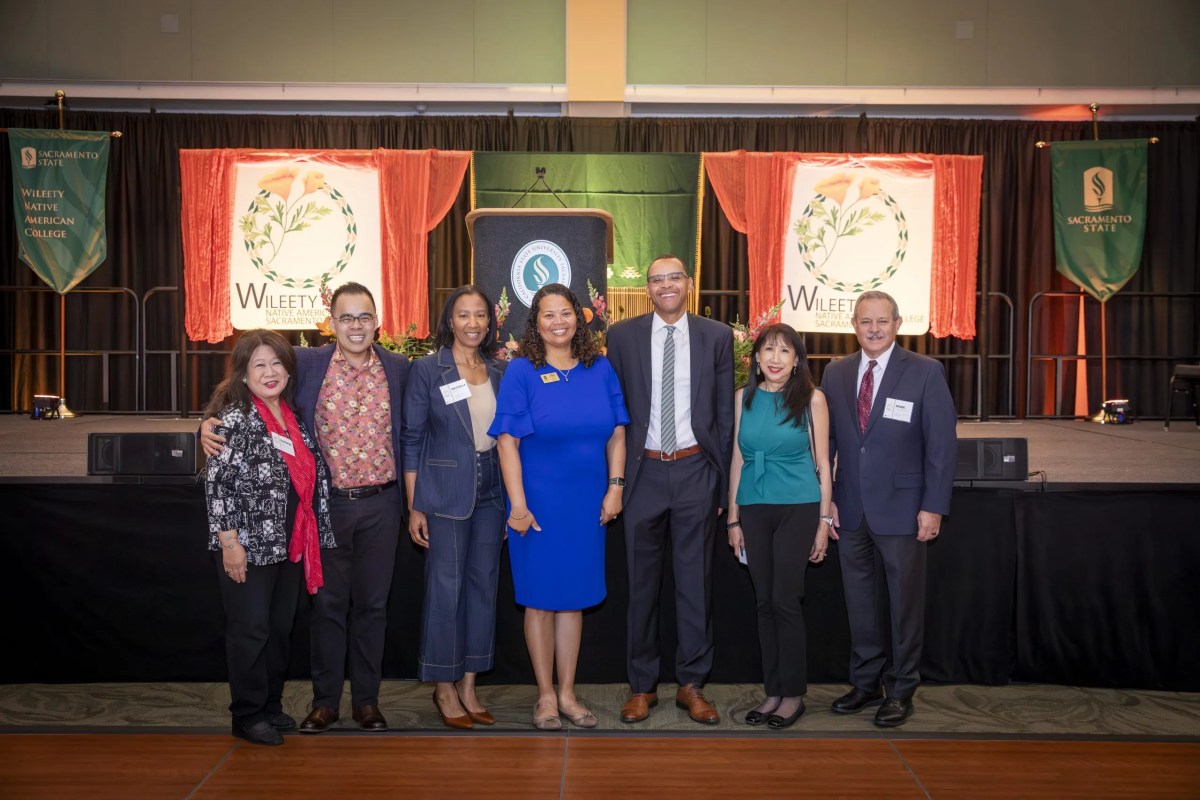
SACRAMENTO, California — Wileety Native American College is likely the first college of its kind to provide an education based in traditional knowledge, focused on tribal leadership and community.
California State University in Sacramento, also known as Sacramento State, opened the opportunity on its campus to students last September.
“[It] was hard getting it up at first, getting a college up and going in one year,” said inaugural dean Annette Reed, Tolowa Dee-ni’ Nation. “But we have a nice space. I love the students.”
The name Wileety (pronounced Wuh-lehh-too) comes from a Miwok word which means “to bloom, to be bright, to shine.”
For faculty, the vision of Wileety is to foster a sense of belonging for Native students and create a community of leaders in an environment centering tribal values and knowledge.
“They didn’t only want to be accepted, they wanted a place where it’s normalized to be a Native student,” said Reed, reflecting on a student assessment she led.
Any student who applies and is accepted to Sacramento State is invited to apply to Wileety where they will minor in Native American studies with an emphasis on tribal leadership, along with any major that the university offers.
The college is located under the Office of the President, which Reed feels is particularly important as Wileety is connecting with sovereign Native nations across the state and beyond on a regular basis.
Building a ‘sense of belonging’
Two years ago Luke Wood, president of Sacramento State, helped launch the Sacramento State Black Honors College. Just a year later, Wileety Native American College opened its doors.
The two colleges came about following a campus survey in 2018 that found that the two student groups on campus that felt the least welcomed and had the lowest school retention rates were Black and Native American students, according to Reed.
Functioning like a school’s honor college, Wileety is its own college on campus with a dedicated space, faculty and specialized curriculum. With 34 students in the initial cohort, the goal is to continue that and add another 35 to 40 students each year.
Wood approached Reed about a year before Wileety opened, asking her to help get the college up and running. At the time Reed, who had been teaching ethnic studies and Native American studies at Sacramento State for decades, was preparing for early retirement. But hearing about plans for a Native American college on campus, she knew she had to stick around.
“To be honest, for years, I had been wanting to see resources and for students to have a place where they felt comfortable being. That they felt a sense of belonging,” Reed said.
When Reed began her own higher education journey in the late 1970s, one of the first classes she took at San Francisco City College was a Native American history class. She remembers being shocked because none of her education up until that point had touched much on Native history.
Realizing it was an option, Reed dove into Native American studies in which she received her bachelor’s degree from University of California at Berkeley. She went on to earn a secondary teaching credential from St. Mary’s College, a masters in U.S. history from University of California at Davis and a Ph.D. in ethnic studies from the University of California at Berkeley.
As a Native woman, she faced obstacles all along the way, including instances of racism from her own professors. Though at times she almost didn’t continue, she vividly remembers a conversation with her late husband about why she wanted to keep going.
“I wanted to start writing my own tribal history,” Reed told him.
Reed, who has worked at Sacramento State for over two decades, has long been known on campus as the person to find if you are a Native student, according to Wood.
Now a respected elder on campus, Reed has created a sense of family at Wileety.
“Wileety feels like a home away from home,” said Damien Scott, a citizen of the Yurok Tribe and a Karuk Tribe and Tolowa Dee-ni’ Nation descendant.
Scott, now a fourth year biology major and part of the Wileety initial cohort, described the supportiveness of Reed who feels like an honorary grandmother to him.
Creating a community on campus is a huge priority at Wileety. As a small cohort, students spend a lot of time together both in classes and in common spaces. Students are also each paired with a faculty mentor.
“When you move away from home, it can be really, really hard when you aren’t connected to community, and you’re not connected to your people,” Breanna Reyes, Eastern Band Cherokee and Rosebud Sioux, told Underscore Native News + ICT. Reyes is heading into her fourth year this fall, majoring in family consumer science on a teaching track. She was part of Wileety’s inaugural cohort.
“And even though there’s only a handful of people that are from the same tribes it’s still sort of that connection. It’s like, ‘oh, you kind of understand what this feels like.’ So it makes it easier to connect, and it makes it a lot less lonely,” she continued.
Reyes is also a parent of a toddler. Part of her initial decision to transfer to Sacramento State was because of the school’s daycare.
At Wileety, Reyes said she feels incredibly supported as a student parent. She described Reed as a sort of grandmother figure to her daughter, often bringing her small gifts.
“I’ve never felt like my kid makes me looked at any different, or like I’m missing out on things, because she’s always welcome too,” Reyes said. “It’s just really good to feel so welcome as a student parent.”
This story is co-published by Underscore Native News and ICT, a news partnership that covers Indigenous communities in the Pacific Northwest.

