Richard Arlin Walker
Special to ICT
The city of San Antonio historically sees its hottest days of summer between late July and mid-August, when the daily high temperatures average 97 degrees.
But a span of triple-digit temperatures had already begun on June 23, and Alesia Garlock was worried it would only get worse for the sacred nesting birds and heritage trees under threat from the city.
“San Antonio is a heat island,” she told ICT on the first of the 100 degree-plus days. “The city is going to remove 48 trees at Brackenridge Park and plans on removing at least 50 more. Without those trees, it’s going to only get hotter there. And what’s a park without trees?”
Read more:
—Indigenous advocates say ‘enough’ at sacred Yanaguana site
Garlock, who is of Indigenous Mexican heritage, is among more than 1,000 San Antonians and at least three tribes who have been fighting for more than a year to save heritage trees, birds and perhaps burial sites in an area known as Yanaguana, considered the Coahuiltecan creation site.
Yanaguana is near the headwaters of the San Antonio River in the city’s Brackenridge Park, which is home to the San Antonio Zoo, a museum, gardens, an outdoor theater, and several sports fields, playgrounds and trails.
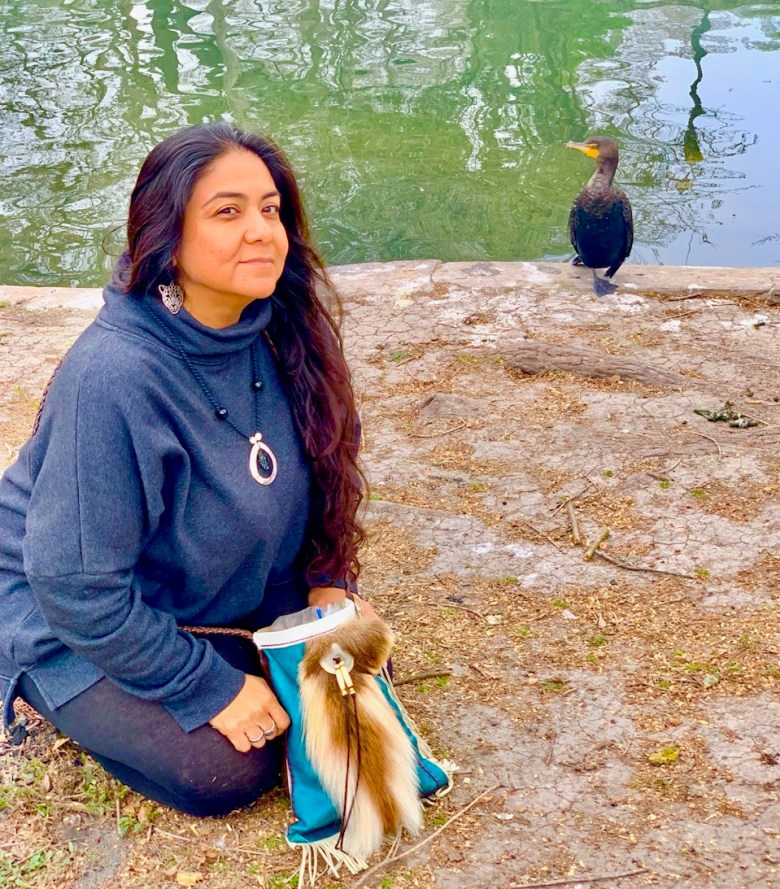
Garlock and Matilde Torres, Otomi, said the city’s plans have displaced nesting birds that are protected by the Migratory Bird Treaty and pose a threat to Indigenous cultural resources. The city also proposes restoring structures installed during the Spanish colonial era and, later, by developers of a then-segregated swimming beach.
More than 1,000 San Antonians have signed a petition opposing the removal of the trees. Among those submitting letters in opposition to the city’s plans are the Comanche Nation, based in Lawton, Oklahoma; the Lipan Apache Tribe, based in McAllen, Texas; and the Lipan Apache Band, based in Brackettville, Texas.
San Antonio, the seventh most-populous city in the United States, is home to an estimated 30,000 Indigenous peoples, representing 1.4 percent of the south-central Texas city’s population, according to the U.S. Census.
An answer could come on July 10. The city’s historic preservation officer and the Texas Historical Commission have approved permits allowing for the trees’ removal, and the San Antonio Zoning Board of Adjustment will consider an appeal of the local decision when it meets on July 10, according to the zoning office.
Ancestral grounds
The park is managed by the Brackenridge Park Conservancy under an agreement with the city Parks and Recreation Department, which joined with the city’s Department of Public Works in recommending removal of the trees, saying the trees were either unhealthy or the root systems jeopardized the historic structures.
The city also claims droppings from nesting migratory birds are causing a public health and safety issue.
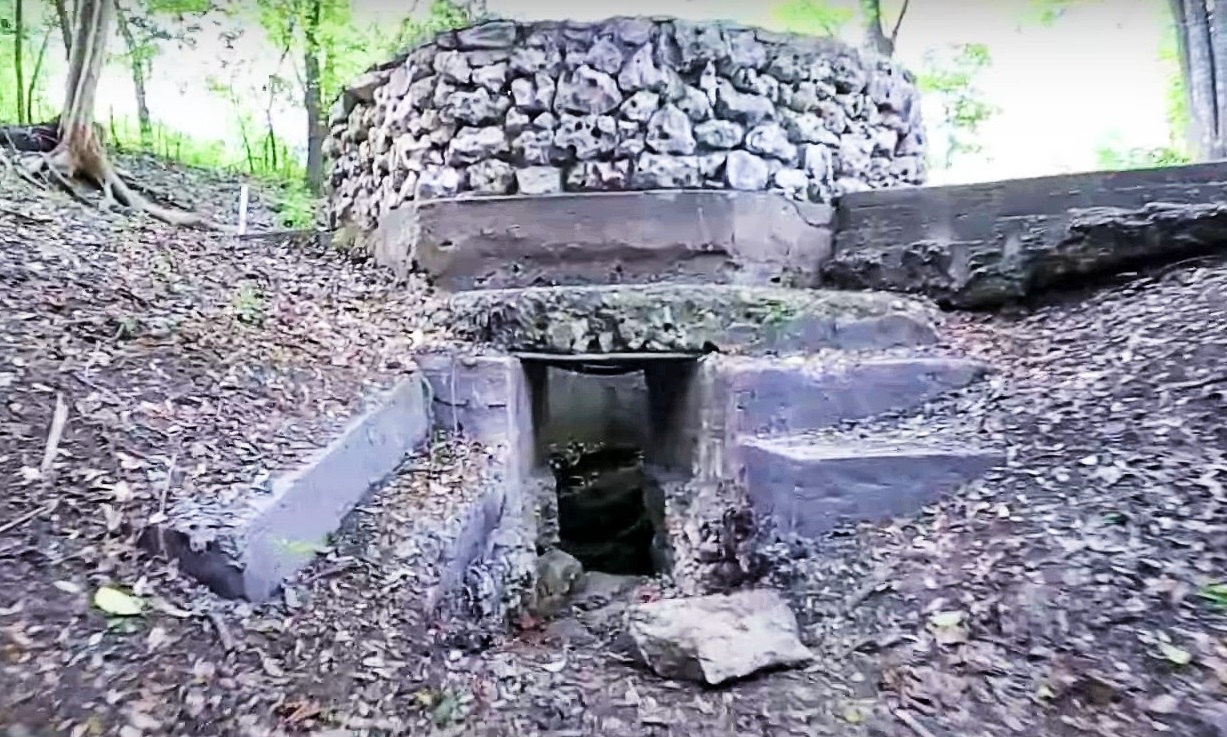
The trees’ removal will clear the way for voter-funded repair of a Spanish-built canal dating to 1719; a waterworks pump house built in 1878; limestone walls at Lambert Beach, developed in 1915; and an outdoor sculpture garden that first opened in 1923.
At least one-third of Brackenridge Park’s 343 acres is defined as forested, or having an average of 60 trees per acre, according to Miranda Garrison, architectural historian for the city Public Works Department.
“This project will affect 1.83 acres,” Garrison wrote in a report to the Texas Historical Commission.
But that doesn’t mitigate concerns of those who say the trees must be spared.
Garlock told ICT that, in addition to displacing migratory birds, the removal of the trees could disturb ancestral burials. Archeological work conducted in 2011 by the University of Texas at San Antonio’s Center for Archaeological Research revealed cultural materials – including cooking hearths, stone tools and projectile points – ranging from 3,000 to 10,500 years old, according to an interpretive panel at the park.
Richard Reed, an anthropology and sociology professor at Trinity University in San Antonio, told the city Historic Design and Review Commission on Feb. 16, 2022 that removal of trees that shade the river will further degrade water quality.
“What I see is a reduction in canopy that is going to increase the temperature of the water and decrease the oxygen in that area,” Reed said. “It’s really important to protect the canopy as a way of keeping the water cool and protecting that [stretch of the river].”
Gary Perez, a Coahuiltecan cultural educator, told ICT in September 2022 that the work proposed at Brackenridge Park is not culturally sound nor environmentally responsible.
Indigenous people know this area as Yanaguana, the Coahuiltecan creation site. The San Antonio River originates less than a mile northwest of the park at the Blue Hole, a spring at what is now a nature preserve owned by a Catholic order.
From here, the river grows as it picks up other streams on its 242-mile southeast course to the Gulf of Mexico. Native American Church adherents visit Yanaguana during their peyote-harvesting pilgrimage.
SUPPORT INDIGENOUS JOURNALISM. CONTRIBUTE TODAY.
The Brackenridge Park Conservancy acknowledges that what is now the park “has been an oasis for humans for 12,000 years,” the earliest of which were “Indigenous people who found water, food and shelter here.”
But the water that drew Indigenous peoples, Spanish settlers and others to the site has been depleted by unchecked growth, Perez said.
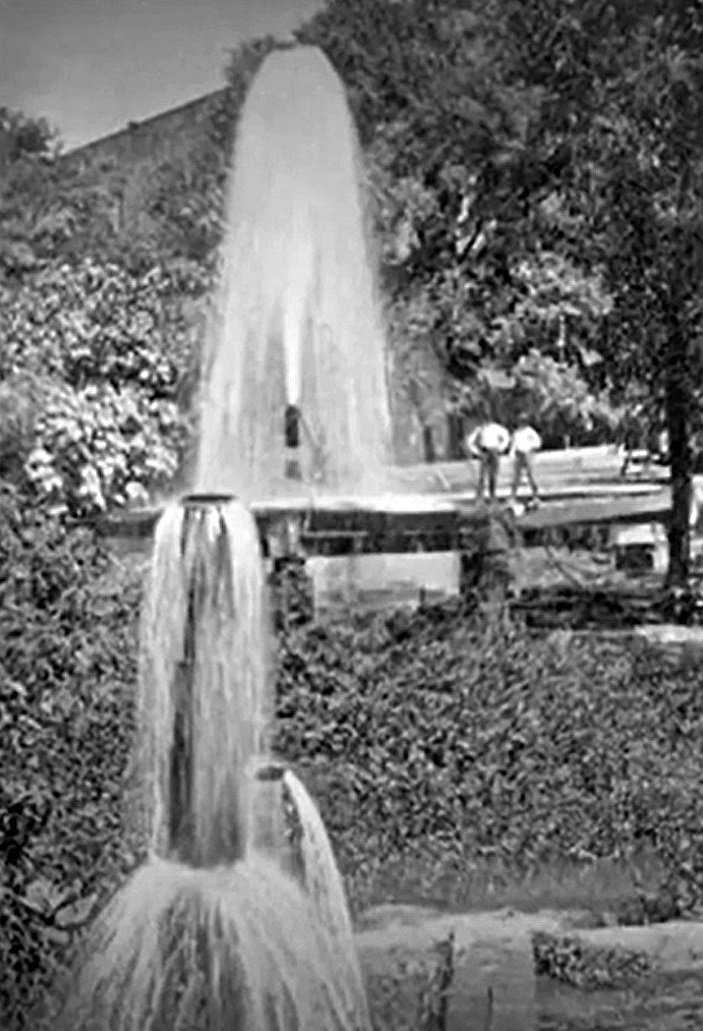
San Antonio’s population was 37,673 in 1890, when water still gushed 20 feet into the air from the Blue Hole, inspiring the development of swimming beaches and golf courses, and driving ambitious plans for the city. The city’s population grew to 53,321 in 1900, 408,442 in 1950, and more than 1.1 million in 2000.
The estimated population in 2022 was nearly 1.5 million, according to the U.S. Census.
Today, the aquifer no longer bursts forth from the Blue Hole. Water flows from the spring after heavy rain, but the geyser that once left New York Central Park architect Frederick Law Olmsted awestruck is no more, Perez said.

The city returns recycled water to the river downstream in the park, but swimming is no longer allowed there and a landscape architect’s report states that the upper course of the San Antonio River and the riparian corridor, or vegetation, are “no longer healthy or accessible.”
Indigenous advocates say they believe the conservancy should tell the story of the area’s First Peoples, rather than restore structures associated with colonization and segregation. Features from the Spanish colonial era had to do with the displacement of Indigenous peoples, Garlock said, and Lambert Beach was originally a Whites-only swimming area.
“Why would we want to bring back features that had to do with displacement and segregation?” she said.
Meanwhile, they say, let the river and its banks be restored to their natural state.
Tourism over nature
Indigenous advocates point out several concerns related to the trees’ removal.
Several of the trees — cypresses, elms, oaks and pecans— that are proposed to be removed are nesting sites for egrets, herons and cormorants, all of which are protected by the Migratory Bird Treaty.
The treaty was signed by the United States and Canada in 1916, and Mexico signed in 1936. Japan signed in 1972 and Russia in 1976. The treaty is intended to ensure the sustainability of populations of all protected migratory bird species.
Eric L. Kershner, chief of the U.S. Fish & Wildlife’s Division of Bird Conservation, Permits and Regulations, told ICT in 2022 story that the city would not need his division’s authorization to remove trees, even those with nests in them, “provided the nest is not in use — meaning no viable eggs or live chicks are present — when the tree is removed and that no person retains possession of the nest.”
But Garlock and Torres told the City Council on March 16 that workers from city parks and the U.S. Department of Agriculture Wildlife Services were firing explosive devices and banging two-by-fours together to drive migratory birds from their nests; they documented the harassment in a film they produced with local artist Danial Armstrong.
Armstrong told the council of finding feathers and eggshells on the ground.
Rose Hill, who campaigned for voter approval of the bond, said the city should follow through on its commitments to preserve the park’s historic features — even if that means some trees should go. She noted that the playground was closed because of droppings from nesting birds.
Garlock countered that bird droppings are not as hazardous as the pesticides being sprayed by parks employees; she said pesticide exposure made her ill and she had to seek medical attention.
And Garlock is concerned that the relationship between at least one decision-maker and the park is too cozy. Texas Historical Commission Chairman John L. Nau III, who participated in the commission’s unanimous vote April 11 in favor of permits for the tree removal, is first vice president of the San Antonio Zoo board of directors.
Nau did not return a June 28 message left for him at his office at Silver Eagle Beverages, of which he is chairman and chief executive. But historical commission spokesman Chris Florance told ICT on June 29: “John Nau III is on the San Antonio Zoo Board. The permit requestor was the City of San Antonio, so there is no conflict of interest.”
There is a lot at stake at the July 10 meeting of the city’s Zoning Board of Adjustment, but Indigenous advocates near and far insist they are not giving up.
Mary Weahkee, Santa Clara Pueblo/Comanche, is an archeologist with the New Mexico Department of Cultural Affairs.
“These birds that we are speaking of are sacred animals and [their feathers are] used in a lot of sacred ceremonies,” Weahkee said in the film co-produced by Garlock. “They were used by my Pueblo people, by my Comanche people, by the Azteca people — everybody who came up that river, that Yanaguana, to make those sacred journeys to these springs. Someday, are you going to be the one that causes its destruction because you lack a wanting to learn about these things?”
She added, “These birds that [the city is] deciding to take out because they feel that they aren’t sacred, that they weren’t here, that they’re not an Indigenous species, these people are lying. These birds have always lived here, before humans came to this place. What gives us the right to take their lives from them?”

Our stories are worth telling. Our stories are worth sharing. Our stories are worth your support. Contribute $5 or $10 today to help ICT carry out its critical mission. Sign up for ICT’s free newsletter.