

Richard Arlin Walker
Special to ICT
Living in perpetual uncertainty.
Intermittent jaw-dropping policy changes.
Chaos and collateral damage.
That’s how some tribal nation leaders are describing life in the second Trump presidency – after only three weeks.
“Hunker down and try to do the best you can to keep the ship on an even keel,” said W. Ron Allen, chairman of the Jamestown S’Klallam Tribe on the Northwest’s Olympic Peninsula, “because Trump’s agenda is chaos and rock-the-ship-like-crazy.”
Here’s a sample of actions taken by the White House that relate directly to Indian Country:
* Trump signed an executive order directing the Interior secretary to submit a plan to assist the Lumbee Tribe in obtaining full federal recognition “through legislation or other available mechanisms.” But he also signed an executive order renaming Alaska’s Mount Denali “Mount McKinley,” in honor of the assassinated 25th U.S. president who, in Trump’s words, “heroically led our Nation to victory in the Spanish-American War” and “championed tariffs to protect U.S. manufacturing, boost domestic production, and drive U.S. industrialization and global reach to new heights.” William McKinley also annexed the Kingdom of Hawai’i and made the lands of the Five Civilized Tribes available for non-Native settlement. (And speaking of problematic former presidents, Trump rehung the portrait of President Andrew Jackson, of Indian Removal Act and Trail of Tears infamy, in the Oval Office.)
* “We’ll forge a society that is color-blind and merit-based,” Trump said in his inaugural address. He then rescinded his predecessor Joe Biden’s executive orders advancing equity, justice and economic opportunity for Black Americans, Hispanics, Native Americans and other historically marginalized peoples – orders also known as diversity, equity and inclusion that are meant to ensure consideration without discrimination. Trump also rescinded an executive order signed in 1965 by President Lyndon B. Johnson that established non-discriminatory hiring practices for the federal government and its contractors. While tribes initially feared Trump’s DEI ban might impact tribal funds, the Department of the Interior issued an order Jan. 30 exempting from the DEI ban tribal nations and Native Hawaiians.
* Trump ordered the deportation of people who are in the U.S. illegally, with the initial target being those who have criminal backgrounds. Trump has widespread public support for that. But Immigration and Customs Enforcement agents have also been rounding up undocumented farm workers and asylum seekers. And nine members of Congress wrote to Trump that they’ve received reports of ICE agents “stopping, detaining and harassing Native Americans in multiple states.” They wrote: “Stopping people because of what they look like – with dark skin, Asian, Latino or Native American characteristics – is never acceptable. We urge you to immediately direct your agents to stop harassing Native Americans and violating Tribal sovereignty.”
The members of Congress said Trump set the tone for racial profiling in a Jan. 22 interview with Sean Hannity on Fox News, in which he said you can tell who’s an illegal alien by how they look. “I won’t get into it, but you can look at them and you can say, ‘Could be trouble, could be trouble.’”
* Trump froze federal grants and loans so his administration, he said, could “quickly look at the scams, dishonesty, waste and abuse that’s taken place in our government for too long.” But tribal nation leaders and Native rights organizations say the freeze paused funding to tribal nations for public safety, healthcare, education, infrastructure and basic needs. To date, two federal judges have blocked the freeze.
There’s more – much more than can be covered in one news story (Trump proposed the displacement of the Palestinian people from Gaza since this writing began, and Elon Musk was given access to the Treasury’s payment system).
Ho-Chunk Nation President Jon Greendeer said he predicts the next four years will be “a rough ride for the poor and underrepresented.” He wrote on social media that he will work with his colleagues “to build or strengthen alliances to maintain the quality of care and services to our members and their families” and will “hold our ground as we have long before this new fury against humankind came to be.”
Feds can’t ignore treaty obligations
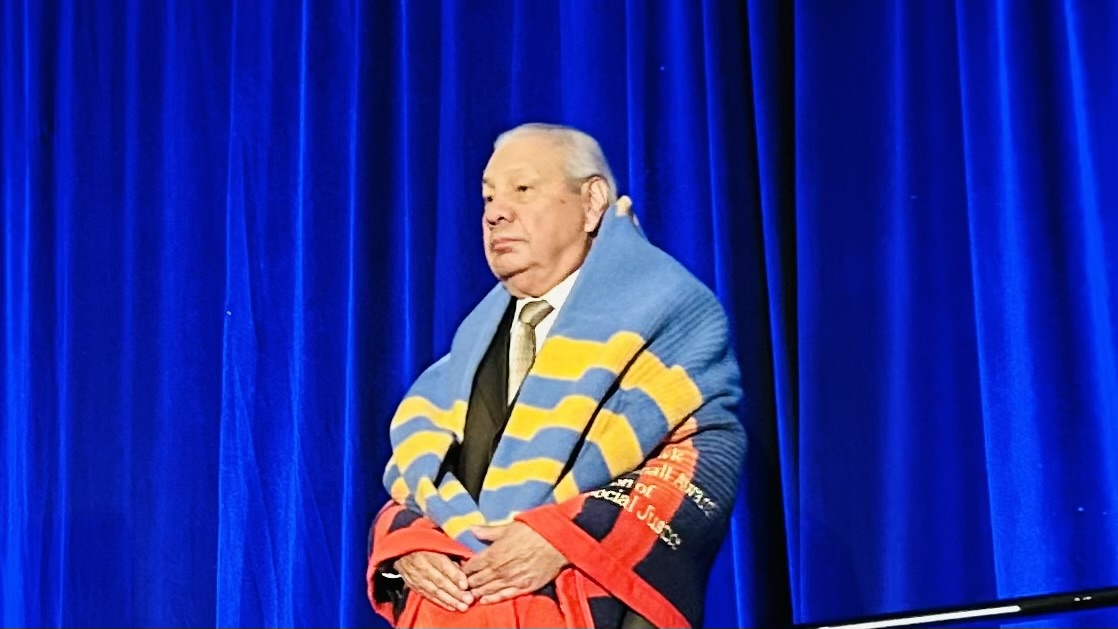
Potentially at stake for tribal nations: funding for clean water initiatives, educational programs, broadband internet access, transportation projects, law enforcement, and health care. Congress approved the funding – $32.6 billion – in 2024, the U.S. Government Accounting Office reports.
Native American Rights Fund Executive Director John Echohawk, Pawnee, wrote on his organization’s website that the United States has a government-to-government obligation to tribal nations and has a responsibility to “protect tribal treaty rights, lands, assets, and resources.”
“Withholding federal funding without consultation is a step in the wrong direction,” Echohawk wrote, adding that NARF is investigating whether it will take legal action.
“Ultimately, the executive branch is tasked with distributing taxpayer funds in a timely and efficient way based on the priorities identified by legislators,” he wrote. “Through Congress, we, the people, have made decisions about how we want our money spent. To withhold our money from us without reason or warning is illegal and immoral.”
Trump’s executive order freezing federal grants and loans, followed by court orders halting the order from taking effect, was dizzying for Allen, the Jamestown S’Klallam chairman, who was planning an environmental project when he learned federal grant funding was questionable. Despite court orders halting the funding freeze, several agencies and nonprofits have said they haven’t been able to access budgeted funds, USA Today and the New York Times separately reported.
Allen’s proposed project: Building a new fisheries lab away from a coastal area that is increasingly inundated by high tides. The project is related to climate change, an issue the Trump administration denies exists. “I’ve got people who work in the lab and if it’s an extreme high tide, the water is in their lab,” Allen said. “Extreme high tides are a new phenomenon. Ten or 20 or 30 years ago, it was never a problem. Now it’s a problem.”
Several coastal tribal nations have climate adaptation projects that are underway, including moving schools and community buildings to higher ground and protecting cultural and natural resources. “These are already approved projects and everybody’s moving forward on them, so the freeze is very troubling for us,” Allen said.
Native Americans detained as possible illegal aliens
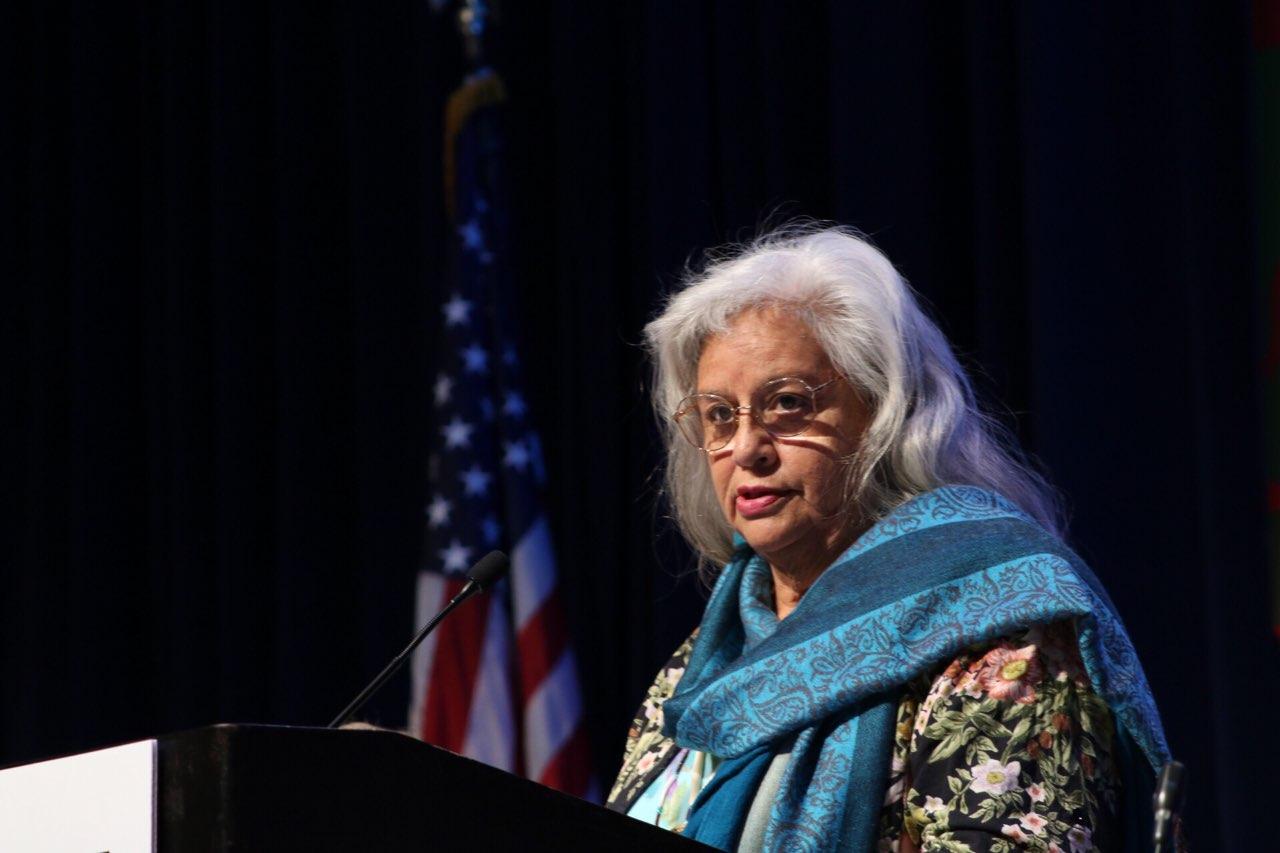
Juana Majel-Dixon is policy director and a tribal council member of the Pauma Band of Luiseño Indians, headquartered 63 miles north of the U.S.-Mexico border. Like the peoples of the other 17 federally recognized tribal nations in San Diego County, the Pauma have relatives among the Indigenous peoples south of the border.
“Our tribal IDs are being questioned [at the border],” Majel-Dixon said. “Or they’re pulling our people over and taking them to Immigration. … We’ve told everybody not to go anywhere near the border right now because they’re not acknowledging our tribal IDs.”
Other tribal nations have issued advisories to their citizens as well.
The Southern Ute Indian Tribe in Ignacio, Colorado, recommended on its website that its tribal citizens ensure their state and tribal identifications are up to date; that they always carry their tribal ID and at least one other form of identification, such as a driver’s license; that, if detained, they ask the individual stopping them to show ICE enforcement officer ID; to call 911 or local law enforcement if necessary; and to keep contact information readily available so they can notify friends and family of their location.
Mescalero Apache Tribe President Thora Walsh-Padilla wrote in a letter to her citizens on Jan. 23 that a tribal family had been questioned in a public place by ICE agents, one of whom questioned a family member in Spanish and asked to see a passport. The tribal citizen responded that he spoke only English and presented a tribal ID and New Mexico driver’s license. The agents then left, Walsh-Padilla reported.
Navajo Nation President Buu Nygren reported on Jan. 24 that his office had received reports of his citizens having “negative, and sometimes traumatizing, experiences with federal agents targeting undocumented immigrants in the Southwest.”
The Navajo Nation government established a hotline for tips and complaints; is making counselors available for Navajo citizens emotionally and mentally affected by negative encounters with immigration agents; and is communicating with the U.S. Department of Homeland Security, ICE, Arizona Gov. Katie Hobbs, New Mexico Gov. Michelle Lujan Grisham, state offices, and members of the U.S. Senate and House.
“It’s best to be prepared, and we are advising Navajo citizens to carry state-issued identification, such as a driver’s license or other picture identification if available,” Nygren wrote. “Having your state ID is crucial, and if you possess a CIB (Certificate of Indian Blood), it can provide an additional layer of reassurance. If you do run into issues with federal immigration officials, reach out to our office through Operation Rainbow Bridge [855-HELP-ORB, www.operationrainbowbridge.com, info@operationrainbowbridge.com].”
To some, Trump’s actions come as no surprise
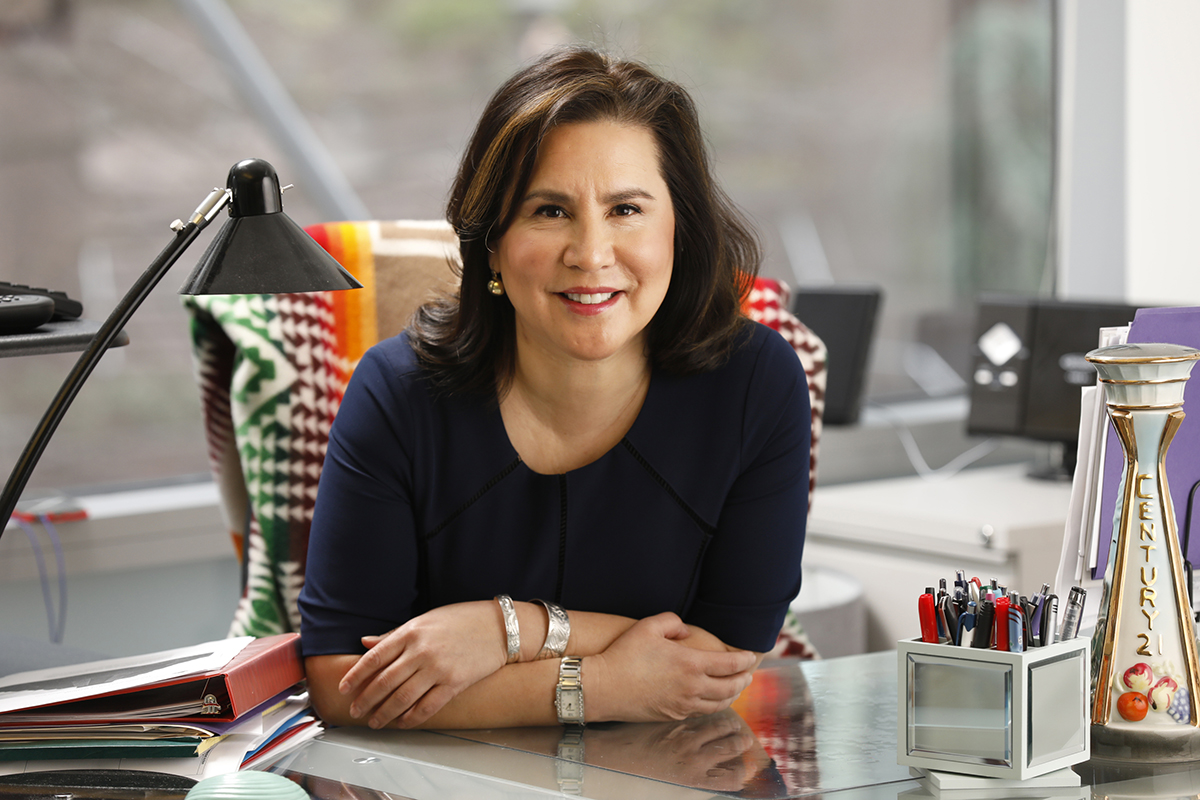
Former Seattle City Council President Debora Juarez, Blackfeet, is a former King County Superior Court judge. She has not been surprised by anything Trump has done so far and believes state attorneys general that challenged certain executive orders knew what was coming and were ready to respond – among them, Washington state’s Nick Brown, who immediately challenged Trump’s executive order regarding birthright citizenship.
“We know what Trump’s going to do,” Juarez said. “We saw what he did the last four years. We read Project 2025. Do you think Nick Brown wrote his brief the night before Trump signed his executive order regarding the 14th Amendment and birthright citizenship? No.”
Trump’s executive order seeks to deny citizenship to children born in the United States to non-citizens – even if one parent is in the U.S. on a student, work or tourist visa. Here’s what the 14th Amendment says: “All persons born or naturalized in the United States … are citizens of the United States.”
Juarez read U.S. District Court Judge John Coughenour’s restraining order blocking enforcement of the executive order and said his words are “powerful.” The harms to those targeted by the order would be “immediate, ongoing, and significant, and cannot be remedied in the ordinary course of litigation,” wrote Coughenour, who was appointed to the bench by President Ronald Reagan.
Those harms include depriving individuals “of their constitutional right to citizenship and all the associated rights and benefits,” and “subjecting them to risk of deportation and family separation; depriving them of access to federal funding for medical care and eligibility for basic public benefits that prevent child poverty and promote child health; and impacting their education, employment, and health.”
Allen, the Jamestown S’Klallam chairman, predicts members of Congress will be emboldened to stand up to the Trump administration when their constituents feel the negative effects of Trump’s policies.
“A lot of these members of Congress, including Republicans, are going to go, ‘Wait a minute, this affects my community, right?’” Allen said. “A significant number of people in red states like Mississippi depend on Medicaid. Mississippi is a huge red state but they are the poorest state in the nation, and so when you say you’re going to cut Medicaid out of that, then that state has got some huge problems. In fact, all states do, because what the Trump administration is trying to do is divert federal obligations to the states. And then the states will have a huge demand on their limited resources.”
Juarez said Democrats can’t let chaos derail them from “getting back to the core of who we are. Stop responding to the bat shit that what’s-his-face says and does, because there’s going to be more. It’s like chasing your tail.”
She served on the Seattle City Council from 2016-2024, during a tumultuous time socially and politically in the city. Still, she delivered capital projects in her district – including Climate Pledge Arena, the Kraken Community Iceplex, the John Lewis Bridge over Interstate 5, two light rail stations and a new community center – as well as other capital projects citywide.
“I care about working people and families,” Juarez said. “Can you pay your mortgage? Can you pay your rent? Can you get your kids to school safely? Are you going to have to walk through fentanyl smoke? That’s what I care about – making sure people have jobs and they’re safe.”
She added, “We need to remember who we are as Americans beyond the Constitution. That moral North Star of what we believe is good for our country.”

Our stories are worth telling. Our stories are worth sharing. Our stories are worth your support. Contribute $5 or $10 today to help ICT carry out its critical mission. Sign up for ICT’s free newsletter.

