
ICT is working to shape the future of journalism and stay connected with readers like you. A crucial part of that effort is understanding our audience. Share your perspective in a brief survey for a chance to win prizes.
Deusdedit Ruhangariyo
Special to ICT
Around the world: Indigenous communities in Malaysia concerned about new hydropower projects, James Smith Cree Nation chiefs seek public safety funding, Eight Māori artists chosen for prestigious exhibition and tributes pour in for an Aboriginal land rights and healthcare advocate in Australia.
MALAYSIA: Hydropower projects raise alarms
Sarawak officials are planning three new hydropower dams for electricity exports, but Indigenous residents are urging a slower, more informative development process, ensuring those affected are adequately informed, Mongabay reported on February 2.
Sarawak’s chief minister, Abang Johari Openg, recently confirmed plans to construct three new hydropower dams in the Gaat River, Belaga River and Tutoh River districts. Abang Johari cited various reasons for promoting these projects, including increased power supply and the notion that residents now rely on roads rather than rivers for transportation, implying minimal negative impacts. He also mentioned that residents requested the dams and cascading dams would help control crocodile populations.
However, this announcement has sparked concern among local residents, with over 500 individuals near the Tutoh dam site signing a petition led by SAVE Rivers, an NGO based in Miri. The petition calls for more information about the cascading dam project and a thorough assessment of potential environmental consequences. Celine Lim, managing director of SAVE Rivers, highlighted the frequent lack of transparency and consultation with local communities in major development projects, emphasizing the need for greater inclusion and transparency in decision-making processes.
“The suggestion that communities no longer use the rivers is particularly alarming and demonstrates that policy makers are out of step with reality. While it is vital to transition to renewable energy, this energy transition must be just and that includes upholding the Free Prior and Informed Consent (FPIC) rights of the Indigenous People,” she said in a press release.
News reports indicate private companies will undertake the construction of these dams, and they will be operated by state utility Sarawak Energy Berhad, which currently operates four dams that play a pivotal role in supplying power to most of the state.
According to their 2021 annual report, approximately 61 percent of the state’s energy is derived from large-scale hydropower, making it a significant contributor to the energy mix.
CANADA: Cree chiefs seek public safety funds
Leaders from James Smith Cree Nation and other First Nations assert that increased federal funding is essential for implementing the recommendations resulting from the Crees’ stabbing massacre inquest, CBC News reported on February 2.
James Smith resident Myles Sanderson tragically took the lives of 11 individuals, including 10 within the community and one in the nearby village of Weldon, Saskatchewan, on September 4, 2022.
The nearly three-week-long inquest investigating this tragedy concluded, and a panel of six jurors provided their findings on the circumstances of each person’s death, along with 14 recommendations. Additionally, Coroner Blaine Beaven, who presided over the inquest, contributed an additional 15 recommendations.
These recommendations target various organizations, including the Royal Canadian Mounted Police, Correctional Service of Canada and James Smith Cree Nation itself. They encompass calls for enhanced programming and resources for offenders and their families, increased collaboration between the tribe and law enforcement, revisions to how police handle suspects on the run and greater resources to facilitate the reintegration of inmates into society.
“Our hearts are still heavy from Sept. 4,” James Smith Cree Nation Chief Wally Burns said Thursday at a news conference in Saskatoon, according to CBC News. “I lost a lot of people, a lot of relations, and it’s sad to hear how they had to die.”
In his efforts to cope with the pain following the massacre, Burns has concentrated on engaging Indigenous ceremonies. He stressed the necessity for increased federal government funding to effectively put some of the recommendations into practice.
“We have a lot of work ahead of us. I really want to look at how we can move forward, especially with self-administered policing, addictions awareness, all of the areas that traumatized our people,” he said, according to CBC News. “My doors are open. Federally, provincially … I’m getting frustrated because it’s like we’re spinning our wheels over and over. Nothing’s happening. And this is where we have to stop it.”
Chief Cindy Woodhouse of the Assembly of First Nations concurred, emphasizing that consistent funding from the Crown for First Nations policing is crucial for the safety of these communities.
“The current funding model is outdated and insufficient to address communities in continuing public safety needs,” she said, according to CBC News.
NEW ZEALAND: Exhibit to feature Māori artists
In April 2024, eight Māori artists will showcase New Zealand’s talent at the Venice Biennale opening in Italy, Te Ao Maori news reported on February 3.
They will join numerous Indigenous artists worldwide in the primary exhibition titled “Stranieri Ovunque: Foreigners Everywhere.”
Sandy Adsett (Ngāti Pahauwera) is among the Māori artists invited to present work at the prestigious contemporary art exhibition, along with Mata Aho Collective artists Erena Baker (Te Ātiawa ki Whakarongotai, Ngāti Toa Rangatira), Sarah Hudson (Ngāti Awa, Ngāi Tūhoe), Bridget Reweti (Ngāti Ranginui, Ngāi Te Rangi) and Terri Te Tau (Rangitāne ki Wairarapa).
Together with Brett Graham, Fred Graham and Selwyn Te Ngareatua Wilson, they will collectively represent New Zealand’s art in Venice. The Mata Aho Collective and Brett Graham are set to travel to Italy in March to install their artworks for the event.
The Venice Biennale, commencing April 17, is set to enchant art enthusiasts until November 24 with its captivating exhibitions.
AUSTRALIA: Aboriginal advocate dies
Dr. Lowitja O’Donoghue, a distinguished Yankunytjatjara woman and advocate for Indigenous land rights, has died at the age of 91 on Kaurna Country, the National Indigenous Times reported on February 4.
Dr. O’Donoghue, a pioneering advocate for Indigenous rights, dedicated her life to improving the health and welfare of Aboriginal and Torres Strait Islander communities. She passed away Sunday, surrounded by her immediate family.
Described by Cape York community leader Noel Pearson as “the greatest Aboriginal leader of the modern era” and “the rock who steadied us in the storm,” Dr. O’Donoghue played a pivotal role in advancing Indigenous causes. She was a prominent figure during historic moments in modern Aboriginal affairs, including the 1967 Referendum, the enactment of Native Title legislation in 1993 and the National Apology to the Stolen Generations in 2008.
Deb Edwards, O’Donoghue’s niece, described her as “the Matriarch of our family, whom we have loved and looked up to our entire lives”.
“We adored and admired her when we were young and have grown up full of never-ending pride as she became one of the most respected and influential Aboriginal leaders this country has ever known,” Edwards said, according to the National Indigenous Times.
“Aunty Lowitja dedicated her entire lifetime of work to the rights, health, and wellbeing of Aboriginal and Torres Strait Islander peoples. We thank and honour her for all that she has done – for all the pathways she created, for all the doors she opened, for all the issues she tackled head-on, for all the tables she sat at and for all the arguments she fought and won.”
O’Donoghue’s family mentioned her frequent invitations by dignitaries worldwide. Notably, in 1992, she made history as the first Aboriginal individual to address the United Nations.
“As an Australian ‘National Living Treasure,’ we shared her with admirers far and wide, but we always loved having her home close to us,” Edwards said.
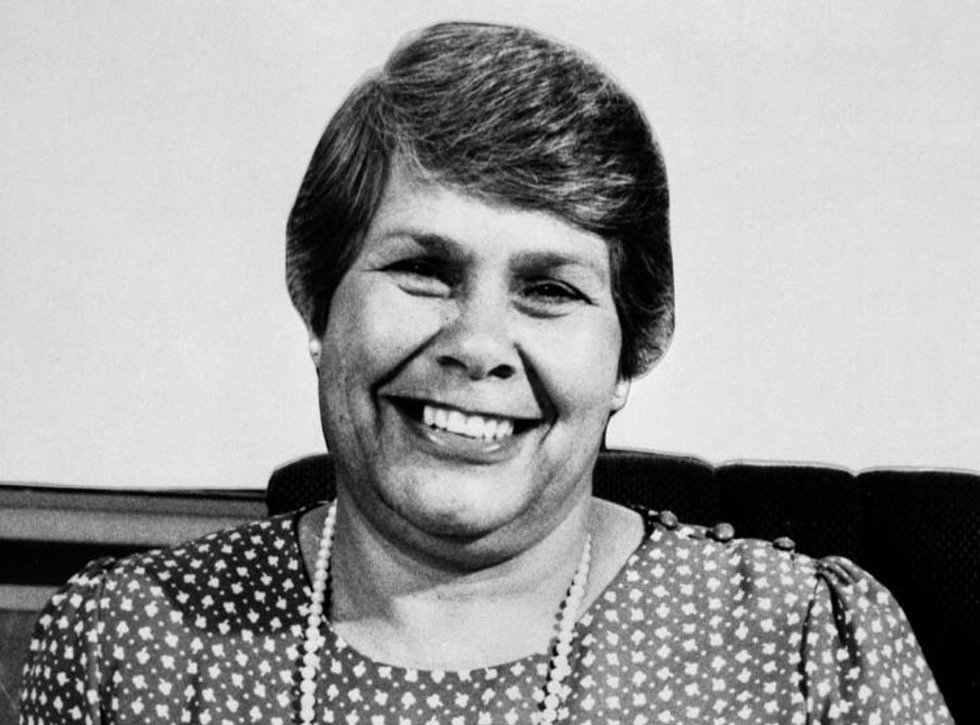
Along with her siblings, O’Donoghue grew up at Colebrook Children’s Home in Quorn, South Australia, where they were prohibited from speaking their Native language, asking about their origins or inquiring about their parents.
Her lifelong dedication to health and well-being began during her formative years. She fought for the right to train as a nurse and became the first Aboriginal trainee nurse at the Royal Adelaide Hospital in 1954. During the 1967 referendum, O’Donoghue campaigned for the recognition of Aboriginal and Torres Strait Islander people before joining the Department of Aboriginal Affairs.
She played a pivotal role as the inaugural chairperson of the Aboriginal and Torres Strait Islander Commission in 1990 and actively lobbied the Keating government for the acknowledgment of Aboriginal rights through Native Title laws following the Mabo decision.
Her remarkable achievements also include being the first Aboriginal woman to be appointed a member of the Order of Australia in 1977, receiving the Commander of the Order of the British Empire in 1983, being named Australian of the Year in 1984 and earning the distinction of National Living Treasure in 1998.
Former senator and “the father of reconciliation” Pat Dodson said: “This is a sad day for first peoples of this nation. We have lost an extraordinary person of great courage and strength.”
My final thoughts
My final thoughts are in Kaurna Country and the rest of Australia where they lost Dr. Lowitja O’Donoghue, a distinguished Yankunytjatjara woman, an advocate for Indigenous land rights, and a health trailblazer who peacefully passed away at the age of 91.
As we reflect on the loss of Dr. Lowitja O’Donoghue, a stalwart advocate for Indigenous land rights, along with her pioneering contributions to healthcare, let us commend her enduring legacy. Her passing leaves a void not only in Kaurna Country but across the entirety of Australia. O’Donoghue’s unwavering dedication to the betterment of Indigenous communities serves as a beacon of inspiration for us all.
In her honor, may we all strive to emulate her tireless commitment and unwavering advocacy. Let Dr. Lowitja O’Donoghue’s remarkable journey remind us to stand up for justice, champion the rights of Indigenous peoples, and dedicate ourselves to the pursuit of a more equitable and inclusive society. In doing so, we can ensure that her legacy lives on, continuing to inspire positive change for generations to come.

Our stories are worth telling. Our stories are worth sharing. Our stories are worth your support. Contribute $5 or $10 today to help ICT carry out its critical mission. Sign up for ICT’s free newsletter.
