ICT is working to shape the future of journalism and stay connected with readers like you. A crucial part of that effort is understanding our audience. Share your perspective in a brief survey for a chance to win prizes.
Deusdedit Ruhangariyo
Special to ICT
Around the world: Australia faces strong criticism for ‘systemic discrimination’ against Indigenous people, Manitoba appoints special adviser to address Indigenous women’s issues and China claims 456,000 Uyghur hires in Xinjiang while experts cite forced labor
AUSTRALIA: Report critical of prisons
In its recently released 2024 World Report, Human Rights Watch criticized the Australian government for overrepresentation of First Nations people in prisons and mistreatment of children in juvenile detention, the National Indigenous Times reported on Jan. 13.
Human Rights Watch’s 740-page report assesses human rights in over 100 nations. Australia faces criticism for its treatment of refugees, offshore detention, relations with China, and “systemic discrimination against First Nations people.”
“In October, the government held a referendum to enshrine a First Nations’ Voice in the country’s constitution,” it read, according to the National Indigenous Times.
“While this was unsuccessful in every state, Australia’s state and federal governments remain obligated to uphold the rights of First Nations people, which should remain a priority.”
The report strongly criticized the substantial overrepresentation of Indigenous individuals in the criminal justice system. Despite only making up three percent of the national population, they account for nearly one-third of Australia’s adult prison population.
“At least 19 Indigenous people died in custody in 2023, including a 16-year-old First Nations boy who died after harming himself in pretrial detention in October, following prolonged solitary confinement,” said the report, according to the National Indigenous Times.
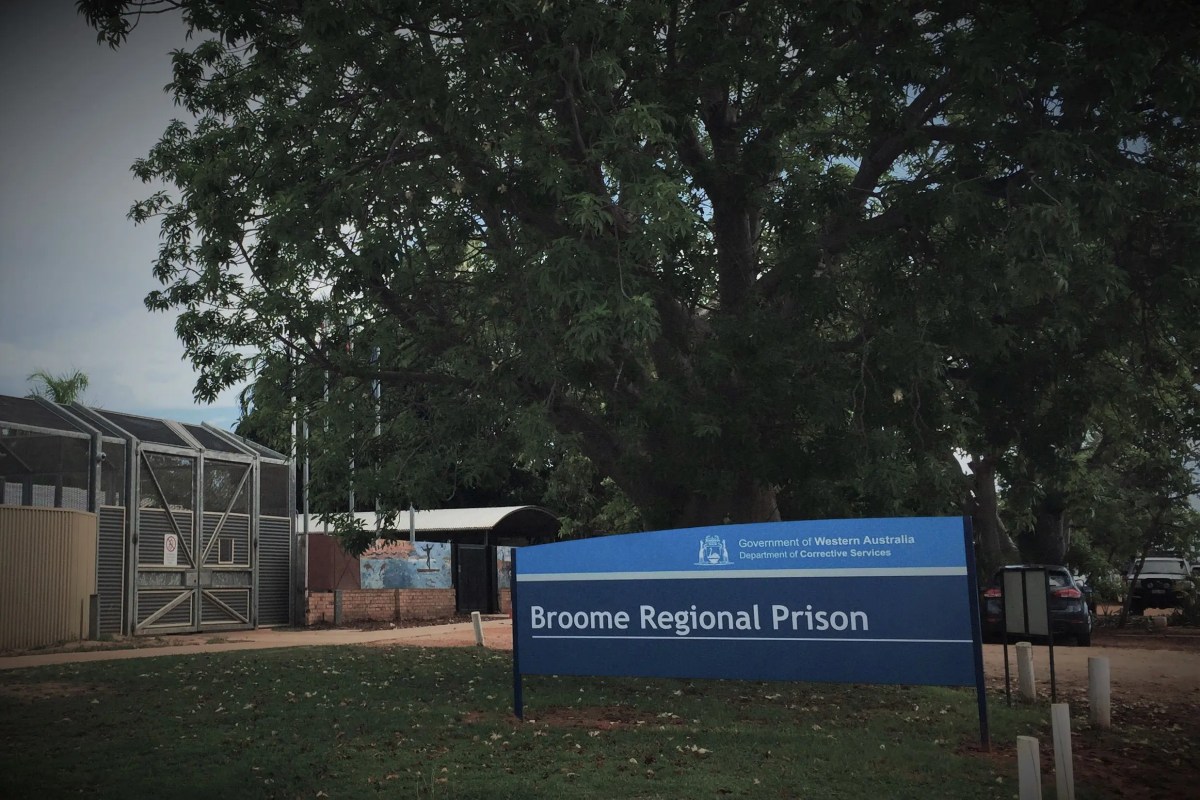
The report described a prison in Western Australia where 80 percent of the inmates are Aboriginal. The report quoted the Western Australia Office of the Inspector of Custodial Services, which described Broome Prison as “depressing, degrading and entirely inappropriate in a modern mental health service context.”
“At least 19 Indigenous people died in custody in 2023, including a 16-year-old First Nations boy who died after self-harming in pretrial detention in October following prolonged solitary confinement.”
Human Rights Watch criticized Australia for not enshrining a First Nations Voice to Parliament in an October 14 referendum, a move that would have recognized Aboriginal people as the First Peoples and enabled them to advise Parliament. In response, the federal government has initiated an inquiry into the country’s human rights framework and is contemplating the implementation of a human rights charter in the future.
CANADA: New adviser for women’s issues
Cora Morgan, a dedicated advocate for Indigenous children, women and families, has been appointed as Manitoba’s special adviser on Indigenous women’s issues, the CBC News reported on Jan. 10.
She will also serve as secretary to the committee addressing missing and murdered Indigenous women, girls, Two-Spirit people, and gender-based violence, according to Minister Nahanni Fontaine.
“I feel really honored and very excited about the potential and the opportunity that this has to make a difference for our people, particularly … Indigenous women and girls,” Morgan, who is Anishinaabe from Sagkeeng First Nation, said in an interview Wednesday, according to National Indigenous Times.
Cora Morgan has sought reforms in Manitoba’s child welfare system. Her experience includes roles as the First Nation family advocate for the Assembly of Manitoba Chiefs and as the executive director of the Onashowewin Justice Circle.
In her new positions, Morgan will be responsible for crafting Manitoba’s MMIWG2S+ strategy and fostering community engagement, according to Minister Nahanni Fontaine.
Morgan highlighted the significant commitments made by the New Democratic Party government during the previous provincial election campaign to address concerns affecting Indigenous women.
“No other government has made … really strong commitments to support the issue of MWIWG, so I think it’s really important to carry out those obligations and those commitments made,” she said, according to CBC News.
“I think that it’s also very important to work around the area of prevention, and improving the quality of life and the safety for our women and girls.”
CHINA: Jobs report questioned
China claims 456,000 new jobs in Xinjiang signify economic progress in creating a “happy and harmonious” Uyghur society, according to a Jan. 2 report by Radio Free Asia. The Chinese-controlled Tengritagh Network revealed on December 25 that authorities aim for “full employment” in the Xinjiang Uyghur Autonomous Region as part of their poverty alleviation strategy.
“Employment signifies a stable source of income, and a stable source of income paves the way for the desire to consume,” said the report, which said 456,000 people had been added to the workforce, according to Radio Free Asia.
Uyghur experts and activists argue that a significant portion of these jobs involve forced labor, often comprising individuals who have been detained in “re-education” camps, where their human rights are consistently violated.
Ilshat Hesen Kokbore, Vice Chairman of the Executive Committee of the World Uyghur Congress, suggests authorities are using forced labor to monitor these individuals closely..
“This involves ensuring that they are not idle, but engaged in various sectors,” he said, according to Radio Free Asia.
“The primary objective of such arrangements is to subject them to Chinese surveillance and control throughout their workday, ultimately aiming at eradicating the Uyghur nation.” Kokbore said.
Regarding the workforce in Xinjiang factories and other Chinese provinces, experts argue that individuals are not willing participants. Instead, local authorities employ coercive tactics, and many receive only a fraction of standard wages, a situation internationally recognized as forced labor.
Experts note China relies on Uyghurs to fill these positions, which involve tasks of lower technical complexity and are less preferred by Chinese workers.
“We consistently organize farmers and herdsmen for employment based on enterprise needs,” said the head of Pichan county’s public employment service center, responsible for employing 100 farmers from Lamjin village, according to Radio Free Asia.
My final thoughts
My final thoughts are in Australia where the Australian government’s ongoing issue of disproportionately high incarceration rates among First Nations people and the mistreatment of children in juvenile detention facilities have come under severe criticism in the 2024 World Report by Human Rights Watch.
This critique highlights the urgent need for comprehensive reforms and proactive measures to address these systemic problems.
I believe the government needs to prioritize initiatives aimed at reducing the overrepresentation of First Nations individuals in prisons, ensuring fair and just treatment within the criminal justice system, and implementing measures to safeguard the rights and well-being of children in detention.
In this regard, collaboration with Indigenous communities and organizations is crucial in an effort to achieve meaningful change and uphold human rights standards.

Our stories are worth telling. Our stories are worth sharing. Our stories are worth your support. Contribute $5 or $10 today to help ICT carry out its critical mission. Sign up for ICT’s free newsletter.