
Deusdedit Ruhangariyo
ICT
Around the world: Indigenous wisdom and science unite to restore Panama’s forests; First Nation and miners reject Yukon’s mining framework; and Solomon Islands coral plan elevates community stewardship over ownership.
PANAMA: Restoration of Panama’s forests
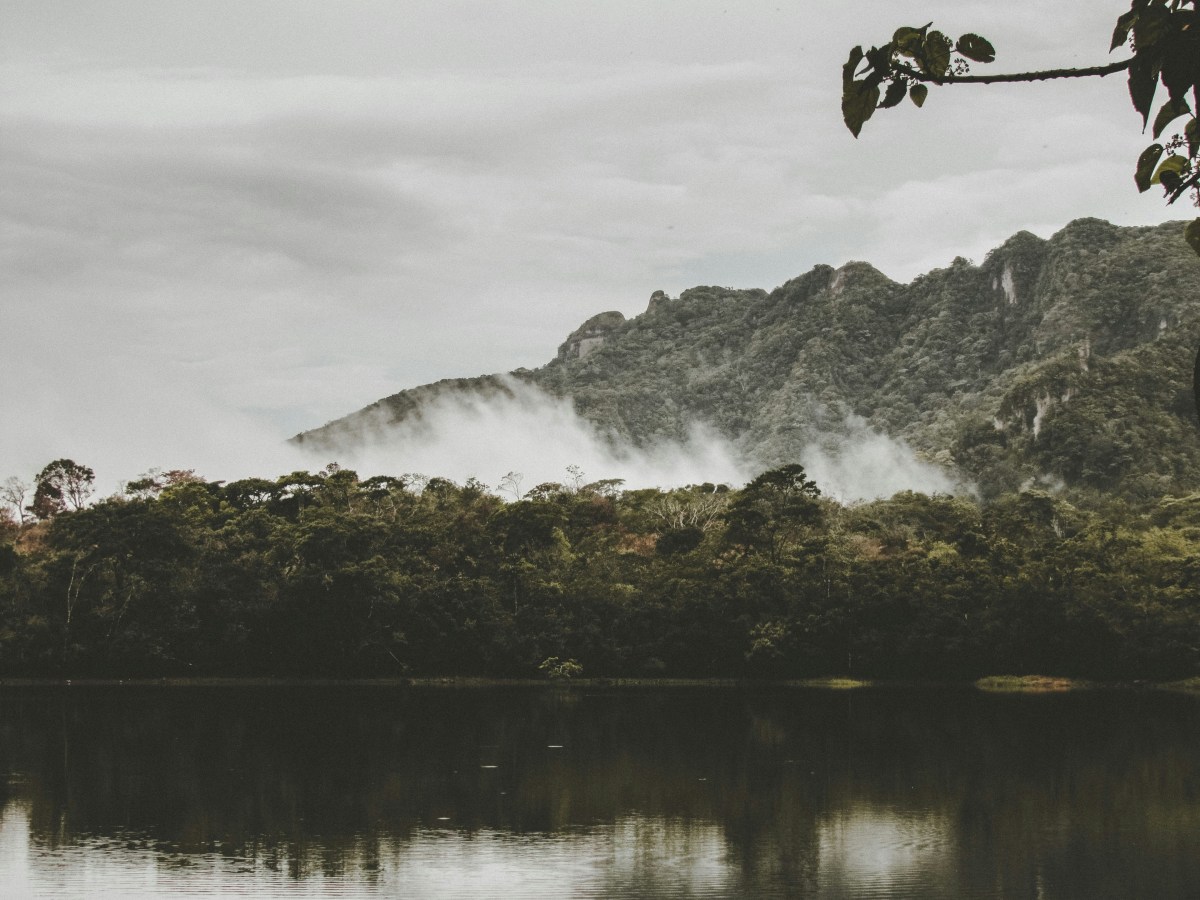
In the heart of Panama’s degraded rural lands, Indigenous wisdom and scientific collaboration are breathing new life into deforested soil. Two Indigenous groups in the Ñürüm district of the Ngäbe-Buglé Comarca, the largest officially recognized Indigenous territory in Panama, are leading a reforestation project in partnership with researchers from the Smithsonian Tropical Research Institute, Mongabay reported on July 31.
This long-term initiative is focused on growing native trees that can both restore the landscape and generate income through carbon sequestration. Backed by the U.S.-based Rohr Family Foundation and the U.K.’s Global Centre on Biodiversity for Climate, the project aims to plant trees across 100 hectares, or nearly 250 acres of land, that has suffered decades of deforestation from agriculture, cattle grazing, and ill-fated government-run monocultures of nonnative pine and teak.
The local soil poses a challenge: it’s clay-heavy, acidic, low in phosphorus, and generally infertile. But Smithsonian scientists have spent more than 20 years studying the ecology of similar conditions through the Panama Canal Watershed Project in Colón province. This research has helped them determine which native trees are most likely to thrive.
By the time of publication, nearly 30 individuals and families had signed on to reforest their land. Among the species they’ve planted is cocobolo (Dalbergia retusa), a nitrogen-fixing tree prized for its durable wood used in furniture and carvings. “It grows on crappy soils, good soils, grows fast when it’s young, it’s good for covering the land area and it’s got big roots, so it enhances filtration,” said Jefferson Hall, a forest ecologist and director of the project. “And it’s super water-use efficient.”
Another frequently planted species is zapateros (Hyeronima alchorneoides), which also flourishes in the region and offers high market value. Participants are paid daily wages for maintaining the plots and provided with tools and seeds. Over time, by cultivating diverse native tree species known for their carbon-storing potential, farmers will be eligible to receive carbon payments.
Perhaps most significant is the model of land ownership. In contrast to a problematic government initiative in 1973 when the environment ministry promised food and money to Ñürüm residents for growing pine trees only to take control of their land, the current project guarantees that the Indigenous communities retain full rights to their territory.
To ensure trust and transparency, the Smithsonian team spent an entire year meeting with residents, holding forums, and gaining their free, prior, and informed consent. These sessions emphasized the science behind carbon sequestration, the economic benefits of the trees, and the long-term vision for restoring ecological balance while honoring traditional ownership.
This collaboration marks a hopeful chapter in climate justice – where Indigenous leadership and ecological science walk side by side, not only healing the land but rewriting the terms of environmental partnership.
CANADA: First Nation and miners reject mining framework
Efforts by the Yukon government to modernize its mining legislation have sparked backlash from both Indigenous leadership and the mining industry, CBC News reported on August 1. The First Nation of Na-Cho Nyäk Dun and the Yukon Chamber of Mines have each rejected the proposed framework – though for vastly different reasons.
The First Nation of Na-Cho Nyäk Dun, based in Mayo, Yukon, issued a firm statement declaring it “rejects” the government’s draft legislation, saying the process ignored their concerns and failed to deliver meaningful change. “It is at best a modest improvement on the status quo,” said Chief Dawna Hope. “The time for modest improvements is over. Yukon government has allowed unsustainable mining to continue for generations.”
The First Nation has spent the last four years engaging in negotiations, hoping to co-create legislation that would protect the land and ensure equitable governance. But according to Hope, their concerns were repeatedly dismissed. “At every turn, our rights were ignored and our voice was unheard. Our interests were discarded. The outcomes we sought were unilaterally rejected by Yukon government representatives time and again.”
Compounding this frustration, Hope pointed out that the territorial government failed to provide sufficient funding to support the First Nation’s participation in the legislative process. The First Nation of Na-Cho Nyäk Dun was forced to use its own limited resources – money that was meant for essential initiatives such as land use planning, health, housing, and community well-being. “We had to take dollars away from (First Nation of Na-Cho Nyäk Dun)-driven initiatives,” she said.
Tensions have only grown since the Eagle gold mine disaster one year ago, which occurred on the First Nation of Na-Cho Nyäk Dun’s traditional territory. The mine failure led to widespread contamination of land and water, creating an environmental crisis that will take years to clean up. “Yukon government sat back and allowed an unsafe mine to continue operating on our territory,” Hope stated. “Our people will be paying the price… for generations.” In response, she announced that from now on, “mining in (First Nation of Na-Cho Nyäk Dun’s) territory will be governed by our own mining policy, as directed by our citizens.”
Meanwhile, the Yukon Chamber of Mines also criticized the proposed framework, but from an economic standpoint. Executive Director Jonas Smith called the reforms overly broad and damaging to investment potential. “It would introduce sweeping changes, which disregard established conventions and would threaten the Yukon’s ability to remain viable and competitive in a global investment market,” he warned.
Smith further claimed that the framework was drafted without proper industry consultation. “Proposals were clearly conceived in a vacuum absent of industry perspective,” he said, noting that the chamber lacked time to properly review or engage with the document. “For these reasons, we are not in a position to support it at this time.”
In response, the Yukon government maintains that the draft framework was created in collaboration with a steering committee that included legal representatives from several First Nations, including the First Nation of Na-Cho Nyäk Dun. “If we collectively agree on a framework, it will act as a commitment to key elements of new minerals legislation,” said cabinet spokesperson Laura Seeley.
For now, the future of Yukon’s mining law remains uncertain – as both land stewards and industry leaders demand more than what’s currently on offer.
SOLOMON ISLANDS: Elevating stewardship over ownership
In a major step toward preserving one of the world’s most vital marine ecosystems, the Solomon Islands is advancing the development of its National Action Plan for Coral Reef Conservation through a pivotal workshop held in Auki, Malaita Province last week. The session, reported by SIBC on July 28, brought together local leaders, government representatives, and environmental experts to shape a strategy rooted in community stewardship and shared responsibility.
The workshop is part of the Coral Reef Rescue: Resilient Reefs, Resilient Communities project, spearheaded nationally by the Wildlife Conservation Society and funded by the Global Environment Facility. The overarching goal is clear: to protect the coral reefs of the Solomon Islands by ensuring they remain ecologically, culturally, and economically resilient for future generations.
Unlike traditional conservation models, this initiative takes its direction from the lived experiences, customs, and insights of local communities. Discussions during the workshop highlighted a major concern: resource ownership disputes are emerging as a key threat to coral reef sustainability.
“Some experiences clearly demonstrated that conflicts arising from resource ownership pose a significant threat to reef harmony,” said Ms. Gloria Siwainao of the Malaita Provincial Environment Health Division. “To safeguard the future of the Solomon Islands’ coral reefs, the National Action Plan must articulate that communities are stewards of these vital marine resources. This fundamental shift towards shared stewardship is essential to promote unity, build resilience, and foster collective responsibility for our precious marine environment.”
Participants collectively called for the plan to redefine communities as stewards, rather than exclusive owners, of marine resources. This redefinition is expected to reduce intra-community conflicts, strengthen social cohesion, and empower communities to take collective responsibility for reef conservation.
The Auki workshop focused on several strategic objectives:
- To synthesize input collected from provincial governments and community members;
- To deepen shared understanding around coral reef resilience;
- To ensure the final action plan reflects the lived realities and aspirations of Malaita’s people;
- To outline practical ways to equip communities with the skills and support systems they need for reef protection;
- And crucially, to institutionalize community stewardship as the guiding principle of national reef governance.
This collaborative process, built on the cultural and environmental wisdom of the Solomon Islands’ people, aims for long-term survival and recovery of the nation’s coral reefs. The process also integrates support from key ministries, including the Ministry of Environment, Climate Change, Disaster Management and Meteorology and the Ministry of Fisheries and Marine Resources.
The National Action Plan effort is part of the broader Global Coral Reef Rescue Initiative, led globally by the World Wildlife Fund, with Wildlife Conservation Society serving as the lead national executing agency in Solomon Islands. The Global Environment Facility’s backing ensures not only financial support but also global scientific alignment for the country’s locally driven conservation vision.
In Malaita, the message was clear: the reefs will survive not through ownership, but through shared stewardship, unity, and respect for ancestral responsibility.
My final thoughts:
Across the Solomon Islands, Canada, and Panama, the world is being given a second chance. Not through technology. Not through legislation. But through Indigenous memory.
In Malaita, they say the reef suffers when communities forget they are stewards, not owners. In Panama, the land heals only when native trees – and Native trust – return. In the Yukon, the Na-Cho Nyäk Dun have drawn a line: they will no longer trade silence for inclusion or land for false reform.
These are not disconnected stories. They are testimonies from the frontlines of forgotten wisdom.
In each place, Indigenous leaders are not asking for permission to protect the earth. They are reminding the world how it is done.
And yet, governments still negotiate around them. Corporations still invest beneath them. Policies still speak about them instead of with them.
But here is what cannot be legislated out of existence:
A reef that knows who fed it.
A forest that knows who named it.
A river that remembers the sound of prayer.
The people of Malaita, the Ngäbe-Buglé, and the Na-Cho Nyäk Dun have spoken in one voice across three continents:
The earth will survive – but only if we return to relationship, not rule.
Their wisdom is not a relic.
It is a roadmap.
And if we do not follow it now, the next time the land speaks, it may no longer be in words we recognize – only in floods, in fires, and in silence.
Let us not wait for that silence.
Let us listen now.
