Deusdedit Ruhangariyo
Special to ICT
Around the world: Women farmers rejoice after court victory against a zinc mine, the United Nations committee is asked to safeguard Aboriginal cultural heritage, Montreal unveils a new health center for Indigenous communities, and a notable Uyghur advocate discovers his father died in Xinjiang
INDONESIA: Women farmers cheer victory over zinc mine
An Indonesian court has ruled in favor of Indigenous women farmers, saying the government should retract an environmental permit for a proposed zinc mine in the Dairi district in North Sumatra, Mongabay reported on Aug. 16.
The women had opposed the proposed mine project backed by China as a threat to their water source and their livelihoods.
SUPPORT INDIGENOUS JOURNALISM. CONTRIBUTE TODAY.
“We came here to get across that our sources of water and our lives in Dairi will be threatened,” farmer Dormaida Sihotang said in late June outside Indonesia’s Ministry of Environment and Forestry, according to Mongabay.com.
Sihotang and other women farmers from the Dairi district had asked authorities to halt the long-standing mine project. On July 24, the court directed the ministry to retract the environmental permit granted to PT Dairi Prima Mineral (DPM) in August 2022.
DPM, located in Dairi’s Sopokomil village near Lake Toba’s caldera, is predominantly owned by China Nonferrous Metal Industry’s Foreign Engineering and Construction Co. Ltd. Indonesia’s Bumi Resources holds the remaining 49 percent ownership.
In 1998, Indonesia’s central government awarded DPM a mining contract encompassing the highland ridges within the Barisan mountain range. The envisioned mining area now spans nearly 62,000 acres straddling the North Sumatra and Aceh provinces.
Experts say it is a repository of about 5 percent of the world’s zinc deposits, a crucial resource for construction, automotive and electronic industries. Surveys have revealed a stash of galena — a primary lead and silver ore — and zinc sulfide, the principal zinc ore, Mongabay reported.
Global attention has centered on the likelihood that a dam would be built to contain mining tailings, a hazardous residue resulting from the extraction of the metal from its ore. As many as five tailings dams endure catastrophic collapses worldwide each year, officials said.
AUSTRALIA: Fighting to protect cultural heritage
Environmental defenders have asked the United Nations Committee on the Elimination of Racial Discrimination to speak out on Western Australia’s admittedly mishandled effort to revise the Aboriginal Cultural Heritage Act, National Indigenous Times reported on Aug. 17.
Members of the Environmental Defenders Office sent a letter to Varene Shepherd, the chair of the UN committee, spelling out their apprehensions about Western Australia’s ongoing efforts to reform the law and to ask the committee to take an official stance.
The Western Australian government recently acknowledged that officials had gone too far. WA Premier Roger Cook indicated that modifications would be made to the 50-year-old act to prevent a recurrence of catastrophic incidents such as the recent destruction of sacred rock shelters at Juukan Gorge by Rio Tinto in 2020.
A 1972 law was repealed in 2021 but officials indicated they would return to the previous regulations that pertain to Aboriginal cultural heritage within the state.
However, Hannah McGlade, Nyungar, who serves as an associate professor at Curtin University’s school of law and is an expert member of the UN Permanent Forum on Indigenous Issues as wel as a member of the racial discrimination committee, expressed the group’s concerns about the lack of consultation with Aboriginal communities before the 2021 act was repealed.
“It’s very disappointing the WA Government under Premier Cook’s leadership has once again shown failure to respect Indigenous peoples’ right to cultural heritage under the frantic legislative reforms passed recently,” McGlade said, according to National Indigenous Times.
CANADA: Montreal unveils new Indigenous health center
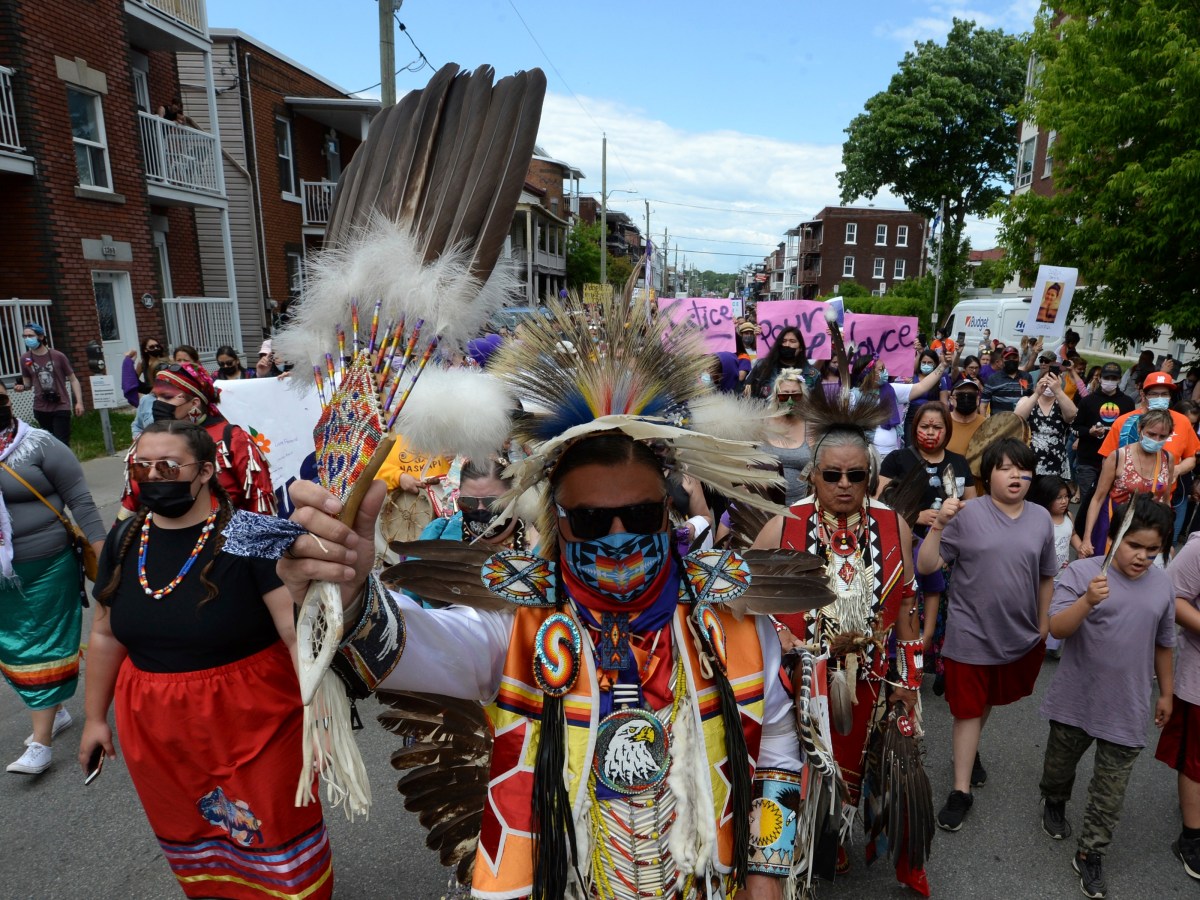
The controversial death of an Indigenous woman who was taunted with racist and abusive comments by healthcare workers until she died of a blood clot in her lung has led to the opening of an Indigenous health care center in Montreal, APTN News reported on Aug. 18.
Michelle Reis-Amores, the executive director of Tiotihtià:ke, the Mohawk word for Montreal, noted that the project had been a long time in coming.
“There has been this dream to provide services that are specifically Indigenous to the Indigenous urban community in Montreal,” Reis-Amores said during an interview, according to APTN News.
“We have one doctor that is providing support on Wednesday in the morning. It is very limited. However, we are working toward increasing those services.”
Joyce Echaquan, an Atikamekw mother of seven, died on Sept. 28, 2020 at Joliette Hospital, shortly after she live-streamed comments racist comments from healthcare workers, who apparently assumed she was a drug addict.
Advocates have long championed the establishment of an Indigenous health center in Montreal, and the effort gained momentum after Echaquan’s death.
The new clinic is designed to provide an array of medical and mental health services, and is staffed by numerous Indigenous physicians, officials said.
Lynn Pathwalker-Bourque, who serves as the health navigator, said Echaquan’s death was instrumental in winning approval for the clinic.
“She was a catapult for things to finally happen and unblock, and that is when the government woke up,” she said. “It’s a human right to have access to health care and wellness.”
CHINA: Uyghurs continue fight amid ongoing pressure
A Uyghur activist based in the United States recently learned that his father had died seven months earlier in the city of Hotanin in China’s western Xinjiang region, Radio Free Asia reported on Aug. 18.
Abdulhakim Idris, the executive director of the Center of Uyghur Studies in Falls Church, Virginia, and a former inspector general of the World Uyghur Congress, learned in January that his father, Abdulkerim Zikrullah Idris, 81, had died in January.
The specifics surrounding his father’s death, however, remain shrouded in uncertainty, Radio Free Asia reported.
Abdulhakim said the last communication he had with his father was through a phone call in April 2017. Since then, Chinese authorities in Xinjiang have detained a majority of his other family members as part of the widespread detentions and imprisonment of Uyghurs in “re-education camps.”
“He was a man of sincerity, an advocate for education, and a hard-working, diligent individual,” Abdulhakim said, according to Radio Free Asia. “He is the reason why all of us pursued education and grew up with a strong dedication to this path.”
Uyghur political activists remain under China’s continuous surveillance, enduring monitoring and diverse forms of oppression, Radio Free Asia reported. Despite the challenges, they persist in advocating for the human rights of Uyghurs in Xinjiang and demanding accountability from China. They hope to establish a Uyghur homeland known as East Turkistan.
My final thoughts
My final thoughts are in Montreal, where the tragic and contentious passing of Joyce Echaquan has highlighted the urgent need for comprehensive and culturally sensitive healthcare services for Indigenous communities.
It is disheartening that such a heartbreaking event had to occur before the initiation of am Indigenous health center in Montreal. The circumstances surrounding Joyce Echaquan’s demise shed light on the persistent inequalities and systemic issues that Indigenous individuals have faced within the healthcare system.
Her passing serves as a stark reminder that proactive measures must be taken to address these issues, rather than waiting for tragedy to strike again.
And as we all know, this is not happening just in Montreal or Canada alone; it is happening to Indigenous peoples the world over.
Therefore, while the establishment of the Indigenous health center in Montreal is a significant step forward, it is essential to recognize that such initiatives should not be reactive. They must be rooted in a genuine commitment to the health and well-being of Indigenous communities, driven by the understanding that healthcare disparities have been long-standing and deeply impactful.
The death of Joyce Echaquan should motivate society as a whole to prioritize healthcare access and quality for Indigenous people, rather than waiting for further losses.

Our stories are worth telling. Our stories are worth sharing. Our stories are worth your support. Contribute $5 or $10 today to help ICT carry out its critical mission. Sign up for ICT’s free newsletter.