
Deusdedit Ruhangariyo
ICT
Around the world: Nepali farmers grow turmeric to keep elephants at bay; Indigenous kids light up Darwin Cricket with joy; South Auckland doctor leads change with visible community impact; and Six Nations tournament honors Dylan Isaacs’s dream for Indigenous kids.
NEPAL: Nepali farmers grow turmeric to protect crops from elephants
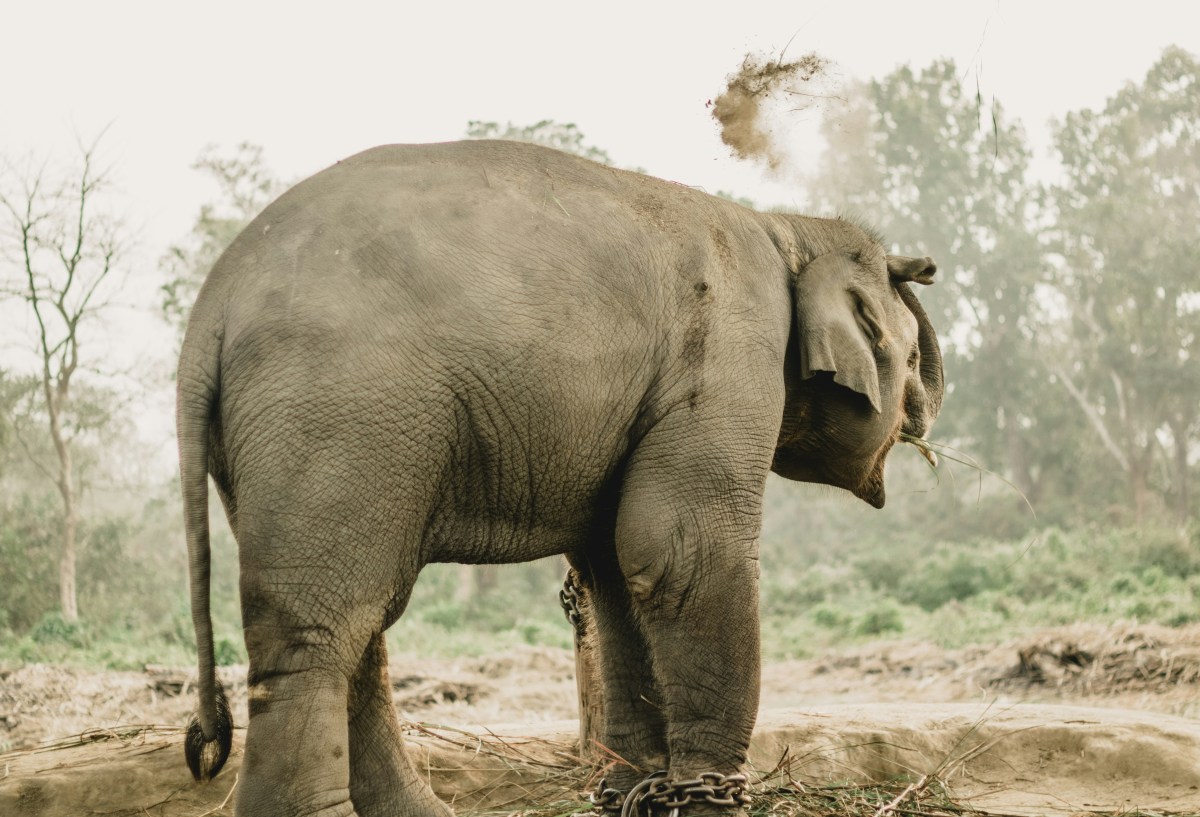
In western Nepal’s Bardiya district, a quiet transformation is unfolding – one that’s keeping wild elephants at bay and restoring peace of mind to local farmers. In 2019, a terrifying incident marked a turning point for Nayaram Sunar. Torrential rains fell on his sister’s cornfield as a wild elephant stormed in, devouring the harvest and destroying their home. That night, the family fled to a neighbor’s house. “Something had to change,” Sunar remembers, Mongabay Asia reported on August 13.
Sunar lives in Kailashi, a village wedged between Bardiya National Park and the Mid-Hill Community Forest. Human-wildlife conflict is an everyday reality. “We barely earned 5,000 rupees from our land,” Sunar says. “Elephants, boars, deer, they destroyed everything.”
A 2023 study in Bardiya’s Khata corridor revealed just how severe the problem is: some villages lose up to 45 percent of their crops annually, especially those near rivers and forest edges. Those closer to park patrols fare better.
In response, Sunar formed the Sahara Farmers’ Group, bringing together 40 Dalit and Indigenous families from Madhuwan and Thakurbaba. With support from the Dalit Women’s Upliftment Association, they planted turmeric, a crop elephants ignore.
Inspired by similar strategies in India’s Assam, they rejected lemon due to storage and market limitations, choosing turmeric for its household ubiquity and longer shelf life.
Their initiative soon attracted national and international conservation groups, including the National Trust for Nature Conservation, Zoological Society of London, Ujyalo Nepal, and Bardiya National Park.
In 2021, the National Trust for Nature Conservation launched Hatti Beshar (“Elephant Turmeric”), providing rhizomes, agronomic training, solar dryers, grinders, and packaging support. With the trust’s help, the Sahara Farmers’ Group even set up a turmeric processing center and began sourcing from nearby villages.
“Why plant crops that only bring misery?” Sunar asked. Earlier experiments with lemongrass and chamomile had failed due to poor markets. Turmeric, however, was hardy, in demand, and avoided by elephants. “Ginger and turmeric work,” confirmed Ashok Kumar Ram, a senior conservation officer.
The science backs it up. A 2017 study near Bardiya found elephants avoid turmeric due to its strong smell and bitter compounds. Turmeric also proved more profitable, generating over $1,200 per hectare compared to $520 for rice. Meanwhile, wealthier households were better protected from elephant raids, while poorer families closer to the park suffered most, deepening inequality.
Sunar now earns 70,000 rupees ($500) a year from turmeric, 10 times his income from maize. Over two years, the group has sold over 7 tons of turmeric powder, earning 1.6 million rupees ($11,400) and supplying cities like Kathmandu and Pokhara.
For Sabitri Sunar, a single mother and group secretary, turmeric has brought safety and security. After losing crops 15 years ago, she now uses her turmeric income to pay her children’s school fees. “Since switching crops, the elephants haven’t come back,” she says.
As Nepal’s forest corridors shrink, Bardiya’s turmeric success story offers hope, a model of coexistence through community innovation and conservation partnerships.
“These elephants are national treasures,” Sunar reflects. “If we protect them, we protect ourselves.”
AUSTRALIA: Indigenous kids light up Darwin Cricket with joy
In a powerful show of inclusion and aspiration, Indigenous children from remote Northern Territory communities recently stepped under the stadium lights of Marrara Oval in Darwin, not just as spectators, but as part of the action during international Twenty20 cricket matches between Australia and South Africa, National Indigenous Times reported on August, 17.
This rare opportunity marks the growing reach of Northern Territory Cricket’s youth development programs, especially for those in isolated areas. For many of the students from Tennant Creek, Borroloola, and Belyuen, it was their first time holding a bat – let alone standing on the same turf as international cricket legends.
“This wasn’t just about watching,” said Jack Doyle, Northern Territory Cricket’s Participation and Growth Lead. “Many of these students had never even seen a live game. Now they were stepping onto the field during innings breaks, feeling the roar of the crowd.”
The effort is part of Northern Territory Cricket’s “Blast” program, which has gained traction across schools in remote regions. Although the children may not be registered club players, they are immersed in school-based cricket through these programs, making the game more accessible.
Twenty students from Tennant Creek, brought in by the Clontarf Foundation, stayed to experience both matches, a worthy journey considering the last international cricket match in Darwin was 17 years ago, before these students were even born.
At the heart of the experience was joy and exposure. The Indigenous youth participated in high-catching and six-hitting contests amid cheers from sold-out crowds. For students from Borroloola, situated on Yanyuwa Country near the Gulf of Carpentaria – the excitement justified a two-hour flight. “It was an incredible experience,” said Katie Honan, assistant principal at Borroloola School. “They had a blast, and we’ve definitely got new cricket fans.”
Even Belyuen, located a ferry ride from Darwin, contributed to young players. “This isn’t something they’d get to do every day,” said Telia Coverdale, a teacher at Belyuen School.
Beyond the spectacle, Northern Territory Cricket has invested deeply in these communities – running immersive week-long visits to build trust and relationships. Doyle emphasized, “Our goal is to make cricket fun and accessible for all Territorians, especially Indigenous communities.”
The initiative is backed by a $2 million investment from the Northern Territory Government, spread over four years, to boost Indigenous cricket participation. The program now engages over 500 young Indigenous boys and girls, with nearly 200 girls actively participating – a dramatic increase from previous years.
The Blast program continues to expand to distant communities like Lajamanu (880km from Darwin), Kalkarindji (770km), and Yarralin (700km), breaking barriers once defined by distance and isolation.
While AFL remains the dominant sport in many Indigenous communities, Northern Territory Cricket is building momentum by linking sport with physical wellbeing, mental health, and leadership skills. The dream is no longer out of reach – it’s already walking onto the pitch.
As Doyle puts it, “We’re not just teaching cricket. We’re building experiences, confidence, and connection.”
NEW ZEALAND: South Auckland doctor inspires through visibility
In South Auckland, Dr. Timoti Te Moke is transforming perceptions of Māori and Pacific success, not through slogans, but by visibly walking home in his hospital scrubs. As a Māori doctor based at Middlemore Hospital, Te Moke chooses to be seen in his community to normalise brown excellence and challenge the assumptions people often make. Many assume he is a cleaner until they realise he’s a qualified doctor, Te Ao Maori News reported on August 16.
Te Moke says that stories like his, paired with strong local government support, can help change what young people aspire to and address the underlying causes of poor health in South Auckland.
“Brown kids in South Auckland need to see doctors like them – and see them so often that it becomes ordinary,” he says. He recalls passing a boy on a bike near Hunter’s Corner who looked at him and said, “Hey, bro.” That one glimpse, Te Moke says, could shape the boy’s future, giving him another path besides the gang life he sees more frequently.
Te Moke, originally from Māngere, has shared his journey in a bestselling memoir, which tells the story of his rise from a gang-influenced upbringing to becoming a doctor.
Despite his success, he chooses to live in a South Auckland apartment complex, not a wealthier suburb, so others can see what’s possible.
“It’s never been about the money,” he explains. “It’s about changing what people believe is achievable.” He donates nearly half of his book’s proceeds, 15 percent each to Māori in need, non-Māori facing hardship, and the people of Palestine.
Te Moke also witnesses the results of systemic inequality every day in the emergency room, patients who can’t afford to see a GP, who return to cold, crowded homes, only to fall ill again. He says national and local policies, like rent increases and low wages, make it harder for South Aucklanders to thrive.
To fix this, he believes housing, education, healthy food access, and job opportunities must all be addressed together.
Louisa Tipene Opetaia, who will chair Te Moke’s event at Māngere Library as part of Auckland Council’s We Read Auckland series, says celebrating success in medicine is critical. “We know our sports and music heroes, but having a doctor and author like Dr Te Moke is powerful for our youth,” she says.
Ōtara-Papatoetoe Local Board chair Apulu Reece Autagavaia praises Te Moke’s symbolic use of scrubs. “Just like I wear my ’ie faitaga in the boardroom, Dr Timoti shows Māori and Pacific pride belongs everywhere.”
Community advocate Dave Letele agrees on the importance of role models but urges more grassroots support. “We must support those already doing the mahi with little backing,” he says.
For Te Moke, change begins with the ballot box. “The systems that hold us back are built by those in power,” he says. “Voting is how we start to remove those barriers.”
He believes South Auckland’s potential is real, but to unlock it, the obstacles must first go.
This year, the event is underway once again, and they’re inviting everyone to come by and watch.
CANADA: Tournament honors player’s dream for Indigenous kids
Months after Dylan Isaacs’s death, his friends approached his family with a proposal: to hold a basketball tournament in Six Nations of the Grand River, honoring the 30-year-old’s dream, CBC News reported on August 16.
“Dylan always talked about bringing basketball into our community more, especially for the youth,” said his aunt, Cecelia Sky.
Now, 19 months since he was killed, the second annual Dylan Isaacs Memorial Basketball Tournament is taking place this weekend, something Sky says he would have been “over the moon” about.
The tournament draws several basketball teams, largely Indigenous, from across Canada and the United States. This year, organizers achieved their goal of dedicating part of the event to youth in the community.
Isaacs, a member of the Cayuga Nation, was shot and killed on January 7, 2024, after leaving an NFL stadium in Miami, Florida. According to police, an altercation broke out with a reckless driver, who allegedly pulled a gun and fatally shot him. CBC contacted Miami Gardens police for an update this week, but they did not respond.
“He’s really missed. He was a big presence in our family,” Sky said, recalling how community children admired him. “He was tall, with a personality just as large.”
His mother, Sue Sky-Isaacs, described her son shortly after his death as “a character in everything he did. … He was full of love, and we loved him.”
Determined to bring Dylan’s vision to life, his family joined with friends to form a committee that organized the inaugural memorial tournament in August 2024.
This year, the event has returned once again, welcoming everyone in the community to come, watch, and celebrate Dylan Isaacs’s enduring dream.
My final thoughts
My thoughts this week are across continents, from the turmeric fields of Nepal to the streets of South Auckland, from Darwin’s cricket grounds to a basketball court in Canada’s Six Nations. The stories are different, but the thread is the same: visibility is not justice.
Communities left behind by systems are forced to invent survival, to embody excellence, or to carry dreams that institutions should have already nurtured.
In Nepal’s Bardiya district, when elephants trampled fields and destroyed homes, it was not government policy that saved farmers but turmeric. Dalit and Indigenous villagers, led by Nayaram Sunar, abandoned maize and rice for a crop elephants ignore. Their choice brought security, even profit, yet it was born from desperation.
Conservation agencies praise resilience, but why are the poorest left to shoulder the burden of coexistence with wildlife? True justice means crop insurance, land rights, and policies that don’t outsource survival to the already vulnerable.
In South Auckland, Dr. Timoti Te Moke wears his scrubs home from Middlemore Hospital so brown children can see a Māori doctor as often as they see a gang patch. That visibility is powerful, but it should not be radical.
Health inequities rooted in housing, wages, and access to care keep his patients returning sick, not because they lack doctors but because policies keep them poor. Excellence should not have to walk the streets as protest. It should be normal, reinforced by systems that remove barriers instead of applauding those who overcome them.
In Darwin, Indigenous children stepped onto the grass at Marrara Oval during an international cricket match, some flying for the first time, some seeing a professional field up close. NT Cricket’s Blast program brought them joy and visibility, but again, why only in moments between innings?
Why should recognition hinge on entertainment? Indigenous belonging must not be conditional on spectacle. Equity means consistent investment in schools, travel, and year-round opportunities, not applause when the lights are brightest.
And in Canada, the memory of Dylan Isaacs lives on through a basketball tournament in Six Nations of the Grand River. Killed at age 30 in a senseless act of gun violence in Miami, Isaacs had long dreamed of bringing basketball to Indigenous youth.
His family and friends turned grief into action, drawing teams from across North America, dedicating the event to community children. The tournament is beautiful, but it also asks a hard question: why did it take his death for institutions to notice what he had been saying in life, that Indigenous youth deserve spaces, courts, and dreams supported with more than memorials?
From Nepal to New Zealand, Australia to Canada, the pattern is unmistakable. We celebrate resilience, ingenuity, and legacy, but too often only after loss, struggle, or spectacle.
Visibility should not depend on tragedy, tokenism, or self-sacrifice. Justice demands that systems meet communities where they already stand – not once they’ve been forced to prove their worth. Until then, we are applauding survival while refusing to dismantle the conditions that make survival necessary.
