
Deusdedit Ruhangariyo
ICT
Around the world: Indigenous women keep the Amazon beyond the reach of greed; First Nations chief rejects Ottawa’s branding of Indigenous remembrance; and Fijian star Koroibete ends his Wallabies journey.
ECUADOR: Indigenous women guard the Amazon
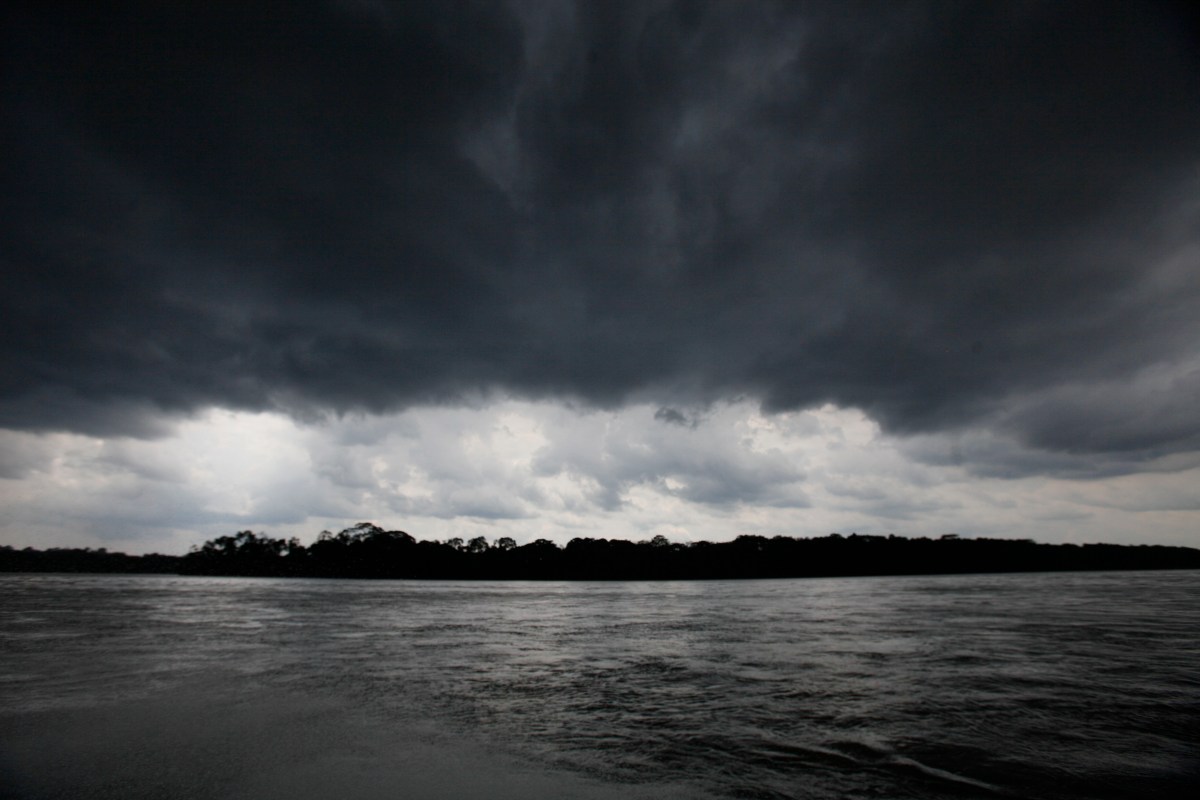
In Ecuador’s Amazon, where the Bobonaza River mirrors the sky, a quiet revolution unfolds beneath the canopy. At her wooden kitchen table, 50-year-old Sacha Gayas unfolds a map, 71,000 hectares of rainforest drawn by hand, a declaration that her people, the Kichwa of Pakayaku, remain unseen, yet undefeated, Mongabay reported on Oct. 22.
“We are the hidden people,” she says. For decades her community has kept the extractive industries at bay – mining, oil, logging – preserving both forest and identity.
Their law is humility, loyalty and dignity. Those values guide a life of balance where children learn from elders and the forest itself. Pakayaku is reachable only by boat – a journey of hours that becomes their armor. “They protect the ecosystem as their only means of survival,” says technician Basilio Suárez. No industry has entered. No government has prevailed.
Here, Gracia Malaver, captain of 45 female guards, leads patrols through mist and mud. “We come from a clan that is a warrior clan,” she says. “When you are on the front lines, you don’t feel fear.” Their palm-carved spears are not for show. They are warnings to illegal miners and loggers who test Pakayaku’s resolve.
President Daniel Noboa’s plans to open roads for petroleum and reopen mining registries now threaten this sanctuary. Yet Gayas and community leaders answer with vision – a six-year “plan of life,” mapping education, economy and territory through Kichwa values. Their future project plants 250,000 cacao seeds interwoven with fruit trees to sustain 250 families without stripping the jungle. “The rainforest must stay alive,” Gayas says.
At night, in the community’s circular meeting hall, President Ángel Santi leans on his spear beneath painted posts inscribed with Pakayaku’s laws. “All the people must agree,” he insists. “It will not pass otherwise.” Consensus is their shield. Their territory – 40,000 hectares recognized by law and more by ancestry – remains untouched. But new government bills seek to privatize protected areas and tighten rules for civil society. “It creates obstacles for defenders,” Santi warns. He earns no salary; he sells yuca and plantain to fund trips to courtrooms.
Still, he smiles when speaking of the women guards. “It is inspiring to see these women come into politics, into defense of the territory.” And as the jungle darkens, his voice softens. “We are looking for allies – people who understand that what we protect here belongs to all humanity.”
CANADA: Chief rejects federal branding on boarding school materials
Kirby Constant, chief of James Smith Cree Nation, stood on the prairie this September with an Orange Shirt stitched in memory of children who never returned from Canada’s residential schools. But what should have been a day of unbranded grief was shadowed by bureaucratic demands, CBC News reported on Oct. 25.
Ottawa required that any materials funded by the Department of Canadian Heritage, even for memorial events, carry the federal logo. “Here’s your $6,700, but you gotta have this at the bottom,” Constant said. “It feels like they’re shoving words in my mouth.”
The community had used the grant for a memorial walk, sweat ceremony, feast and beading class. Firekeepers were honored and survivors remembered. Yet the requirement to display government branding turned mourning into marketing. “To force a thank-you for funding a tragedy they created is the opposite of reconciliation,” Constant said.
Federal officials defended the policy as “transparency.” “This acknowledgment ensures transparency of government spending,” spokesperson Ines Akue wrote. But for survivors and their families, the request felt like a return to erasure. Roughly 150,000 Indigenous children were forced into residential schools; thousands died, their names still emerging from archives. The Truth and Reconciliation Commission found that the goal had been to “erase Indigenous cultures.”
Constant, himself a child of that system’s shadow, now walks two paths. He raises his children in ceremony while navigating Western institutions. “(The government) really did a number on us,” he said. “I see that daily. We have to walk both worlds.”
He submitted his required reports but refused to let a logo define his community’s grief. For James Smith Cree Nation, Orange Shirt Day remains sacred – a space for memory without mandated gratitude.
AUSTRALIA: Fijian star Koroibete ends his Wallabies journey
Two-time John Eales Medallist Marika Koroibete has drawn the curtain on his Test career, a quiet farewell from a player whose runs once lifted stadiums, National Indigenous Times reported on Oct. 24.
Born in Fiji and forged in two codes, he crossed from rugby league to union in 2017 and became one of the world’s most explosive wingers. When he claimed his second Eales Medal in 2022, commentators called him the heartbeat of the Wallabies.
He played 63 Tests, scoring 20 tries, and 69 Super Rugby games for the Melbourne Rebels before joining Japan’s Saitama Panasonic Wild Knights. Even from Japan, his form kept him in Australia’s starting side until his final Test in Sydney last September.
Now, as new talents, Max Jorgensen, Harry Potter, Dylan Pietsch, Corey Toole, Filipo Daugunu, Andrew Kellaway, fight for positions, Koroibete reads the moment clearly. “I’m done with the Wallabies,” he said before a pre-season match in Brisbane. “They’ve got a lot of young outside backs coming … which is exciting to see.”
Splitting his time between Japan and Brisbane, he now tends a kava farm in Fiji – a return to roots and rhythm. For a man who once thrived on collision, retirement arrives not as defeat but peace.
Final thoughts
Three lands, three battles, one question: Who controls the story of survival? In Ecuador, Indigenous women guard their forest with spears and consensus; in Canada, a chief defends the right to mourn without state branding; in Australia, a Fijian athlete writes his own ending before institutions do.
Each reveals a pattern, the struggle for narrative sovereignty in a world that rewards compliance more than conscience.
Sacha Gayas and Gracia Malaver are not activists in the western sense; they are moral sentinels of a planet gasping for restraint. Their defense of the Amazon is not nostalgia for purity but a demand for continuity, proof that civilization can coexist with humility. In their silence and discipline lies a philosophy the International Monetary Fund cannot quantify that life itself is the economy.
Chief Kirby Constant’s defiance exposes another moral contradiction. Reconciliation funded by branding is not healing; it is public relations in ceremonial costume. His refusal to let a government logo accompany grief reminds us that remembrance cannot be franchised. The moral weight of apology must never be offset by the optics of sponsorship.
And then Marika Koroibete, leaving while still powerful, shows that dignity sometimes means exiting the field before applause fades. In a sports world addicted to spectacle, his self-authored farewell becomes a sermon on agency – the right to decide when your story is complete.
Across these continents runs a single vein of conscience: the insistence that moral ownership is the last frontier of freedom. When the world measures progress by extraction, branding, or medals, these guardians, chiefs, and athletes remind us that the truest power is not dominance but self-definition.
They teach a lesson worthy of any age.

