
Richard Arlin Walker
Special to ICT
USNS Billy Frank Jr., the Navy’s newest towing, salvage and rescue ship, will serve and defend the nation’s interests just as its namesake did as a U.S. Marine during the Korean War.
It will help protect the marine environment, just as its namesake did as chairman of the Northwest Indian Fisheries Commission. It will stand firm in support of its mission, just as its namesake did as a civil rights activist. And it will be courageous when need be, just as Frank was during the battle to defend Native fishing rights in the Northwest.
“We all go through peaks and valleys and tumultuous times and Billy showed us how to gracefully walk through those peaks and valleys,” Peggen Frank, his daughter-in-law, told ICT after the christening ceremony for the ship.
“He taught us how to be calm. He taught us how to be strong, tenacious and a protector during those times. He’s a perfect example for us Indians, he’s a perfect example for his family, and he’s a perfect example for the United States and our military to be able to handle these different cycles and different challenges that we move through in our lives.”
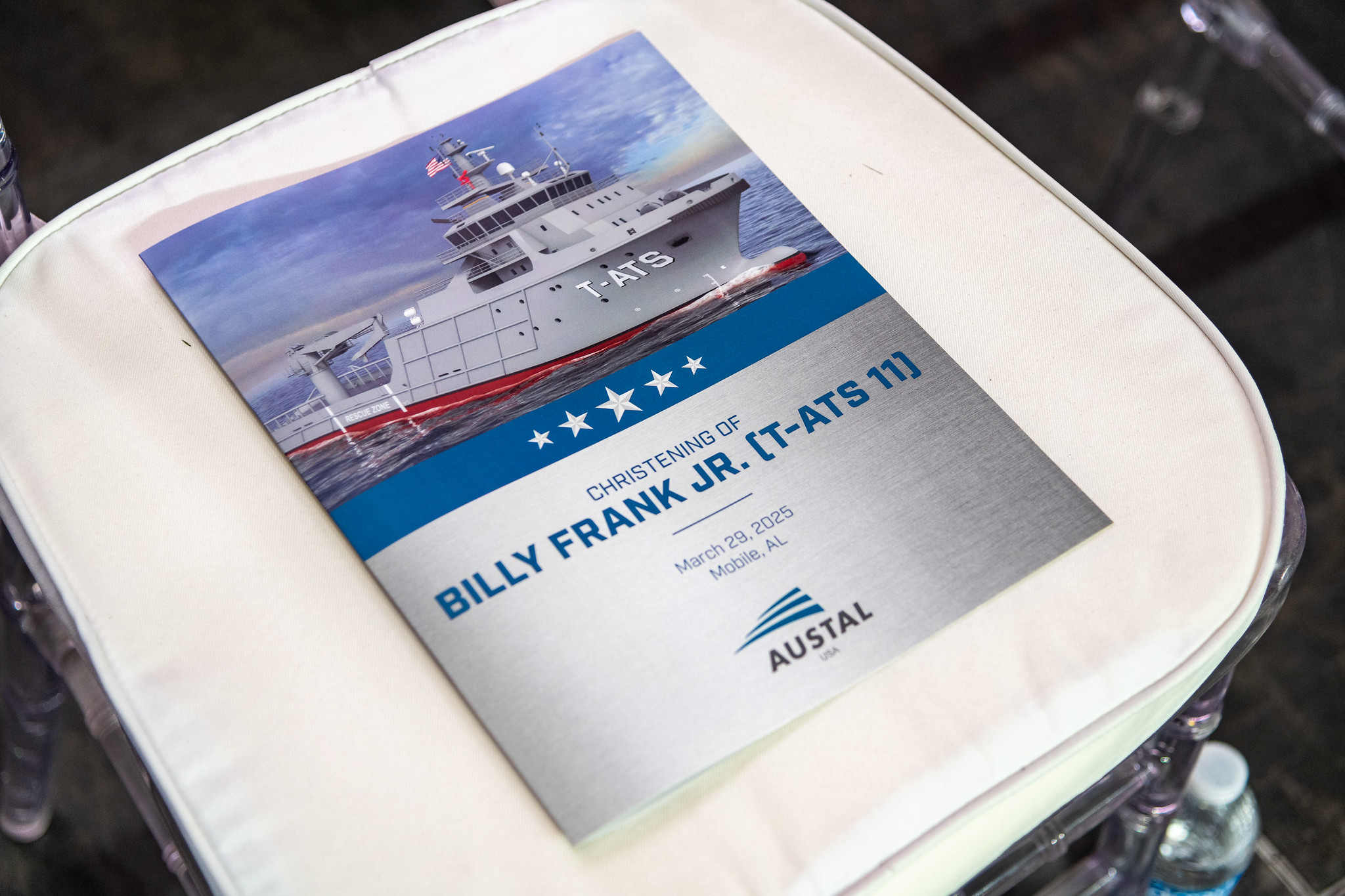
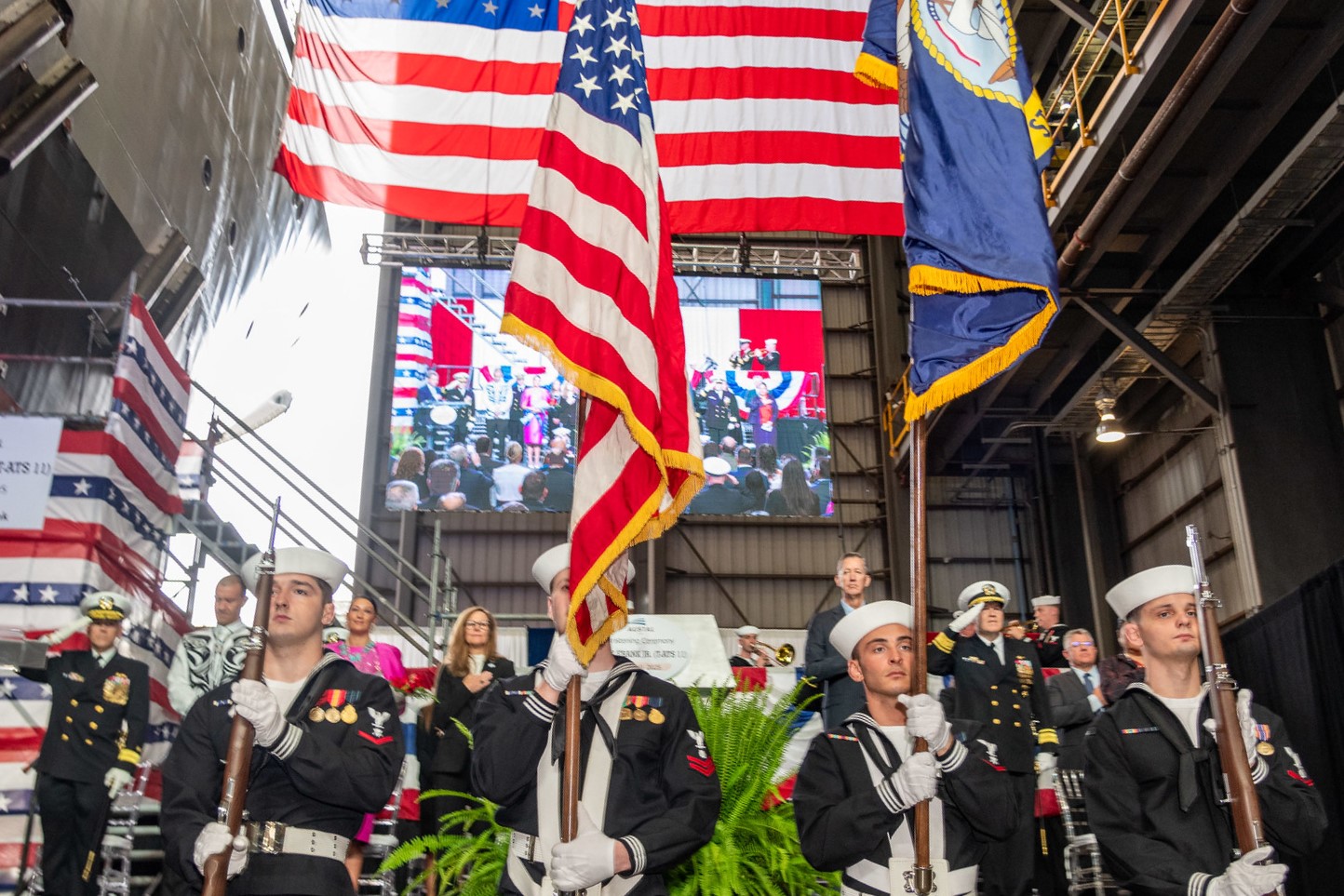
The USNS Billy Frank Jr. (T-ATS 11) was christened March 29 at Austal USA shipyard in Mobile, Alabama, in a ceremony attended by admirals, an assistant secretary of the Navy, representatives of several Coast Salish nations, and Frank’s sons, Tobin Frank and former Nisqually Tribe Chairman Willie Frank III.
Peggen Frank, Willie’s wife, was a keynote speaker and christened the ship by breaking a bottle of champagne across its bow.
Billy Frank Jr. (1931-2014) was a Nisqually fisherman whose defense of Native fishing rights in western Washington – often in the face of violent arrest – led to a federal court decision upholding the treaty-reserved right of tribes to fish in their historical territories and manage their own fishery. The ruling established the treaty tribes and the state of Washington as co-managers of the state’s marine resources. Frank spent the rest of his life bringing adversaries together as partners for habitat restoration and environmental protection.
Frank received several honors for his life’s work, including the Albert Schweitzer Prize for Humanitarianism; the Martin Luther King Jr. Distinguished Service Award; and, posthumously, the Presidential Medal of Freedom. A statue of Frank will be installed in the U.S. Capitol’s Statuary Hall this year or in 2026.
Amid the pomp of the christening ceremony, there was the intimate and the sacred: the opening prayer by Nisqually Tribe Vice Chairwoman Antoinette Squally, lifted up in the Southern Lushootseed language; an opening song offered by Cecilia Gobin and other representatives of the Tulalip Tribes; a song drummed and sung by Derek Sanchez, sergeant at arms of the Nisqually Tribal Council, as Peggen Frank was escorted to the christening platform; and remarks by Peggen and her husband, Willie Frank III.
The ship will carry under its mast a box containing sage, cedar and other ceremonial items placed by the Franks. A small copy of the Statuary Hall statue will be on display on the ship.

Peggen Frank said the Nisqually Tribe is designing the ship’s seal, which will depict a tribal fishing net; the image will be enclosed by a red cedar rope border. The ship’s nickname will be a Southern Lushootseed word for a spirit power that “provides great abundance for people living near Puget Sound.”
Peggen Frank, Northern Arapaho, is executive director of Salmon Defense, a nonprofit that organizes and raises money for salmon habitat restoration. At the christening ceremony, she said the USNS Billy Frank Jr. carries the name of “a modern-day warrior who was a trailblazer, embraced us all, held us up, built our confidence, and brought out the very best in each and every one of us. Thank you to the Navy, all hands on deck assembling the ship, and its captain and crew. May Creator continue to bless your hands, minds, bodies and spirits as she’s being finished so when she sets sail all her missions are successfully completed.”
The ship’s christening coincides with the Navy’s 250th anniversary. It is the first all-steel ship Austal USA has built for the Navy, company president Michelle Kruger said.
Each speaker spoke of the significance of Billy Frank Jr.’s life and legacy and how they will inspire the crew of his namesake ship.
“The name bestowed on this vessel, Billy Frank Jr., honors a legacy of profound significance,” Kruger said. “Billy Frank Jr.’s decades-long fight for justice and environmental preservation serves as an inspiration to us all. The future crew of this ship will be entrusted with upholding the values and the spirit this name represents.”
She added, “Ship building demands tenacity, decisive action, continuous learning and resilience, characteristics that mirror those of Billy Frank Jr.”
Billy Frank Jr.’s name was a natural choice for the ship, Assistant Secretary of the Navy Brent Seidel said at the ceremony.
“From boyhood, his father taught him how to fish, a tradition shared down many generations, nurturing his deep connection with water and salmon,” Seidel said. “He understood water as a source of life better than most and it shaped a life of leadership and service.”
After serving in the Marines, Frank returned home and “it was his connection to fishing, his tribe’s treaty rights and his deep commitment to his people that manifested itself in great leadership and sacrifice,” Seidel said. “For his outstanding contributions, he earned the nation’s highest decoration, the Presidential Medal of Freedom. And so, 2025 is a big year for the enduring legacy of this great leader.”
Seidel said the Navy understands the importance of its relationships with federally recognized tribal nations, and said the christening of the USNS Billy Frank Jr. “represents a bond between the Navy and the Nisqually people and the treaty tribes in Western Washington.”
Rear Adm. Mark Haigis, deputy commander of Military Sealift Command, said the USNS Billy Frank Jr. will be crewed by merchant mariners who will “carry his name proudly around the world for the next 40 years or more” – one of more than 140 Military Sealift Command ships on the world’s oceans and seas supporting the Navy and allies.
“Towing, salvage and rescue ships do critical work that enable the Navy to be ready for any task,” Haigis said. “We eagerly look forward to integrating this ship into our fleet.” Its crew, he said, “will operate this ship with the same skill, resolve and courage displayed by Billy Frank Jr.”
Ships designated “USNS” – for United States Naval Ship – are support vessels owned by the U.S. Navy and crewed by civilian mariners as part of the Military Sealift Command. USNS vessels include hospital ships, submarine tenders, salvage ships and tugs. Ships designated “USS” – for United States Ship – are commissioned for active military service and are crewed by uniformed Navy personnel.
USNS Billy Frank Jr. is the 11th towing, salvage and rescue ship in its class. According to its specifications, it is 263 feet from bow to stern, with a beam of 59 feet and a draft of 17.7 feet. It can carry a load of 1,796 tons. Willie Frank III said he hopes the ship will visit Puget Sound within the next two years.

Our stories are worth telling. Our stories are worth sharing. Our stories are worth your support. Contribute $5 or $10 today to help ICT carry out its critical mission. Sign up for ICT’s free newsletter!

