

Richard Arlin Walker
Special to ICT
Racial bias against Indigenous people may have played a part in a Monache man’s 1978 arrest, prosecution and conviction for murder in Fresno, California, a Superior Court judge has ruled.
Judge Alvin Harrell III ruled May 29 that attorneys for Douglas Ray Stankewitz are entitled to additional evidence they seek from the district attorney under California’s Racial Justice Act. The judge set a hearing for Aug. 14.
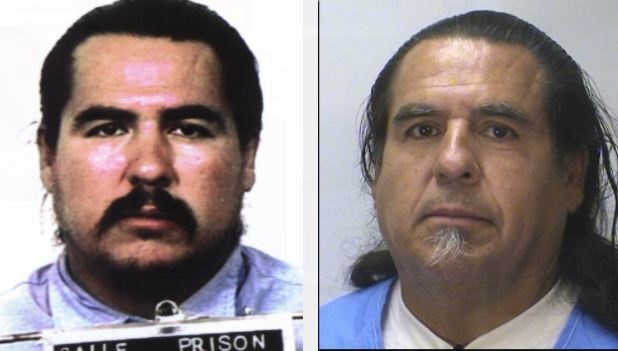
The ruling opens the door for a possible reversal or modification of the conviction or sentence, perhaps with a new trial or resentencing to time served. Stankewitz has long maintained he is innocent and that he was targeted by police because of his family’s criminal history and because he’s Indigenous.
“It’s been a long time and we’re finally getting heard,” Alexandra Cock, a member of Stankewitz’s defense team, said after the hearing. “American Indians have suffered for so long in the justice system here and it’s not been acknowledged.”
Stankewitz’s attorneys believe the data they are seeking, from 1972 to the present, will prove there’s been a disproportionately high murder conviction rate for Indigenous, Black and Hispanic individuals in Fresno County. The defense also seeks juror notes from Stankewitz’s 1983 retrial to determine why the only Native American juror candidate was dismissed by the district attorney’s office.
His attorneys produced evidence at a May 29 hearing to bolster the claim: a record of systemic racism in the community, derogatory statements about Native Americans in police department yearbooks, and derogatory testimony allowed by the prosecutor that may have influenced jurors in Stankewitz’s trial.
Harrell acknowledged a history of racial bias in the community: a park still named for a known Ku Klux Klan leader even after signage with the man’s name was removed in 2020; the recent use of a derogatory term for Native Americans on a county website; and a county reference to a community using a derogatory term for a Native woman despite the fact that the name had been officially changed.
In addition, a federal jury found the City of Fresno liable in March for racial discrimination and retaliation against a Black employee. La-Kebbia “Kiki” Wilson testified to experiencing years of racial slurs, including the N-word, within a city department, and the jury awarded her $15.4 million. The city is requesting a new trial, arguing the jury should have respected a local board’s finding that the discipline was not based on racial animus.
Laura Wass, area director of the American Indian Movement, told ICT that Harrell’s acknowledgement of systemic racism stunned her.
“I was shocked because Fresno is a very racist area in so many ways,” said Wass, Mountain Maidu. “To see somebody stand up to the racism that has something to do with the courts was shocking, for sure. My prayers are that this leads to more evidence that has been squelched and which will lead to a new trial or the judge saying, ‘Time served.’”
A death in 1978
Stankewitz was 20 when he was convicted of murdering Theresa Graybeal, 21, the evening of Feb. 9, 1978. Stankewitz and some friends kidnapped Graybeal from a Kmart parking lot in Modesto and drove her car to their hometown of Fresno, some 95 miles southeast in California’s Central Valley.
Stankewitz assured Graybeal she would not be harmed, that they only needed her car so they could get home to Fresno, Stankewitz’s co-defendants told investigators. The co-defendants said the young woman had relaxed, chatted with them and shared her cigarettes.
They pulled the car over next to a vacant lot near a residential neighborhood, presumably to drop Graybeal off late that evening. Stankewitz and two others, Marlin Lewis and Billy Brown, exited the car with her. Then, a gun was fired.
Stankewitz has maintained Lewis pulled the trigger. Wass signed a statement several years later that Lewis admitted to her that he, not Stankewitz, fired the gun.
“According to Marlin, Billy was drunk and I know Doug was strung out on heroin, really strung out that night,” Wass said. “And Marlin took it upon himself to be the big man. He was short in stature and I think it was more peer pressure than anything. I’m not sure that it was intentional, you know, that he realized the severity of what he was doing.”
Christina Menchaca and Teena Topping, who stayed in the car, told investigators they didn’t see who fired the gun. Brown, who was a minor at the time, was questioned by police without a parent or lawyer present and later said he was coerced by investigators into falsely testifying that Stankewitz killed Graybeal.
Stankewitz was sentenced to die in San Quentin Prison but his conviction was overturned four years later because of doubts he had been competent to assist in his own defense. He was found guilty at retrial in 1983 and again sentenced to death.
The case unraveled from there. James Ardaiz, the prosecutor in Stankewitz’s initial case, told ICT in a 2024 interview that he stands by the way his department and officers handled the case.
Stankewitz’s retrial attorney, however, acknowledged in 1989 in two sworn statements that he failed to introduce psychiatric and psychological evaluations that might have spared Stankewitz the death penalty. In 1993, co-defendant Brown recanted his testimony that he saw Stankewitz shoot Graybeal.
Stankewitz’s death sentence was reversed In 2012 based partly on the retrial attorney’s sworn statements. He was sentenced to life without parole in 2019, but a state appellate court ruled in 2022 that he had been entitled to an evidentiary hearing before he was re-sentenced.
Another chance
The evidentiary hearing took place in January 2024 before Fresno County Superior Court Judge Arlan Harrell, who is now a state appellate court judge and the brother of Judge Alvin Harrell III.
Stankewitz’s defense team introduced evidence and expert testimony that the handgun investigators reported finding in Graybeal’s car after the shooting was not the murder weapon; that Stankewitz was too tall to have been the shooter based on the angle and trajectory of the bullet wound; that there were no fingerprints on the gun and no gunshot residue on Stankewitz’s hands at the time of arrest; and that evidence had been mishandled.
Stankewitz’s attorneys asked the court to order a new trial or dismiss the case without the option of filing new charges. Judge Arlan Harrell denied the request. The attorneys then pursued a new course through the California Racial Justice Act of 2020, which expands a defendant’s ability to gather evidence of racial bias and allows for the reversal or modification of a conviction or sentence.
Meanwhile, Stankewitz was transferred in 2024 from San Quentin Prison to California Men’s Colony in San Luis Obispo. He works as a janitor in the prison, Cock said, and in December participated in his first sweat lodge in 51 years.
If released from prison, his attorneys would move him to the Sacramento or San Francisco areas, Wass said.
“What he would love to do is to be a speaker in Indian Country, to go and talk to these boys and girls and different groups about what he’s been through and how they can improve themselves,” she said. “I’d love to see him do something like that.”
Wass said she hopes the outing of Fresno’s history of racial animus will effect change in the local criminal justice system.
“Only if we keep it out there in a good way,” she said. “The local attorneys are pretty well under the thumb of the system, so change will come only if the community keeps it out there and there’s more reporting done.”

