
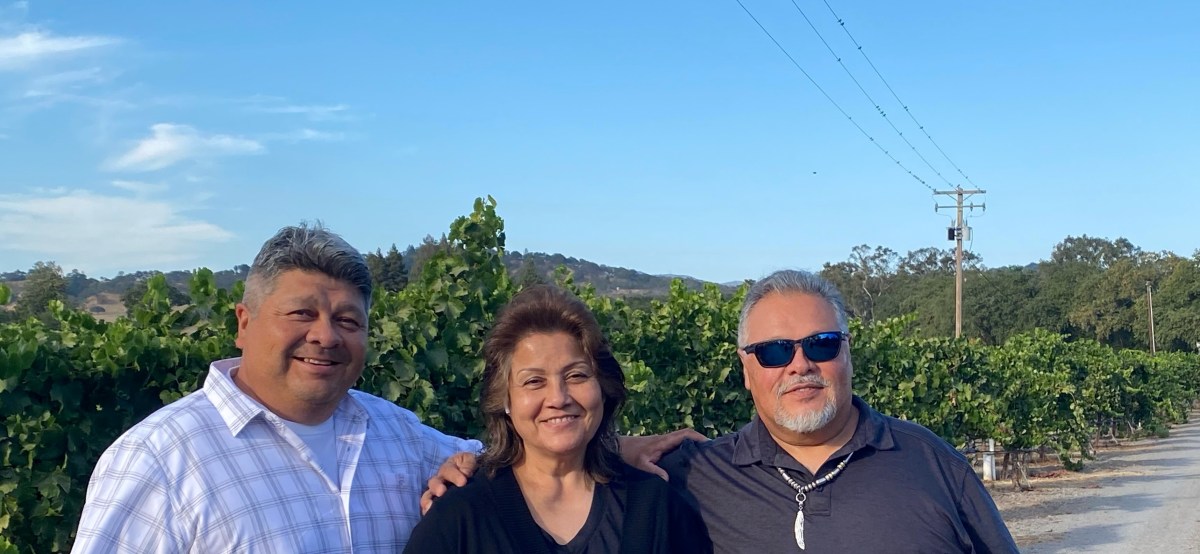
Darin Beltran, Dino Beltran, and Judy Fast Horse
Tribal council of the Koi Nation of Northern California
A small group of our brother and sister tribal nations are seeking signatories to a misleading letter to the honorable governors of California, Oregon, and Washington. If sent, the letter would urge the three western governors to pressure President Joe Biden and Interior Secretary Deb Haaland into pausing approvals for what it calls an “imminent proliferation of off-reservation tribal casinos.” The letter includes a chart of 24 trust land or eligibility requests for gaming currently pending before the U.S. Department of the Interior, including the Koi Nation’s request for restored lands determination.
Let’s be clear: calling for a universal pause in federal approvals for all pending tribal gaming projects is wrong, dishonest, and bad policy. The authors’ opposition to a select few projects has morphed into an obvious attempt to nationalize an issue with profoundly negative consequences for all in Indian country. By pressuring a federal agency to subvert its own regulations and existing law, this effort significantly harms all in Indian Country – not just the applicants whose projects would be directly affected.
This letter should be rejected outright by all who believe in the rule of law, and more importantly, the truth.
To understand why this letter is such a farce, one need not look any further than our own tribal gaming project’s inclusion. Calling the Koi Nation’s proposed Shiloh Resort & Casino an “off-reservation” project is, on its face, false. Despite the letter’s opposition to our project, the Koi Nation has neither reservation nor trust land. As a matter of law (and commonsense), our tribe cannot possibly then pursue an “off-reservation casino.”
The three western governors, our project opponents, and all of Indian Country should be aware that the reason the Koi Nation does not currently have a reservation or trust land is the same reason we seek a restored lands determination and not a so-called “two-part determination:” our wrongful termination from federal recognition status after the United States improperly sold off our original, uninhabitable Rancheria.
As a previously terminated tribe subsequently restored to federal recognition status, the Koi Nation is pursuing gaming on lands to which our people have demonstrated a “strong historical connection” through what is known as the “restored lands exception.” This provision of the Indian Gaming Regulatory Act was designed precisely to remedy the United States’ brutal history of Indian removal and tribes like ours’ termination from federal recognition status.
Without the restored lands exception, wrongfully terminated tribes like the Koi Nation would have no avenue through which to pursue the same rights to gaming the act provides every other federally recognized tribe.
What makes our project’s inclusion in the letter most egregious is the fact that the Chief Justice of the Federal District Court of Columbia affirmed the Koi Nation’s ability to pursue gaming through Indian Gaming Regulatory Act’s restored lands exception in 2019. Furthermore, the U.S. Department of Justice’s appeal of that decision was settled and vacated, making the District Court’s decision binding on the Interior.
Any pressure to pause the Interior’s review of our application would not only flagrantly defy the spirit of that court decision, but it would also amount to a violation of the Indian Gaming Regulatory Act, administrative procedure law, the trust responsibility, and due process for all tribal gaming applicants relying on current laws and regulations – not just the Koi Nation.
The letter’s clear attempt to create a smoke screen of manufactured hysteria over false concerns about an impending flood of “off-reservation” gaming applications is particularly dishonest. The Indian Gaming Regulatory Act requires restored tribes submit requests for restored lands determination within 25 years of achieving their respective restorations. Given the small universe of tribes meeting these rigid criteria, this likely means the four pending restored land applications are the very last allowed under existing law.
While we certainly appreciate that some in Indian Country harbor authentically felt opposition to a few of these 24 projects due to gaming market competition, this has never been a legitimate reason for denying – or pausing – applications. Competition-driven opposition certainly should not warrant a campaign to pressure elected officials and a federal agency to undermine the Biden administration’s record of completing a historic amount of lawful fee to trust applications.
Like the general public, these same tribes may of course object to pending applications through numerous avenues for comment and legal argument. They should not, however, attempt to pull the wool over the eyes of our brothers and sisters with this false and misleading letter. This not only harms the Koi Nation, but all tribal gaming applicants following existing law and regulations in good faith.
Indian Country should put an end to this hysteria and call for a rejection of this deceptive letter.
This op-ed has been corrected to show that it was 24 projects.
The Koi Nation of Northern California’s Tribal Council is headquartered in Sonoma County, California and comprised of Darin Beltran as Chairman, Dino Beltran as Vice Chairman, and Judy Fast Horse as Secretary. We are dedicated to empowering our people to achieve a better way of life and to maintain tribal integrity and honor through responsive government while practicing traditional ways as a central part of our lives.

This opinion-editorial essay does not reflect the views of ICT; voices in our opinion section represent a variety of reader points of view. If you would like to contribute an essay to ICT, email opinion@ictnews.org.
More information about our guidelines: Submission guidelines.

