

Sandra Hale Schulman
Special to ICT
The latest: Florida tribal artists shine at new museum exhibition, generational fiber art in South Carolina and family drama onstage in Biloxi
ART: Seminole, Miccosukee, and other artists ‘reclaim home’
Beading, rickrack and paintings are among The Ringling Museum of Art’s new exhibition of contemporary art by living Florida tribal artists with ancestral, historical, and present-day connections to the Sunshine State.
SUPPORT INDIGENOUS JOURNALISM. CONTRIBUTE TODAY.
“Reclaiming Home: Contemporary Seminole Art,” which opens March 18 and runs through Sept. 4 at the Sarasota, Florida, museum, features more than 100 artworks by 12 artists highlighting the range and depth of Seminole, Miccosukee, and mixed-heritage artists, along with notable work by recognized artists of Muscogee (Creek) and Seminole descent from Oklahoma and beyond.
Expanding the conceptual framework of Native American art made in Florida helps provide a fuller understanding of the complexities of issues within the unconquered Seminole tribal lands art, officials said.
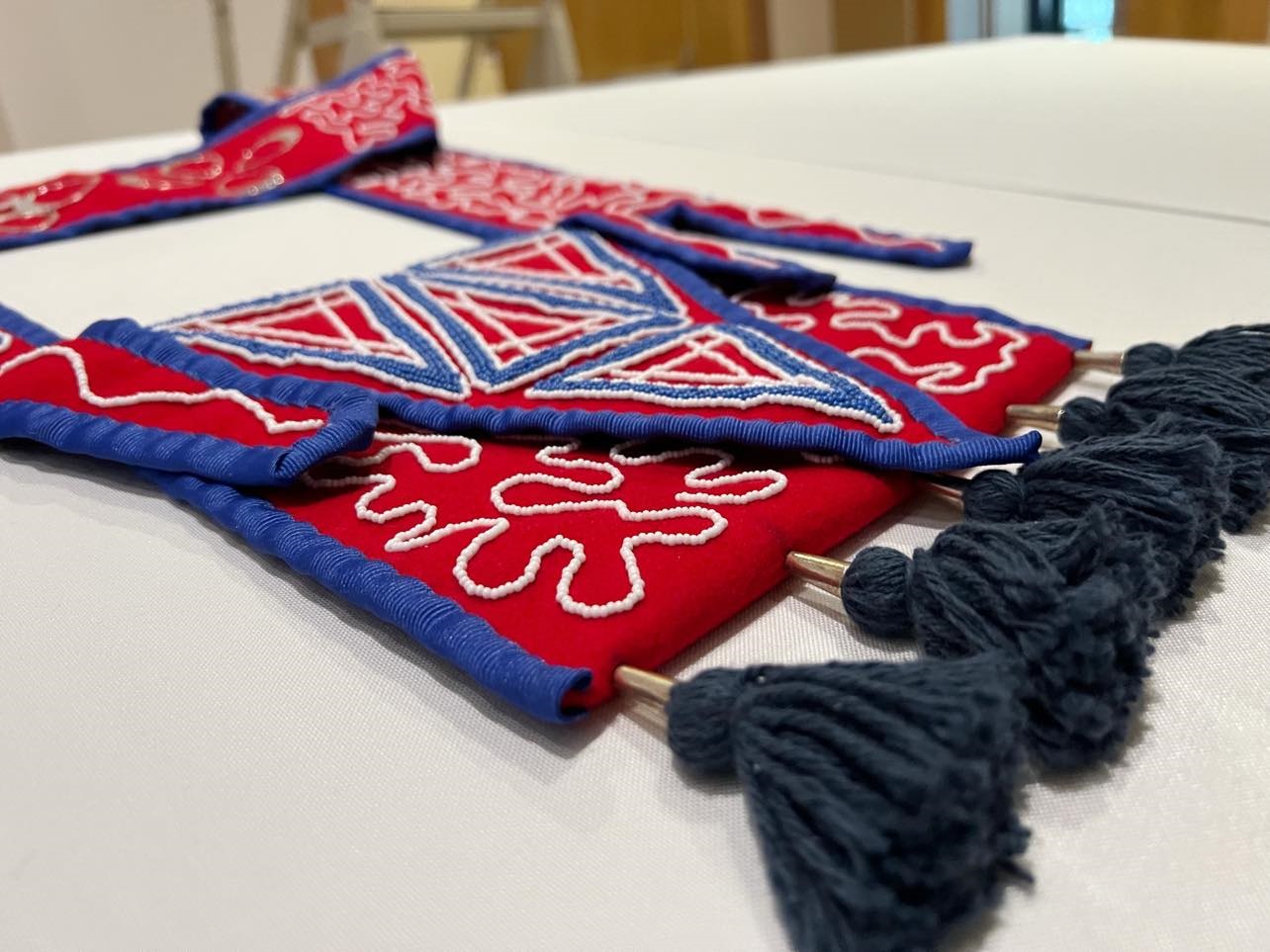
“This exhibition is an imperative step toward establishing a meaningful relationship with the Native American artistic community,” said Ola Wlusek, the museum’s Keith D. and Linda L. Monda Curator of Modern and Contemporary Art. “We are honored to be able to present the work of these incredible artists at The Ringling.”
Seminole and Miccosukee artists are represented by works in textiles, film, woodworking, beadwork, digital drawing and painting. The exhibit offers an in-depth look into their lived experiences and issues of ancestry and identity, as well as environmental issues, interfaith practices and traditional ways.
Other works use photo-based and digital collage techniques, performance, video, installation art and mixed-media.
Brian Zepeda,Seminole artist and a council and board liaison for the Naples Community, has colorful beaded bags on display.
”I taught myself how to make beaded bandolier bags by studying original historical pieces and figuring out how they were constructed,” Zepeda told ICT. “Then it was four months of trial and error until I made a bag that I was happy with.”
Zepeda said he’s been making the bags since 1998 and has no plans to stop.
“During the pandemic, my beadwork brought me peace and happiness,” Zepeda said. “I am extremely grateful to be a part of this exhibition and to be among such talented artists.”
Other featured artists include Noah Billie, Seminole; Wilson Bowers, Seminole; Houston R. Cypress, Miccosukee; Alyssa Osceola, Seminole; Jessica Osceola, Seminole/Irish; Corinne Zepeda, Seminole /Mexican; and Pedro Zepeda, Seminole/Mexican.
Also included are internationally recognized artists of Muscogee (Creek), Seminole, and mixed heritage from Oklahoma and beyond, including Elisa Harkins, Cherokee/Muscogee (Creek); C. Maxx Stevens, Seminole/Muscogee (Creek); Tony Tiger, Sac and Fox/Seminole/Muscogee (Creek); and Hulleah J. Tsinhnahjinnie, Taskigi/Diné.
The exhibition will also unveil Jessica Osceola’s 2017 work, “Portrait One, Portrait Two, and Portrait Three,” the first work by a Seminole artist to be added to The Ringling’s collection of modern and contemporary art.
Read more:
—Seminole museum reopens with new exhibits
Many of the works are on loan from the Ah-Tah-Thi-Ki Museum on the Big Cypress Indian Reservation, officials said.
“We are grateful for the generous loans of artwork by the artists and lending institutions and, in particular, the Ah-Tah-Thi-Ki Museum for their support of this historic project,” said Steven High, the museum’s executive director, “We look forward to partnering on exhibition projects in the future.”
FIBER ARTS: Stories told in cotton and wool
Fiber art weaves stories at a new exhibit at the University of South Carolina Lancaster’s Native American Studies Center.
The exhibit, “Woven Together: Fiber Art within Special Collections,” which opened Feb. 23 and runs through Aug. 3, showcases a wide variety of fabric arts that offer rarely seen, hand-woven creations from the Native American Studies Collections.
The exhibit includes regalia, finger weavings, leatherworks, beaded items, moccasins, jewelry, and more.

“The goal was to highlight fiber arts that people may not have seen from our collection yet, as well as the artists who made them,” said Elisabeth Avelar, the center’s special projects coordinator in a statement. Avelar curated the exhibit along with Sharon Simmers-Norton, Catawba, who is assistant curator and program assistant.
“The items we have selected showcase beautiful works from an array of Indigenous artists,” Avelar said, “and I think each piece represents the broad genre known as fiber arts well.”
One of the unique woven items is a reed basket cradle by Marilyn Harrison from 1995.
The cradle, exhibited with a handmade blanket and pillow, was used by the artist’s own daughter when she was an infant.
Another item, which has never been displayed, was donated in the late 1990s, and holds a special significance to Simmers-Norton.
“My favorite piece in the exhibit is the child’s regalia, which was made by my Catawba great-aunt Brenda Sanders-Sigmon,” said Simmers-Norton. “She made it in the early ‘90s for my cousin, and it was later passed down to my daughter, who wore it in the late ‘90s.”
THEATER: Family and cultural ties play out on stage
The Tunica-Biloxi Tribe of Louisiana is joining with the Oklahoma Indigenous Company to present a new play, “Three Sisters,” at the Paragon Casino Resort in Louisiana.
The performances, on Friday and Saturday, March 24-25, are free and open to the public.
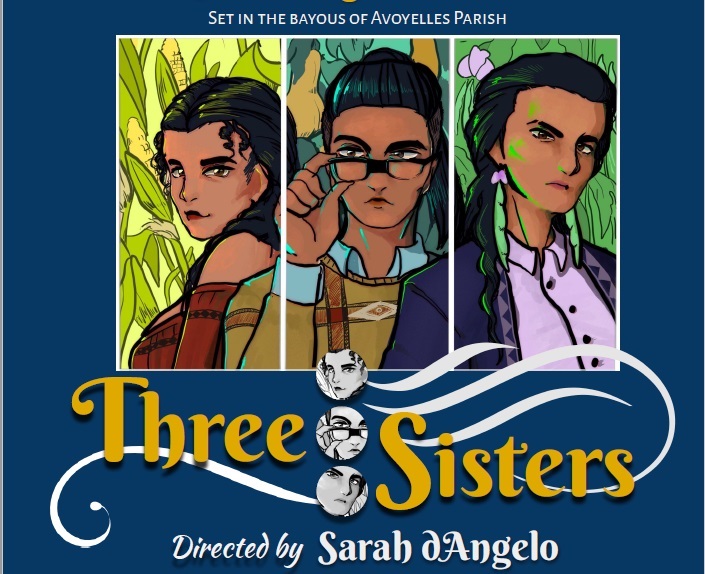
Written by playwright Carolyn Dunn, a Tunica-Biloxi descendant, “Three Sisters” tells the story of estranged sisters who return home to Avoyelles Parish in Louisiana at the request of their dying aunt. The play explores familial ties, hidden secrets and the death of elders, and their intersection with love, loss, tradition and culture.
The play also explores the struggles of the Biloxi Native community and the plight its tribal citizens face in preserving their culture and traditions amid societal pressures. Dunn’s Indigenous roots gave her an innate understanding of what motivates her characters and the familial connection between culture and relationships, officials said.
“It is important for not only the Tunica-Biloxi Tribe of Louisiana, but all of Indian Country to share pieces of our culture with those unfamiliar with our history and traditions,” John Barbry, director of the Tunica-Biloxi Language and Culture Revitalization Program, said in a statement.
“Our hope is to continue spreading our culture across the country, and with the help of ‘Three Sisters’ and Carolyn Dunn, we are well on our way,” Barby said. “I encourage all audiences to partake in this wonderful story that transcends cultural divides.”
The Paragon Casino Resort is at 711 Paragon Place in Marksville, Louisiana, north of Lafayette near Alexandria.

Our stories are worth telling. Our stories are worth sharing. Our stories are worth your support. Contribute $5 or $10 today to help ICT carry out its critical mission. Sign up for ICT’s free newsletter.

