
Jennifer Solis
Nevada Current
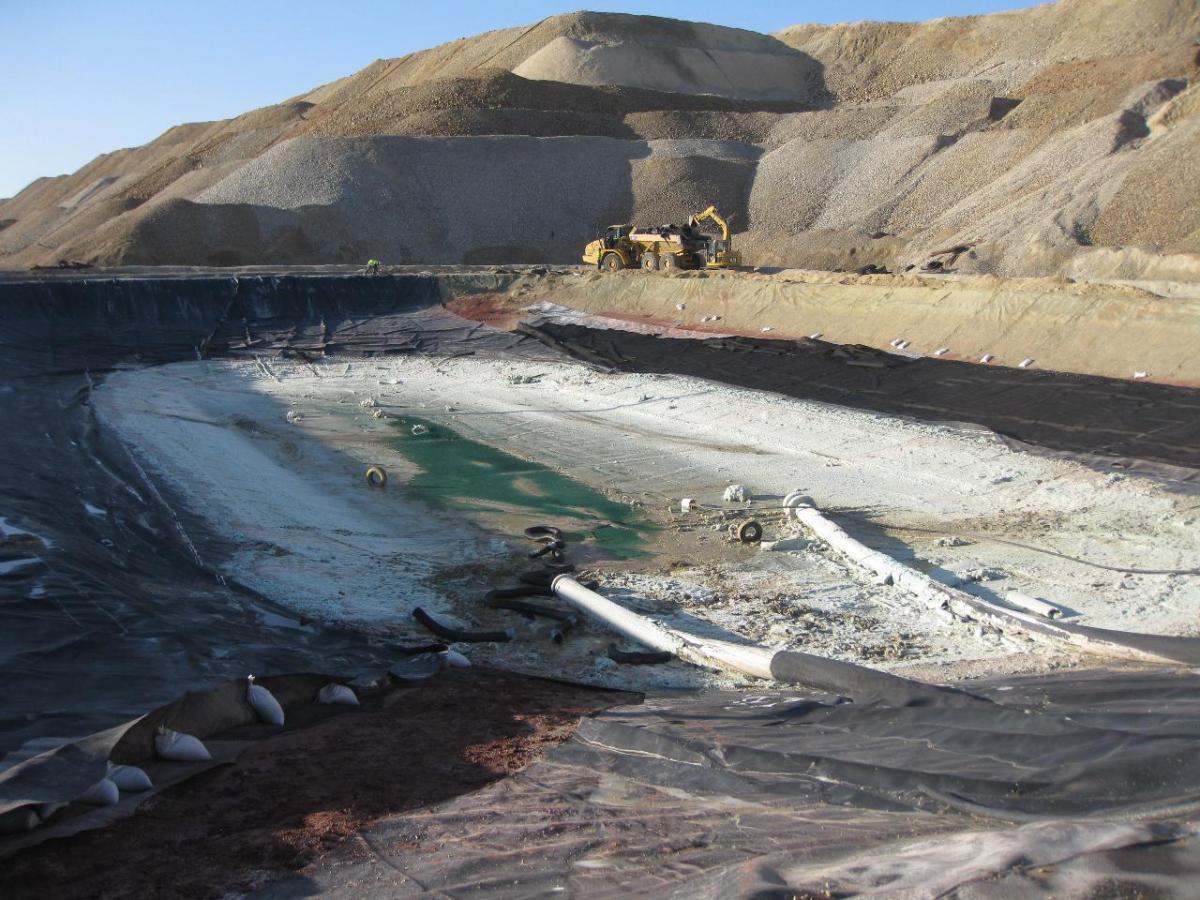
A federal court temporarily blocked the sale of more than 2,000 acres of public land in and around a polluted former copper mine to a multi-national petroleum company on Thursday, July 16 while a lawsuit against the sale is decided in court.
In April, the Bureau of Land Management approved the direct sale of 2,062 acres of public land near the Anaconda Copper Mine site in Lyon County — and the underlying mineral rights — to the Atlantic Richfield Company (ARC).
Several environmental groups — the Great Basin Resource Watch, Prayer Horse Inc., and Taboosi Dikudu NO’Obatu Numma Cooperative — responded by suing the federal government to prevent the sale, which was slated to go through after July 27, 2026.
On Thursday, U.S. District Judge Miranda Du ruled the lawsuit raised serious questions about whether the sale complied with federal land disposal requirements and if BLM failed to take a “hard look” at the impact of future mining on the site before approving the sale of public land to a private company.
The federal judge agreed the sale of the site before a final decision is made on the overall sale would cause “irreparable harm and that the requested relief serves the public interest” by cutting off access to public land.
ARC purchased and operated the Anaconda Copper Mine in the late 1970s before it eventually sold to Arimetco, which abandoned the heavily polluted site after filing for bankruptcy. ARC remains responsible for the contaminated sites’ clean-up along with the BLM, the state of Nevada, and the Environmental Protection Agency.
Federal land managers have argued the land sale would benefit the public because it would facilitate a more effective and timely clean-up of the contaminated former copper mine, which is set to be completed in 2030.
However, during a hearing last week attorneys representing BLM noted the sale would not make clean-up efforts faster, while attorneys for ARC said the sale would largely benefit the company by easing administrative burdens created by having “another cook in the kitchen” due to BLM oversight.
The court determined the federal government officials “have not provided a satisfactory explanation” for their decision to sell the land or how “BLM’s ownership has or will hinder the clean-up,” thus potentially violating provisions of the Federal Land Policy Management Act of 1976.
BLM and ARC did not immediately respond to requests for comment on the blocked sale.
In her decision, Du noted even if clean-up efforts were measurably slower under BLM oversight than private oversight “public ownership has been the status quo for decades, which cuts against any argument that it would now cause irreparable harm.”
The court also determined the federal government potentially violated the National Environmental Policy Act by failing to take a “hard look” at the impact of future mining on the site before the sale when evidence exists that the sale will likely result in future mining operations.
Lion Copper and Gold Corp and its wholly owned Singatse Peak Services (SPS) have developed plans to mine the Anaconda site, according to an economic assessment prepared by AGP Mining Consultants for the company.
“Upon acquisition, ARC will convey title to all minerals to SPS and the parties will execute a Surface Use Agreement allowing SPS the right to explore and mine the property,” the report says.
Singatse Peak Services filed a motion to join the case on Thursday after the court blocked the sale while the overall case against the sale makes its way through court.
John Hadder, the executive director of the Great Basin Resource Watch, said SPS’s intervention suggests a mining interest, which he said was further supported by the company’s water right’s applications and historical exploration reports.
“It really does also point to the fact that this mining company is interested,” Hadder said. “It’s reasonably foreseeable that re-mining on the site will occur.”
“Our view is the real reason for the land sale is to facilitate plans to re-mine the site with no environmental impact statement. That’s what we think is going on,” Hadder said.
Johanna Emm, the executive director of Taboosi Dikudu NO’Obatu Numma Cooperative, said he was “glad that the court understood that ARC/BLM did not provide evidence of how the land sale would make the Anaconda mine clean-up better.”
Joshua Dini, the executive director of Prayer Horse Inc., said blocking the sale would prevent “any further contamination.”
“I appreciate the court’s finding in preserving my ability to stay connected to my homelands,” said Dini, who is a member of Walker River Paiute Tribe.
For decades, toxins from the Anaconda Copper Mine have seeped into the nearby land, polluting the groundwater and forcing the responsible parties – BP America and Atlantic Richfield Company — to take responsibility for the clean up, including providing bottled water for the Yerington Paiute Tribe’s reservation about 2 miles north of the abandoned Anaconda Copper Mine.
In 2002, the Nevada Division of Environmental Protection, the U.S. Environmental Protection Agency, and BLM agreed to coordinate oversight of the site’s clean-up. In 2005, BLM closed about two-thirds of the Anaconda Copper Mine site to the public due to environmental hazards.
In 2018, the Environmental Protection Agency and the state of Nevada agreed to keep the site off the federal Superfund National Priorities List in favor of allowing the state to oversee the remaining cleanup by Atlantic Richfield Company. However, the site is still managed under Superfund guidelines.
