

Daniel Herrera Carbajal
ICT
SELLS, Arizona — For thousands of years the Tohono O’odham people have lived in their homelands in what is today southern Arizona and northern Mexico. For centuries since the artificial border went up between the United States and its southern neighbor, tribal members have moved north and south relatively freely.
That might end soon.
The Trump administration is planning to build a border wall through the nation that would split the community apart and force tribal citizens to get visas to visit relatives or the doctor.
“I stand on the principles of our forefathers, of our beliefs and our culture and the position that our people have taken on an opposition to a destructive wall,” Tohono O’odham Chairman Verlon Jose told ICT.
The Tohono O’odham Nation sued the Department of Homeland Security in federal court in June, arguing the wall illegally seized sovereign land and desecrated ancient sacred sites.
A federal judge denied the tribe’s request for a preliminary injunction, though the legal battle continues.
On Aug. 25, armed U.S. Customs and Border Protection and Bureau of Indian Affairs law enforcement officers accompanied DHS contractors onto Tohono O’odham land to begin pre-construction activities.
Despite the tribe making it known they considered the officers to be trespassing, customs officials said a new wall is necessary to close what it describes as a long-standing border security gap and dangerous smuggling corridor.
ICT reached out to the U.S. Customs and Border Protection for a comment and didn’t hear back in time for publication.
Jose said the tribe has had a productive, long standing relationship with the border patrol that has resulted in a 95 percent reduction in border crossings over the last two years.
“Look at the numbers, look at the years of cooperation, a unification of addressing border issues,” he said. “Their own numbers indicate that the apprehensions are down. …. During Trump (administration) one, when they built the walls, they said that the 62 miles here was going to create a funnel effect where there was going to be a gap and then everybody is going to come through here.”
“That didn’t happen.”
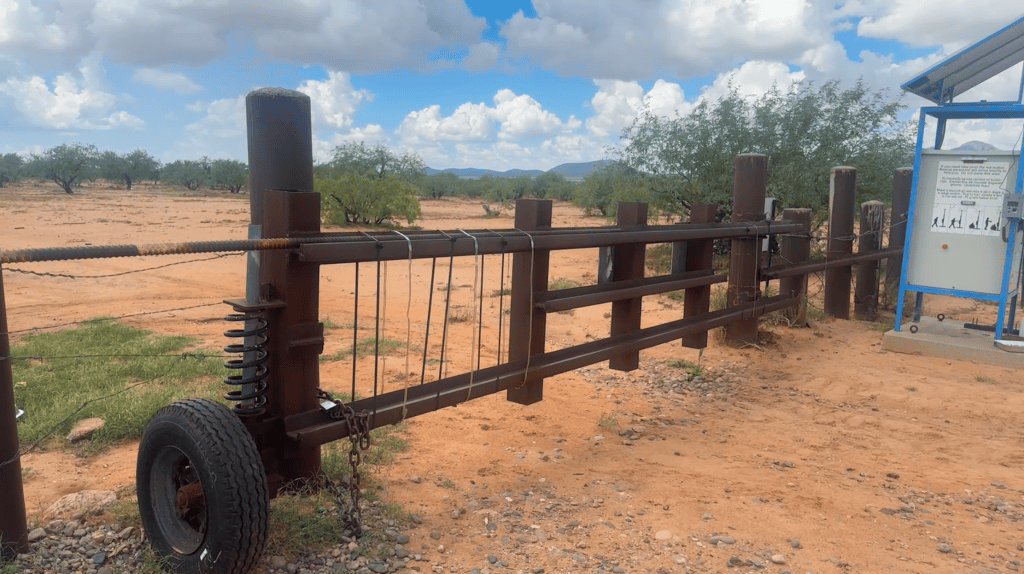
The 62 miles of the U.S.-Mexico border that lies within the Tohono O’odham Nation has multiple gates that are accessible to Tohono O’odham citizens – or other specially-permitted tribal members – to use crossing between the two countries without having to access a regular port of entry. Members are able to click a button at the gate and, after they are verified by remote video link, they are able to cross the frontier.
Members of the tribe have set up a prayer camp near one of the traditional crossing gates, San Miguel gate, opposing the border wall.
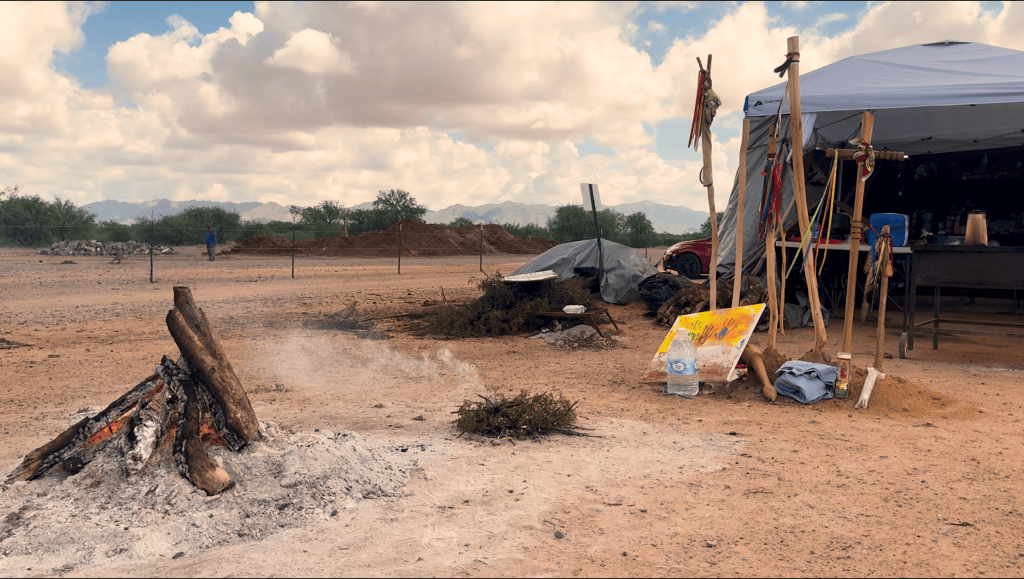
Davy Cross, Tohono O’odham, is an attendee of the prayer camp. He told ICT he’s been there since the second day DHS came on the land in August.
“I have been here because of this border wall that’s going up and the Trump administration,” he said. “I really dislike it because it’s dividing our people and that really hurts,” he told ICT. “They can’t see their families, they can’t visit their families, they can’t go home. Just the other day, we went to our neighbors right across (the border) to invite them over for breakfast and we got stopped … and we got carded and they never did that before. They wouldn’t let us cross until we gave them our tribal IDs.”
There are currently more than 3,000 enrolled tribal members who live in Mexico, according to the tribe.
If the border wall were to take away the tribe’s traditional crossings, members would have to drive to a regular border crossing and have to apply for a traveling visa, which Jose said many members would not be able to afford.
“We would have to go around through the point of entry, which is difficult because, number one, our members don’t have a visa and passport to enter this country,” he said. “They have a tribal ID, they don’t qualify for an enhanced tribal ID, which we are now issuing out because they’re not deemed as American citizens.”
The chairman explained that Tohono O’odam citizens in Mexico would have to apply for a special permit to come into the United States for a day or a couple of days.
But he said there would be real problems with those.
“The president of the United States put out an executive order and they said that anybody with those permits would have to pay $1,000 for it,” he said while standing this month at one of the traditional tribal border gates.
“We don’t have $1,000,” he said, shaking his head. “It is even hard for our members … in Mexico, to even have $100. So it’s very difficult.”
Since many tribal members wouldn’t be able to pay for a visa, they would lose the ability to access Indian Health Service and other tribal benefits on the U.S. side of the border, he said.
“As it is right now, they won’t have health care. The public health care in Mexico is zero-to-none. People die in the waiting rooms,” Jose said.

