You can help elevate meaningful stories from Indigenous nations when you support ICT during Arizona Gives Day! ICT is headquartered in Arizona, and covers the Indigenous world across North America. Help us reach our goal to raise $10,000 for reliable, compelling, Indigenous-led journalism in Arizona and beyond.
Sandra Hale Schulman
Special to ICT
The latest: Osage costumes in spotlight, skateboards inspire new weaver line, woven reeds and black pots
COSTUME DESIGN: Oscar outfits star in exhibit
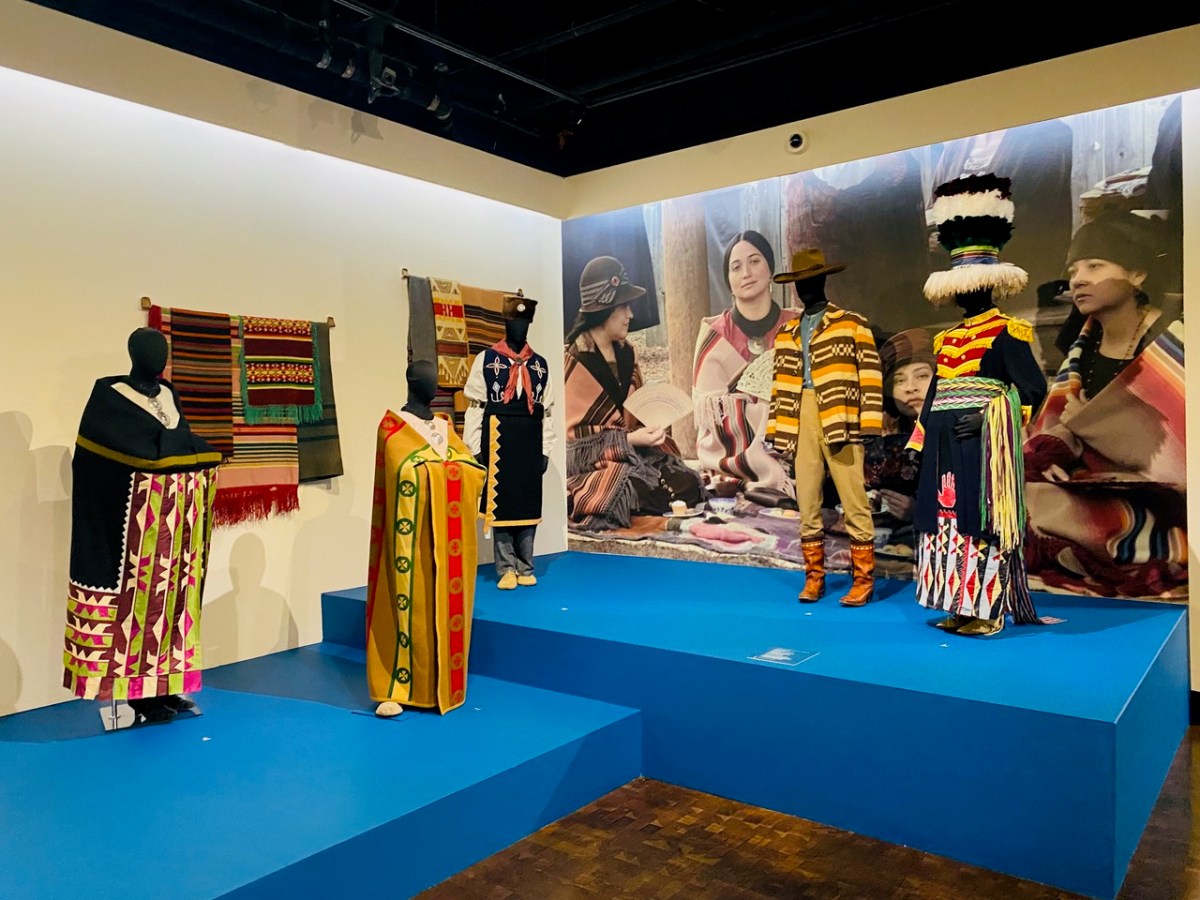
It’s one thing to see costumes in the Oscar-nominated and -winning films, but it’s a real thrill to see them in person. On display through April 20 in Los Angeles, an exhibit at the ASU Fashion Institute of Design and Merchandise Museum showcases achievement in costume design from several of the films released over the last year.
The “Art of Costume Design in Film” features all five nominees for Best Costume at this year’s Academy Awards, including “Killers of the Flower Moon,” “Oppenheimer,” “Barbie” and the winner “Poor Things.”
“Killers of the Flower Moon” costume designer Jacqueline West, a four-time Academy Award nominee, added Osage art consultant Julie O’Keefe of Tulsa to her costume department to bring the period to life and locate artisans to make elements of the film’s wardrobe.
“These were museum pieces that Osage people wanted to share and let us use in the movie,” West told the Los Angeles Times. She said she copied original items and employed local artisans to make traditional finger-woven belts, complex ribbon work appliqués and silver jewelry.
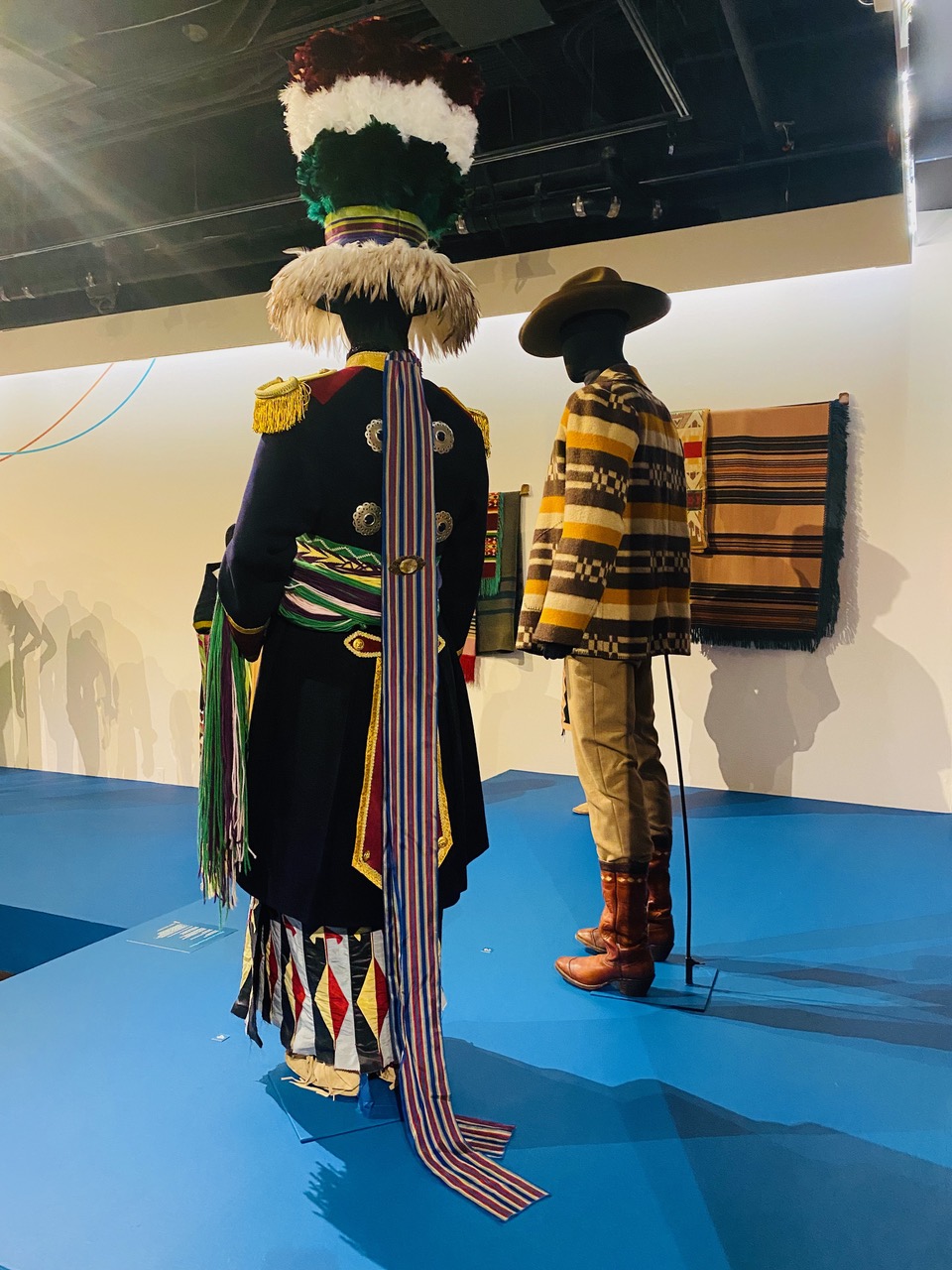
On loan from Apple Films, the standout costume is the colorful wedding outfit worn by Mollie Burkhart that features a British military coat and enormous feathered hat. There are large yarn belts and engraved silver medallions on the back with abalone details that were not shown in detail in the film.
Altogether there are two outfits from Lily Gladstone’s wardrobe, one from Leonardo DiCaprio as Ernest Burkhart in a blanket coat and boots, one woven blanket costume from Desiree Storm Brave as Bertha Bigheart, and one from Christopher Cote as “baby namer” for Anna Burkhart in a traditional Osage hat and jacket.
DESIGN: Feathers and skateboards inspire fashions
Native fashion continues to inspire and be taken seriously as major museums and fashion companies look to indigenous designers and designs.
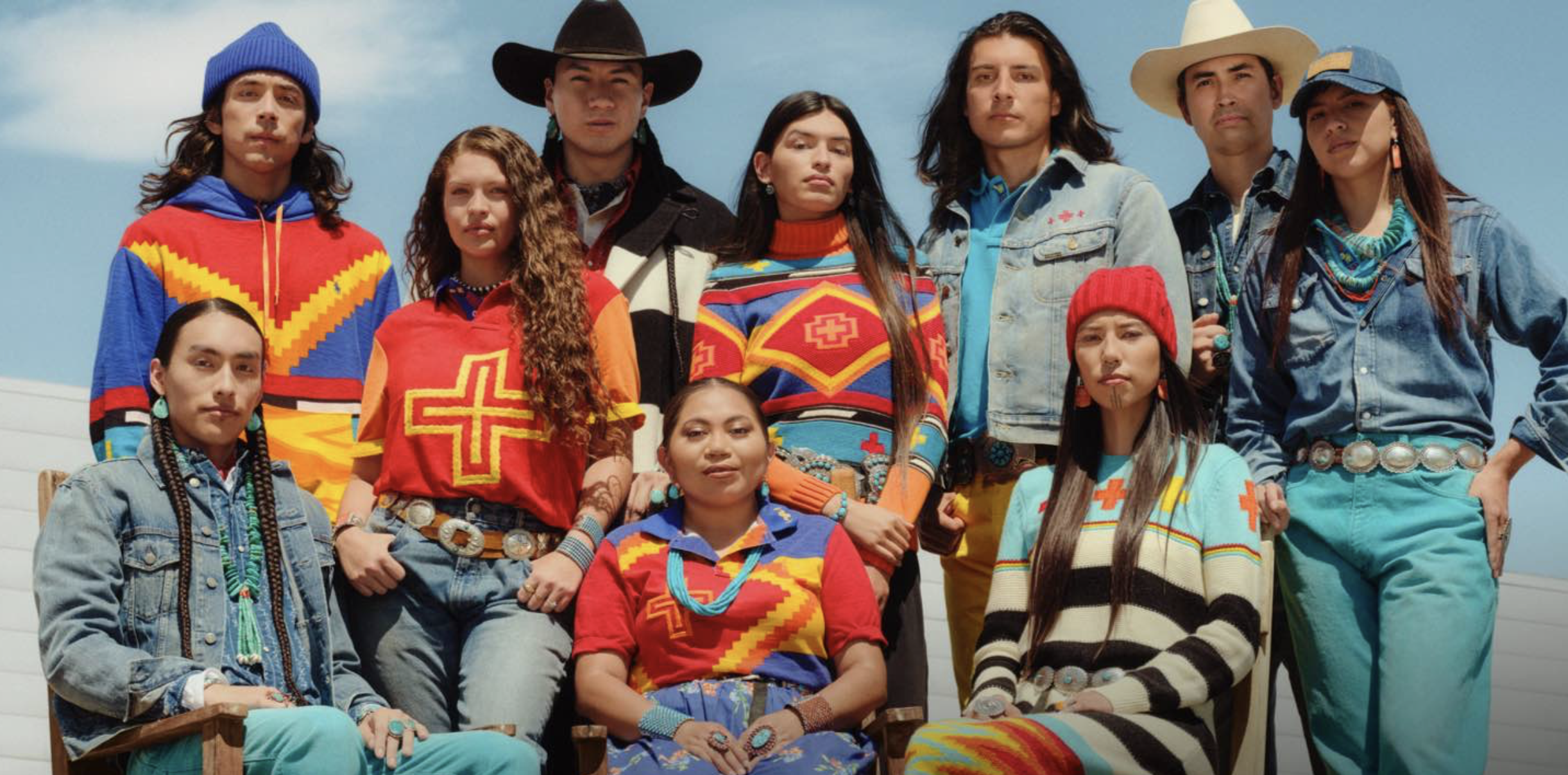
Over the past two years, Naiomi Glasses, Navajo, has worked with Ralph Lauren and his design teams to reimagine the original designs of her woven wool art into a collection that will have three releases by the end of summer. The first collection of winter wool sweaters and coats came out in December. The second drop was released March 21 and is called Color in Motion, reflecting Naiomi’s love of skateboarding and translating that into wearable, sporty clothes. The third comes out in August.
Bold, bright color pairs with modern interpretations of Navajo historical motifs here with 24 men’s, women’s and unisex items. Four-directional crosses, wedge woven emblems and bright turquoise, orange, yellow and red make for a versatile palette.
Glasses loves skateboarding, a hobby she started at 5 years old to escape bullies.
Video Profile of Naiomi Glasses

“Her time spent at the skatepark has brought healing and community and has been a pivotal source of inspiration in designing this collection,” Polo Ralph Lauren said in a statement. The collection has skate-inspired pieces, like turquoise board trousers, pocketed cargo pants and useful waist packs.
The collection is available through the Ralph Lauren webstore. Star Native models include Peshawn Bread, her brother Phillip Bread, Comanche, and Quannah Chasinghorse, Han Gwich’in. A percentage of proceeds will benefit the Phoenix Children’s Foundation Patient and Family Assistance Funds for Native American Families and the Center for Cleft & Craniofacial Care.
Jontay Kahm, Plains Cree, a young designer who wowed the crowd at last year’s Indian Market Fashion show and whose feathered designs have since been seen on award-winning actress Lily Gladstone, is taking flight with traditional Native culture and modern innovation.
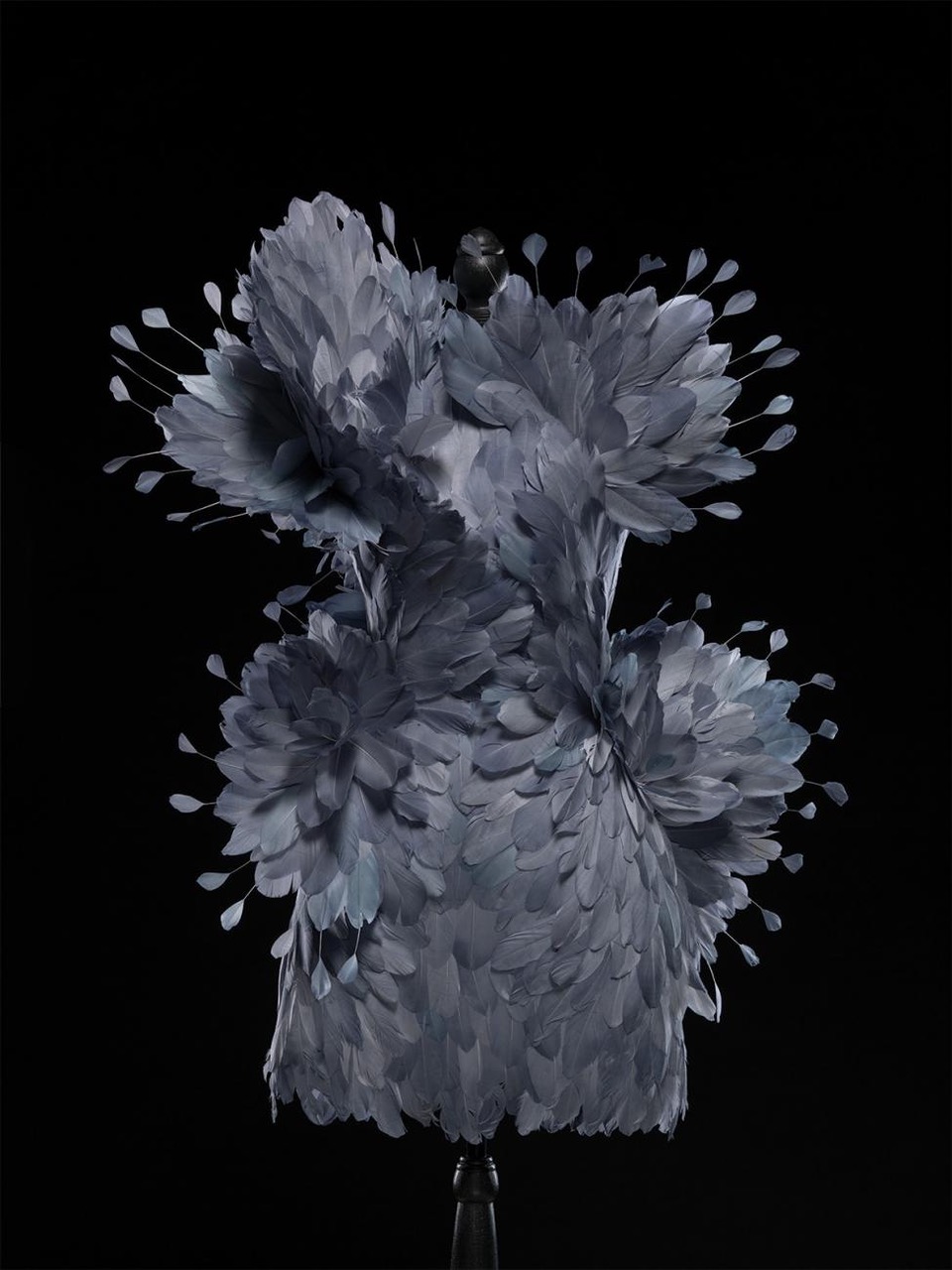
His “Bell Bird,” outfit is now the March Object of the Month at the National Museum of the American Indian. The dress is exquisitely handmade by Kahm and inspired by the loudest bird in the world.
With fans of feathers and an exotic shape, the work has a “dark and moody” sentimentality as he draws on the concept of death and the afterlife. Kahm describes his dresses as symbolizing “transitioning from an earthly body to a heavenly one” and “abandoned buildings and nature taking over.”
“I never draw illustrations of my dresses, because that takes away from the creativity of actually assembling the dresses,” Kahm told Vogue magazine. “I see it in my head, and I just go for it. It’s already downloaded into my head.”
He mostly uses feathers, fringe, and ribbons – no fabric – which makes for extremely challenging design structures.
Kahm has graduated with a Bachelor of Fine Arts in studio arts from the Institute of American Indian Arts in Santa Fe. He is now enrolled in a Master of Fine Arts program at Parsons School of Design in New York to continue “incorporating my cultural background,” he says.
ART: Baskets and ceramics in Phoenix
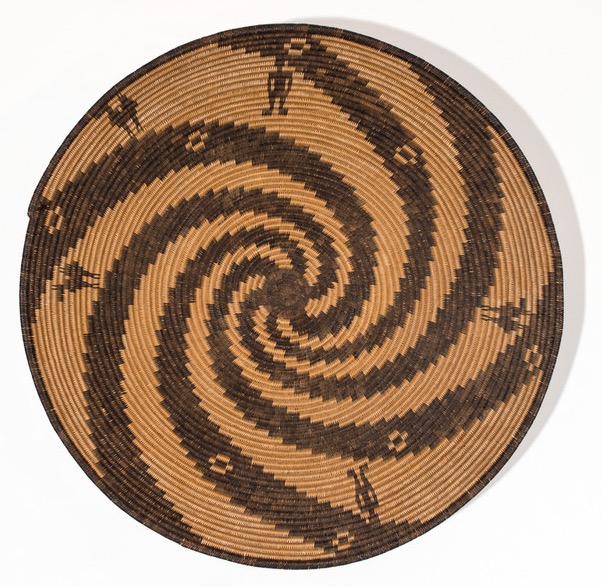
The Heard Museum has two stellar exhibits. One is Heart of the Community: Baskets from the Basha Family Collection of American Indian Art, showcasing baskets from the Southwest. The exhibition contains artistry of Western Apache, Yavapai, Navajo and Akimel O’odham weavers, connecting past and present.
Many of the baskets were woven in the early decades of the 20th Century in Arizona. They come from a time when weavers were exploring their art form, referencing design that was important to their lives and recognizing change.
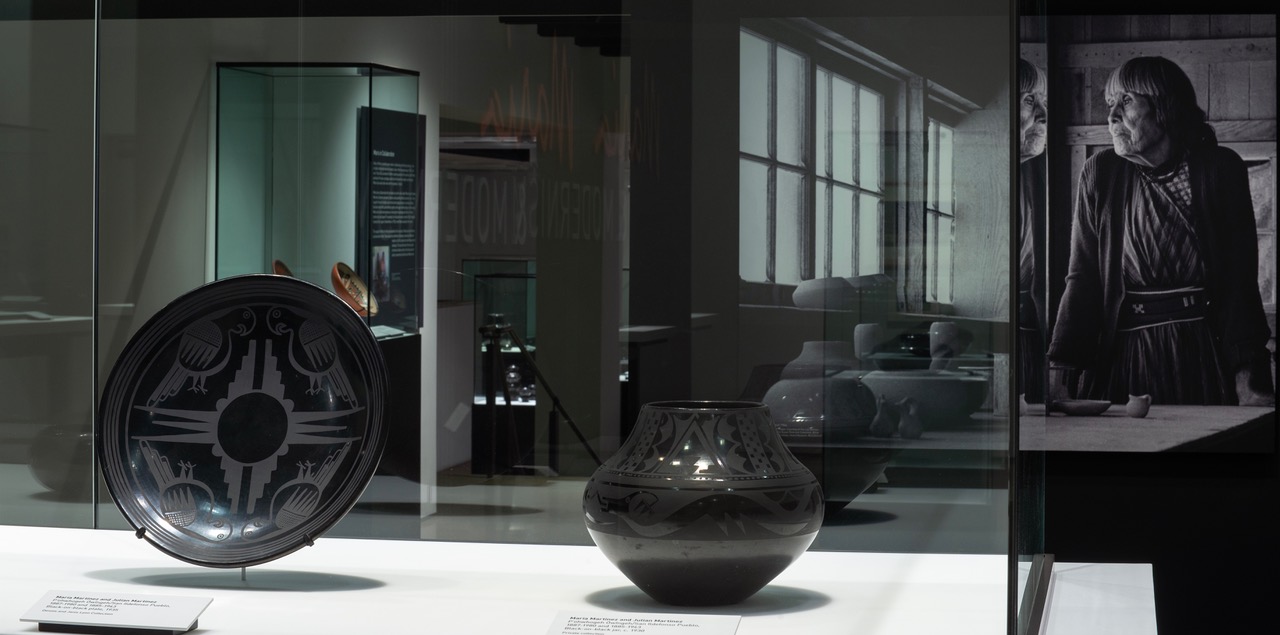
The other exhibit, Maria & Modernism, features more than 80 works spanning seven decades by San Ildefonso ceramist Maria Martinez (1887-1980), one of the 20th Century’s most celebrated and recognizable women artists.
Through experimentation with traditional Pueblo ceramic production and design, Martinez radically transformed the dramatic black-ware vessels of her ancestors. Her sleek, black, sculptural vessels fit into any modern 20th Century home, and often did. Martinez was so well known in her lifetime she met US presidents, movie stars, scientists and fellow artists, including Georgia O’Keeffe.
“This exhibition is the first to exclusively focus on Maria Martinez’s overlooked contributions to Modernism, the most important artistic movement of the 20th Century,” said David M. Roche, CEO of the Heard Museum. “Visitors will see masterpieces of Martinez’s work that we have gathered from collections around the United States, including the Metropolitan Museum of Art and the Museum of Modern Art in New York.”
The exhibition will be open through July 28th, 2024.

Our stories are worth telling. Our stories are worth sharing. Our stories are worth your support. Contribute $5 or $10 today to help ICT carry out its critical mission. Sign up for ICT’s free newsletter.