

Christopher Lomahquahu
ICT
A new Indigenous artist collective unveiled its goals this fall in working with a southern Arizona city.
This October, Hekiu held its first reception, unveiling its goals for working with the city of Tempe in Phoenix’s East Valley and not far from the Salt River Pima-Maricopa Indian Community..
The project is based on what the group calls the Oidbad: Original Peoples Design Principles, to describe the ancestral presence of the O’odham, Piipaash and Pascua Yaqui tribes. Oidbad is a translation of Tempe, meaning a “mountain” or “dead fields”
To describe the Indigenous artist collective called Hekiu, or “past,” The word comes from the O’odham language, “O’odham Ñoek,” to describe the continuum.
Hekiu is a collaborative partnership between citizens of various tribal communities that neighbor Tempe through public art projects made possible through the National Endowment of the Arts: Our Town grant.
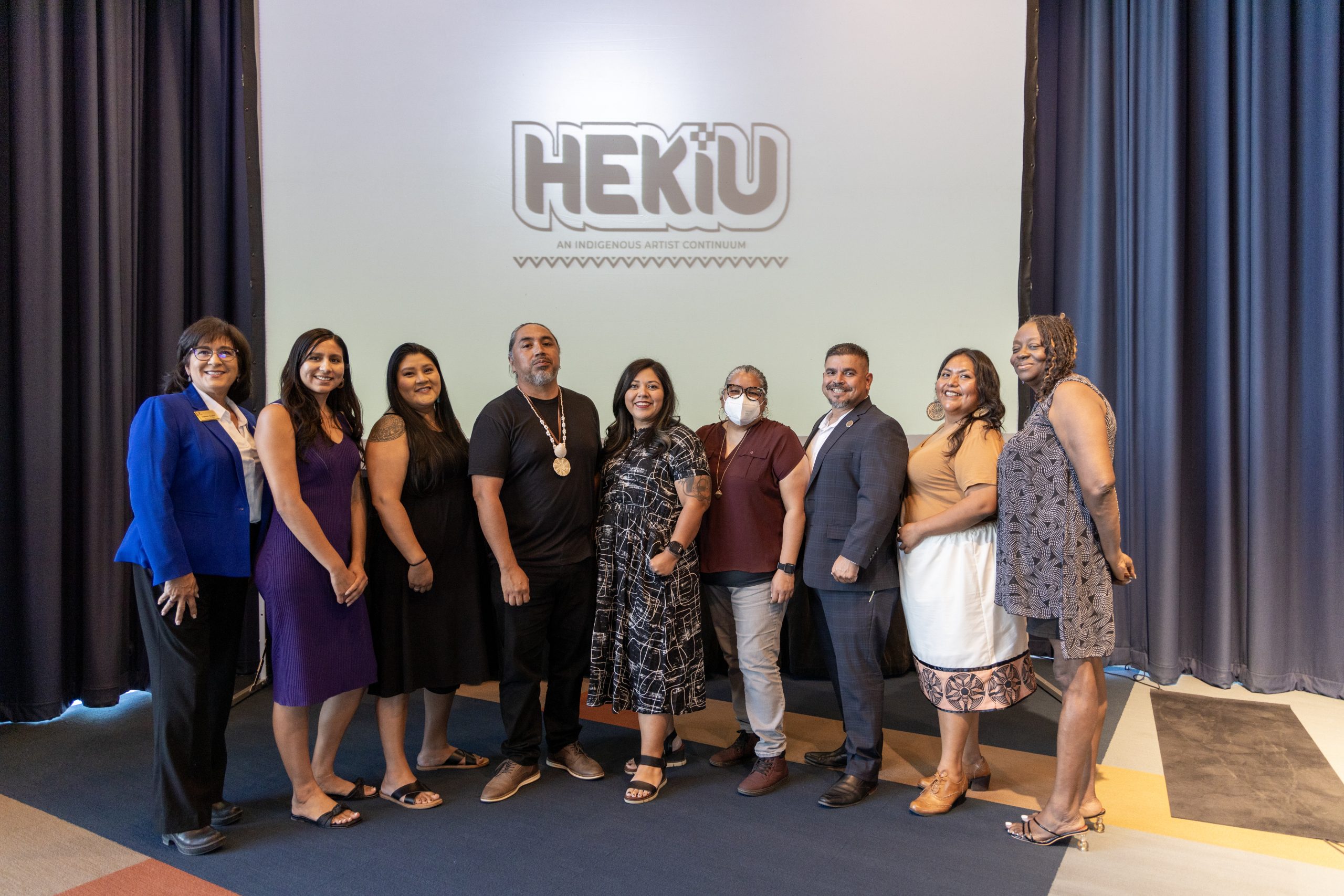
The partnership is in its infancy with Tempe, which will be the location of Hekiu’s public art and design installations. Artist Jacob Butler, Salt River Pima-Maricopa Indian Community, said it will allow them to represent the cultural history of the O’odham, Piipaash and Pascua Yaqui tribes in an urban environment.
These principles are based on the following categories: Ancestral Presence, Culturally Significant Sites, Natural Environment and Creative Expression.
Butler said O’odham artists utilize knowledge about their culture to represent the tribal communities, like Salt River, the Gila River Indian Community, the Tohono O’odham Nation and other Indigenous tribes across southern Arizona.
Thomas “Breeze” Marcus, also from Salt River, is a Hekiu co-founder and mural artist. He echoes Butler’s perspectives on equal representation in the public eye.
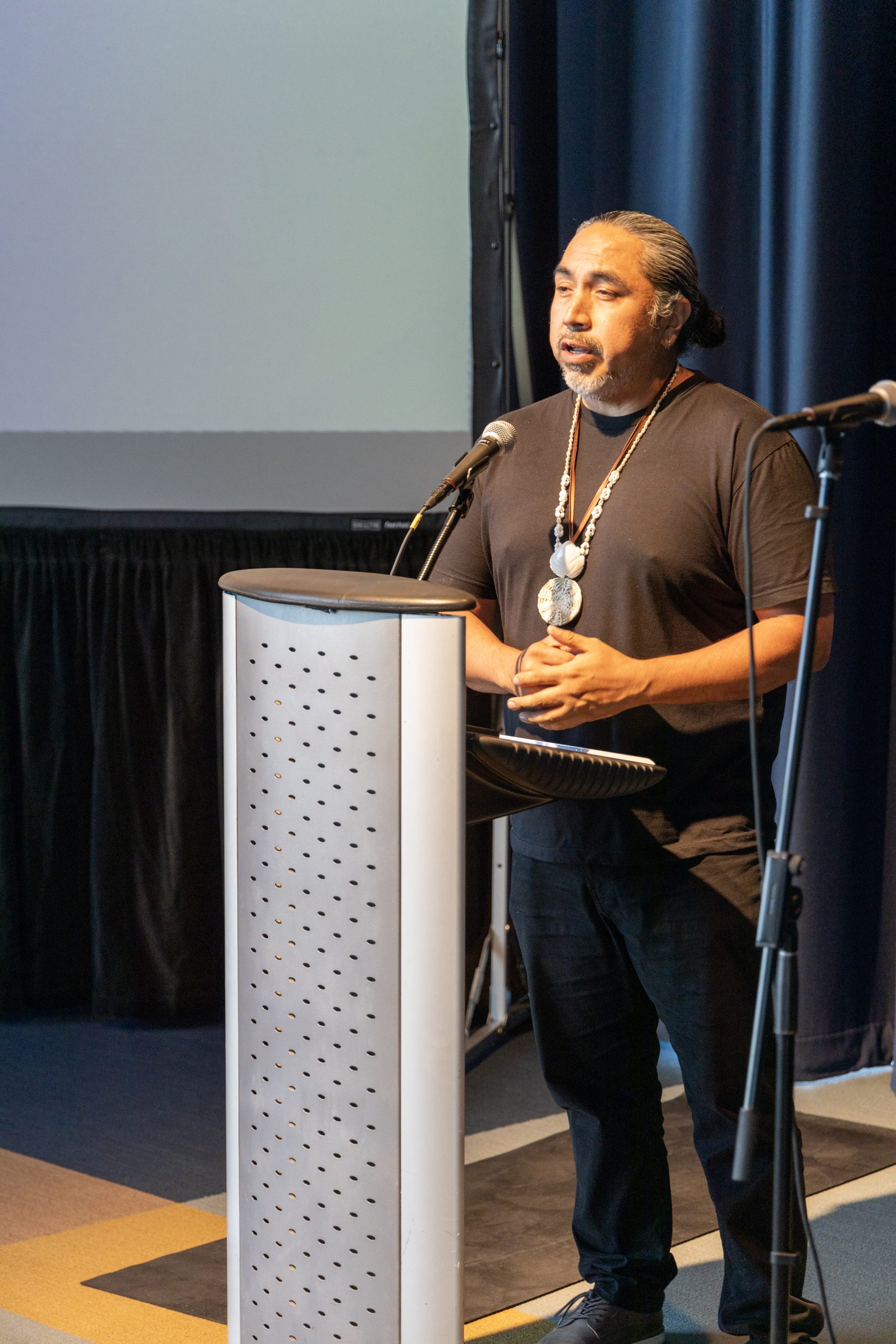
“We all have been doing this work in our own way and the idea of putting together some sort of O’odham based collective is the perfect opportunity to see it come to fruition,” he said.
To showcase local Indigenous culture, Marcus has created two-dimensional murals throughout the Salt River community and was also selected by the Phoenix Suns in 2021 to create a T-shirt design for Indigenous Heritage Night.
Marcus is enthusiastic about the opportunity to apply his O’odham designs to the projects Hekiu develops with Tempe. His work can be seen throughout Salt River’s many public buildings and on walls that dot the community.
Other tribal communities, like the Piipaash and Pascua Yaqui tribes, although smaller in numbers, are important because of their close ties to neighboring Indigenous communities.
“As a people living on the land today, this is something that we have to be proud of, to have all these different ideas with all these creatives in one place,” Butler said, harkening back to his journey of learning about O’odham culture.
He is hopeful that the partnership with Tempe will allow the continuum to express itself in ways that can only be told through their lens and history as Indigenous peoples.
Butler is driven by the belief that his peoples’ past can be celebrated through public projects Hekiu plans to do in the near future. He maintains that, as a leader, it allows him to advocate for the representation of culture in a way that is unique — in a way that can educate others to cement bonds between municipalities and communities.

“When Butler understood what we are trying to do as an artist’s collective, he understood from his own experience as a cultural source in his community and a leader, how much representation means these days,” says Amy Davila. Davila is one of the co-founders of Hekiu, a citizen of the Gila River Indian Community and a graphic artist.
She said there are times when groups like Hekiu need an advocate who can make connections with those “across the table” at the local government level. She added that Butler’s role is essential to the collaboration with Tempe.
Architectural designer and Hekiu co-founder Selina Martinez, Pascua Yaqui and Xicana, said Butler’s experience working with other cities helped the collective engage in conversations with Tempe about the grant’s vision.
“It’s a great benefit to be able to have somebody, who is not only like talented and the arts and culture side of it but is also very knowledgeable when it comes to the history and kinds of agricultural practices of that community and then obviously now as a leadership role in in the overall government,” Martinez said.
Martinez leads a local organization called Design Empowerment Phoenix, a program within Sagrado Galleria, in South Phoenix. Design Empowerment Phoenix is a response to the absence of cultural diversity seen in the city, where many diverse pockets of culture exist.
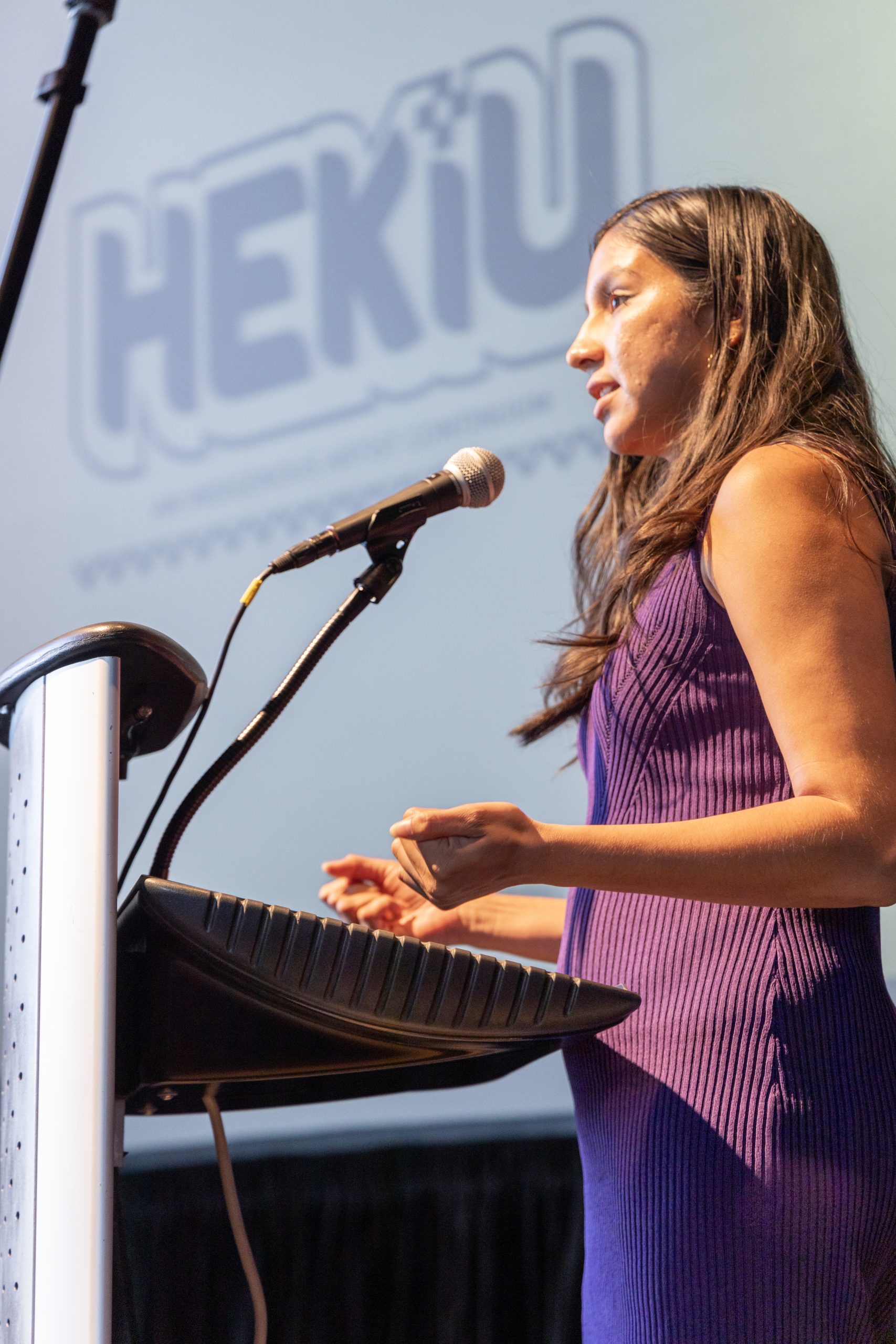
Hekiu, to her, is about building a cultural presence in an environment where structures already exist. “When projects like Hekiu come along, it is because there is a need and sometimes, they are in response to a lack of representation in the ‘built environment,” she said.
Martinez adds that Jacob has given Hekiu a lot of ideas to collaborate with Tempe, through his own experiences, whether it is consultations, whether it is working directly with the city, he provides more depth from a cultural perspective.
“We don’t want to just be seen as in the past as Indigenous people — we want to be integrated into the future as we move forward,” Martinez says. “So, I think Jacob was really spot on with finding that word that could be inclusive but specific enough to the Salt River community.”
“We are super excited to be collaborating with Hekiu,” Brendan Ross, Tempe Arts & Culture Department deputy services director says. “Butler’s cultural values and principles set the framework for how we can identify a common benefit, a mutual benefit.”

Ross works as the liaison between Hekiu and Tempe on facilitating the development of projects that will benefit both sides. He said the partnership with Hekiu offers Tempe a chance to work collaboratively on projects that recognize the rich history of Indigenous culture.

ICT is a nonprofit news organization. Will you support our work? All of our content is free. There are no subscriptions or costs. And we have hired more Native journalists in the past year than any news organization ─ and with your help we will continue to grow and create career paths for our people. Support ICT for as little as $10.
