

Miles Morrisseau
ICT
Just a few months ago, the election of Canadian prime minister looked like a slam dunk – or, using a Canadian metaphor, a shot to score into an empty net.
Now, Canada is in sudden-death overtime, and one mistake could decide the outcome.
SUPPORT INDIGENOUS JOURNALISM. CONTRIBUTE TODAY.
The reigning Liberals were 20 to 30 points down in numerous polls at the end of last year and the party was fighting in public over the divisive leadership of then-Prime Minister Justin Trudeau.
On Jan. 6, Trudeau announced he was stepping down and former central banker Mark Carney was elected into his position on March 9, taking over both party and country leadership. Carney became the 24th Prime Minister of Canada without ever being elected to office.
Suddenly the Liberals were back up in the polls and the Conservatives led by Pierre Poilievre were playing catch-up.
On Monday, April 28, the parties will face off to win the leadership position in an election that could ultimately be determined by Indigenous voters in some of the vast nation’s remote areas. Canadians don’t cast ballots for prime minister candidates, unlike voters in the U.S. who vote for a specific presidential candidate. In Canada, they choose a representative for their riding, and the party that wins the majority of ridings becomes the party in charge.
The Assembly of First Nations has done an analysis of the districts – known in Canada as ridings – where First Nations voters can make the difference.
“Our key ridings analysis shows that there are 36 ridings, at least, where First Nations votes don’t just matter, they will determine the outcome, and that number is growing every day,” AFN National Chief Cindy Woodhouse Nepinak told ICT.
“We’re 1.5 million strong across the country,” she said. “This analysis highlights that First Nations voices and votes matter. It also sends a message to all federal parties that our priorities must be reflected in their platforms.”
The election is likely to be close, and it is not always the popular vote that wins. In Canada, the winner is determined by the party that wins the majority of the 343 ridings across the country.
In the final two of Trudeau’s three victories, for example, in 2019 and 2021, he did not win the popular vote. In both those elections, the Conservatives won the popular vote. The difference between winning and losing can be determined in close races all across the country.
‘Very important and pivotal election’
The AFN has shared with all parties its platform, “Prosperity for All,” which outlines its priorities for the incoming government, whether it be headed by a new Conservative Party or incumbent Liberal Party leader with an actual mandate from the people.
“First Nations will continue pushing for adequate funding, recognition of our jurisdiction and fulfillment of commitments to our nations in prosperity for all,” Woodhouse Nepinak said. “We are looking for clear commitments now on how the next government will uphold our rights and move reconciliation forward.”
Métis are the fastest-growing Indigenous demographic in Canada; the 2021 census put the number of those identifying as Métis at over 600,000.

“It’s extremely important for Métis voters to get out there, of course, and cast their ballots, but also to do that kind of research and reflection about what candidates and what parties are bringing to the table. I think this is a very, very important and pivotal election,” Métis National Council President Victoria Pruden, told ICT from her hotel in New York, where she was attending the United Nations Permanent Forum on Indigenous Issues.
“It’s amazing how democratically active and representative our people are,” Pruden said. “And yes, we definitely have the opportunity to swing several ridings.”
Pruden says that the economy is an issue for Métis people, with many people across the country having difficulty making ends meet.
“We’re concerned about how any economic impacts are going to reverberate from the micro, from the individual and family level out through community and rippling out into the nation,” said Pruden. “We had a chance to take a look at some statistical data that indicated that 44 percent of Métis people participating in the Indigenous People’s Survey could not meet their monthly expenses. So to us and to me, if 44 percent of the people participating in that survey are struggling to make ends meet, that’s a crisis.”
She said it’s imperative that the incoming government help build up Métis people and the community.
“We need to ensure that any Indigenous policy that’s focused on growing the economy for the benefit of Métis governments, Métis communities, Métis businesses, we need to ensure that there’s opportunities for our people and our Métis governments to get those on an equal footing,” Pruden said.
In the Inuit territory of Nunavut, three Inuk candidates are squaring off for a seat in Parliament. The incumbent, Lori Idlout, of the New Democratic Party, is being challenged by James Arreak of the Conservative Party and Kalikvak Kaboona of the Liberal Party.
Experienced leadership
The political campaigns heated up quickly, with both of the top candidates lobbing rhetoric at U.S. President Donald Trump and the tariffs involving Canada’s biggest trading partner.
Carney’s short time in power reflects the unique peculiarities of Canada’s parliamentary system, which allows an unelected person to become prime minister, and for the prime minister to call an election independently without the approval or support of his or her own party, let alone the House of Commons or the Senate. Carney won election with 86 percent of the vote, but only registered members of the Liberal Party were allowed to vote. He assumed the prime minister’s seat when Trudeau officially stepped down on March 14.
Educated at Harvard and Oxford universities, Carney, 60, has been among the world’s economic elite for most of his career, beginning with Goldman Sachs in 1988, where he worked in a variety of roles for 15 years. He was governor of the Bank of Canada for six years, from 2007-2013, and followed that with seven years as the governor of the Bank of England.
He also served as finance advisor to the British Prime Minister from 2020 until announcing his candidacy for prime minister, and has served as a United Nations Special Envoy on Climate Change and Finance.
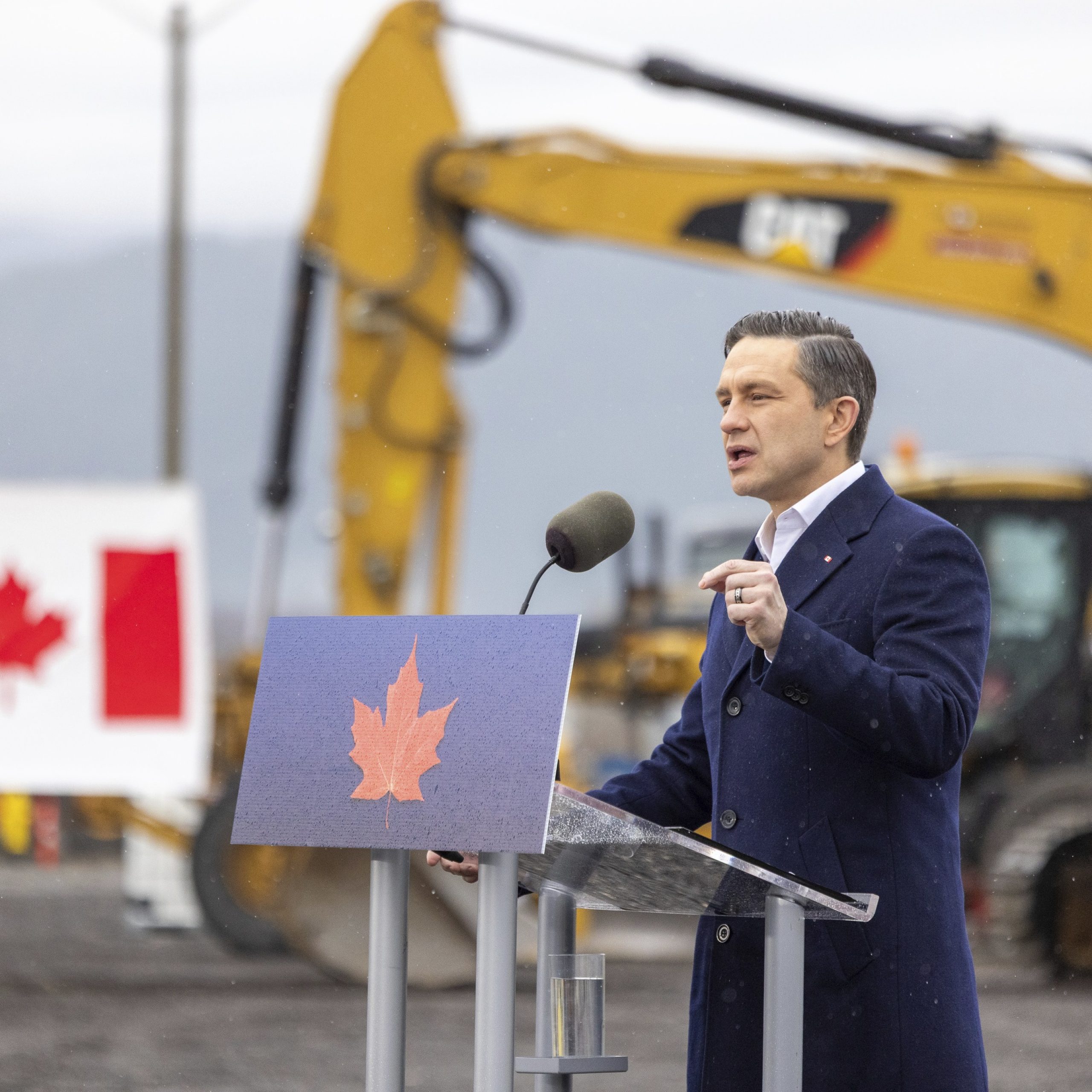
Poilievre, 45, was elected to Parliament in 2004, representing the riding of Carleton, Ontario, and was elected the Conservative Party leader in 2022. He served in several parliamentary roles under Prime Minister Stephen Harper and then began serving concurrently as minister of employment and social development and minister for democratic reform..
Canada has more than a dozen registered political parties but has essentially been a two-party system, with power swinging back and forth between the Liberal and Conservative leadership.
Other political parties on the ballot, however, are several that are hoping to beef up their representation in Parliament, including Bloc Québécois, the New Democratic Party and the Green Party.
Indigenous issues
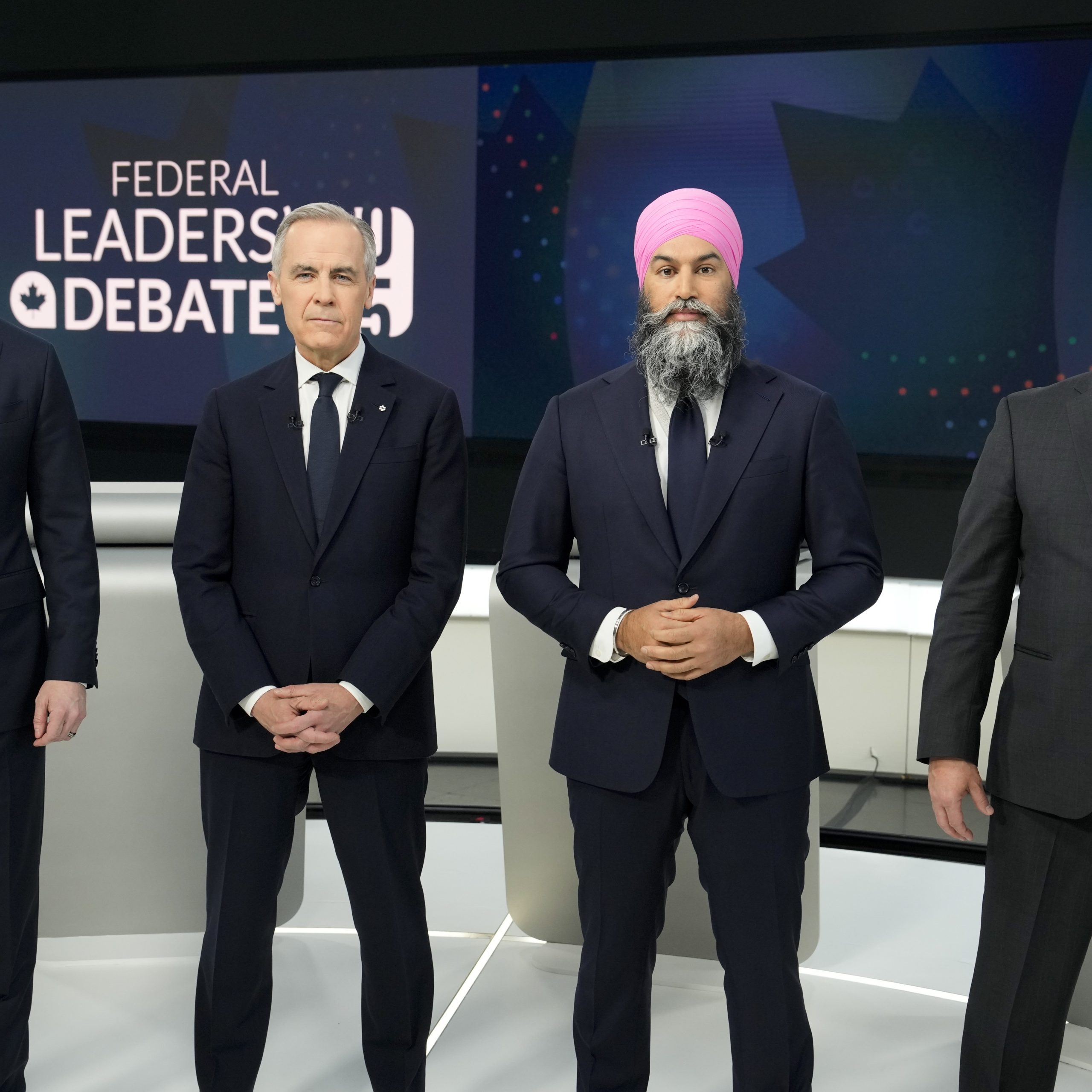
A recent English-language debate on April 17 in Montreal among four party leaders included questions specific to Indigenous peoples.
Poilievre was asked if his tough-on-crime stance would unfairly target Indigenous people, who are overrepresented in the prison system.
“I’m concerned that Indigenous people are disproportionately the victims of crime,” Poilevre said. “I give you the example of a wonderful group of Indigenous people who came under attack in Saskatchewan, and many of them were murdered. Killer was out of jail after 60 prior convictions … This is the result of 10 years of liberal laws that allow the same offenders to be released dozens and dozens of times, even when it’s known they are a danger.”
Carney was asked how he plans to fast-track pipelines and mining projects while also following the Supreme Court decision that requires consent of Indigenous communities.
“I think the first thing, and this goes back a bit to where we started, which is recognizing that we are in a crisis,” he said. “We need to act with maximum force and having a process and a consultation, but a consultation with a purpose, which is to identify those projects, those investments of national interest, that are really going to move the dial in terms of growth, jobs, energy security, well-being consistent with long-term competitiveness, which necessarily means lower carbon.”
He continued, “And so part of that process is ensuring that First Nations, Indigenous peoples, are there from the start. It also includes their ability to participate fully in those projects.”
In addition to Carney and Poilievre, the debate included New Democratic Party leader Jagmeet Singh and Bloc Québécois leader Yves-Francois Blanchet.
Growing clout
AFN National Chief Woodhouse Nepinak told ICT that there are several ridings across the country where First Nations people can influence the outcome, including the riding of Churchill Keewatinok Aski in northern Manitoba, where 64 percent of the electorate is First Nations.
“Our people make up the majority of voters,” she said.
“The Northwest Territories riding is another example where almost 40 percent of voters are First Nation, and in 2021, the race was decided by just 5.9 percent,” she said. “In Ontario’s Kenora Kiiwetinoong riding, over 35 percent of voters are First Nation. And in New Brunswick, Miramichi-Grand Lake, the 2021 election was decided by just 4.4 margin and 7.5 percent of the electorate, the people that are going to vote, are First Nations.”
She said the ridings in Saskatchewan and Alberta also have a significant number of First Nations voters. With the growing significance of the First Nations vote, however, the chief would like to see more representation on the ballot.
“Every political party should make sure they have a First Nations candidate on every ballot in every election,” she said. “It’s disheartening when you see the First Nations are not prioritized sometimes on that. And although I’m glad it’s getting better, I think we need to move a lot quicker.”
She recalled the excitement on Oct. 18, 2023, when Wab Kinew, Anishinaabe, was elected in Manitoba as the first First Nations Premier in Canada.
“Young people all over the streets and they filled up that hotel, young people, young First Nations people,” she said. “I was so proud of our people standing up … against aggressive policies of not to search the landfill for our women. And I think that that sends a very clear message to any political party across this country: Don’t pick on our women because we will stand up, we will fight back and we’ll fight back at the polls.”
Both national Indigenous leaders commented on the importance of the incoming government working with Indigenous peoples to face the threats and actions of the Trump administration.
“We’ve had several encouraging opportunities to sit down alongside First Nations leadership and Inuit leadership to really articulate our allyship together,” Pruden said. “We’ve had some encouraging conversations with the current Liberal leadership and administration about how Indigenous people can and will play a pivotal role in terms of any Team Canada approach.”
The AFN national chief said that Canada and its provinces have to remember that First Nations people have been standing up for Canada since before there was a Canada.
“They’re bringing together the provinces and the federal government to talk about big national issues,” Woodhouse Nepinak said. “It’s so unacceptable when they’re leaving out First Nations people, the first people of these lands and territories who have fought for generations in the War of 1812 and many other wars.
We’ve always stepped up to help this beautiful country that we all call home. But we do have a treaty and inherent rights on these lands.”
Polls will be open for 12 hours across Canada on April 28, starting with the first polls opening at 8:30 a.m. Atlantic time in the East and closing at 7:30 p.m. Pacific time in the West.
*Clarification: This story has been updated to clarify that Canadians don’t cast ballots for individual prime minister candidates but rather choose a representative for their riding, or district. The party that wins the majority of ridings becomes the party in charge.

Our stories are worth telling. Our stories are worth sharing. Our stories are worth your support. Contribute today to help ICT carry out its critical mission. Sign up for ICT’s free newsletter.

