

Kalle Benallie
ICT
ALBUQUERQUE, N.M. — Itality Plant Based Foods wants to move away from modern colonial foods – fast food, highly processed foods, artificial flavored, artificially colored, the meat and dairy industry – and the impacts they have.
The restaurant opened on Indigenous Peoples Day in October 2022 in Albuquerque, New Mexico, with the intention of providing healthy food options for the Native community due to the lack of healthy fresh food options and lack of plant-based food options in her pueblo or in other pueblos.
“It was seeing the effects of diet in Native community. Being surrounded by obesity, being surrounded by diabetes, being surrounded by people who have high cholesterol is what pushed me to create my business,” owner and founder Tina Archuleta, Jemez Pueblo, said.
All of that has detrimental effects on Native communities. For me, stepping away from those types of foods, that type of industry, is a way of decolonizing and taking it back to earth foods, food that come back from the earth and are Indigenous as well.”
The National Health Interview Survey and Indian Health Service reported from 2010 to 2012 Native American adults have the highest percentage of diabetes than any other race or ethnicity, leading at 16 percent.
Archuleta said Itality Plant Based Foods is the first Native-woman owned plant-based restaurant in the nation.
“It’s sad that there’s not more and I don’t feed into that narrative so much, but it is something that is special. I operate like such and uphold our standards and core values,” she said.
Three of her core values listed on the website are: decolonizing diets, cultivating a culture of health in Native spaces and supporting local farmers. She works with up to six Native farmers, depending on the season.
“By supporting Native farmers, I’m supporting pueblo Native culture and pueblo way of life,” she said. “Pueblo people are agriculturalists. Pueblo people have been agriculturalists for millennia and the foods we have been cultivating are used all over the world.”

Archuleta is passionate about the impact that Native people have on the earth.
“We’re supposed to be keepers of the earth. Are we supporting community? Are we supporting the earth with what we’re supporting with our dollars?” she said.
As well as the pollution effects from the meat and dairy industry.
“I feel like we need to step away from that. That comes down to earth ethics, how are we treating the earth, are we really care taking the earth,” Archuleta said.
She chose the name Itality from the word Ital that is derived from the Rastafari Movement in Jamaica. It adheres to eating food that comes from the earth, not processed and contains no meat or dairy.
Itality’s top sellers are cold-press juice and Ital NDN taco. The taco, without the usual meat or cheese, is described as being made in a pueblo-style fry bread with red chile green beans, avocado, romaine, tomatoes and onions with pumpkin chi sauce on top.

The 35-year-old began cooking at a young age by helping her community.
“In pueblo community, there’s jobs for everyone. There’s a lot of help needed in pueblo kitchens for ceremony, feast day, family gatherings, community gatherings so you’re kind of taught early how to help,” she said.
She hopes people learn that her business is an “act of tribal sovereignty and Indigenous self-determination.”
It’s located on Avanyu Plaza, a business and cultural center located on 12th Street, north of the I-40 highway. The plaza is on land owned by 19 pueblos of New Mexico, meaning all tax revenue generated by Itality is returned to the 19 pueblos.
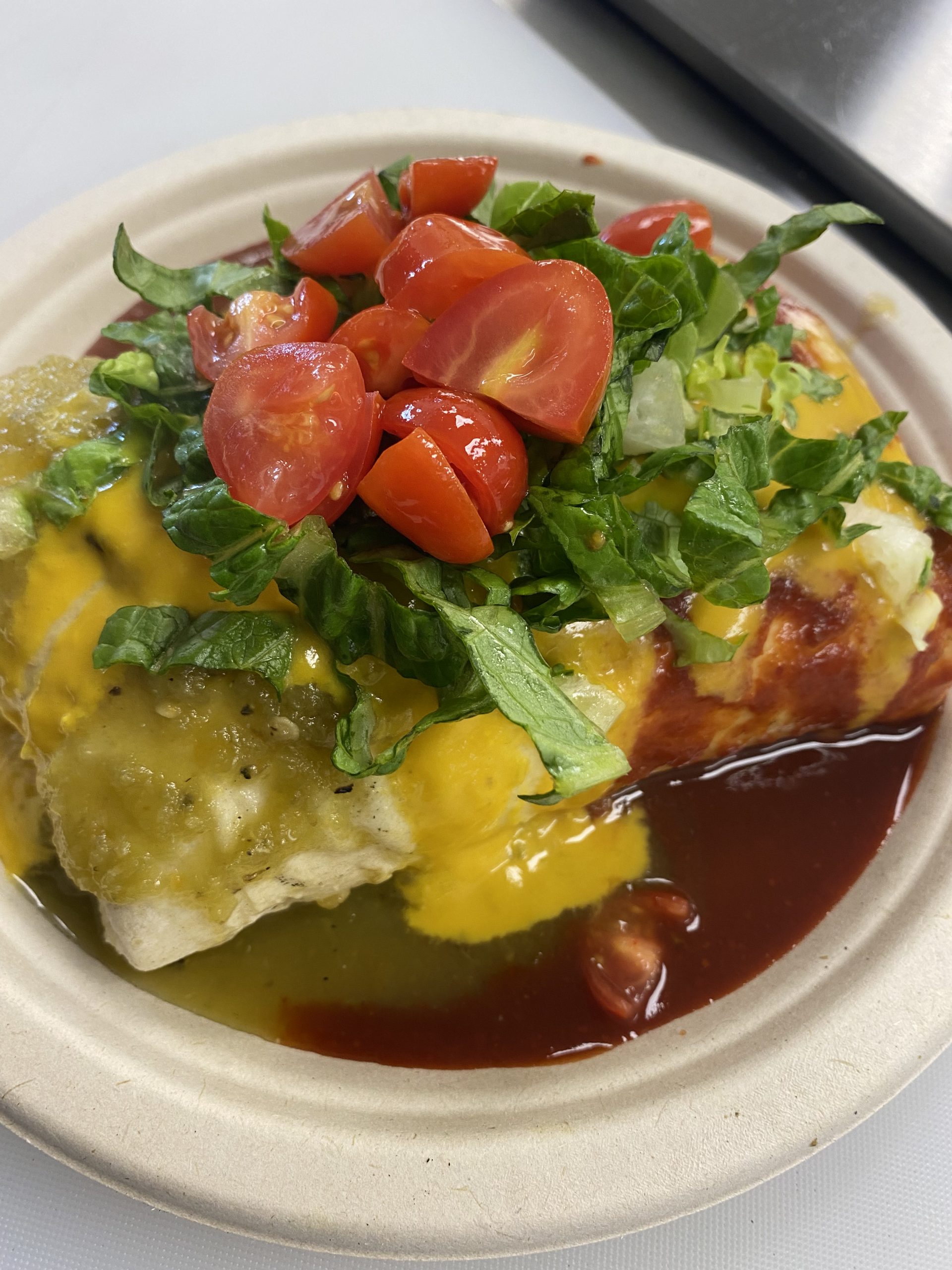
Archuleta considers what she does for her business not as a career but as a life path.
“I just wanted to create food that is not hurting Native people and not hurting the earth. That’s a lot of the foundation there,” she said. “I’m just living up to the best of my abilities and if that inspires others then that’s great, but I’m just doing my best.”

Our stories are worth telling. Our stories are worth sharing. Our stories are worth your support. Contribute $5 or $10 today to help ICT carry out its critical mission. Sign up for ICT’s free newsletter.

