Pauly Denetclaw
ICT
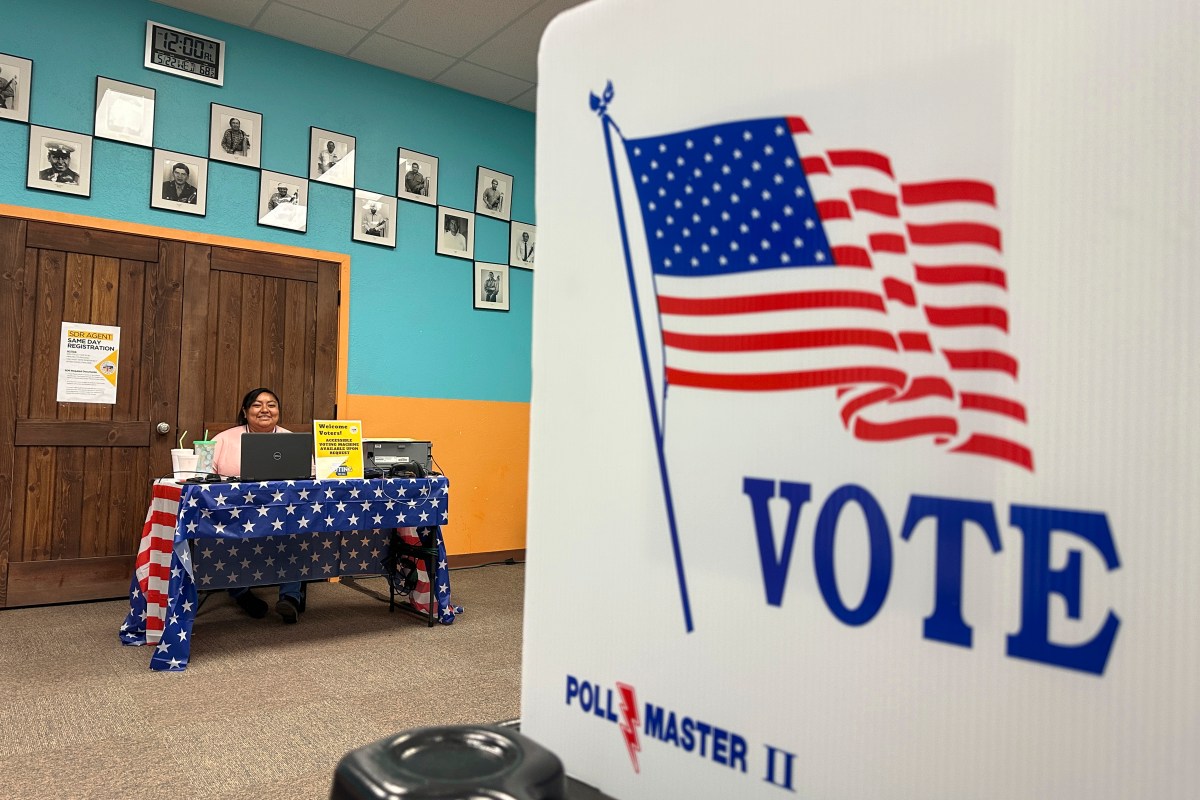
WASHINGTON — The United States has Super Tuesday but the big election days for Indian Country are the first two weeks of June. On June 4, New Mexico, Montana, Oregon, South Dakota and Iowa headed to the polls for the primary election.
There were 40 Indigenous candidates who ran for office.
Next Tuesday, June 11, voters in Nevada, North Dakota, and South Carolina will head to the polls. On June 18, Oklahoma will have their primary election, and Utah’s will be on June 25. There are 28 Indigenous candidates in these elections, according to a database managed by ICT and Advance Native Political Leadership.
In the month of June, 68 candidates from 8 states will go through a primary election.
The next big elections for Indigenous candidates won’t be until August where the other 40 percent of candidates have their primary election. In the entire month of August, 71 candidates are running across 9 states.
The state with the highest number of Indigenous candidates is Arizona with 29.
In second is Hawai’i with 21 running for county council to the Hawai’i State Senate and Office of Hawaiian Affairs.
Two of the five Indigenous women running for Congress, Sharon Clahchischilliage, Diné, and Yvette Herrell, Cherokee, will both head to the general election. Clahchischilliage is running for New Mexico’s third congressional district and Herrell is running for New Mexico’s second congressional district. They are both Republicans.
“I am honored to officially be the Republican nominee in New Mexico’s Second Congressional District!” Herrell wrote on social media. “Now, the real battle begins. I’m running against radical Democrat Gabe Vasquez, a candidate with a criminal record, deep-seated disdain for law enforcement and the rule of law, and a disgraceful voting record that aligns him with Joe Biden and the far-left agenda plaguing our country. I am committed to the values that make our state and our country great, and that’s exactly why President Donald J. Trump has endorsed my campaign. I am dedicated to fighting for New Mexico’s families, protecting our freedoms, and standing up against the radical policies that threaten our way of life. I will always put the interests of New Mexico and America FIRST!”
The redistricting will make it challenging for any Republican candidates to get elected in New Mexico, especially for congressional district two where Herrell is running for office. Previously, the second district was a more conservative area of the state and was able to easily elect a candidate that aligned with their values.
This changed in 2022. The state cut district two in half and parts of southern New Mexico are now pushed in with the more Democratic voters in the north. Despite this drastic change, Zuni, Acoma, Laguna and Isleta Pueblos, as well as the three satellite Navajo communities and Mescalero Apache are still in congressional district two, currently represented by U.S. Rep. Gabe Vasquez, a Democrat.
Congressional district three, where Clahchischilliage is running, was always a tough race for Republicans and with redistricting it’s only gotten more competitive since the inclusion of Santa Fe. She is running against incumbent U.S. Rep. Teresa Leger Fernandez. Native voters tend to support Native candidates so it will be interesting to see how that will impact this seat.
Another notable Indigenous candidate who won is first-time state Senate candidate, Angel Charley, Laguna and Zuni Pueblos, and Diné, who is currently the executive director of IllumiNative. Charley was previously the executive director of the Coalition to Stop Violence Against Native Women.
New Mexico legislators, all incumbents, will all head to the general election:
- Patricia Roybal Caballero, Piro Manso Tiwa
- Derrick Lente, Sandia Pueblo
- Charlotte Little, San Felipe Pueblo
- Shannon Pinto, Diné
- Benny Shendo, Diné
Only six Indigenous candidates lost their races out of 19 candidates who ran in the state.
Montana has the highest per capita representation of Indigenous state legislators in the country. They make up 7.3 percent of the legislature and the state’s population of American Indian and Alaska Natives is 6.6 percent according to the U.S. Census.
There were 13 candidates who ran for office. Only three of the candidates lost.
One of them was Charles WalkingChild, Anishinaabe, Cree and Blackfeet, who ran for the Republican nomination for the open U.S. Senate seat. He didn’t make it to the general election. Last year, he ran unsuccessfully for the U.S. House. in South Dakota’s second congressional district.
Montana state legislators Donovan Hawk who is Crow, Frank Smith who is Assiniboine, and Tyson Running Wolf of Blackfeet Nation are all headed to the general election.
Only three of the 13 candidates lost their race.
Non-incumbents that will advance to the general election:
- Erin Farris-Olsen, Brothertown Indian Nation
- Thedis Crowe, Blackfeet
- Shelly Fyant, Confederated Salish & Kootenai Tribes
- Mike Fox, Gros Ventre
- Sharon Stewart-Peregoy, Crow
- Jonathan Windy Boy, Chippewa Cree
- Jacinda Morigeau, Bitterroot Salish
There were five Indigenous candidates who threw their hats in the race.
Incumbents Peri Pourier, Oglala Lakota; Shawn Bordeaux, Rosebud Sioux; and Red Dawn Foster, Oglala Lakota, will move forward to the general election. They are all Democrats.
Incumbents Tamara St. John, and Tyler Todsen, both Republicans, lost their primary race. The mother and son duo, who are both Sisseton Wahpeton Oyate, will no longer be in the state House together. Tordsen talked with the ICT Newscast earlier this year about being in the state legislature with his mother.
“I want to thank all who supported me over the years in office and I wish the new people well who are taking on a very hard and challenging job,” St. John said on a social media post.
Both St. John and Tordsen supported legislation for a controversial carbon capture pipeline project that would “collect CO2 from ethanol producers in South Dakota and other states and move it through an underground pipeline for sequestration in North Dakota,” according to South Dakota Searchlight.
The proposed project has caused a slurry of legal battles and legislative bills parsing out landowner rights and eminent domain in relation to the project. The two are part of 14 Republican incumbents who were ousted by candidates from their own party, some speculate because of their support for the carbon capture pipeline.
There were two Indigenous candidates in Iowa, both Democrats.
They were each running for Iowa House of Representatives and will move forward to the general.
Anna Banowsky, Choctaw, and Jessica Lopez-Walker, Winnebago Tribe of Nebraska, are both non-incumbents in Iowa.

Our stories are worth telling. Our stories are worth sharing. Our stories are worth your support. Contribute $5 or $10 today to help ICT carry out its critical mission. Sign up for ICT’s free newsletter.
Correction: This story has been corrected to show that Oklahoma’s primaries are June 18 and Utah has their primaries on June 25.