Stacie Boston
Cherokee Phoenix
His actions live on forever through a photo captured by Joe Rosenthal in 1945 when marines raised the American flag during the World War II battle of Iwo Jima.
A bronze statue of he and his fellow Marines stands in Washington, D.C., as a monument to the marines’ heroism during that pivotal battle. His name is Ira Hamilton Hayes, an Akimel O’odham war hero.
But after returning home, Hayes was left to fight a different battle that arose from what he saw during the battles that shook the world.
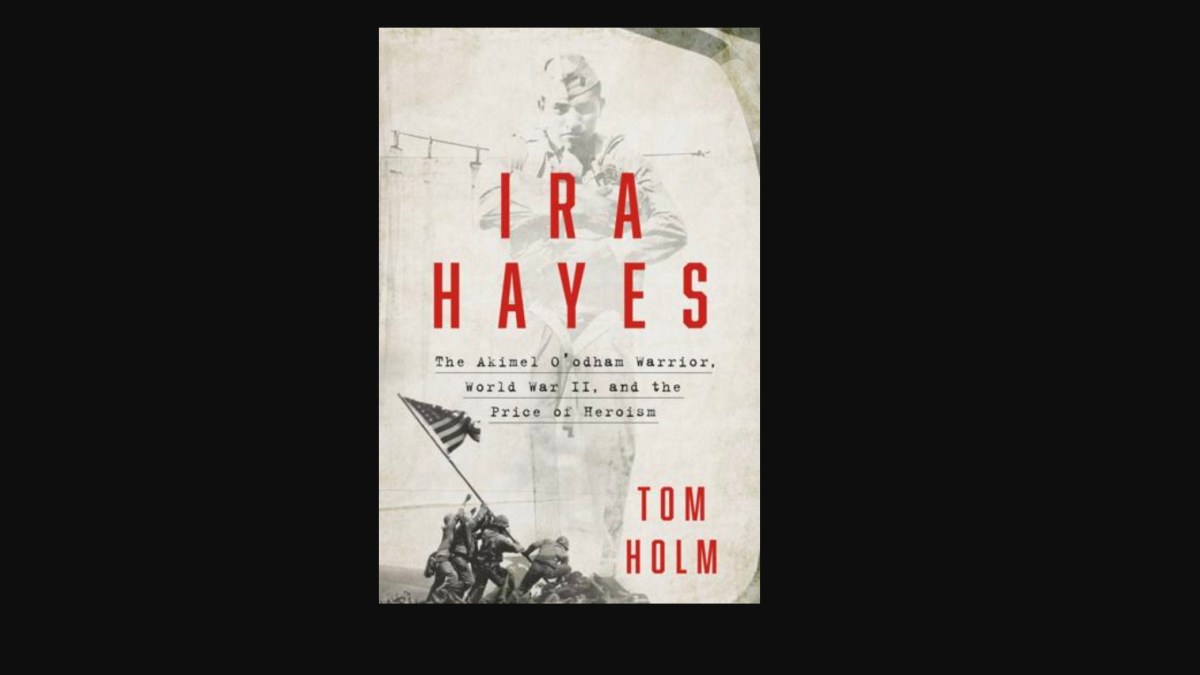
Cherokee Nation citizen Tom Holm, an author, scholar and Marine Corps veteran of the Vietnam War worked to shed light on Hayes through his book “Ira Hayes: The Akimel O’odham Warrior, World War II, and the Price of Heroism.”
Through books, movies and music, a picture of Hayes has been painted, but Holm said through his book, which was released on Aug. 1, he wanted to put an emphasis on the horrors of post-traumatic stress disorder that surrounded Hayes.
“I was looking especially at the stuff on PTSD because I’ve been dealing with that my own self for a long time. Ira was less an alcoholic, then he was kind of a victim of PTSD. It’s kind of the tale of the “drunk Indian,” so I wanted to kind of correct that with this book,” Holm said.
To start his story, Holm said Hayes was born “one generation” after the Akimel O’odham people suffered a “terrible famine” on the Gila River reservation in southern Arizona.
“The reason of the famine is because the crops failed, and it was because of the siphoning off of the water from whites around the reservation, pretty much stole the Gila River from the people,” Holm said. “A lot of people were dying, and a lot of livestock died.”
Growing up, Holm said Hayes attended mission school and later went to Phoenix Indian School, a Native American boarding school that was open from 1891 to 1990.
“Then he went in the Civilian Conservation Corps in (1942), and he was in there for a while and then joined the Marine Corps and was off to war,” Holm said.
During his service, Hayes served as a paratrooper, held the rank of corporal and received numerous honors. After returning from the war, Holm highlights some of the trials Hayes faced.
“Ira wasn’t necessarily an alcoholic; he was a binge drinker. He would go on weekends and walk into a bar in some place, and people will be starting to buy him drinks,” Holm said. “The whole kind of alcoholism stigma was more on the side of the stereotype of Indian people being prone to alcohol. Within a span of 10 years, he was arrested at least 50 times. Basically, Arizona police … were on the lookout for him. Every time he got arrested, it would be in the papers, and the whole thing because he was a hero of the war.”
Holm said he believes Hayes had PTSD, which according to the U.S. Department of Veterans Affairs wasn’t a “mental health diagnosis” until 1980, approximately 25 years after Hayes’ death.
“I think that in many ways he didn’t get any kind of help, anyway, from the government. He was kind of left on his own,” Holm said. “I’d really like for people to understand the nature of post-traumatic stress disorder. It’s a combination of various kinds of things – survivor’s guilt and just the trauma of watching people die and seeing bodies. Plus, seeing the destructiveness of warfare. I would really like to have people take away that the other part of this is that as Indian people … tribes had ways of dealing with these kinds of traumas through ceremonial means. The O’odham did too, but they were kind of robbed of that through time.”
During his life, Holm said Hayes protested racial property restrictions in Los Angeles in the 1940s and advocated for water rights in Washington D.C.
Through his many trials, Hayes’ life was cut short at the age of 32 when he died in Bapchule, Arizona.
“I got a hold of his death certificate and it has on there acute alcoholism … testimony said that he was drinking some cheap wine, which is actually low in alcohol content. And then went out on the desert and died. He actually died of hypothermia. Flat out just went out and went to sleep,” Holm said.

Hayes is buried at the Arlington National Cemetery in Virginia. His story lives on through people like Holm and those who live on the reservation that Hayes called home.
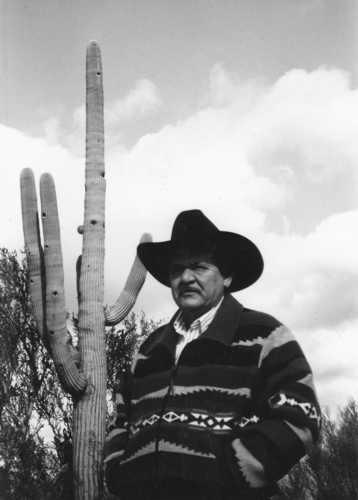
Holm, originally from Chelsea, Oklahoma, has been writing about Native veterans since the 1970s. He is a professor emeritus of American Indian Studies at the University of Arizona. During his career, he has worked with various tribes and even served on the State of Sequoyah commission in the early 2000s. Holm retired in 2009 after serving 30 years at ASU.
“Ira Hayes: The Akimel O’odham Warrior, World War II, and the Price of Heroism,” can be found in stores and online.

This article was first published in the Cherokee Phoenix.