
Michelle Griffith
Minnesota Reformer
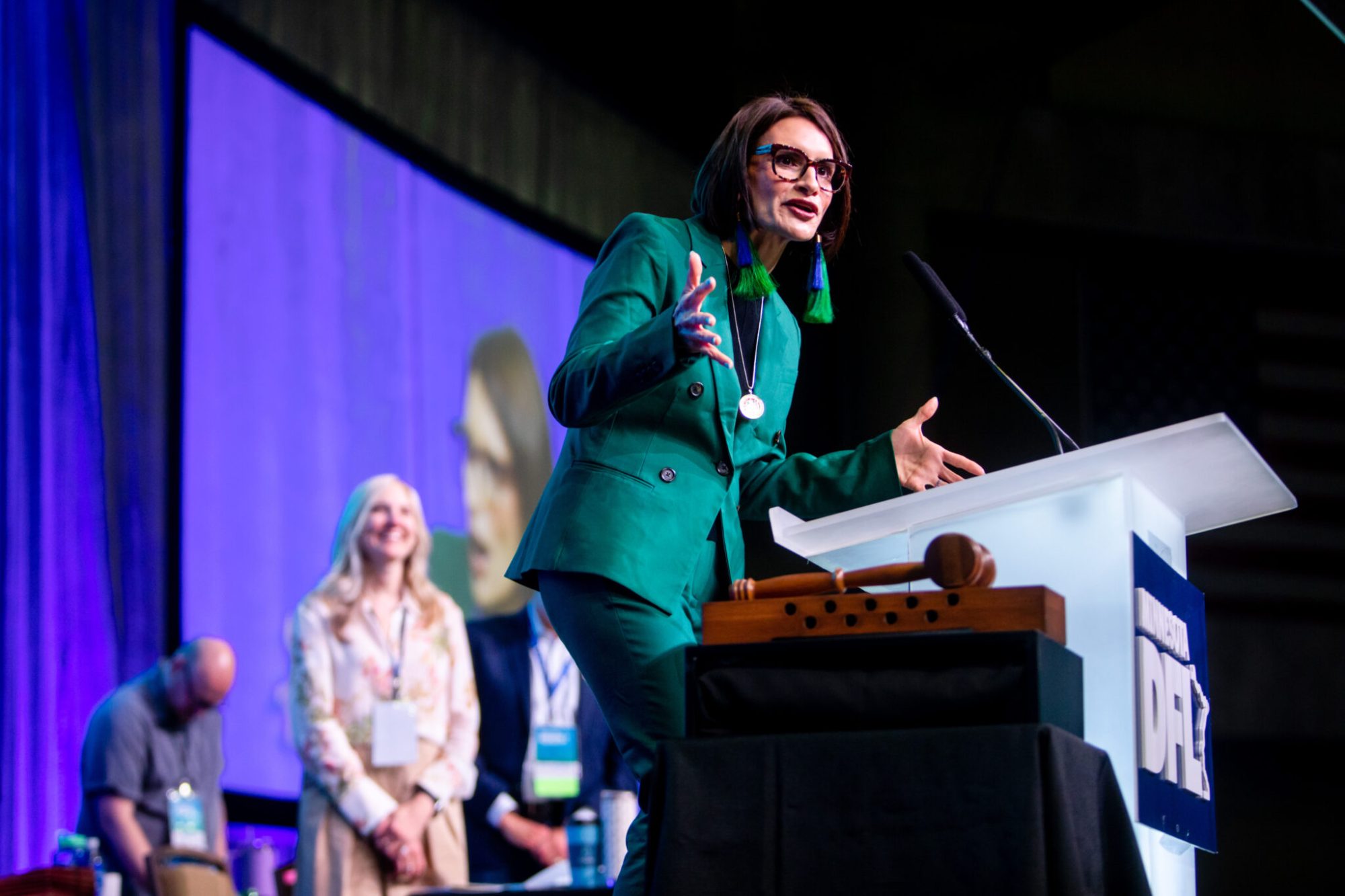
ROCHESTER – Democratic-Farmer-Labor delegates endorsed Minnesota Lt. Gov. Peggy Flanagan for U.S. Senate on Saturday, solidifying her support among party activists going into a competitive primary election in August against U.S. Rep. Angie Craig.
Flanagan said Minnesotans are tired of Democrats capitulating to Republicans, and they deserve a fighter representing them in D.C.
“We can’t just be the lesser of two evils, and we will never ever win by being a pale shadow of our opponents,” Flanagan said after winning the endorsement. “We’re building a movement that demands more from our leaders in Washington.”
Despite solidifying the endorsement of party activists, Flanagan has a long road before securing the nomination. Craig of the 2nd Congressional District has a history of winning close, tough races and has four times the cash on hand as Flanagan. Craig didn’t show up to the DFL convention in Rochester, announcing earlier this week that she’d forgo the endorsement in the face of all but certain defeat.
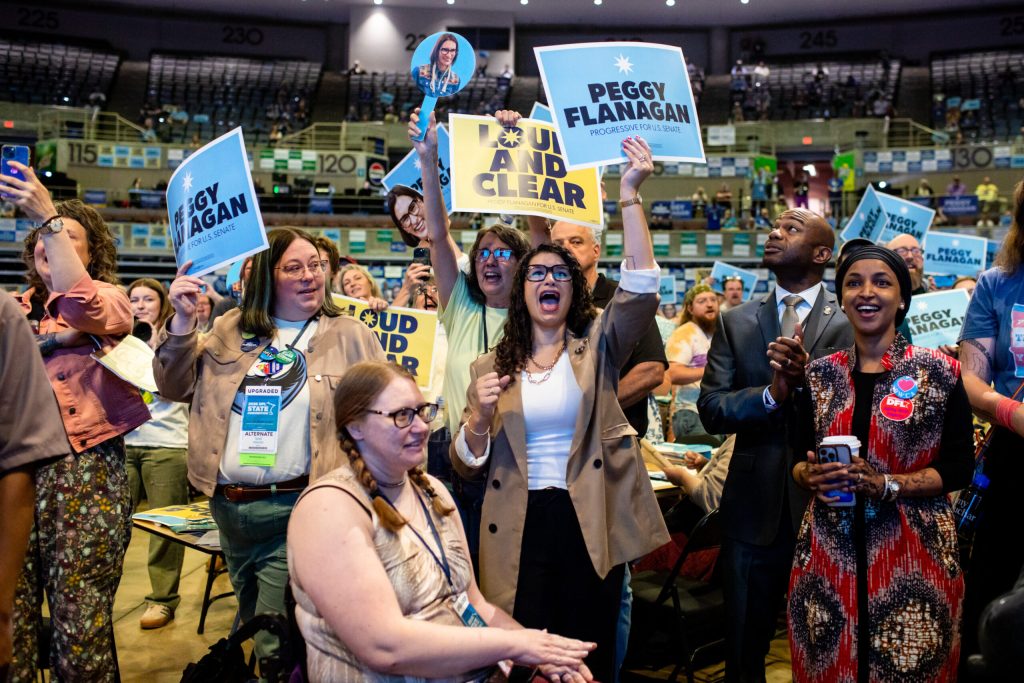
The Saturday endorsement was less dramatic without Craig, but Flanagan’s win is meaningful: She will have access to DFL Party resources and be the subject of party advertising.
Both candidates would be historic. Flanagan, who is member of the White Earth Nation, would be the first Native woman in the U.S. Senate. Craig would be the first openly gay woman to represent Minnesota in the Senate.
Flanagan has spent the past few days defending the importance of the endorsement as an important grassroots organizing tool, even though she was running mate to Tim Walz in 2018 when they lost the convention endorsement but won the primary. Likewise, Craig has been criticizing the endorsement process in the past few days as too exclusive to party insiders, despite seeking it for the past year.
As a senator, Flanagan said her priorities would be “ripping ICE apart and fixing our broken immigration system,” ensuring access to affordable housing, codifying abortion rights and bolstering tax credits to “lift working families out of poverty.”
A year ago, Craig was a formidable front-runner for the Senate seat, but she’d long positioned herself as hawkish on border security and voted for the Laken Riley Act.
That was the first piece of legislation signed by President Donald Trump during his second term, and it mandates the detention of undocumented immigrants who are merely accused of crimes, including certain nonviolent offenses like burglary, theft and shoplifting. She reversed herself in early March, but by then, the incursion of 3,000 federal immigration agents into Minnesota ignited massive resistance, which Flanagan has capitalized on.
Flanagan has sharply criticized Craig’s Laken Riley vote, and on Saturday highlighted the vote as a key distinction between her and Craig.
As Walz’s lieutenant governor, Flanagan is bound to face sharp attacks from Republicans during a general election about the massive defrauding of Minnesota’s social safety net programs during their two terms. In a March statement to the Star Tribune, Craig said “It’s pathetic that (Flanagan) still refuses to take responsibility for the fraud that happened on her watch.”
To which Flanagan responded: “Taxpayer dollars were stolen from programs meant to help families during a crisis, and that is unacceptable. The governor has taken significant steps and proposed several measures to strengthen oversight and provide regulators with tools to prevent fraud.”
Craig must now quickly pivot and attempt to persuade Minnesota Democrats that the delegates at this weekend’s convention were wrong about whom can best represent them in November.
She’ll have the money to do it: During the first quarter of the year, Craig raised $2.5 million while Flanagan raised $1.3 million. Craig had $4.8 million cash on hand, while Flanagan had about $1.1 million.
Flanagan repeatedly highlighted that she has the support of grassroots Democrats, arguing that that is what propels candidates to win, not money.
“Minnesotans have always proved that organized people can beat organized money,” Flanagan said.
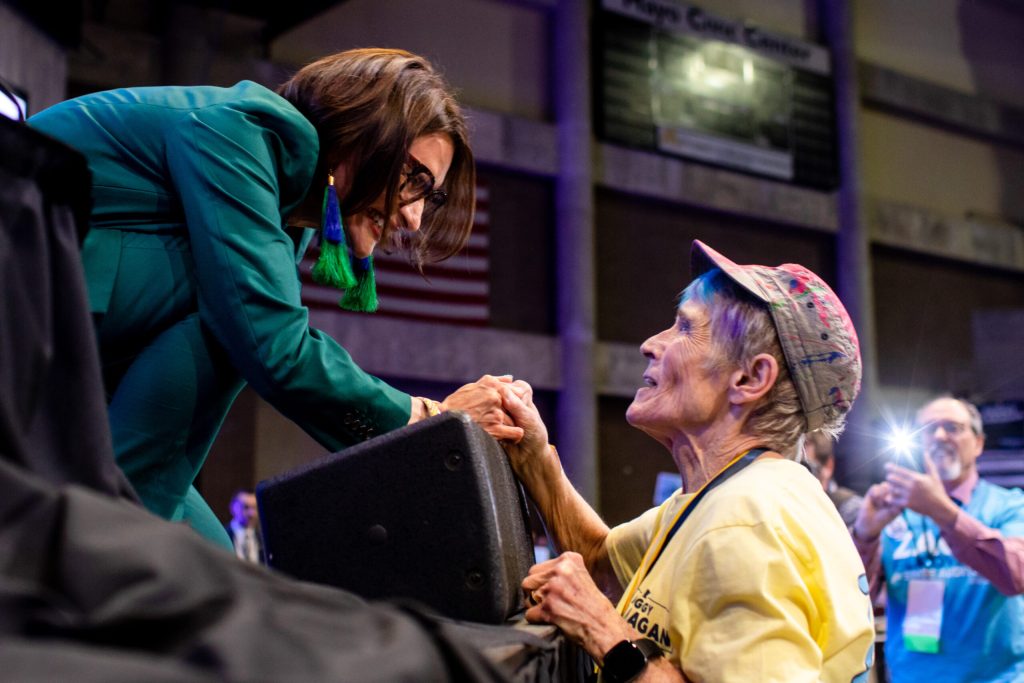
Kathy Sullivan, a retired nurse, was not a delegate but wanted to show up to the convention to see Flanagan’s endorsement acceptance speech and said she’s excited to tell other Democrats in her hometown of Rochester about Flanagan’s remarks.
Sullivan, 71, said she’s disappointed Craig decided to bypass the DFL endorsement.
“Do the fight. Do what’s right. Bring us a reason why you want to represent us,” Sullivan said.
Flanagan said that from now until August she will travel Minnesota, make calls and bring more people into her coalition, including persuadable Craig supporters.
Tristan Bergmann, a 28-year-old delegate from Luverne, Minnesota, said he thinks the convention has been “a mess,” and he’s disappointed with the party. Bergmann said he believes Flanagan has ignored greater Minnesota as lieutenant governor, and he doesn’t expect her to do anything different if she’s a U.S. senator.
“I just don’t think she’ll show up at all. We (rural Minnesota) just won’t get seen,” Bergmann said.
Despite his reservations about Flanagan, Bergmann said he plans to follow the party’s endorsement in the August primary.
“If every moderate walked out of the party, then there would be no one sane enough to talk down the progressives,” Bergmann said.

