
Logan Pierson
Special to ICT
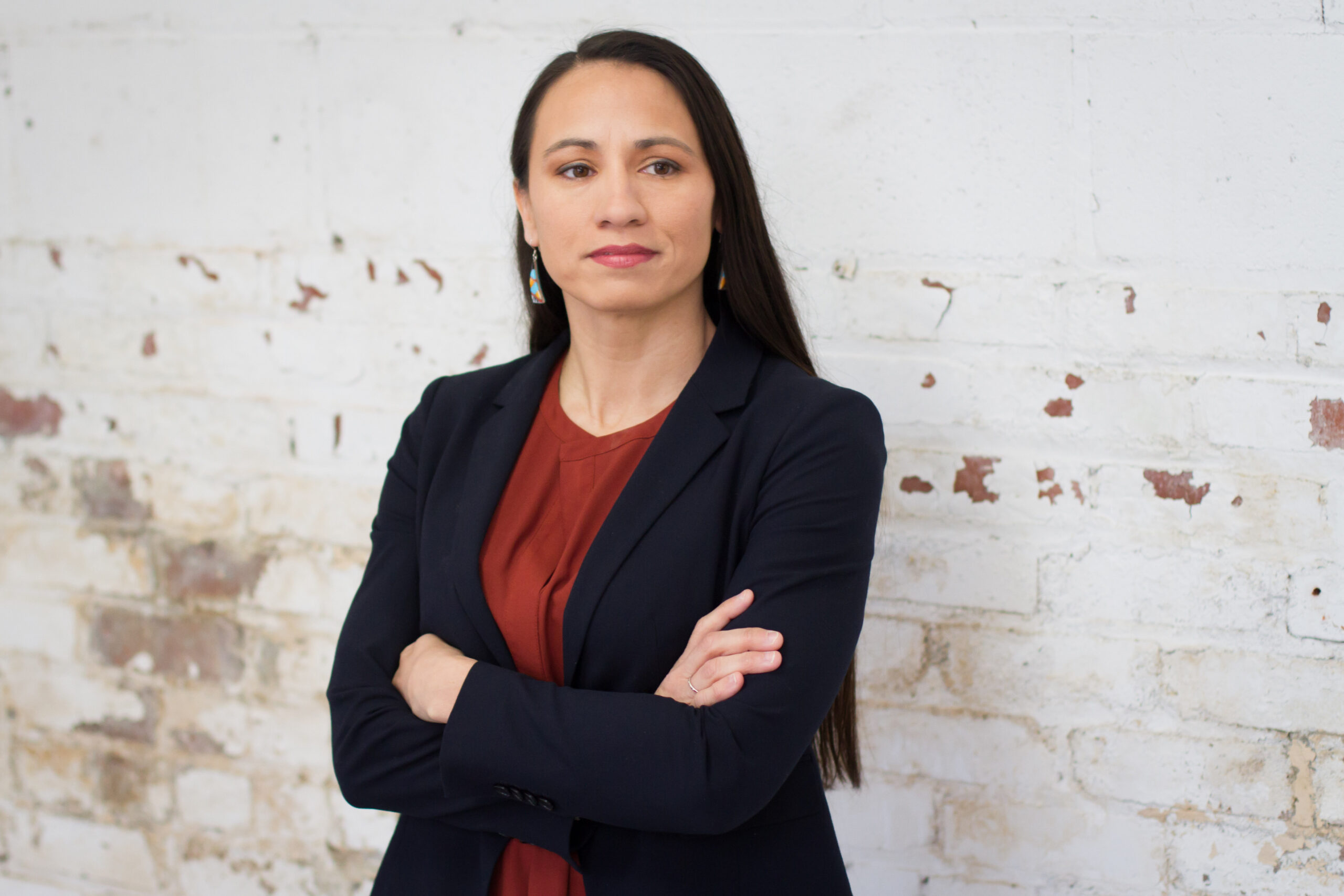
OLATHE, Kansas – Rep. Sharice Davids, D-Kansas, cruised to victory Tuesday in the Democratic primary and will face Republican Eric Jenkins in the November general election.
“I’m deeply honored to earn the trust of voters across the Third District,” Davids, a citizen of the Ho-Chunk Nation of Wisconsin, said in a statement released after she secured victory. “I fundamentally believe the government should work for the people it serves — not special interests, big corporations, or partisan agendas.”
With all 736 of 736 precincts reported, Davids led her opponent, Sarah Preu, with 83 percent of the vote.
“Every single day, I hear from Kansans who are working hard, budgeting carefully, and doing everything right, but are still getting squeezed by rising costs on everyday essentials like groceries, healthcare, and housing,” said Davids, who is seeking her fifth term in the U.S. House.
Former Kansas House of Representatives member Christina Haswood, Diné, said that Davids continues to be a consistent, ethical voice for both Kansas and Indian Country.
“Sharice is that bipartisan person who’s able to bring those results back home, and at the federal level and working with Indigenous issues, working with veterans issues and transportation,” Haswood told ICT. “She’s been able to bring those results back to her home district, but also working across Indian Country and being that voice that we need in Congress.”
Davids, 46, first took office for the district in 2019 as one of the first two Native women to hold seats in Congress. Davids is the only Democrat in the Kansas U.S. congressional delegation and the longest-serving Indigenous woman in Congress.
Voters across five counties poured into cool, air-conditioned voting booths in libraries, churches and more on Tuesday to cast their ballots during a humid, muggy and bright election day with little wind to cool them down. While many came out to vote on Kansas’ new, rejected Republican-backed, supreme court amendment, Davids’ supporters and registered Democrats came out in clear support.
Patricia Maholmes, 60, voted for Davids at the Olathe Indian Creek Library voting station, and said she wanted to maintain a strong Democratic opposition to Republicans in Congress.
“I just think we just have to keep our officials that are now in office, and I think with the election for president coming up soon, within the next couple of years, I think it’s important that we have our Democratic support,” Maholmes said.
“I see her working for it, and I see her working for Kansas too.”
Fred Weems, 74, said he has appreciated Davids’ efforts in standing up for veterans and protecting green card holders since taking office. Weems’ wife is from China, and he said they frequently have issues that Davids’ makes efforts to address.
“We have green card issues sometimes and she’s been very helpful. She knows what she’s doing and she has a good staff working for her. They’re very good people,” Weems told ICT after voting and exiting the Olathe Indian Creek Library.
Davids’ opponent Preu told ICT that, while she did not win this year, she believes her progressive messages to Kansans are evergreen and will continue to hold an impact on the state.
“There is no losing here. We had to challenge the status quo,” Preu told ICT outside of her bustling watch party full of supporters at Strip’s Chicken and Brewing in Merriam.
While the candidates found common ground on raising the minimum wage and protecting reproductive rights, Preu ran on progressive policies such as abolishing the Immigration and Customs Enforcement, or ICE, supporting single-payer Medicare for all, and opposing unconditional military aid to foreign countries.
“We have always been at the forefront of ethical politics. It is our literal birthright as Kansans,” she said. “I am a born and raised Kansas girl, and this moment feels very true to me. There is a real depth to the understanding that we can’t sit by while vulnerable people are attacked and continue to vote (for) the same people who have gotten us to this point.”
In comparison, Davids has taken a moderate approach. In healthcare, Davids has fought for the expansion of the Affordable Care Act and backed legislation which allows Kansans to retain private insurers. However, In February, Davids faced pushback from supporters in her district after she became one of 21 democrats, out of the 212 sitting in the house, to vote for temporarily extending funding for the Department of Homeland Security amid the Trump administration’s immigration crackdown in Minnesota, which led to the deaths of Alex Pretti and Renee Good in January.
In a statement in January, Davids said she voted for the funding to avert a prolonged government shutdown and deliver critical investments, which included spending on roads and aviation infrastructure in Johnson County, just outside Kansas City. However, Davids later called for strong oversight and accountability from ICE, and voted against the Secure America Act, the bill that awarded $70 billion in funding to Homeland Security, U.S. Customs and Border Protection, and ICE through fiscal year 2029.
Davids said she will continue to work across the aisle to attain results.
“Kansans don’t want political games or constant partisan bickering — they want practical, common-sense solutions. That’s why I’ll keep working across the aisle with anyone, Republican or Democrat, to lower the cost of living, protect healthcare access, and build an economy where every family has the opportunity to get ahead,” Davids said in her Tuesday statement.
Kansas’ 3rd Congressional District includes most of the Kansas side of the Kansas City metropolitan area, representing all of Anderson, Franklin, Johnson and Miami counties and parts of Wyandotte County.
While The Kansas City Indian Center is based on the Missouri side, the nonprofit assists Urban Natives experiencing food insecurity on both the Kansas and Missouri sides of the city. While the center acts as a nonpartisan 501-(c)3, leaders at the center spoke Tuesday on the policy and protections that they want to see from the next term’s representative.
“We cannot continue to keep absorbing policies that are getting entrenched in a way that is going to be unsustainable for our communities we serve,” Director of Civic Engagement and Advocacy at the center, D’Arlyn Bell, Cherokee Nation, told ICT.
Among other things, leaders at the center said they wanted to see protections for medicare and medicaid, and a prioritization from representatives to address and be aware of poverty and issues with food assistance and housing, along with ensuring that people have access to a living wage.
“We’re all concerned about being able to afford housing. We’re all concerned about nutritional security. We’re all concerned about all these things,” the center’s Executive Director Gaylene Crouser, Standing Rock Sioux Tribe, told ICT. “I think that that’s the biggest thing for either of these candidates, for all the candidates, is not forgetting that we’re all human beings and there are all inherent needs and rights, and we need to take care of each other first and foremost.”

