
Mary Steurer
North Dakota Monitor
United Tribes Technical College on Sept. 5 will hold a dedication ceremony for a new monument honoring the memory of Japanese Americans who were imprisoned there during World War II.
During the war, the U.S. government incarcerated more than 100,000 people of Japanese descent. Some were held in military posts like Fort Lincoln, which would later be converted into United Tribes Technical College in the late 1960s.
Almost 2,000 Japanese Americans were imprisoned at Fort Lincoln beginning during the 1940s.
Through the Snow Country Prison Japanese American Internment Memorial, United Tribes and Japanese American historians hope to call attention to what incarcerated families suffered and how they resisted persecution by the U.S. government, the college’s website for the memorial notes.
It’s also meant to recognize the common experience shared by Japanese Americans and Indigenous communities who faced forced removal and oppression by the United States.
“The Snow Country Prison Memorial is our story as well as the Native American story,” Satsuki Ina, who helped plan the site, said in a promotional video for the monument. Ina’s father, Itaru, was incarcerated at Fort Lincoln in 1945 and 1946.
The monument gets its name from a haiku poem Itaru wrote while he was there.
“The war is over but I’m still in a snow country prison,” the haiku reads.
The memorial was designed by MASS Design Group, a nonprofit architecture firm, and funded through private donations and a grant from the National Park Service.
The firm worked with a committee that included Japanese American historians and activists to plan the space.
“They put definition to the design,” said Joseph Kunkel, a managing director for MASS who helped lead the project.
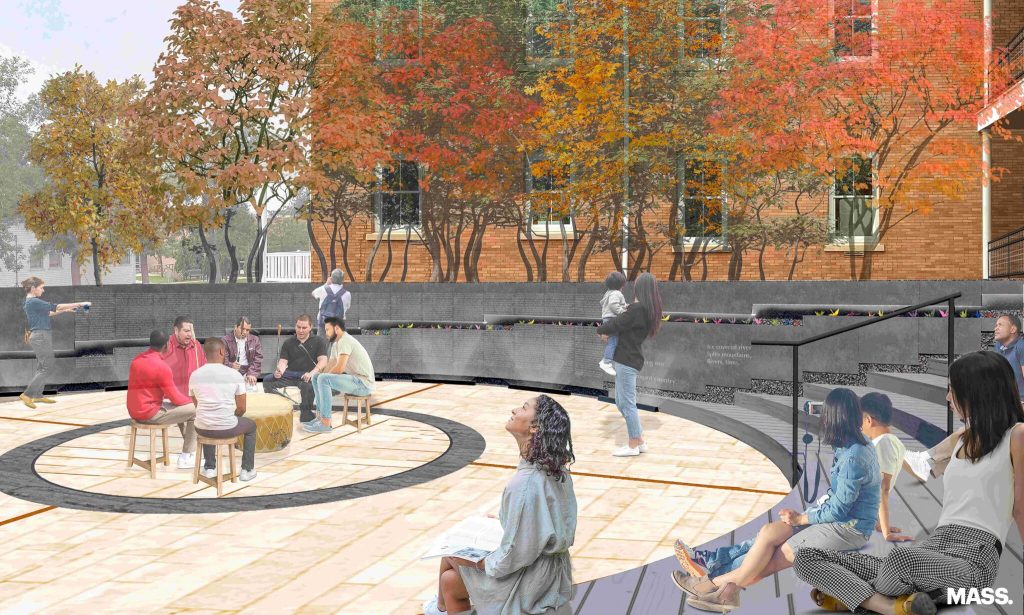
The monument incorporates both Japanese and Native American design elements.
The inside walls of the memorial will display the names of the 1,850 Japanese Americans imprisoned at the military post. In the middle, it features a drum circle shaped like an Indigenous medicine wheel. The site is meant to be a place for community building and collective healing, Kunkel said.
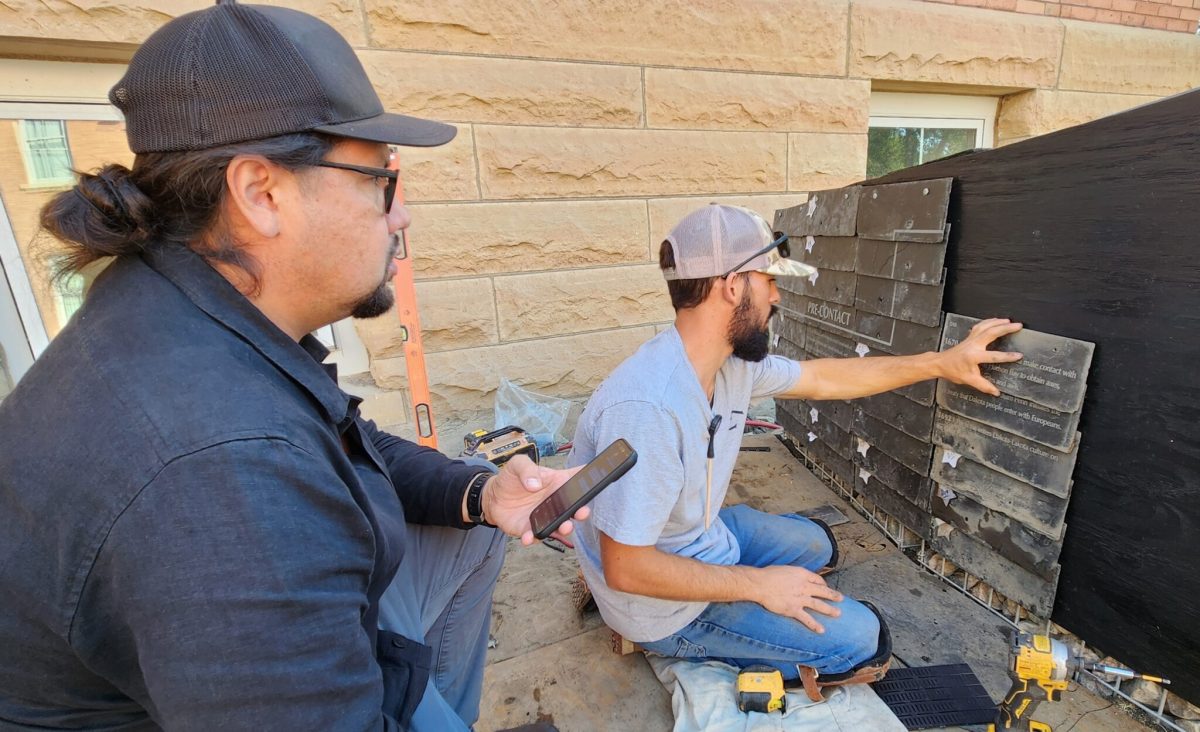
The design of the monument was also inspired by kintsugi, the Japanese art of using gold to repair broken pottery. The walls incorporate old slate tiles that once lined the roofs of the buildings where Japanese Americans were incarcerated, for example.
The dedication is scheduled to start at 1 p.m. Sept. 5 in the courtyard behind the college’s Education Building in Bismarck.
Ina will speak during the ceremony. Afterwards, she will also host a signing for her new book about her family during the World War II era titled “The Poet and the Silk Girl.”
The Rev. Duncan Ryūken Williams, a Sōtō Zen Buddhist priest and member of the memorial committee, will offer a blessing.
Williams led a project to create a book memorializing the names of 125,284 people of Japanese ancestry incarcerated in the United States during the war. The book, called the Ireichō, will be on display at the United Tribes Technical College library on Sept. 5 and 6.
Additionally, the ceremony will feature a Native drumming group, as well as a drumming and dance performance by Ensō Daiko, a group from the Minneapolis-St. Paul area, according to a news release from the college.
Dancers from Ai Dance Theater of New York City will also perform.
Afterwards, at 3:30 p.m., United Tribes will host a screening of “Defiant to the Last,” a documentary about Japanese Americans who pushed back against their persecution by the U.S. government during the war.
The dedication coincides with the United Tribes Technical College’s 55th annual International Powwow.
This story was updated to correct Joseph Kunkel’s title.
North Dakota Monitor is part of States Newsroom, a nonprofit news network supported by grants and a coalition of donors as a 501c(3) public charity. North Dakota Monitor maintains editorial independence. Contact Editor Amy Dalrymple for questions: info@northdakotamonitor.com.
