

Richard Arlin Walker
Special to ICT
Generations of adverse experiences had perhaps steeled the People’s resilience for times such as these.
An 8.8 earthquake – the sixth-largest ever recorded – rocked the sea floor off the coast of Kamchatka, Russia, on July 29, shoving a subsurface wall of ocean toward Canada and coastal U.S. states at a speed of about 500 mph.
Canoes were on the beach then, en route to the next stop on the Intertribal Canoe Journey, the great annual gathering of Northwest Indigenous canoe cultures. The size of the tsunami wave that was expected to reach Washington state was unknown at the time, but the people were accustomed to facing the unknown.
The grandparents share accounts handed down by their grandparents’ grandparents’ grandparents about the Cascadia quake of 1700 that destroyed villages and sent a tsunami wave to Japan. Quileute culture bearers talk of the great flood that carried relatives in their canoes to a place now known as Chimakum, 110 miles east, where descendants of those carried there still live.
Those were the natural unknowns; others were manmade, such as introduced diseases and land grabs and assimilation policies. And yet, the People could not be stopped. And as a tsunami barrelled toward Washington state, neither would the 2025 Canoe Journey.
Lower Elwha Klallam Chairwoman Frances Charles, whose tribal nation is hosting this year’s event, said late July 29 that canoe skippers and emergency management officials were meeting hourly to monitor wave estimates and talk about the possible strength of post-wave currents. Some canoes were moved to higher ground.
Waves measuring 4.9 feet were reported in Hilo, Hawai’i, and a parking lot was flooded in Oahu. The tsunami seemed to lose muscle by the time it reached Washington’s shores. It arrived just after midnight in the form of 1-foot waves at the Quileute Tribe capital of La Push, on the Pacific Coast. The Washington state Emergency Management Department later that morning reported waves measuring 1.3 feet in the Makah Tribe capital of Neah Bay; and 1.2 feet in Port Angeles in Elwha Klallam territory.
By 5:24 a.m. July 30, the threat had passed and canoes returned to the water. And the Intertribal Canoe Journey, like life, continued on.
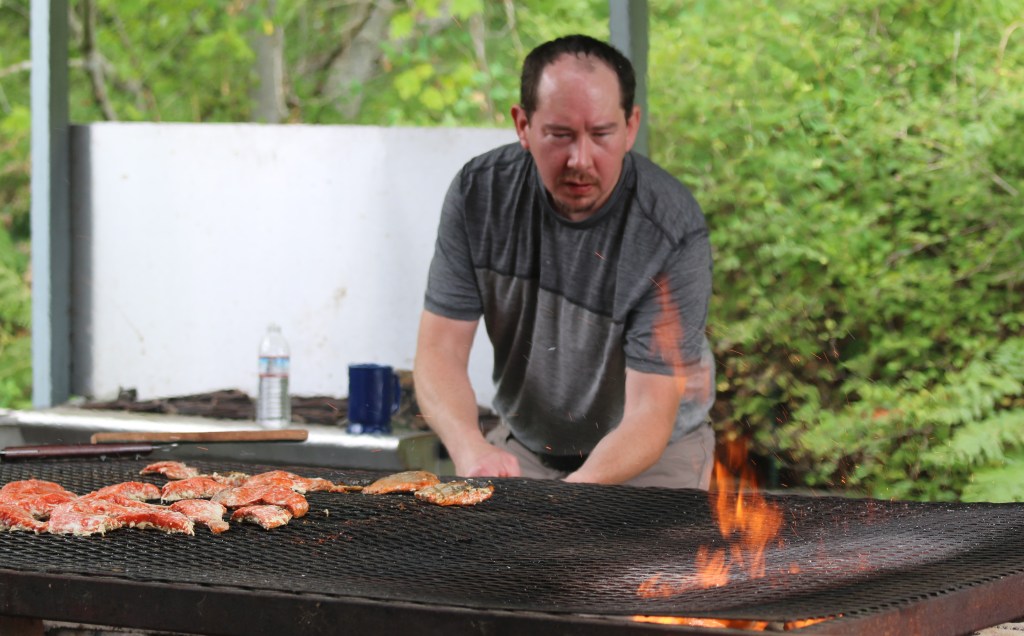
Samish fish cook Jeffrey Wooten stirs the fire as he prepares salmon for several hundred guests July 25 at Fidalgo Bay Resort, on the shores of Fidalgo Bay in Anacortes, Washington. About 15 canoes from Northwest Coast Indigenous nations visited Samish territory en route to Elwha Klallam’s homelands for the Intertribal Canoe Journey. More than 100 canoes will be in Elwha July 31 to Aug. 5. (Richard Arlin Walker photo) 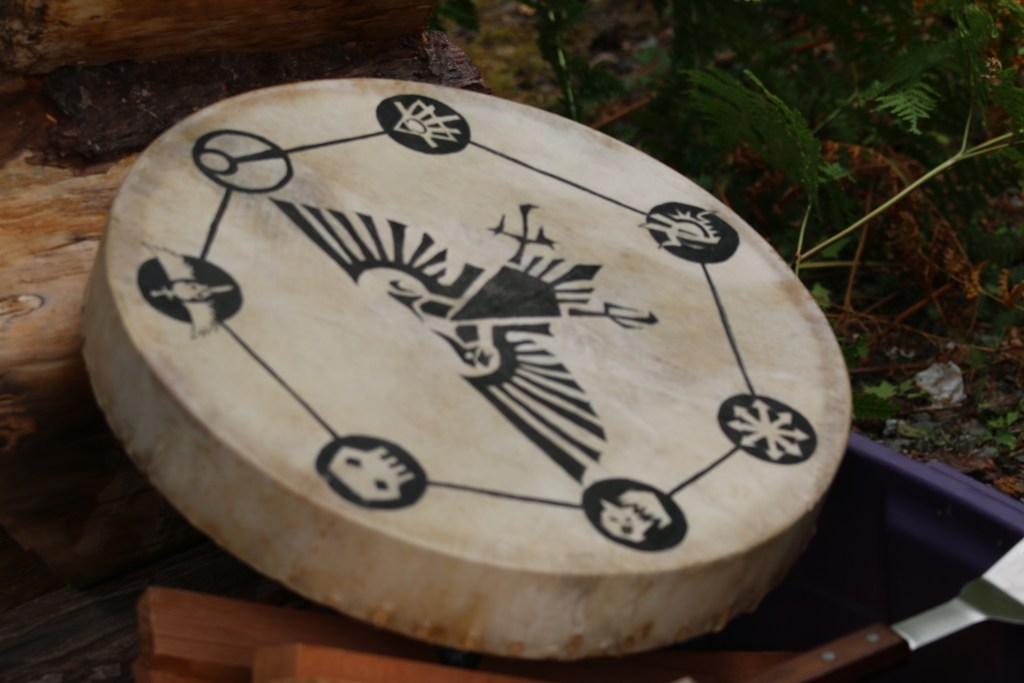
Samish fish cook Jeffrey Wooten’s drum rests nearby as he prepares barbecued salmon for several hundred guests July 25 at its Fidalgo Bay Resort, on the shores of Fidalgo Bay in Anacortes, Washington. About 15 canoes from Northwest Coast Indigenous nations visited Samish territory en route to Elwha Klallam’s homelands for the Intertribal Canoe Journey. More than 100 canoes will be in Elwha July 31 to Aug. 5. (Richard Arlin Walker photo) 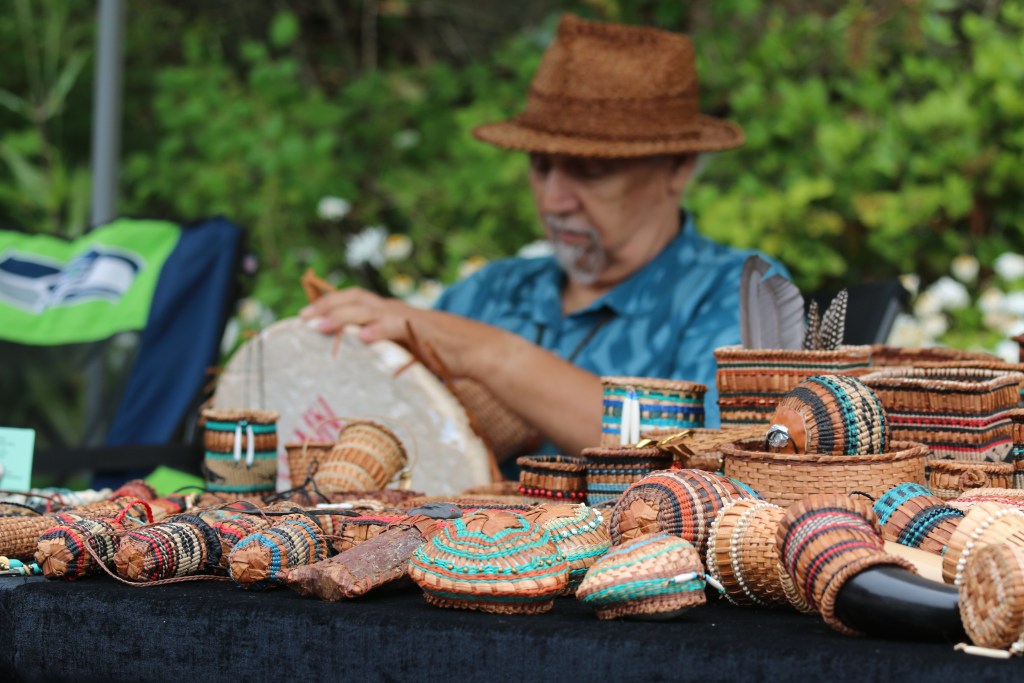
Pat Dunn, Samish, weaves a cedar hat July 25 at Fidalgo Bay Resort in Anacortes, Washington during the Intertribal Canoe Journey. His table featured many traditional items, including rattles, baskets and jewelry. (Richard Arlin Walker photo) 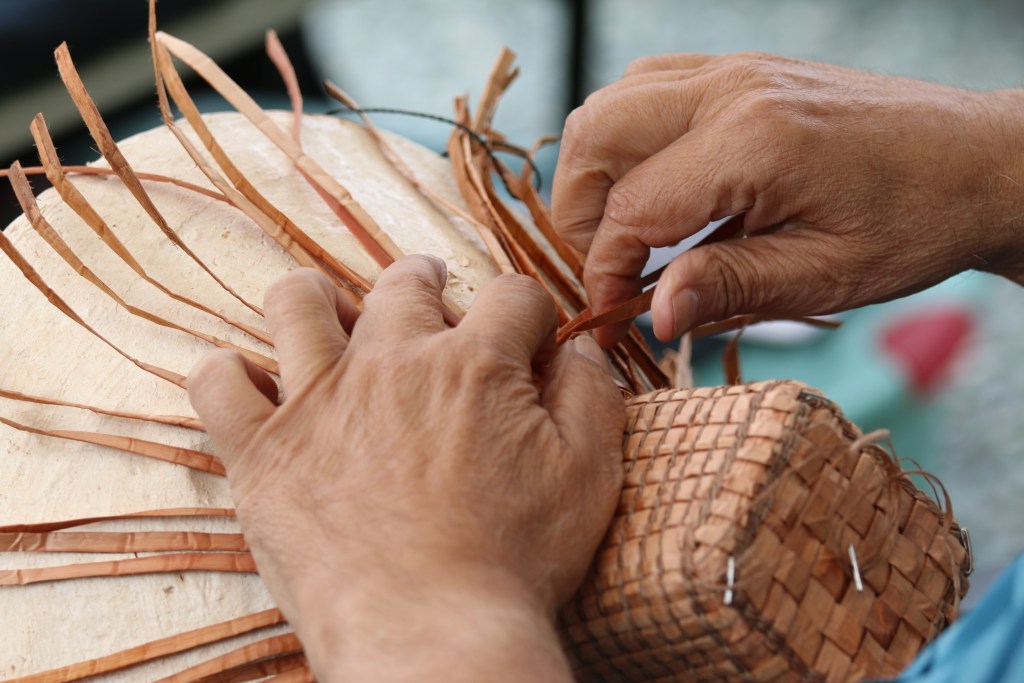
Pat Dunn, Samish, weaves a cedar hat July 25 at Fidalgo Bay Resort in Anacortes, Washington during the Intertribal Canoe Journey. More than 100 canoes will be in Elwha July 31 to Aug. 5. (Richard Arlin Walker photo) 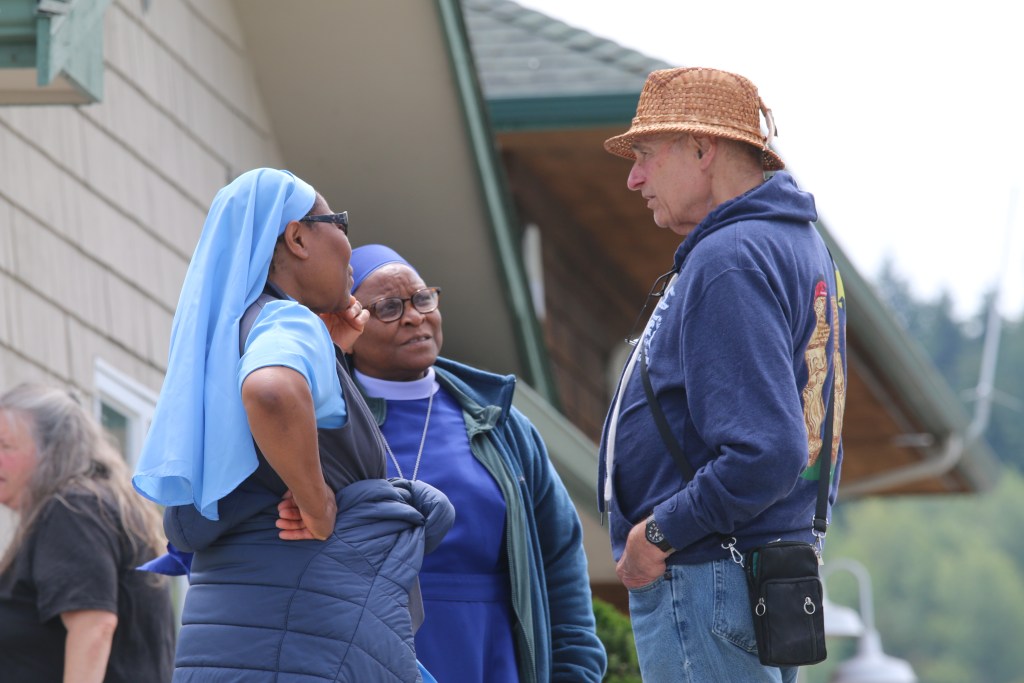
Gene Thomas — whose wife, Leslie Eastwood, is Samish — talks with two visiting nuns about the Samish Nation July 25 at Fidalgo Bay Resort in Anacortes, Washington during the Intertribal Canoe Journey. More than 100 canoes will be in Elwha July 31 to Aug. 5. (Richard Arlin Walker photo) 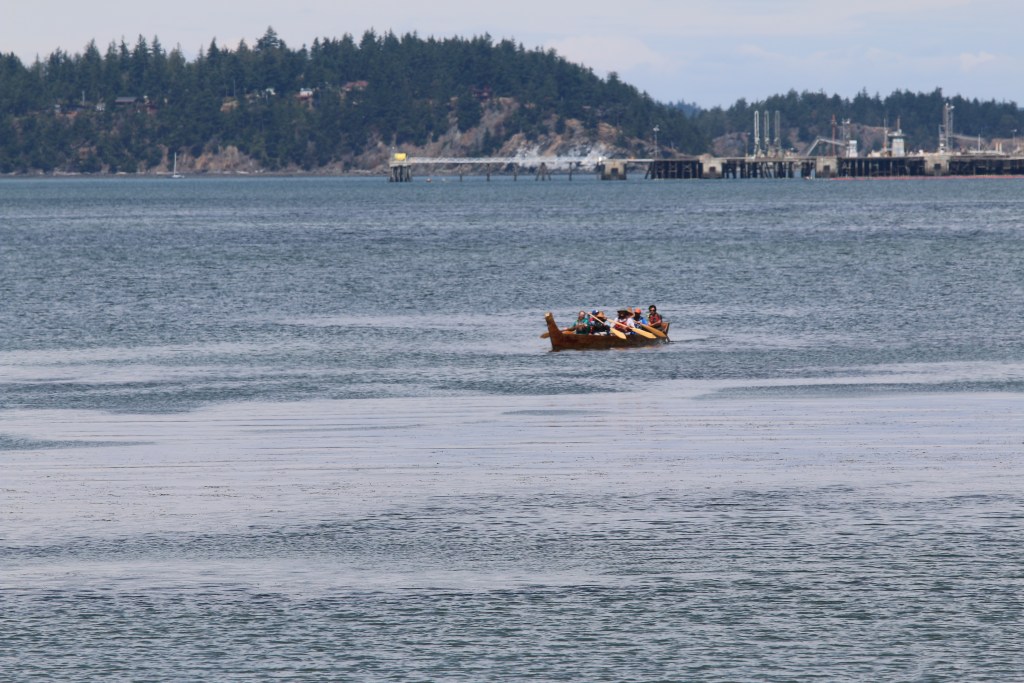
A canoe arrives July 25 at the Samish Indian Nation’s Fidalgo Bay Resort, on the shores of Fidalgo Bay in Anacortes, Washington. About 15 canoes from Northwest Coast Indigenous nations visited Samish territory en route to Elwha Klallam’s homelands for the Intertribal Canoe Journey. More than 100 canoes will be in Elwha July 31 to Aug. 5. (Richard Arlin Walker photo) 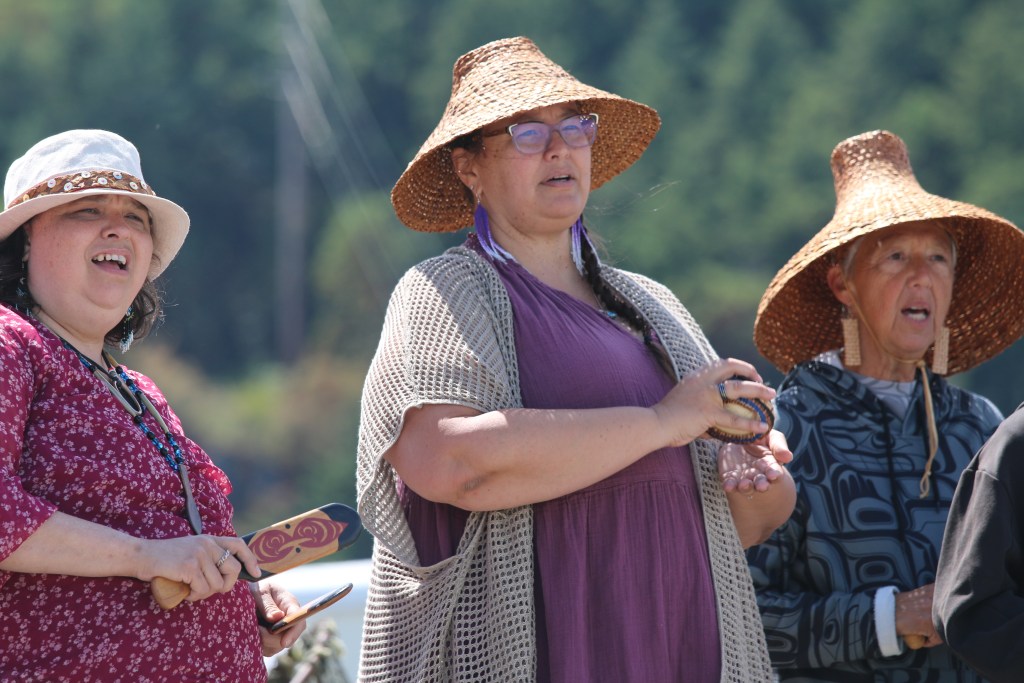
Samish Nation citizens welcome an arriving canoe with song July 25 at Fidalgo Bay Resort, on the shores of Fidalgo Bay in Anacortes, Washington. About 15 canoes from Northwest Coast Indigenous nations visited Samish territory en route to Elwha Klallam’s homelands for the Intertribal Canoe Journey. More than 100 canoes will be in Elwha July 31 to Aug. 5. (Richard Arlin Walker photo) 
Samish Nation citizens welcome an arriving canoe with song July 25 at Fidalgo Bay Resort, on the shores of Fidalgo Bay in Anacortes, Washington. About 15 canoes from Northwest Coast Indigenous nations visited Samish territory en route to Elwha Klallam’s homelands for the Intertribal Canoe Journey. More than 100 canoes will be in Elwha July 31 to Aug. 5. (Richard Arlin Walker photo) 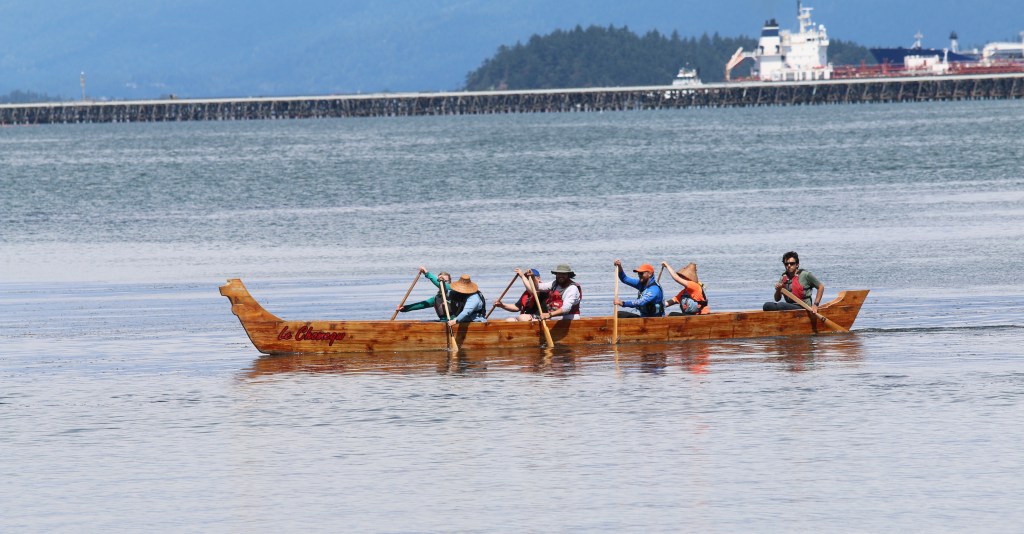
The Oliver family canoe from the Lummi Nation arrives July 25 at Fidalgo Bay Resort, on the shores of Fidalgo Bay in Anacortes, Washington. About 15 canoes from Northwest Coast Indigenous nations visited Samish territory en route to Elwha Klallam’s homelands for the Intertribal Canoe Journey. More than 100 canoes will be in Elwha July 31 to Aug. 5. (Richard Arlin Walker photo) 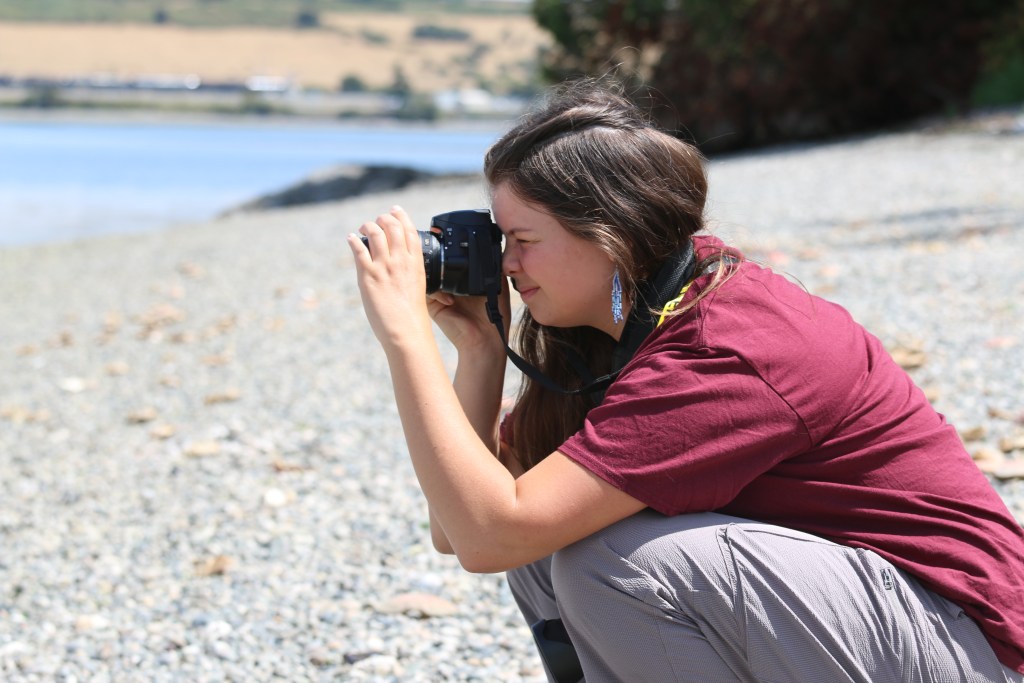
Lily Johnson, a Samish citizen and volunteer photographer for the tribe, photographs the arrival of canoes July 25 at Fidalgo Bay Resort, on the shores of Fidalgo Bay in Anacortes, Washington. About 15 canoes from Northwest Coast Indigenous nations visited Samish territory en route to Elwha Klallam’s homelands for the Intertribal Canoe Journey. More than 100 canoes will be in Elwha July 31 to Aug. 5. (Richard Arlin Walker photo) 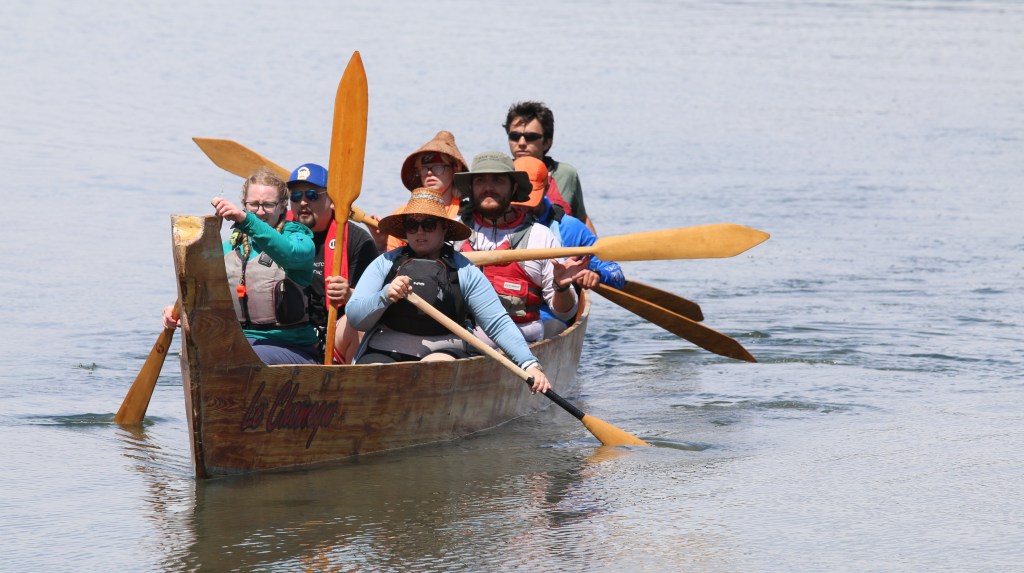
The Oliver family canoe from the Lummi Nation arrives July 25 at Fidalgo Bay Resort, on the shores of Fidalgo Bay in Anacortes, Washington. About 15 canoes from Northwest Coast Indigenous nations visited Samish territory en route to Elwha Klallam’s homelands for the Intertribal Canoe Journey. More than 100 canoes will be in Elwha July 31 to Aug. 5. (Richard Arlin Walker photo) 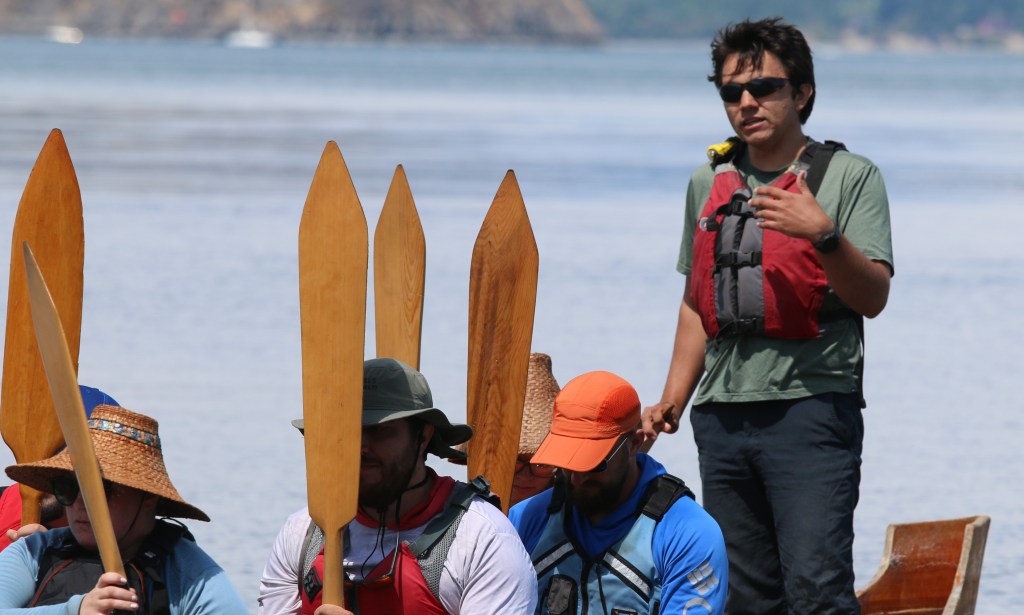
The skipper of the Oliver family canoe Le Chomeqw asks permission for his crew to come ashore July 25 at Fidalgo Bay Resort, on the shores of Fidalgo Bay in Anacortes, Washington. About 15 canoes from Northwest Coast Indigenous nations visited Samish territory en route to Elwha Klallam’s homelands for the Intertribal Canoe Journey. Chomeqw means great-grandmother. (Richard Arlin Walker photo) 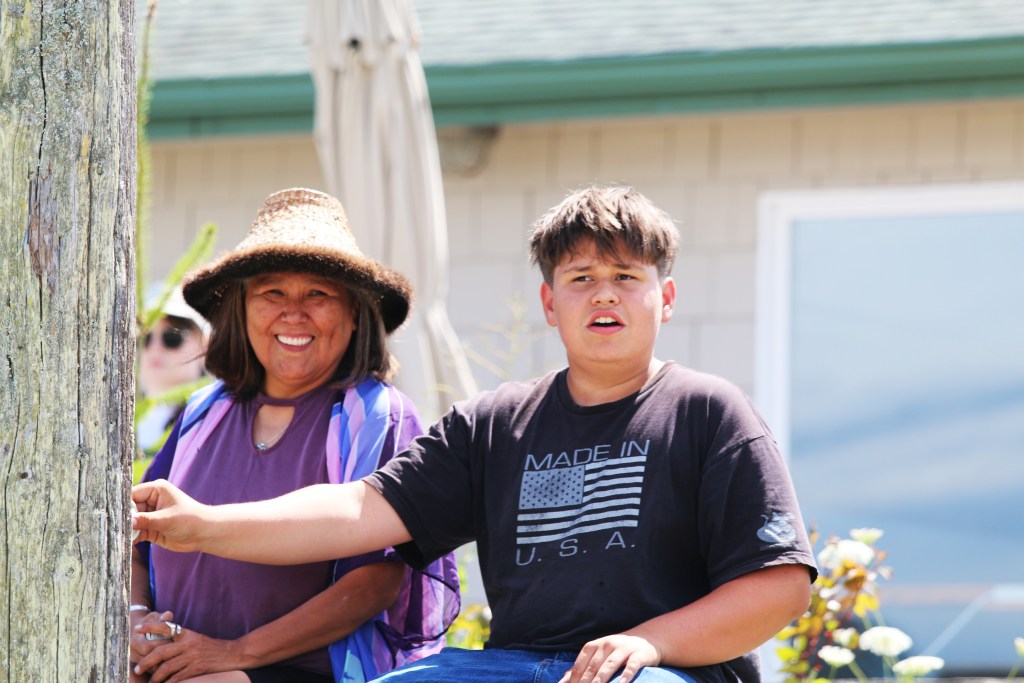
Canoes arriving at Samish Indian Nation’s shores July 25 were greeted with smiles and song. About 15 canoes from Northwest Coast Indigenous nations visited Samish territory en route to Elwha Klallam’s homelands for the Intertribal Canoe Journey. More than 100 canoes will be in Elwha July 31 to Aug. 5. (Richard Arlin Walker photo) 
Eva Hinds, a great-granddaughter of Tol Stola, a well-documented Samish ancestor, reflects as canoes arrive July 25 at Samish’s Fidalgo Bay Resort. About 15 canoes from Northwest Coast Indigenous nations visited Samish territory en route to Elwha Klallam’s homelands for the Intertribal Canoe Journey. More than 100 canoes will be in Elwha July 31 to Aug. 5. (Richard Arlin Walker photo) 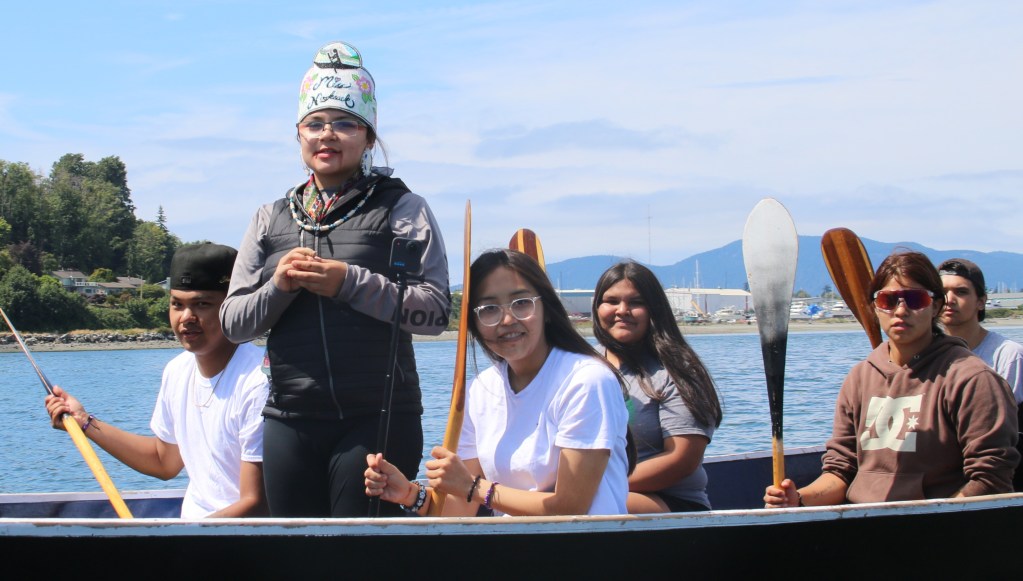
A Nooksack canoe arrives July 25 at Samish’s Fidalgo Bay Resort. About 15 canoes from Northwest Coast Indigenous nations visited Samish territory en route to Elwha Klallam’s homelands for the Intertribal Canoe Journey. More than 100 canoes will be in Elwha July 31 to Aug. 5. (Richard Arlin Walker photo) 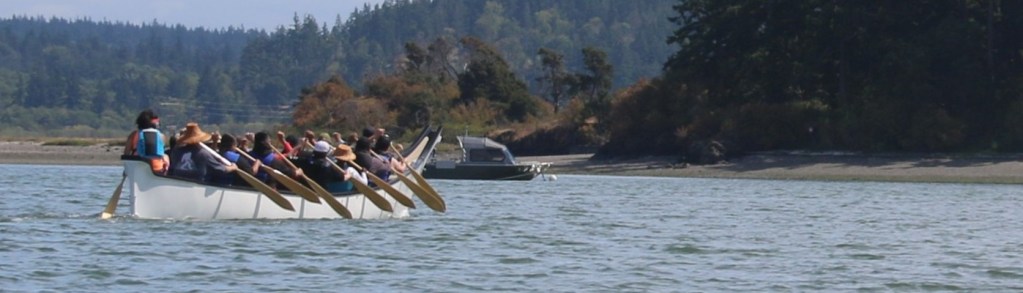
A canoe from Northwest Indian College arrives July 25 at Samish’s Fidalgo Bay Resort. About 15 canoes from Northwest Coast Indigenous nations visited Samish territory en route to Elwha Klallam’s homelands for the Intertribal Canoe Journey. More than 100 canoes will be in Elwha July 31 to Aug. 5. (Richard Arlin Walker photo) 
Lenox King and Lily Johnson, two Samish citizens, watch the arrival of canoes July 25 at Samish’s Fidalgo Bay Resort. About 15 canoes from Northwest Coast Indigenous nations visited Samish territory en route to Elwha Klallam’s homelands for the Intertribal Canoe Journey. More than 100 canoes will be in Elwha July 31 to Aug. 5. (Richard Arlin Walker photo) 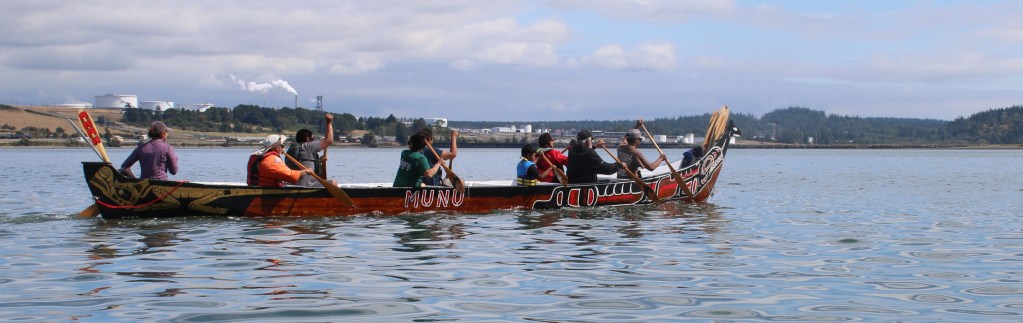
The Munu canoe family from the Snuneymuxw First Nation arrives July 25 at Samish’s Fidalgo Bay Resort. About 15 canoes from Northwest Coast Indigenous nations visited Samish territory en route to Elwha Klallam’s homelands for the Intertribal Canoe Journey. More than 100 canoes will be in Elwha July 31 to Aug. 5. (Richard Arlin Walker photo) 
Samish citizens greet an arriving canoe July 25 at Samish’s Fidalgo Bay Resort. About 15 canoes from Northwest Coast Indigenous nations visited Samish territory en route to Elwha Klallam’s homelands for the Intertribal Canoe Journey. More than 100 canoes will be in Elwha July 31 to Aug. 5. (Richard Arlin Walker photo) 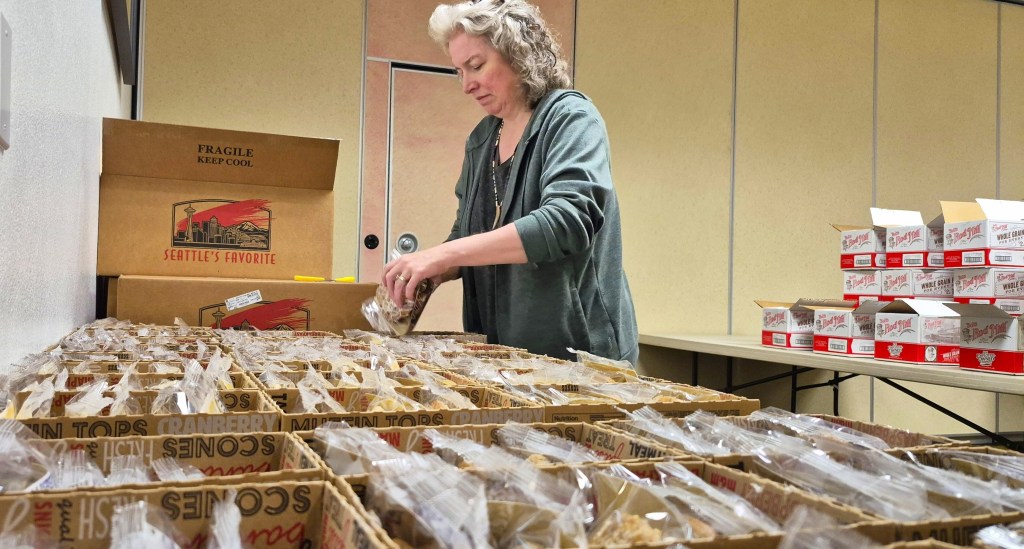
Sue Bergquist, Samish, readies some breakfast items early July 26, 2025, at Fidalgo Bay Resort in Anacortes, Washington. About 15 canoes from Northwest Coast Indigenous nations visited Samish territory en route to Elwha Klallam’s homelands for the Intertribal Canoe Journey. More than 100 canoes will be in Elwha July 31 to Aug. 5. (Richard Arlin Walker photo) Credit: Richard Arlin Walker 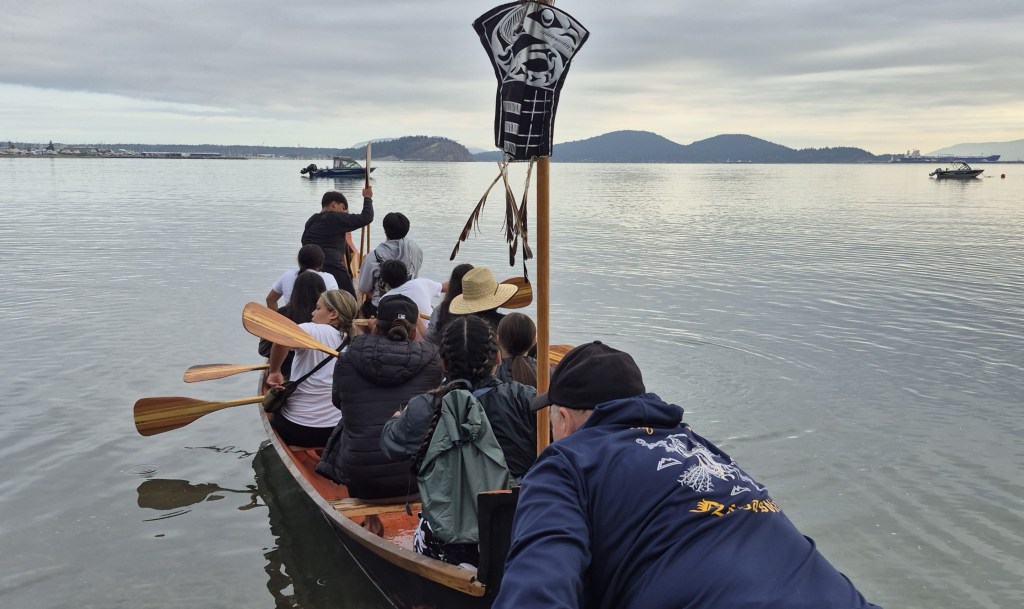
A canoe is launched from Samish Indian Nation’s shores July 26 in Anacortes, Washington. About 15 canoes from Northwest Coast Indigenous nations visited Samish territory en route to Elwha Klallam’s homelands for the Intertribal Canoe Journey. More than 100 canoes will be in Elwha July 31 to Aug. 5. (Richard Arlin Walker photo) Credit: Richard Arlin Walker 
A canoe is launched from Samish Indian Nation’s shores July 26 in Anacortes, Washington. About 15 canoes from Northwest Coast Indigenous nations visited Samish territory en route to Elwha Klallam’s homelands for the Intertribal Canoe Journey. More than 100 canoes will be in Elwha July 31 to Aug. 5. (Richard Arlin Walker photo) Credit: Richard Arlin Walker 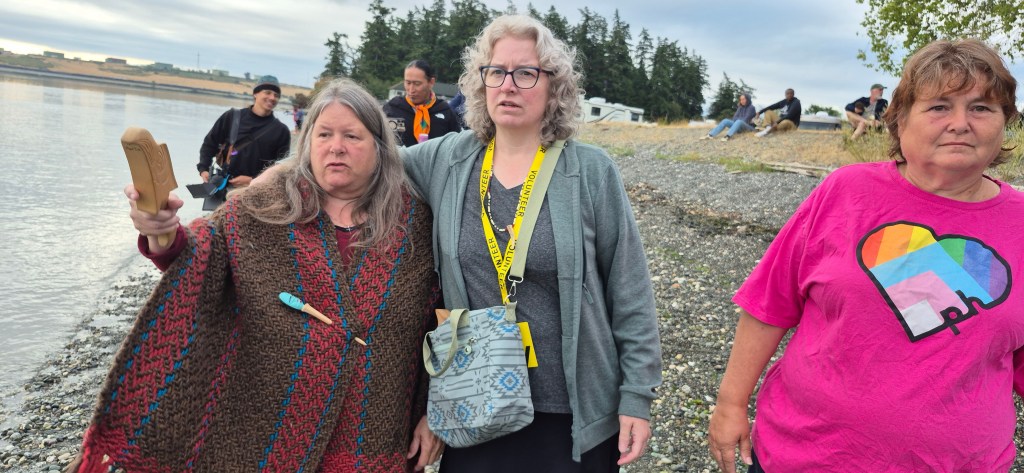
Samish Nation citizens Molly Neely-Walker, her niece Sue Bergquist, and Eva Hinds watch as canoes line up July 26 to request permission to leave during the Intertribal Canoe Journey. About 15 canoes from Northwest Coast Indigenous nations visited Samish territory en route to Elwha Klallam’s homelands. More than 100 canoes will be in Elwha July 31 to Aug. 5. (Richard Arlin Walker photo) Credit: Richard Arlin Walker 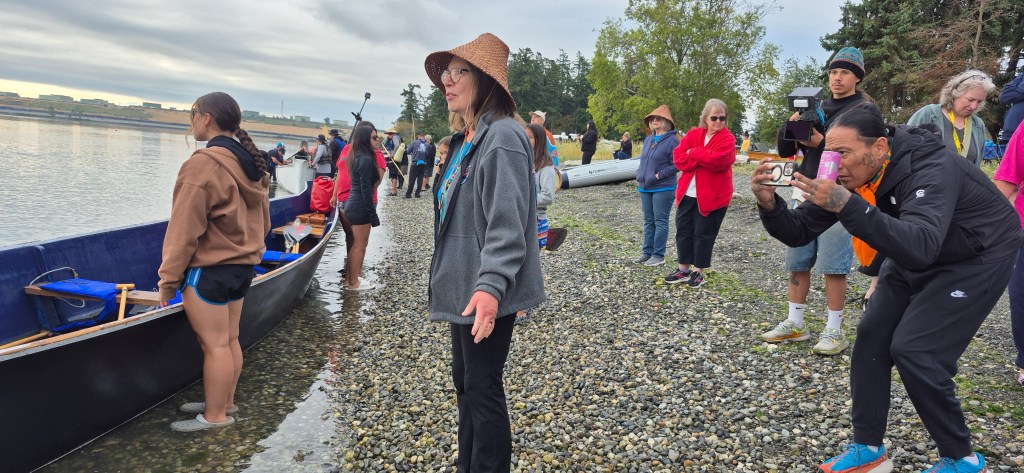
Leslie Eastwood and other Samish Nation citizens watch as canoe prepare to leave Samish’s shores July 26 during the Intertribal Canoe Journey. About 15 canoes from Northwest Coast Indigenous nations visited Samish territory en route to Elwha Klallam’s homelands. More than 100 canoes will be in Elwha July 31 to Aug. 5. (Richard Arlin Walker photo) Credit: Richard Arlin Walker 
Canoes prepare to request permission to leave the Samish Indian Nation’s shores July 26 during the Intertribal Canoe Journey. About 15 canoes from Northwest Coast Indigenous nations visited Samish territory en route to Elwha Klallam’s homelands. More than 100 canoes will be in Elwha July 31 to Aug. 5. (Richard Arlin Walker photo) 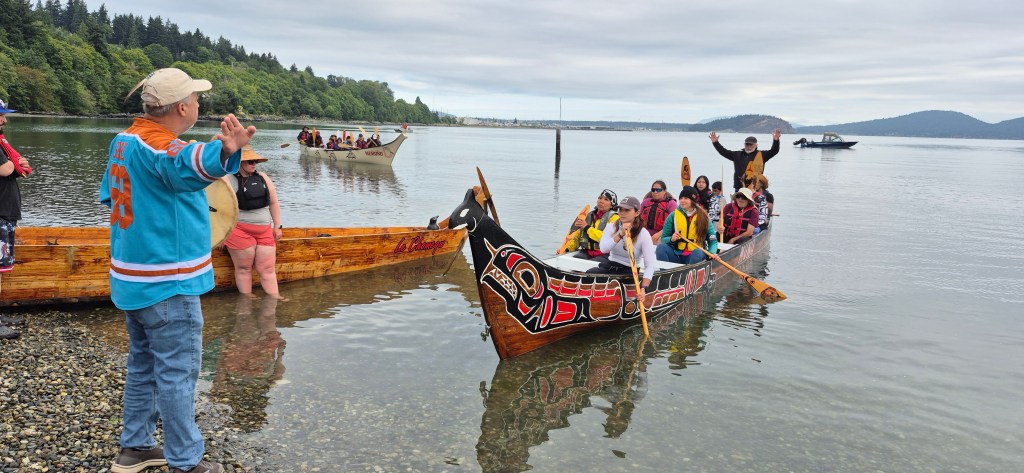
Samish Indian Nation Chairman Tom Wooten wishes a departing canoe family safe travels July 26 as they continue on in the Intertribal Canoe Journey. About 15 canoes from Northwest Coast Indigenous nations visited Samish territory en route to Elwha Klallam’s homelands. More than 100 canoes will be in Elwha July 31 to Aug. 5. (Richard Arlin Walker photo) 
Molly Neely-Walker, Samish, watches as canoes depart Samish’s shores July 26 in the Intertribal Canoe Journey. About 15 canoes from Northwest Coast Indigenous nations visited Samish territory en route to Elwha Klallam’s homelands. More than 100 canoes will be in Elwha July 31 to Aug. 5. (Richard Arlin Walker photo) 
Samish Indian Nation Chairman Tom Wooten wishes canoe families safe travels July 26 as they continue on in the Intertribal Canoe Journey. About 15 canoes from Northwest Coast Indigenous nations visited Samish territory en route to Elwha Klallam’s homelands. More than 100 canoes will be in Elwha July 31 to Aug. 5. (Richard Arlin Walker photo) 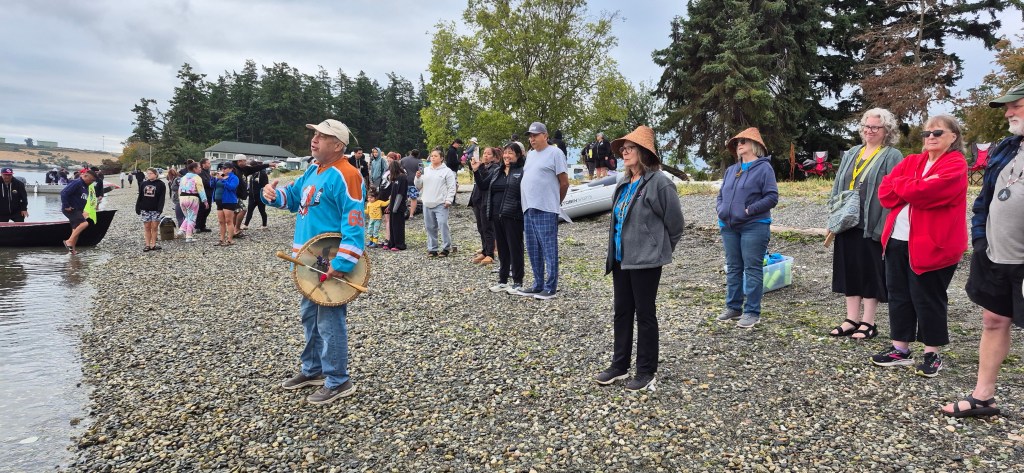
Samish Indian Nation Chairman Tom Wooten wishes canoe families safe travels July 26 as they continue on in the Intertribal Canoe Journey. About 15 canoes from Northwest Coast Indigenous nations visited Samish territory en route to Elwha Klallam’s homelands. More than 100 canoes will be in Elwha July 31 to Aug. 5. (Richard Arlin Walker photo) 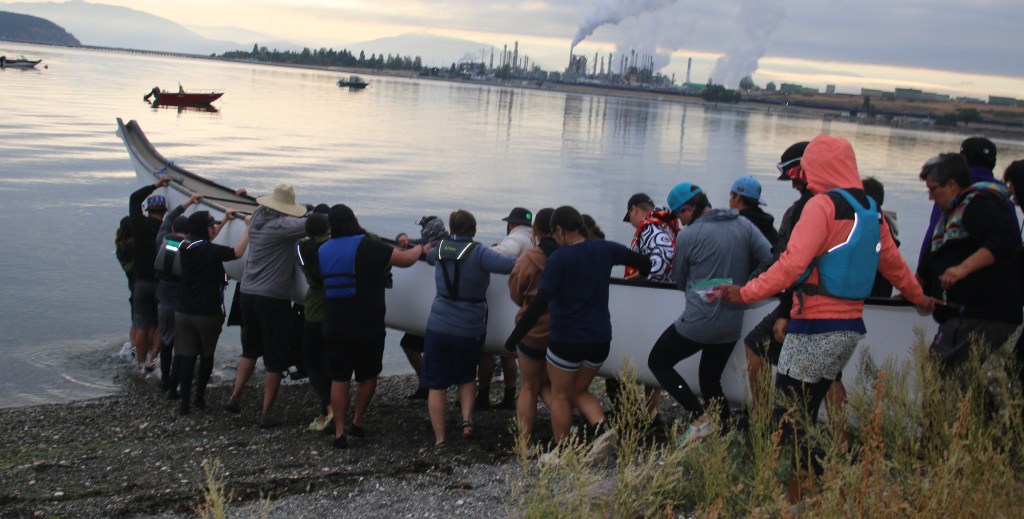
The Northwest Indian College canoe is carried to the water July 26 at Samish Indian Nation’s Fidalgo Bay Resort. About 15 canoes from Northwest Coast Indigenous nations visited Samish territory en route to Elwha Klallam’s homelands. More than 100 canoes will be in Elwha July 31 to Aug. 5. (Richard Arlin Walker photo) 
Canoes wait for the incoming tide to bring some depth into the channel so they can land at the Swinomish Tribe’s shores July 26 during the Intertribal Canoe Journey. More than 100 canoes will be in Elwha July 31 to Aug. 5. (Richard Arlin Walker photo) 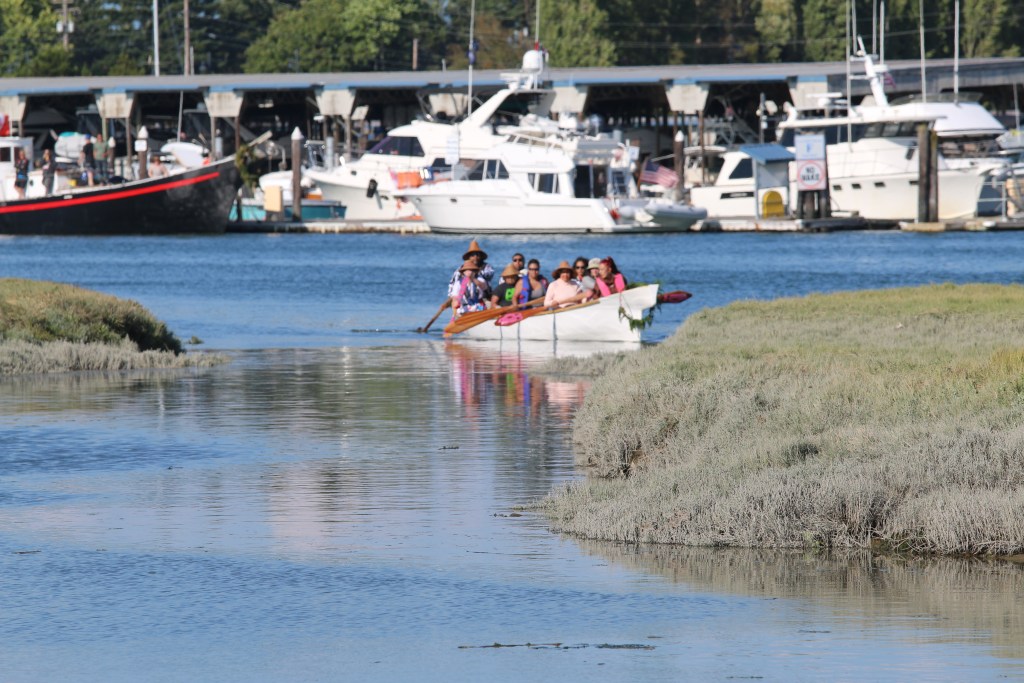
Canoes wait for the incoming tide to bring some depth into the channel so they can land at the Swinomish Tribe’s shores July 26 during the Intertribal Canoe Journey. More than 100 canoes will be in Elwha July 31 to Aug. 5. (Richard Arlin Walker photo) 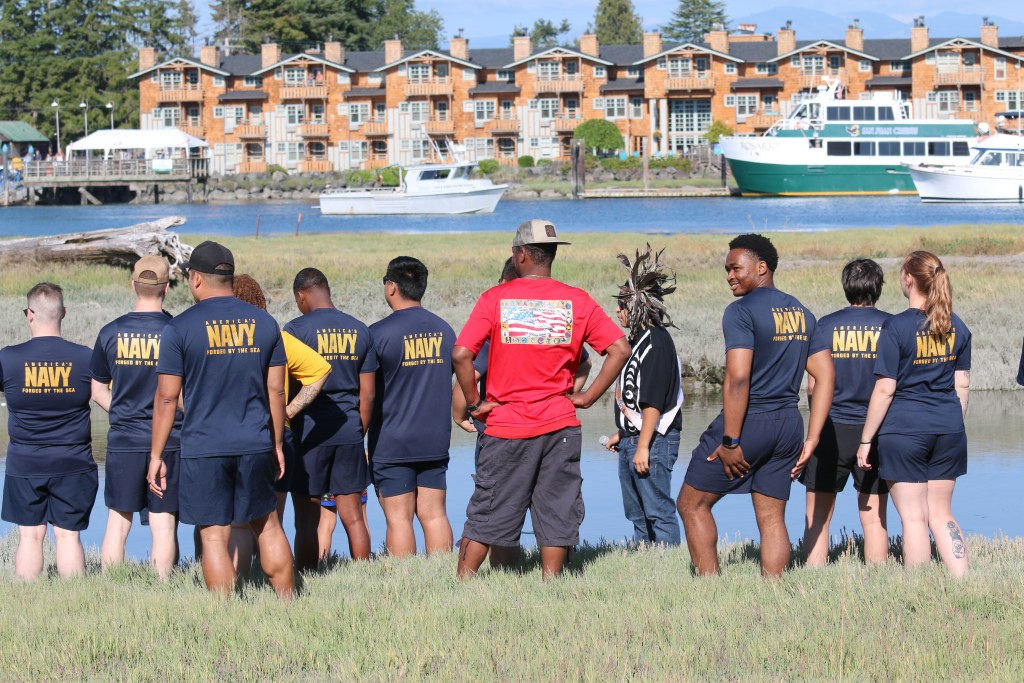
Sailors from Naval Air Station Whidbey Island helped carry canoes ashore July 26 at Swinomish during the Intertribal Canoe Journey. More than 100 canoes will be in Elwha July 31 to Aug. 5. (Richard Arlin Walker photo) 
Canoes enter the channel for the landing at Swinomish July 26 during the during the Intertribal Canoe Journey. The ultimate destination is Elwha Klallam territory. More than 100 canoes will be in Elwha July 31 to Aug. 5. (Richard Arlin Walker photo) 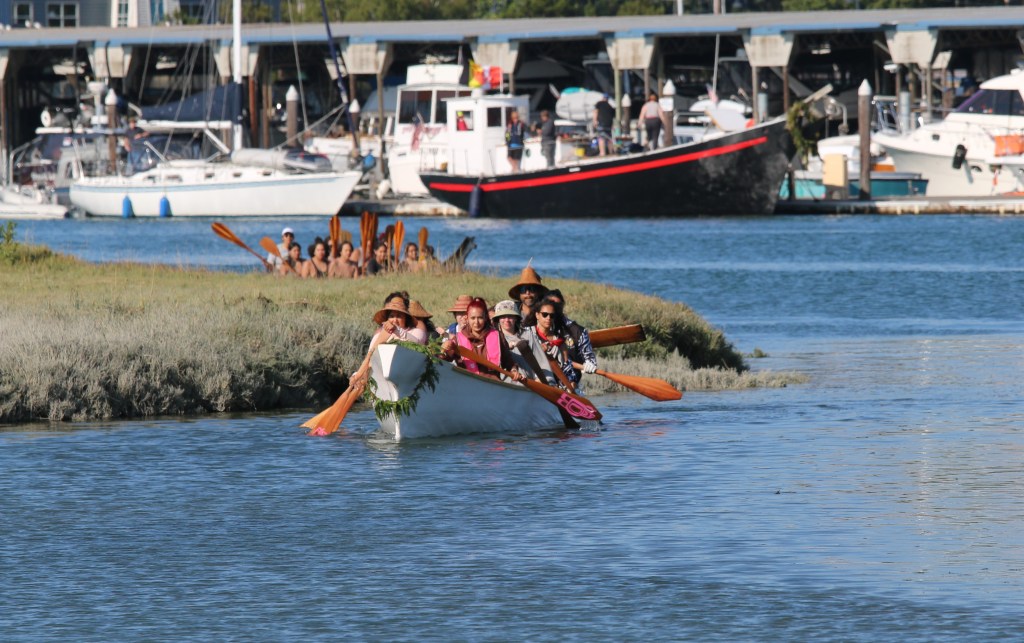
Canoes enter the channel for the landing at Swinomish July 26 during the during the Intertribal Canoe Journey. The ultimate destination is Elwha Klallam territory. More than 100 canoes will be in Elwha July 31 to Aug. 5. (Richard Arlin Walker photo) 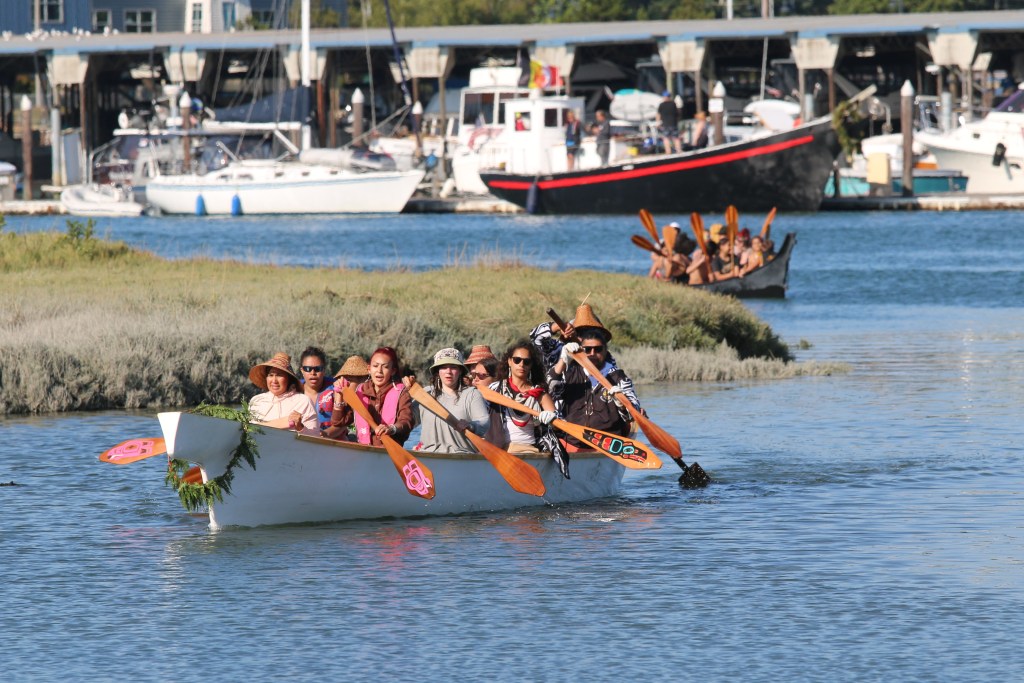
Canoes enter the channel for the landing at Swinomish July 26 during the Intertribal Canoe Journey. The ultimate destination is Elwha Klallam territory. More than 100 canoes will be in Elwha July 31 to Aug. 5. (Richard Arlin Walker photo) 
Barbara James, in cedar hat and red shawl, joins the Edwards Family in singing the family’s song as the first canoes arrive at Swinomish on July 26 during the Intertribal Canoe Journey. The ultimate destination is Elwha Klallam territory. More than 100 canoes will be in Elwha July 31 to Aug. 5. (Richard Arlin Walker photo) 
Sailors from Naval Air Station Whidbey Island helped carry canoes ashore July 26 at Swinomish during the Intertribal Canoe Journey. More than 100 canoes will be in Elwha July 31 to Aug. 5. (Richard Arlin Walker photo) 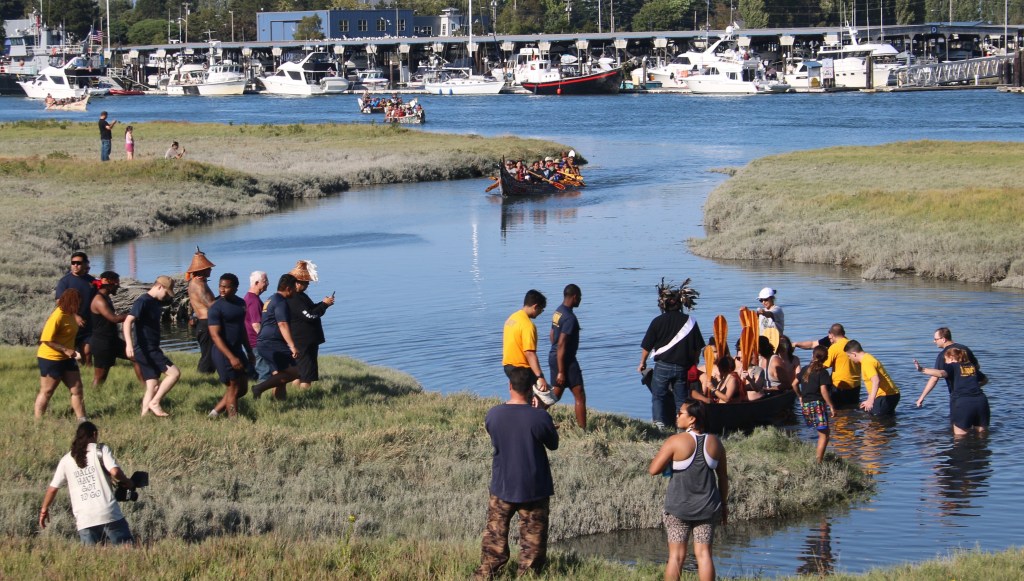
Canoes arrive at Swinomish on July 26 during the Intertribal Canoe Journey. The ultimate destination is Elwha Klallam territory. More than 100 canoes will be in Elwha July 31 to Aug. 5. (Richard Arlin Walker photo) 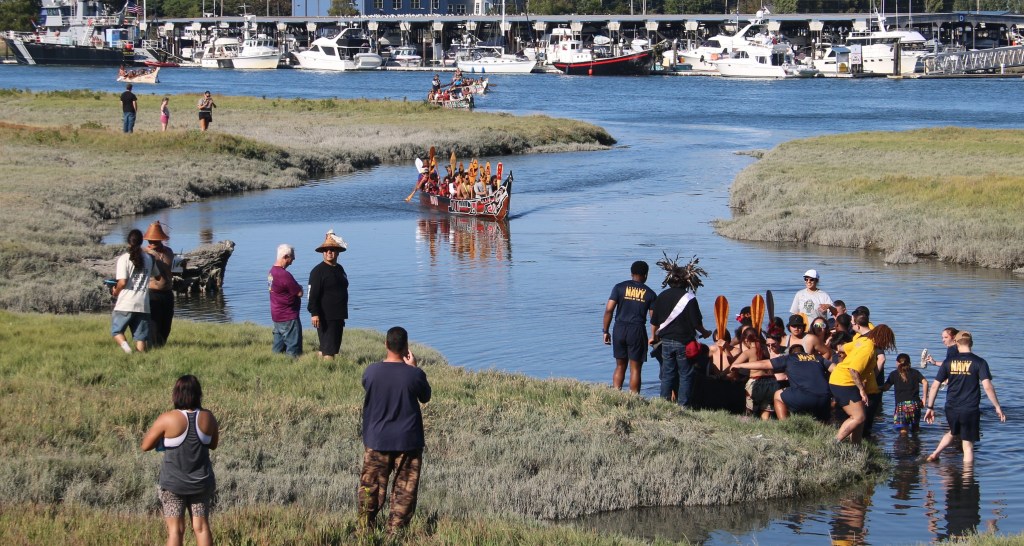
Canoes arrive at Swinomish on July 26 during the Intertribal Canoe Journey. The ultimate destination is Elwha Klallam territory. More than 100 canoes will be in Elwha July 31 to Aug. 5. (Richard Arlin Walker photo) 
Canoes arrive at Swinomish on July 26 during the Intertribal Canoe Journey. The ultimate destination is Elwha Klallam territory. More than 100 canoes will be in Elwha July 31 to Aug. 5. (Richard Arlin Walker photo) 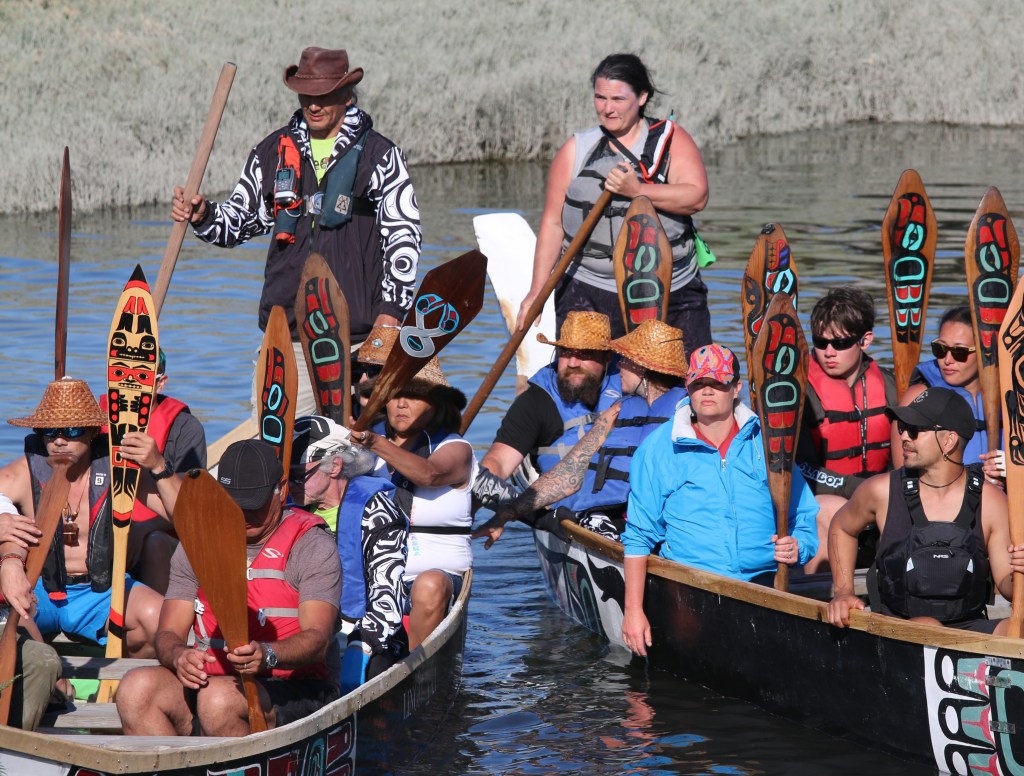
Canoes arrive at Swinomish on July 26 during the Intertribal Canoe Journey. The ultimate destination is Elwha Klallam territory. More than 100 canoes will be in Elwha July 31 to Aug. 5. (Richard Arlin Walker photo) 
A canoe is carried ashore after landing at Swinomish on July 26 during the Intertribal Canoe Journey. The ultimate destination is Elwha Klallam territory. More than 100 canoes will be in Elwha July 31 to Aug. 5. (Richard Arlin Walker photo) 
About 17 canoes arrived at Swinomish on July 26 during the Intertribal Canoe Journey. The ultimate destination is Elwha Klallam territory. More than 100 canoes will be in Elwha July 31 to Aug. 5. (Richard Arlin Walker photo) 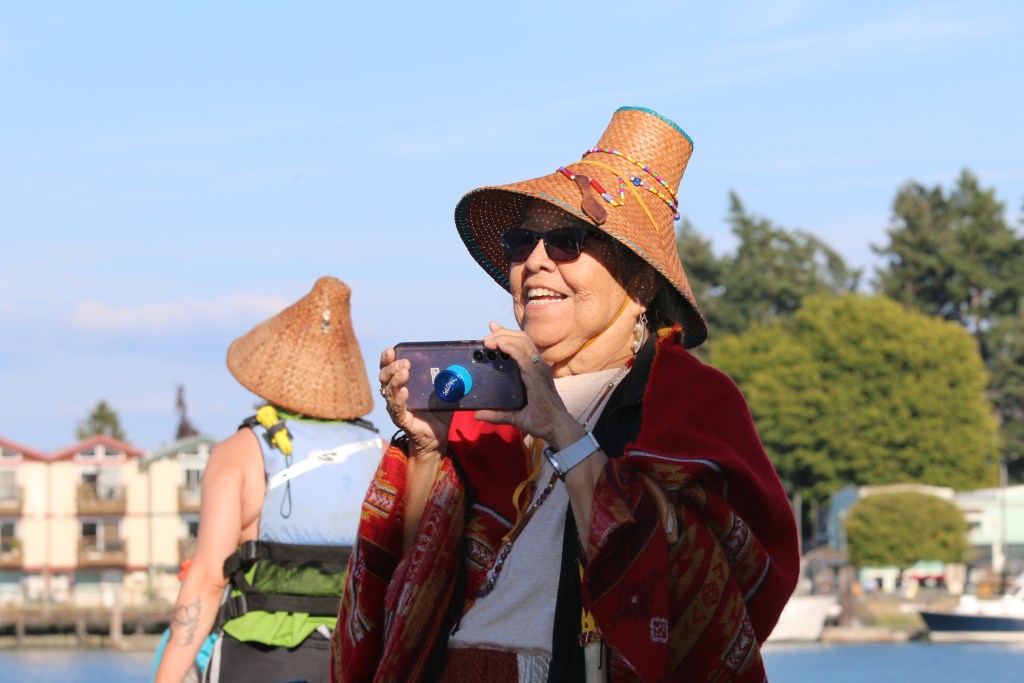
Barbara James, Swinomish, beams as canoes arrive at Swinomish on July 26 during the Intertribal Canoe Journey. The ultimate destination is Elwha Klallam territory. James is a longtime member of the Swinomish Senate, the tribe’s legislative body. (Richard Arlin Walker photo) 
Canoes arrive at Swinomish on July 26 during the Intertribal Canoe Journey. The ultimate destination is Elwha Klallam territory. More than 100 canoes will be in Elwha July 31 to Aug. 5. (Richard Arlin Walker photo) 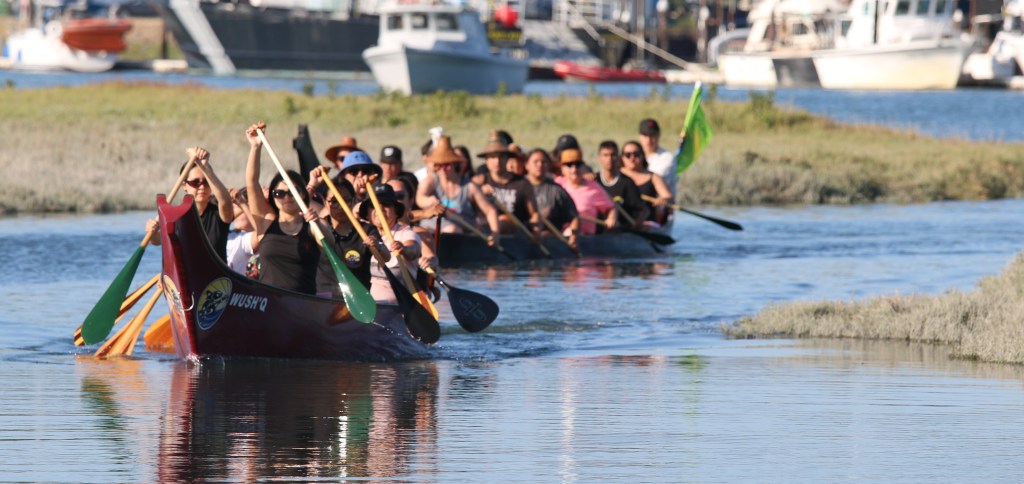
Canoes arrive at Swinomish on July 26 during the Intertribal Canoe Journey. The ultimate destination is Elwha Klallam territory. More than 100 canoes will be in Elwha July 31 to Aug. 5. (Richard Arlin Walker photo) 
Canoes arrive at Swinomish on July 26 during the Intertribal Canoe Journey. The ultimate destination is Elwha Klallam territory. More than 100 canoes will be in Elwha July 31 to Aug. 5. (Richard Arlin Walker photo) 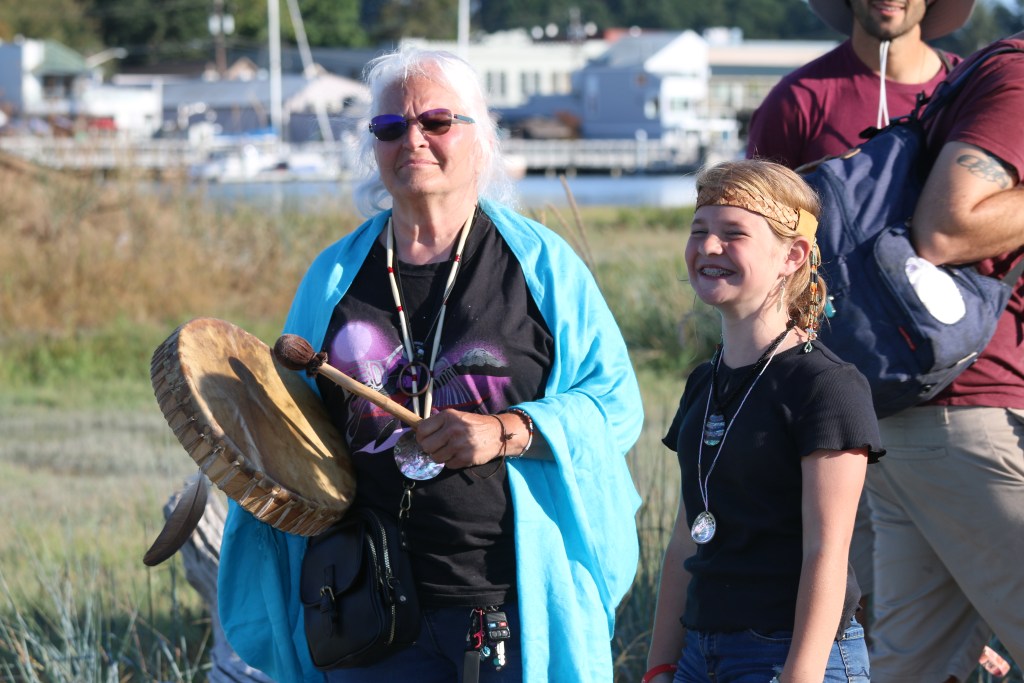
Samish elder Darvee Olson drums and her granddaughter, Lenox King, smiles during the canoe landings at Swinomish on July 26 during the Intertribal Canoe Journey. The ultimate destination is Elwha Klallam territory. More than 100 canoes will be in Elwha July 31 to Aug. 5. (Richard Arlin Walker photo)
‘It never occurs to me to stop’
More than 100 canoes are expected to land at Elwha Klallam on July 31. A five-day cultural celebration – with traditional languages, regalia, songs, dances and foods – will follow.
The Canoe Journey is a showcase of Northwest Indigenous cultures and resilience, Chairwoman Charles said. Elwha’s hosting – July 31 to Aug. 5 – takes place 20 years after the tribal nation and its allies stopped a state construction project that disturbed remains at Tse-whit-zen, an ancestral village site, and about 15 years after the removal of two dams that blocked salmon from their habitat on the Elwha River. The river’s natural processes are being restored and the salmon are coming back, Charles said.
Despite all that has happened to the People politically and otherwise, Charles said, “We are still strong.”
Indeed. The state tried to take away the People’s languages and kill their cultures, but the languages and cultures survived. Treaty rights are challenged, but tribal nations stand ready to defend them in courts. Dams were built that block salmon passage, and the People stand tough until the dams are brought down. Muscles get sore and the sea gets rough, but canoe pullers endure.
“I get to where I’m tired, but not to the point where I want to give up,” Samish Nation canoe puller Loralei Tillotson said in an earlier interview.
“I get tired,” she said, “but it never occurs to me to stop.”

