
Amelia Schafer
ICT + Rapid City Journal
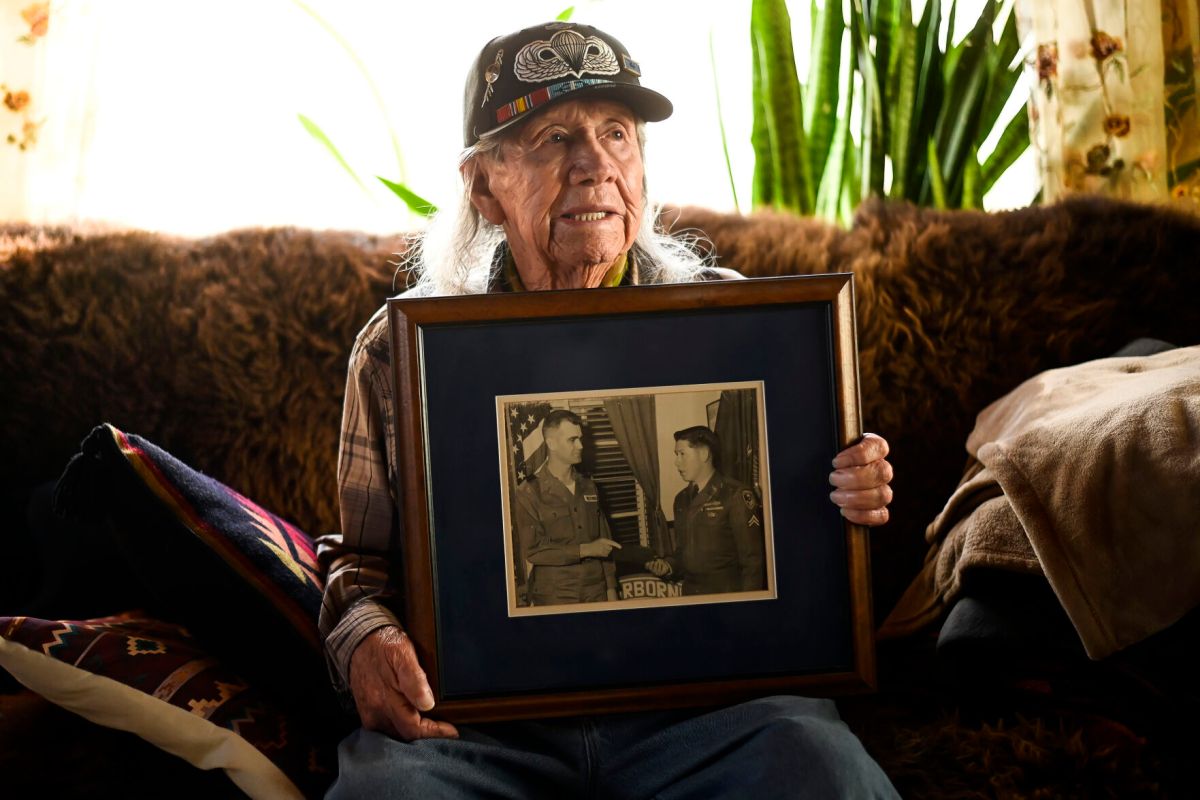
At 18 years old, Basil Brave Heart found himself in a military plane flying over Korea, moments away from parachuting into the middle of the war. A few months earlier military recruiters had come to the Holy Rosary Mission boarding school, where he was living.
On a whim, he took a chance and signed up. Brave Heart’s parents had to sign off on his decision because he was 17 at the time. The decision was final and made quickly. That night, he was put on a bus to Chicago headed to training.
In general, Native Americans serve in the United States Armed Services at a higher rate than any other demographic. Brave Heart was one of 10,000 Native Americans who served in the Korean War. Of those 10,000, only 194 never came home.
For those who did come home, things weren’t easy. In general, seven out of every 100 Veterans experience Post Traumatic Stress Disorder, including Brave Heart. There is no official count of how many Korean War Veterans experience PTSD, as the disorder wasn’t formally recognized until 1980. In those thirty years many, including Brave Heart, went without mental health resources or treatment.
Brave Heart spent 27 months in Korea. He left at 18 and returned a few months before his 21st birthday. In that 27-month period, things moved fast and Brave Heart said he had to learn quickly.
Related:
— Honoring Native veterans
— Army medic, traditional practitioner, veteran pays it forward
— Oglala Lakota elder reflects on military service
— Code Talkers integral to victory
Only a month after enlisting, Brave Heart boarded a boat headed for Yokohama, Japan. It was a 10,000-mile trip across the Pacific Ocean, and in that moment he realized the reality of what he signed up for.
“I thought, ‘This is not a movie, this is real’,” Brave Heart said. “I felt scared, I mean I had talked to my recruiters who served in World War II about their combat operations, but we really had romanticized it so much. There was this idea that if you wanna be a man this is what you do, but we had no idea what we were getting into.”
After arriving in Yokohama, Brave Heart was informed that he was going to be a paratrooper and would be transferred to Camp Chickamauga, a special training camp in Beppu, Japan. It was there that he was assigned to the 187 Regimental Combat Team, training in the same location where Kamikazes trained in World War II.
The training was rigorous and intense. Brave Heart said he began to grow more confident in himself and started to understand mentally what it would take to make it through.
“(In combat) If you’re distracted, if you’re thinking about something or someone else, you can get someone killed,” Brave Heart said. “In combat, you have to work as a team, if someone isn’t operating at that level we needed to report them because it was a danger to everyone.”
Brave Heart was told that he should be ready at any moment to go to Korea and after a month and a half in Japan, that call came. Brave Heart would soon be boarding a plane and literally jumping into a war zone.
The team was loaded onto a plane, and each person was given a special scarf. The general wished them good luck, shut the door, and they took off. Brave Heart said his heart was racing, and his adrenaline was at an all-time high.
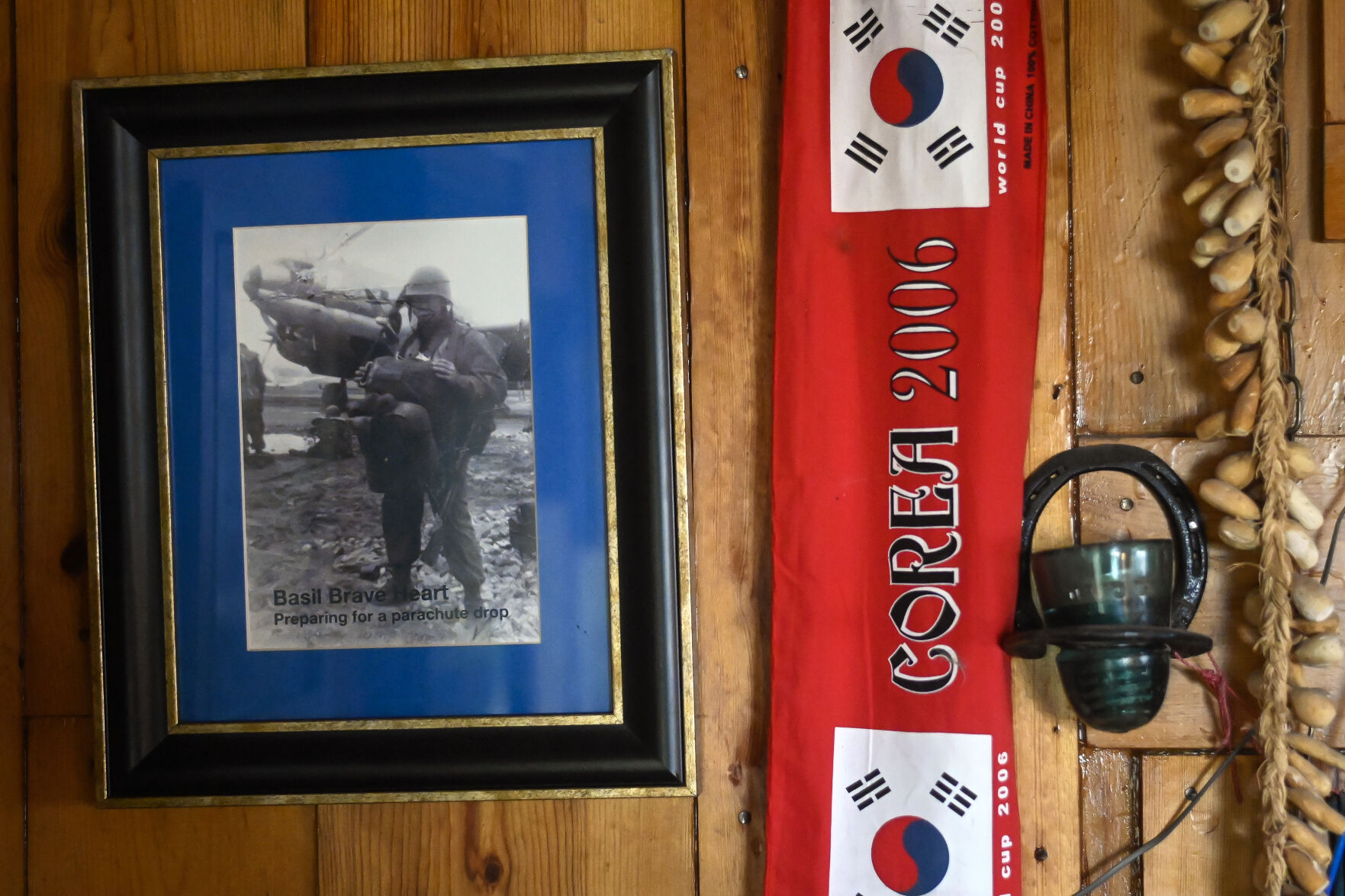
The plane was silent. No one uttered a word. Everyone was bracing for what was to come. The jump had been delayed by a small monsoon on the Japanese coast, prolonging the team’s anxiety and anticipation.
Once he jumped, Brave Heart had four things to worry about: sharks, enemy rockets from ships below, turbulent weather and general shock.
“We were dropping over the Japanese sea and that’s a very challenging sea,” Brave Heart said. “I learned what I was doing fast, and all the while thought, ‘What am I doing?’”
The jump was only the beginning. After jumping, Brave Heart and his team had to walk for 35 miles with enough rations to last them a day. They were given live ammunition, guns, and grenades.
Korea was swampy and the mosquitos were brutal, much different than the dry plains Brave Heart grew up with on Pine Ridge. The terrain was largely mountainous, with valleys and narrow plains. Worst of all, the team had to constantly worry about stepping on landmines. The overwhelming threat of death lingered in Brave Heart’s mind.
“My grandma had taught me that you never really die, everything is just rearranged. Your spirit goes to a divine and your body is recycled in the earth. So that knowledge had helped me to prepare for it, but then again there’s that anxiety, ‘Am I going to die today,’” Brave Heart said.
Despite the odds, they made it to their camp. Not much later, the team was sent on one of their first assignments, a special assignment to rescue prisoners from a prison camp. The operation went horribly wrong. Brave Heart said smoke filled the prison and the team couldn’t tell enemies from their own men. Several members of his team were killed, and Brave Heart said he was traumatized by what happened.
“The things we did there I’ve had nightmares about for over 40 years,” Brave Heart said.
This was only the beginning. Brave Heart remained in Korea until the very last day of the war, and even after catching malaria from the mosquitos, he kept going.
On one occasion, he endured continuous gunfire for over 45 days, earning him the Combat Infantry Badge.
On the night before the ceasefire, Brave Heart described non-stop continuous gunfire and explosions as both sides emptied the remainder of their weaponry. “It looked like fireworks,” Brave Heart said. “The entire night sky was alight.”
All the while, he was experiencing symptoms of PTSD. Public understanding of PTSD began to grow after World War II and expanded significantly following the Vietnam War before the formal diagnosis came in 1980.
Because of the lack of knowledge of PTSD at the time, it is unknown just how many Korean War Veterans developed it, according to the National Library of Medicine. Many went decades without receiving mental health treatment, including Brave Heart.
“I had nightmares all the time and intrusive thoughts,” Brave Heart said. “I was afraid to ever get close to someone else because they’d either leave or die. I felt like a killer, I defined myself as that.”
Coming back from combat was a difficult transition. For a lot of his time in Korea, Brave Heart said he felt numb and detached from himself. He described feeling like he’d essentially blacked out and put himself on autopilot.
After 27 months away from home, it was difficult to readjust to life without war.
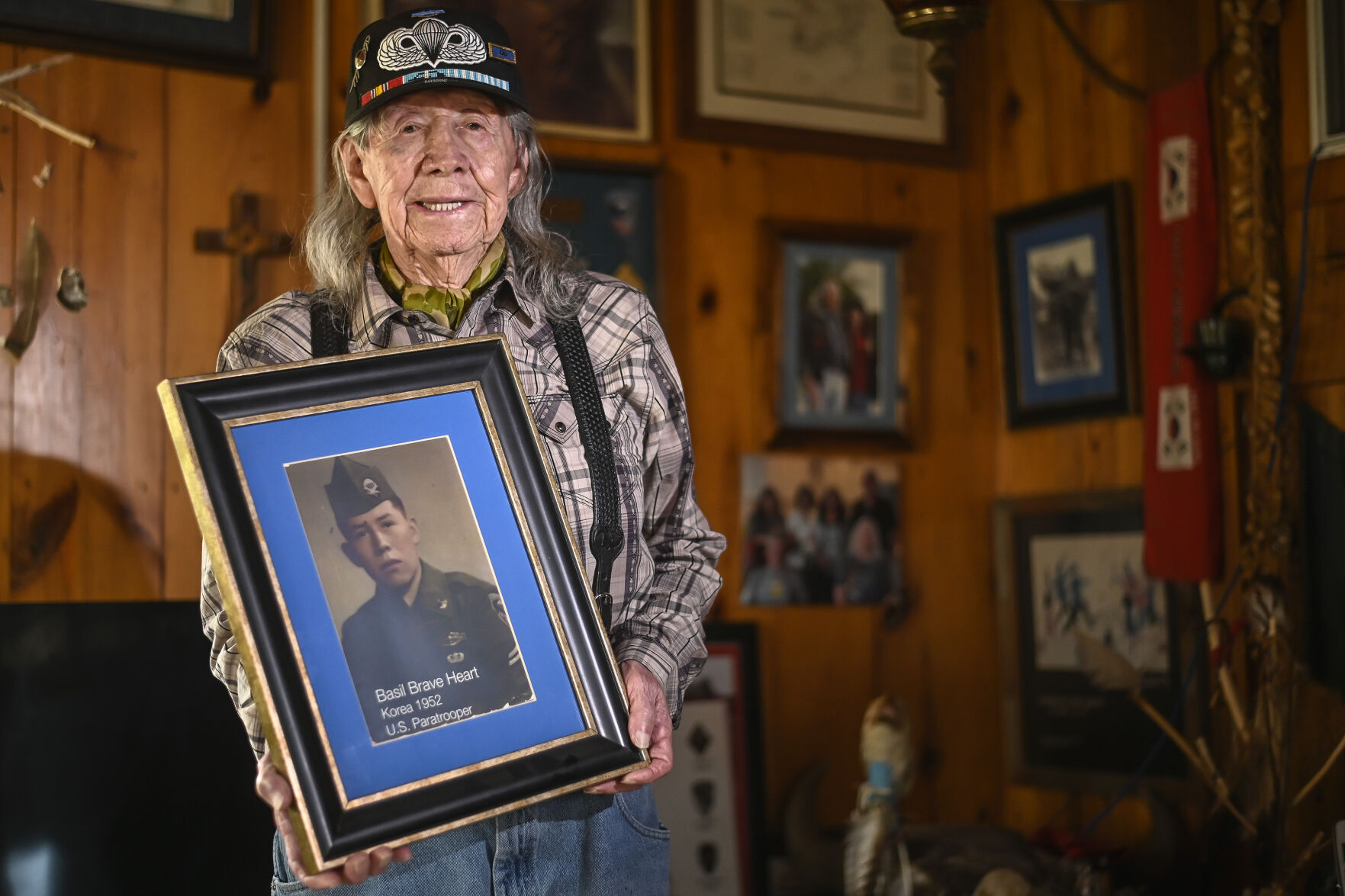
“In a way, it felt a bit like I was betraying my buddies because I saved their lives and they saved mine, and now we’re just separated,” Brave Heart said. “It was similar to boarding school, I’d bonded with the other kids there and I bonded with my buddies from the war. I wanted to be back with them again, but the war was over.”
Back at home, Brave Heart said he felt that he wasn’t deserving of his family’s love or his wife’s love because of what he’d done while he was away.
“My grandma asked me, ‘Why don’t you go back to your Lakota ways?’ And that’s how I began to heal,” Brave Heart said. “I did just that. I went to ceremony, I quit drinking and I quit smoking, and I got to be okay. I did it with my Lakota traditions.”
Brave Heart also spent two years in outpatient care in Minneapolis, after which he said he began to learn to love himself and accept himself again.
He embraced his Lakota heritage and culture and eventually was part of the push to rename Harney’s Peak to Black Elk’s Peak to honor the Oglala Lakota spiritual leader and knowledge keeper.
Brave Heart emphasized that his path to healing hasn’t been linear. He has good days and bad days. He still patrols his property every night to make sure no enemies are sneaking up on him, just like he did every night in Korea.
Of his original team, Brave Heart said he’s the last remaining member. One month ago he celebrated his 90th birthday.
When Brave Heart first came home from Korea, he said it was rare for anyone to shake his hand and thank him for his service or welcome him home. Now, he said it’s rare that someone doesn’t.
On Veterans Day, the Oglala Sioux Tribe is honoring Veterans, including the remaining Korean War Veterans at 10:30 a.m. in the Prairie Wind Casino. There, Brave Heart will be recognized for those 27 months spent in Korea.

This story is co-published by the Rapid City Journal and ICT, a news partnership that covers Indigenous communities in the South Dakota area.
Our stories are worth telling. Our stories are worth sharing. Our stories are worth your support. Contribute $5 or $10 today to help ICT carry out its critical mission. Sign up for ICT’s free newsletter.
