Editor’s note: This story will be updated throughout the Paris Olympics. It focuses on Indigenous athletes competing in the Paris 2024 Olympics. For our previous coverage, please visit this link. Be sure to refresh our page often.
Dan Ninham
Special to ICT
Greg Edgelow is a retired Team Canada Olympic freestyle wrestler with Cree ancestral heritage from Manitoba on his mother’s side. He is a nationally certified Aboriginal wrestling coach.
Edgelow was a juvenile, junior and six-time Canadian senior wrestling champion and placed in the top 10 of the world championships five times.
He represented Canada at the 1992 Summer Olympics in Barcelona, Spain, placing 11th. Edgelow has the distinction of being the only Canadian to win a medal in wrestling at the Goodwill Games when he earned a bronze medal. He is also the only Canadian wrestler to win four separate consecutive senior freestyle weight classes – 82 kg, 90 kg, 96 kg and 100 kg.
His last senior national title was in 1998, when he represented Canada at the World Championships in Tehran, Iran.
Edgelow traveled across the Atlantic Ocean to be an observer of the Paris 2024 Olympics, including basketball, beach volleyball, tennis, soccer and wrestling.
His Olympic moment just over 30 years later made him realize where the Olympic Movement should be a part of: Indigenous youth.
“It makes me feel we need to do more to introduce children and youth to sport and recreation and find ways to continue to invest in them through sport, especially in the Indigenous communities,” Edgelow told ICT. “I am very fortunate to have had the opportunity.
“I have always said that parents and society needs to invest upfront in their children through sport or pay dearly for the rest of our lives as those children and youth later have less of a fighting chance to navigate through the challenges of life that will be all around them,” Edgelow said.
Edgelow’s experience on the other end of the mat sank in wholeheartedly in each Olympic venue.
“It is enjoyable to watch the sports and digest rather than being a competitor,” said Edgelow. “But we seem to still be very intense in cheering on who you want to win. … that does not change.”
Edgelow grew up with an adoptive white father and wasn’t immersed in his Indigenous culture.
It was in 1997 when he was asked to speak to 5,000 Indigenous athletes at the Parade of Nations at the North American Indigenous Games that he truly started down the path of reconnecting with his heritage.
“I was not connected with my Indigenous roots until after my sport career and started volunteering and coaching Indigenous youth,” said Edgelow. “I did not see the need to tell people my mixed heritage, but now I wish I had of. I didn’t because I did not think people cared and I was not sure what I had to be proud of when all I heard during my life from my stepfather is negativity about my mom’s family. Plus society did not look favorably upon Indigenous peoples too.”
Although not raised with Cree core values, more often than not his inner being came through with positive results. He presents to Indigenous youth in schools. Talking with the Old Massett Village Council, Edgelow said investing in sports for youth is like “preventative medicine.” It builds good relationships between teammates and coaches, and encourages a resilience that goes well beyond the gym.
“I think I had strong values of working hard, never giving up, leaving no stone unturned in my quest to succeed, good intuitive sense and use smarts in my matches,” said Edgelow. “I was often not the fastest, strongest, nor technically the best. I always kept things light and humorous but there is no doubt I was a fierce warrior competitor.”
Active and positive leaders remember who came before them. They also encourage the empowered journey of those who follow them.
“The advice I would give is listen to your coaches and elders, work hard, pick the right friends who will not be an obstacle to your goals, never give up, always fight or work like hell, envision your goals, write them down, tell someone, then go and achieve them,” said Edgelow.
On April 15, Edgelow was featured in a video through the BC Sports Hall of Fame for the Digital Indigenous Sport Gallery.
Edgelow was awarded the 1999 Canadian Sport Leadership Award for his outstanding athletic achievements and leadership in volunteerism, beating out fellow finalist, hockey great Wayne Gretzky.
In 2018, Edgelow was inducted into the British Columbia Sports Hall of Fame, Indigenous Gallery. He was also inducted into the North American Indigenous Athletics Hall of Fame in 2024.
Edgelow currently works in Indigenous relations in the energy sector. He volunteered at four North American Indigenous Games.
Greg Edgelow earned the right to win by competing on the mat. He continues to earn the right to empower those in his path and those who follow him.
In his Facebook post on the day of the Paris 2024 Closing Ceremony, Edgelow wrote:
“The Olympics represents more than mere athletic competition and national rivalry; it is an opportunity to connect with individuals from diverse nations and partake in the collective excitement of these magnificent games.
“My extensive travels enable me to engage with people from various countries on a deeper level, fostering a mutual understanding of their cultural backgrounds and perspectives.
“This is the essence of my passion for both traveling and attending the Olympics. My aspiration is to continue this journey until I am no longer able to do so, due to financial, physical, or mental limitations.”
Indigenous Olympians update
Women’s canoe/kayak
Team New Zealand’s Lisa Carrington, Ngāti Porou/Te Aitanga ā Māhaki, won three gold medals in the Paris 2024 Olympics in the Kayak-2 500m, the K-1 500m, and the K-4 500m. She has won eight gold medals and one bronze in her illustrious career, dominating in her races. Carrington deserves to be regarded as one of the great Olympians from any country in any sport.
Kerri Williams and her sister Jackie Gowler were bronze medalists in the Coxless Four.
Olivia Brett teamed with Lisa Carrington and two others to earn the K-4 500m gold medal.
Women’s gymnastics
Sunisa Lee, Indigenous Hmong of Minnesota, was diagnosed with two kidney diseases in March 2023. After a six-month layoff, she recovered to the point of performing at an elite level. She became the first American woman to win two medals in the same event. Lee’s performances in uneven bars and balance beam helped secure gold in the team event. Then she claimed bronze medals in the individual all-around and uneven bars. Now with six career Olympic medals, Lee has solidified herself as one of the all-time greats with Simone Biles (11) and Shannon Miller (7).
Men’s volleyball
Team USA are the bronze medalists of Men’s Volleyball. After losing to World No. 1 Poland in the semifinal match in five sets, they defeated Italy in straight sets 3-0. The sets were tight at 25-23, 30-28, and 26-24. Team USA only lost to Poland in the total Olympic competition. The USA led 2-1 before dropping each of the final two sets by two points each.
6’6 setter Micah Makanamaikalani Christenson is an American and Native Hawaiian professional volleyball player who plays as a setter for Zenit Kazan and the U.S. national team. He was a bronze medalist at the Olympic Games Rio 2016 and the 2018 World Championship; the 2014 World League and the 2015 World Cup winner.
Women’s rugby sevens
The New Zealand team this year, meanwhile, will include more Indigenous athletes than any team in the history of the games, fielding 37 athletes of Māori descent among the 195 Olympians on its team, according to the New Zealand Olympic Committee.
New Zealand beat Canada 19-12 to claim back-to-back women’s rugby sevens Olympic gold medals and USA earned the bronze medal, defeating Australia in the last minute of regulation to win their first Olympic sevens medal.
Indigenous Olympians on the roster, including their name and iwi (tribe or tribes), are Tyla King, née Nathan-Wong, Ngāpuhi; Stacey Waaka, Ngāi Tūhoe; Sarah Hirini, née Goss, Ngāti Kahungunu Ki te Wairoa; “Risi” Pouri-Lane, Ngāpuhi; Portia Woodman-Wickliffe, Ngāpuhi; Manaia Nuku, Ngāi Te Rangi, Ngāti Ranginui; and Mahina Paul, Ngāti Pukeko.
Team Canada
Shalaya Valenzuela is a member of the Tseshaht First Nation on Vancouver Island in British Columbia, Canada. Valenzuela was a reserve athlete on the roster and also received the silver medal as a member of the team.
Men’s rugby sevens
Fiji suffered its first-ever Olympics Men’s Rugby Sevens loss 28-7 to France in the host’s venue with almost 70,000 fans watching history happen. The Pacific Island nation had never lost a sevens match at the Olympics, taking a 17-game winning streak into the gold medal match. At press time, ICT was still waiting for a list of Indigenous roster athletes to feature in the story.
Updated August 8
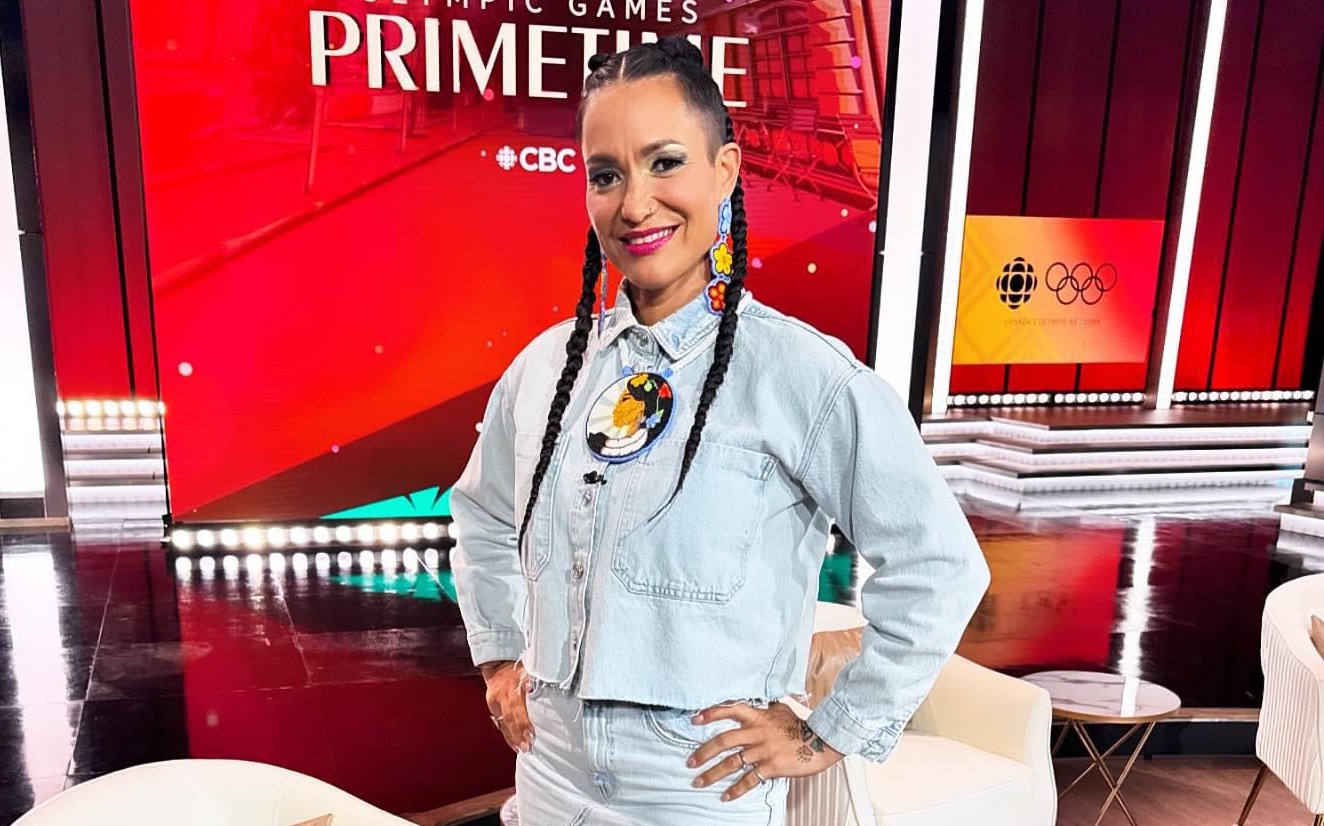
Waneek Horn-Miller, Kahnawake Mohawk, was a key member of the Canadian women’s water polo team that won gold at the 1999 Pan Am Games. Voted MVP, Horn-Miller became co-captain and proudly led her team at the Sydney Olympics in 2000, the first year the Olympics included women’s water polo. The team finished fifth in Sydney.
Horn-Miller is continuing to make waves in her career today as a Canadian Broadcasting Corporation sports broadcaster.
In her role at CBC, she is part of the 2024 Summer Olympics Toyota primetime panel broadcast live each day from Toronto. She covered and will cover the opening and closing ceremonies and provides commentary on the events throughout the 16 days of the Olympics. She also commentates on women’s water polo.
Horn-Miller worked as a color commentator at three Olympic Games in the sport of water polo: Athens in 2004, Beijing 2008 and Vancouver 2010. In Vancouver she worked for the Aboriginal Peoples Television Network as a color commentator and guest host.
She also worked on the Canadian Shopping Channel and on the American shop HQ for the Indigenous brand Manitobah Mukluks for almost 10 years.
Horn-Miller recently told ICT: “About two years ago, I was on the largest Canadian reality TV show called ‘Canada’s Ultimate Challenge’ where five well-known Canadian athletes coached teams to do physical competitions across Canada.
“A good friend of mine was on that show. She is seven-time Olympic medalist Clara Hughes and I was telling her that I knew the Olympics was coming up and I was wondering when is there going to be an Indigenous host that’s going to be able to sit at the table talking about all the Olympic stories,” she said.
“She looked at me and she said, ‘Well, if you wanna know, ask that woman over there. She’s the head of the Canadian Broadcasting Corporation’s Olympic coverage and she can tell you. If you want me to come, I’ll go sit with you and we could chat with her.’”
Horn-Miller continued to talk about her career move that was about to happen. “So I laid it out for this woman why I thought it was important to have an Indigenous perspective and what I needed to do to get that job and she looked at me and she said these are all really great ideas and you’ll hear from somebody. Eight months later, I heard from the head producer of CBC coverage, offering me the position as one of the primetime panelists.”
Horn-Miller is one of nine Indigenous people working on the broadcast side. Dallas Soonias, Ojibwe and Cree from Cape Croker First Nation, is doing the volleyball color commentating. He was a Team Canada volleyball athlete and 2015 Pan American Games bronze medalist. Michael Linklater, Cree, is a color commentator for 3X3 basketball and is a six-year 3×3 World Tour Pro and 3×3 Canadian National Team Captain. The basketball coverage is in Inuktitut, Cree and Dene languages and includes colour commentators from those areas.
“I and the other commentators are not just covering Indigenous stories, but of course I was highlighting the ones that I knew of on the primetime coverage as much as possible,” said Horn-Miller.
Horn-Miller is on nightly, talking about all of the Olympic stories of the day.
“I believe strongly in an indigenous perspective on the Olympics and sport,” said Horn-Miller. “Because we don’t just care about who wins gold, though that is important, but I always think back to the greatest legends that come from our nations are often about how our people fought a battle. We take great pride in the honor and the strategy and the perseverance of our people, and the outcome is secondary to that.
“I also believe strongly that the Indigenous perspective is more well-rounded and inclusive and that is what I try to bring to my commentary,” she said.
According to Horn-Miller, the Canadian Broadcasting Corporation has included Indigenous art in its graphics and has done a lot of things to try and bring more of an Indigenous flavor to its coverage.
“I’ve been known for my earrings and my clothing and my look because it’s so different,” said Horn-Miller. “A lot of of the public in Canada is really enjoying tuning in to see what I’m gonna wear each night.
“It’s been 25 years since I competed at the Olympics,” said Horn-Miller. “I’m now a mother and a coach and I know that it’s important for Indigenous people to be in all aspects of the Olympics, not just competing, but as well as covering it.
“I know the term ‘representation’ matters, but can’t emphasize enough what it meant to me to see fellow Mohawk, Alwyn Morris, when I was eight years old,” said Horn-Miller, who was a recent guest on a Native America Calling episode featuring perspectives of the past and present state of Indigenous Olympians in which she talked about Indigenous representation.
“A child can’t dream if they don’t know something is possible and I’m hoping one day that kids will see me on primetime coverage and maybe one day they’ll hope to be a broadcaster, or an Olympian or anything, but they’re seeing us, the entire team of Indigenous people on this coverage, and knowing that they belong wherever they dream to be.”
Horn-Miller said she is looking forward to getting more involved with coaching water polo. “My two eldest children compete and it would be a great honor one day and a dream come true to be able to coach at the Olympics. I think that if I could help young athletes go all the way to the top of the sport I love, I would be more proud of myself than when I went because I’ve always been taught that Indigenous people see power differently than the mainstream society.
“We see someone being powerful, not by how many people they control or how much they can do personally but rather by how many people they can help find their own personal power and achieve their own personal greatness,” she said.
Daily updates from Horn-Miller are available on her Instagram page: https://www.instagram.com/waneek/p/C-TnABUsrjH.
Indigenous Olympians update
Canoe/kayak/rowing
In the Women’s Kayak-4 500m, Team New Zealand’s Lisa Carrington, Ngāti Porou/Te Aitanga ā Māhaki, Olivia Brett, Ngāpuhi, and teammates are gold medalists in the Paris 2024 Olympics in a time of 1:32.20. Germany won the silver medal with a time of 1:32.62 and Hungary won bronze at 1:32.93.
In the Women’s Kayak-2 500m, they placed first in heat two in 1:41.05. The team will compete in the semifinals on Friday. In the Women’s K-1 500m, Carrington won her heat five in 1:48.51. She will compete in the semifinals on Friday.
Kurtis Imrie, Whakatōhea, and his partner placed fifth at the 2020 Summer Games in Tokyo in the K-2 1000 meters. Imrie and his partner placed fourth in the quarterfinals of Paris 2024 in a time of 1:30.29 and will compete in the semifinals on Friday. He and his other three teammates in the Men’s Kayak-4 500m placed eighth in the medal event in 1:22.19.
Kelsey Bevan, Ngāpuhi, is a 2019 world champion, winning the women’s eight title at the 2019 World Rowing Championships. She will be competing in the Rowing event in the Women’s Four alongside Kerri Williams, née Gowler, Rangitāne, and two other teammates.
In the Women’s Kayak Single 500m Heats, Raina Taitingfong from Guam finished seventh in her heat with a time of 2:29.66, which allowed her to advance to the quarterfinals. Despite her best efforts, she finished seventh in her quarterfinal with an improved time of 2:27.03.
The Clifton siblings from Samoa are yet another sibling pair from the Pacific at Paris 2024. Samalulu Clifton competed in the Women’s Kayak Single 500m Heats, finishing seventh in her heat with a time of 2:02.12 and advancing to the quarterfinals. She clocked 1:59.64 in the quarterfinals, finishing eighth.
In the Men’s Kayak Single 1000m Heats, Tuva’a Clifton finished sixth in his heat with a time of 3:54.49, advancing to the quarterfinals where he finished seventh with a time of 3:55.20.
Beach volleyball
Australia’s Mariafe Artacho del Solar and Taliqua Clancy, Wulli Wulli and Goreng Goreng, will be playing in the semifinals on Wednesday at 2 p.m. The reigning silver medalists are one win away from the gold medal match on Friday. Their opponents are Brazil and Duda Lisboa and Ana Patrícia Silva Ramos.
Men’s volleyball
Team USA was defeated 3-2 by Poland in the semifinals on Wednesday. Micah Christenson, Ethnic Hawaiian, is a 6’6 setter and team captain.
Mixed dinghy
Team Australia’s Conor Nicholas, Whadjuk, and his partner Nia Jerwood are in the Mixed Dinghy. They made it to the 10-boat mixed dinghy medal race after finishing ninth in the opening series.
Athletics
In the Men’s Discus Throw Final, Samoa’s Alex Rose finished 12th with a 61.89m mark. Australia’s 4X100 men’s relay finished in 38.12 and in sixth place in their heat today.
Calab Law, Wakka Wakka, who didn’t start his 200m race due to an injury, was the third leg. The team didn’t advance to the next round.
Weight lifting
Papua New Guinea lifter and three-time Olympian Morea Baru finished fifth in the Men’s 61kg Weightlifting event. He lifted a total of 279kg, with 118kg in the snatch and 161kg in the clean and jerk. Baru’s previous Olympic appearances were sixth at Rio 2016 and 10th at Tokyo 2020.
In the Men’s 61kg category, Kaimauri Erati from Kiribati finished seventh overall with a total lift of 220kg. In the Women’s 49kg category, Nicola Lagatao from Guam finished 11th overall with a total lift of 136kg.
Wrestling
Mia Lahnee Ramos Aquino of Team Guam made her Olympic debut in the Women’s Freestyle Wrestling 53kg category at Paris 2024, bowing out 0-10 against China’s Pang Qianyu.
Canada’s Justina Di Stasio, Norway House Cree Nation, is a two-time world and Pan American Games medalist. The freestyle 76kg competition begins August 10 with the gold medal match the next day.
Diving
Team Canada’s Margo Erlam competed in the 3-metre springboard event and placed 22nd in the preliminaries with a total of 258.30 points, and didn’t advance to the semifinals.
Updated August 7
On July 30, Native America Calling hosted a show previewing the Paris 2024 Olympics.
The episode featured perspectives of the past and present status of Indigenous Olympians.
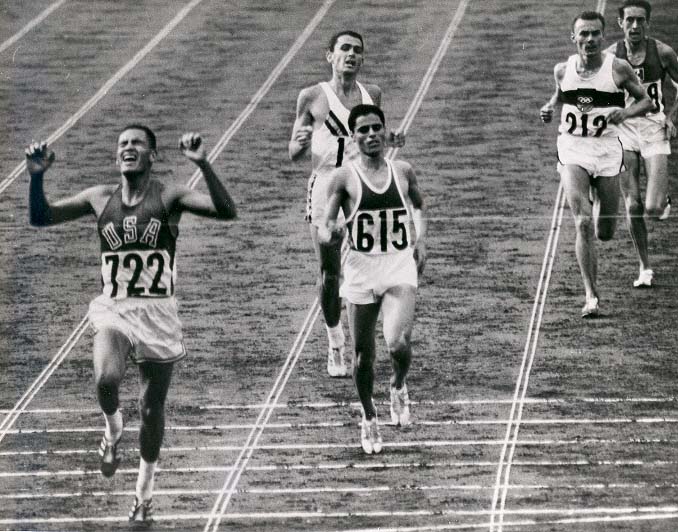
I was honored to be invited to share my thoughts, including speaking about the legacy of Billy Mills, the only American to win the Olympic 10,000m race. This year is the 60th anniversary of his epic race.
I talked about how Mills appeared and spoke in Bemidji and elsewhere in north-central Minnesota in April 2014, a year that marked the 50th anniversary year of his epic Olympic gold medal performance.
According to the Bemidji Pioneer, “Mills took part in the Billy Mills Honor 28:24 Run and Walk at Bemidji State University (BSU) at the Gillette Recreation and Fitness Center. The name of the event is for Mills’ winning time in the 10,000 meters.”
The participants walked, jogged or rolled for 28 minutes and 24 seconds. Mills also visited Red Lake Nation and Bemidji schools, including in the 1,000-seat Bemidji High School Auditorium.
This year, Mills and his wife Pat, along with their family members, are attending the Paris Olympics.
Indigenous Olympians Update
Canoe/kayak
Lisa Carrington, Ngāti Porou/Te Aitanga ā Māhaki, is a flatwater canoeist and New Zealand’s most successful Olympian, having won a total of five gold medals. She will be in three women’s events with the Canoe Sprint: Kayak Single 500m, Kayak Double 500m, and Kayak Four 500m. Her teammate is Olivia Brett, Ngāpuhi, in the Kayak-4 500m, in addition to two others. In the Double, her partner is Lucy Matehaere, Ngāti Raukawa.
In the Women’s Kayak-4 500m, Carrington and teammates placed first in heat one on Tuesday in 1:32.40. In the Women’s Kayak-2 500m, they placed first in heat two also on Tuesday in 1:41.05.
In the Women’s K-1 500m, she will compete on Wednesday’s heat five at 3:10 am.
Olivia Brett, Ngāpuhi, will be in her first Olympic Games in Paris. She will be competing in the canoe sprint women’s K4 500m alongside Lisa Carrington, Alicia Hoskin and Tara Vaughan.
Brett, Ngāpuhi, has been racing with the team since 2021, with significant results, including winning the World Championships in 2023 and two World Cup podium finishes. They placed first in their heat on Tuesday in 1:32.40. Their next race is Thursday at 4:40 a.m.
Kurtis Imrie, Whakatōhea, and his partner placed fifth at the 2020 Summer Games in Tokyo in the K-2 1,000 meters. He will be competing in the Canoe Sprint and today he and his teammate placed fourth in their heat in the quarterfinal of the Men’s Kayak Double 500m in 1:30.29. He and his other three teammates placed second in their heat today in the Men’s Kayak-4 500m in 1:20.56.
Kelsie Bevan, Ngāpuhi, is a 2019 world champion winning the women’s eight title at the 2019 World Rowing Championships. She will be competing in the Rowing event in the Women’s Four alongside Kerri Williams, née Gowler, Rangitāne, and two other teammates.
Beach volleyball
Australia’s Mariafe Artacho del Solar and Taliqua Clancy, Wulli Wulli and Goreng Goreng, defeated Switzerland 2-1 on Tuesday in the quarterfinals of Women’s Beach Volleyball. They will be playing in the semifinals and finals with a win on Friday. Their next opponent won’t be known until their quarterfinal on Wednesday.
Men’s volleyball
Team USA will play Poland in the semifinals on Wednesday at 9 a.m. The team defeated Brazil 3-1 in the quarterfinals on Monday. Micah Christenson, Ethnic Hawaiian, is a 6’6 setter and team captain.
Hockey
Mariah Williams, Wiradjuri, Brooke Peris, Ngarrawanji, and the Australia Hockeyroos have been ousted in the quarterfinal against the People’s Republic of China 3-2 on Monday. This was the Hockeyroos third straight exit in the quarterfinals of the Olympic Games. The three-time Olympic champions lost to New Zealand at Rio 2016, to India at Tokyo 2020 and now against China.
Men’s basketball
NBA star Patty Mills, Kokatha, Naghiralgal and Duaureb-Meriam, and his Australia Boomers lost in a heartbreaker overtime to Serbia 95-90 in the quarterfinals.
Mills had a team-leading 26 points and two points in the waning seconds of regulation to force overtime.
Mixed dinghy
Team Australia’s Conor Nicholas, Whadjuk, and his partner Nia Jerwood are in the Mixed Dinghy. According to Australian Olympics media: Nicholas and Jerwood “concluded their opening series in fickle winds and scraped into tomorrow’s medal race in ninth position.”
Tokyo 2020 Olympian Nia Jerwood has improved on her performance after finishing 16th at the previous Olympics in the Two-person Dinghy. She has secured a top-10 finish and has the opportunity to move up to fifth overall in the new Mixed Dinghy event.”
According to a media release by Shivneel Narayan/ ONOC:
“Athletics
In the Men’s Discus Throw Qualification, Samoa’s Alex Rose made history by becoming the first Samoan to qualify for the finals in an athletics event. Competing in Group B, Rose finished 6th out of 14 with a throw of 62.88 meters. His performance secured him the 12th position overall, allowing him to advance to the finals. This marks a significant achievement for Rose, the Oceania Area Record holder, and a proud moment for Samoa on the global stage.
Sailing
The sailing events in Marseille were once again challenged by unpredictable weather. Day nine of the regatta was barred by strong winds, which led to the cancellation of the 10th race for the women’s dinghy fleet.
In the Women’s Dinghy event, Fiji’s Sophia Morgan, and Samoa’s Vaimooia Ripley completed nine races in the competition. Morgan finished 37th with a total of 257 net points, while Ripley placed 43rd in the final standings.
The Men’s Dinghy event saw the cancellation of races nine and ten. Fiji’s Viliame Ratului and Samoa’s Eroni Leilua ended the day without new results. The final standings saw Ratului stand in 43rd place with 283 net points after eight races, while Leilua finished the competition in 42nd with 274 net points.”
Updated: 8:30 p.m. Aug. 5
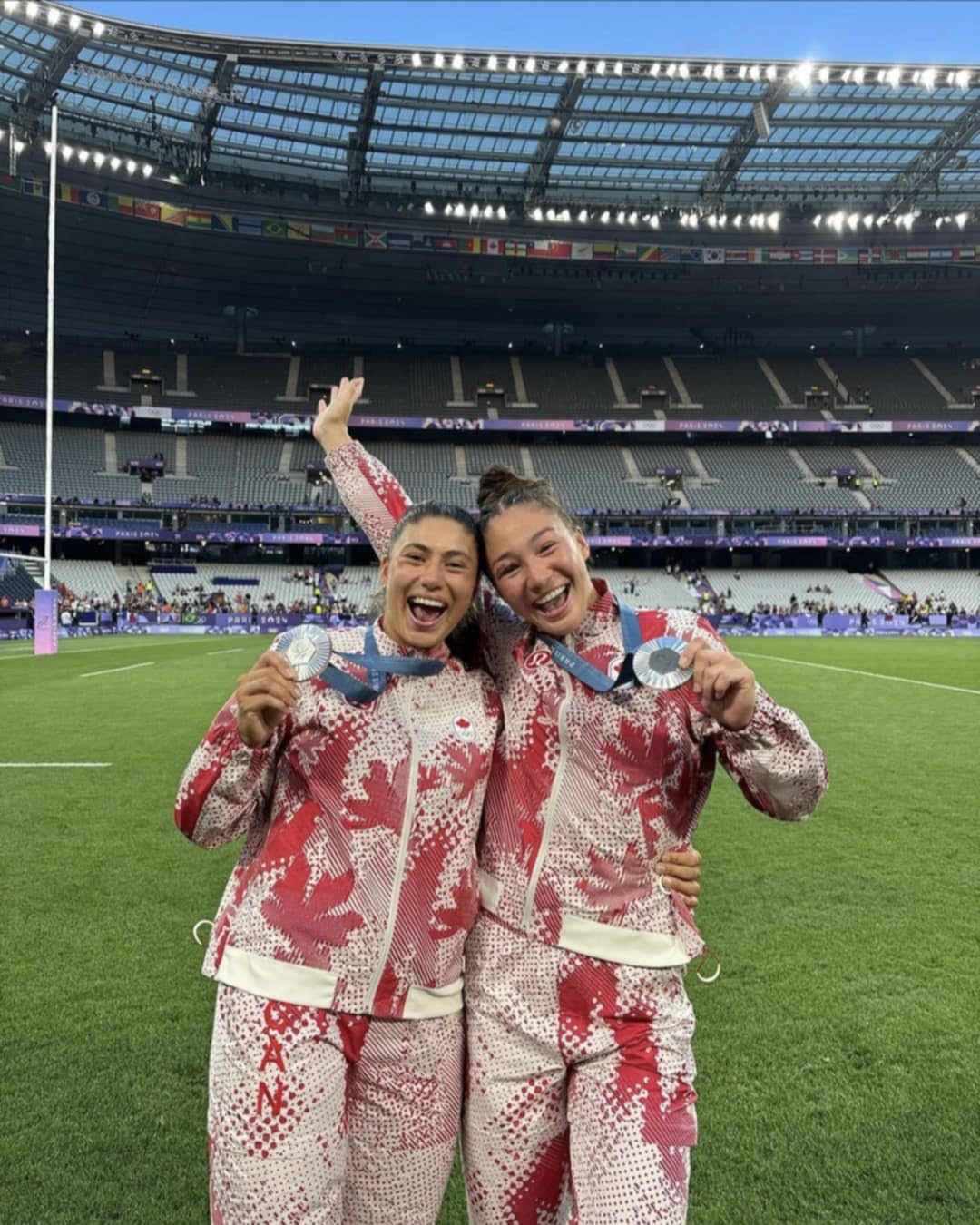
The Team Canada Women’s Rugby Sevens won a historic silver medal in the Paris 2024 Olympics, beating Australia 21-12 in a comeback victory in the semifinals for a best-ever Olympic performance for Canada in rugby sevens.
After a stunning 19-14 win over France in the quarterfinals, Canada beat favored Australia in a rematch of the Rio 2016 Olympic semifinal.
Canada was defeated by defending Olympic champions New Zealand in the gold final. The Black Ferns Sevens were down at halftime 12-7 and held Canada scoreless in the second half and won 19-12.
Canada had their best performance at an Olympics, and earned their second Olympic medal from Rio 2016 and Paris 2024 for Canadian rugby.
Shalaya Valenzuela, a member of the Tseshaht First Nation near Port Alberni, British Columbia, on Vancouver Island, was a reserve Team Canada member.
“Originally I was only selected to participate in the pre-Olympic camp in Auxerre,” Valenzuela told ICT. “My mindset was to be the best teammate and push my teammates in practice and challenge them so they are in the best place for competition.
“Our main goal as a team was to podium so I put my feelings aside to help reach our goal. Halfway through the camp my coach sat me down and offered me a spot on the squad as a reserve which meant I would stay with the team in the village and get the full experience aside from dressing for games,” added Valenzuela.
Valenzuela was ready to dress and play when needed. An opportunity arose due to some athletes having injuries.
“I was able to dress for the quarterfinal against France,” said Valenzuela. “I got to put on my Olympic jersey for the first time and all my family and friends got to see me run out of the tunnel.
“Through all the ups and downs, I continued to work for my team with one greater goal in mind. At the end of the day, I was able to stand on the podium with my team with a silver medal around my neck,” added Valenzuela.
Indigenous Olympians represent their country and their people back home. Valenzuela exemplified the true essence of being on the world’s stage.
“I’m extremely proud to represent my country as an Indigenous athlete,” said Valenzuela. “I believe representation matters at all levels and I’m proud to have accomplished this to show Indigenous youth that there is no limit to their potential.”
She talked about helping others to become elite athletes. “Being in this position has given me the opportunity to serve as a role model for other Indigenous athletes and I hope it motivates them to show resilience and work hard for their dreams.
“I previously was a youth in care and I want to help inspire children who have gone through similar experiences,” said Valenzuela.
Valenzuela has completed half of her criminal justice degree. She has represented the University of the Fraser Valley, the University of Victoria and is currently enrolled at the University of British Columbia. She is continuing to play high-level rugby and competing in the World Series with Rugby Canada.
In a media release on July 30 from the Tseshaht First Nation, Wahmeesh (Ken Watts) Elected Chief Councillor said: “Shalaya, you have provided pride and inspiration throughout the entire Tseshaht First Nation, Nuu-chah-nulth First Nations and Indigenous youth, women and girls throughout Canada.”
Shalaya Valenzuela’s star is continuing to rise and shine as she competes internationally.
Indigenous Olympians updates
Beach Volleyball
Australia’s Mariafe Artacho del Solar and Taliqua Clancy, Wulli Wulli and Goreng Goreng, defeated Brazil’s Bárbara Seixas and Carolina Solberg Salgado 2-0 in the Women’s Beach Volleyball round of 16.
The team will play Switzerland’s Esme Boebner and Zoé Vergé-Dépré on Tuesday at 3 p.m. in the quarterfinals.
Men’s volleyball
Canada was defeated in pool play versus Slovenia 3-1, France 3-0, and Serbia 3-2. Fynn McCarthy, Métis, was a 6’7 player on the team. The team had been eliminated.
Team USA was undefeated in pool play with wins versus Japan 3-1, Germany 3-2, and Argentina 3-0. Micah Christenson, Ethnic Hawaiian, is a 6’6 setter and team captain. They defeated Brazil 3-1 in the quarterfinals on Monday.
Hockey
Indigenous Olympians Mariah Williams, Wiradjuri, Brooke Peris, Ngarrawanji, and the Australia Hockeyroos were undefeated in Pool B with wins versus Spain 3-1, a draw with Argentina 3-3, wins versus United States 3-0, Great Britain 4-0, and South Africa 2-1.
Australia entered the semifinals as the top seed. China upset Australia 3-2 for their first semifinal berth in 16 years since Beijing in 2008.
Artistic gymnastics
Indigenous Hmong Sunisa Lee (USA) earned the bronze medal in the uneven bars. She is the first American woman to win two medals in the event.
Lee also placed sixth in the balance beam.
Athletics
Caleb Law, Wakka Wakka, will be representing Australia in the Men’s 200m on Tuesday at 12:55 pm. He will be in round one, heat one and will be in lane five. He has a personal best 20.42 and a season best 20.54. The first three in each heat advance to the semifinal, all others re-advance to Repechage Round (except DNS, DNF, DQ). He will also be competing in the 4x100m Relay on Thursday.
New Zealand’s Zoe Hobbs, Ngāruahine, advanced to the semifinals of the Women’s 100m. She ran a 11.08 in the preliminary heat and didn’t place in the top eight the next day to advance to the finals.
New Zealand track athlete Samuel Tanner, Ngāpuhi, competed in the Repechage 1500m. He finished in 13th place in heat two in 3:40.71 and didn’t advance.
Swimming
Team Canada’s Apollo Hess, Blood, qualified his team to be in the Mixed 4x100m Medley Relay Final. The team finished in 3:41.41 and in fifth place in the final. The gold medalists were the United States in a world record 3:37.43.
Hess swam the second leg breaststroke the day before when the team finished third in their heat and qualified for the final with a time of 3:43.87. He did not swim in the final.
New Zealand’s Erika Fairweather, Ngāi Tahu, competed in her fourth final of the Paris 2024 Olympic Games. She finished the 800m final in eighth place in 8:23.27.
3×3 Basketball
Alex “Ally” Wilson, Ngarrindjeri, and her Australia Gangurrus team were defeated by Canada 21-10 in the semifinals and were eliminated.
Competing at their inaugural Olympics, the Gangarrus registered four consecutive wins during their pool rounds to lead the standings after five matches. However, an injury to one of their players hurt them and they lost against Spain and the hosts France to miss automatic qualification for the semifinals.
Updated: Aug. 4
About three years ago, I began freelance writing for ICT.
My first story assignment was to feature the Indigenous Tokyo 2020 Olympians who didn’t compete until a year later because of COVID. While googling the keywords “Indigenous Tokyo 2020 Olympics” I would get some leads, but the search would include the word “native” in the context of native to a certain town or city and not in the Indigenous context.
Team Australia, to my awareness at the time, would be the only Olympic Committee that tracked their Indigenous Olympians and Paralympians and would do a media release.
Richard (Dick) Garrett MNZM is a leader with the Te Tohu Taakaro o Aotearoa Charitable Trust and Aotearoa Māori Sports Awards. He and I have built a strong relationship, and he would send me names and iwi’s, or tribes, plus events of their Indigenous Olympians and Paralympians and athletes’ contact information.
Because Olympics committees receive so many messages, I rarely received feedback. Sometimes I received invaluable information.
So back to the drawing board or to the laptop and internet. Facebook Messenger and Instagram were the next means to find the Indigenous demographic.
These were the same strategies I used to secure a database for the Paris 2024 Olympics and forthcoming Paralympics.
I began pursuing other global regions to inquire if people self-identify as Indigenous.
Amnesty International defines someone who is Indigenous as someone who:
• Self-identifies as Indigenous.
• Shares an ancestral link with those who inhabited a country or region before they were colonized or before other peoples became dominant.
• Has a strong link to particular territories and the surrounding natural resources.
• Has distinct social, economic or political systems, which they are resolved to maintain and reproduce.
• Has a distinct language, culture and beliefs.
• Is politically and socially marginalized.
I delved into the thought that if there were self-identified Indigenous demographics in Australia and New Zealand, then how about other Pacific Islands? My research eventually found the established Oceania National Olympic Committees.
According to their website: “Established in 1981, the Oceania National Olympic Committees (ONOC) is one of five Continental Associations. It looks after the interests of 17 member nations in the Oceania Region, including Australia and New Zealand as well as seven associate members.”
Shivneel Narayan, the organization’s acting chief communications officer, recently told ICT: “Most of our athletes identify as Indigenous. In terms of medalists, we only have the Fiji Men’s Sevens Rugby Team who have won a silver medal so far (in Paris 2024).”
The leaders of the Fiji Men’s Sevens Rugby Teams are Jerry Tuwai – gold in Rio 2016, gold in Tokyo 2020, and silver at Paris 2024; Iosefo Masi – gold in Tokyo 2020 and silver at Paris 2024; and Coach Osea Kolinisau – gold in Rio 2016 as a player and silver at Paris 2024 as coach.
According to Wikipedia, the Paris 2024 Fiji Seven’s Rugby squads included:
• Men – Joseva Talacolo, Jeremaia Matana, Sevuloni Mocenacagi, Ponipate Loganimasi, Josaia Raisuqe, Terio Veilawa, Jerry Tuwai, Waisea Nacuqu, Iosefo Masi, Iowane Teba, Selestino Ravutaumada, Ratu Felipe Sauturaga, Kaminieli Rasaku, Joji Nasova, and Vuiviwa Naduvalo.
• Women – Raijeli Daveua, Verenaisi Ditavutu, Adi Vani Buleki, Lavena Cavuru, Reapi Ulunisau, Ana Maria Naimasi, Ilisapeci Delaiwau, Kolora Lomani, Aloesi Nakoci, Laisana Likuceva, Maria Rokotuisiga, Sesenieli Donu, Meredani Qoro, Adimereani Rogosau, and Talei Qalo Wilson.
Wikipedia also has other Oceania countries rugby rosters for the Paris 2024 Olympics.
According to a press release by the Oceania National Olympic Committees: “Our teams had an action-packed day on 03 August, with athletes showcasing their talents across Athletics, Swimming, and Sailing at the Olympic Games Paris 2024.
Athletics (ATH): In the Men’s 100m Preliminary Rounds, our Pacific sprinters gave their all on the track. William Reed from the Marshall Islands completed his heat in 11.29 seconds, placing 6th in his heat.
Karalo Maibuca of Tuvalu, despite finishing 7th in the same heat, recorded a close time of 11.30 seconds. Kenaz Kaniwete from Kiribati also finished 5th in his heat with a time of 11.29 seconds, while Scott Fiti of the Federated States of Micronesia finished 7th in his heat, clocking in at 11.61 seconds.
Winzar Kakiouea from Nauru achieved a commendable time of 11.15 seconds, finishing 6th in his heat. Joseph Green from Guam was impressive, finishing 5th in his heat with a time of 10.85 seconds. Maleselo Fukofuka from Tonga completed his race in 12.11 seconds, finishing 8th in his heat. Waisake Tewa from Fiji stood out with a time of 10.73 seconds, placing 7th in his heat.
Aquatics > Swimming (AQU > SWM): In the Aquatics Center, the Women’s 50m Freestyle heats saw remarkable performances. Kayla Hepler from the Marshall Islands shone brightly, finishing 2nd in her heat with a time of 30.33 seconds.
Isabella Millar from the Solomon Islands finished 8th in her heat, clocking in at 31.32 seconds. Palau’s Yuri Hosei recorded a time of 30.52 seconds, finishing 6th in her heat. Noelani Day from Tonga impressed with a time of 28.60 seconds, securing 3rd place in her heat.
Kestra Kihleng from the Federated States of Micronesia finished 4th in her heat with a time of 28.81 seconds. Vanuatu’s Loane Russet achieved a personal best of 28.86 seconds, finishing 6th in her heat. Samoa’s Kaiya Brown finished 7th in her heat with a time of 28.31 seconds.
Georgia-Leigh Vele from Papua New Guinea delivered a strong performance, finishing 4th in her heat with a time of 27.61 seconds. Anahira McCutcheon from Fiji was impressive, finishing 5th in her heat with a time of 26.88 seconds.
Sailing (SAL): In Sailing, our sailors were in the third day of competition. The Women’s Dinghy races saw Fiji’s Sophia Morgan and Samoa’s Vaimooia Ripley giving their best.
After six races, Sophia Morgan stands 37th out of 43 with 157 net points, while Vaimooia Ripley is 42nd with 200 net points.
In the Men’s Dinghy races, Fiji’s Viliame Ratului and Samoa’s Eroni Leilua showed great determination. Viliame Ratului is currently 43rd with 209 net points, and Eroni Leilua is 42nd with 203 net points after six races.
Our Pacific athletes have demonstrated exceptional dedication and spirit, making their nations proud on the world stage.”
Updated: 12:30 pm ET, Aug. 3
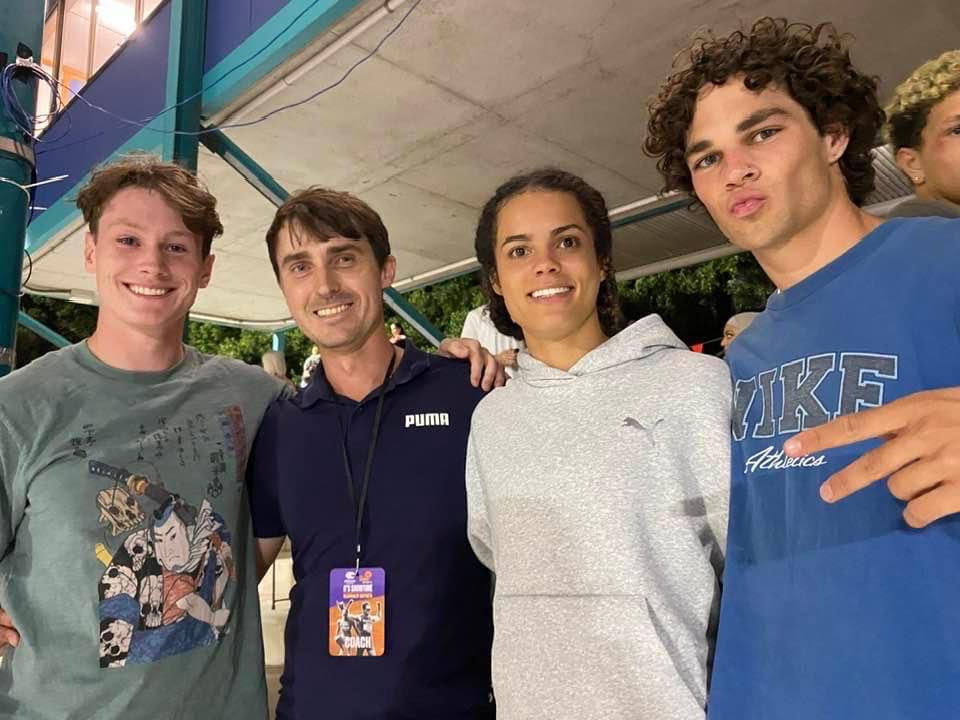
The magnitude of the Indigenous representation of Olympians that are world class is enormous. Equally, the Indigenous representation of coaches at the world-class level is also the same.
Andrew Iselin, from the Wiradjuri people in New South Wales, Australia, is the coach of Team Australia sprinter Calab Law, Wakka Wakka, at the Paris 2024 Olympics.
“I have coached Calab Law since he was 14 years old and like many younger coaches I have grown with him,” Andrew Iselin told ICT. “We have both learnt off each other over the years.”
“Calab is not just one of my athletes he is like family and I would not be the coach I am today without him,” added Coach Iselin.
This is the first Olympics that Coach Iselin has been involved in and he hopes to be involved in future Olympics.
He is coaching three Paris 2024 Olympians with Team Australia. Calab Law is in the 200m and 4x100m relay, Torrie Lewis in the 200m and 4x100m relay and Lachlan Kennedy in the 4x100m relay.
Coach Iselin prepared Calab to be at his peak performance level for his Olympic first heat. As with all Olympians who begin in a heat competition, they need to be fast in order to qualify for the next round.
“To get to this point has been a multi-year focus,” Coach Iselin said. “Calab has had many great performances along with numerous injuries we have had to manage and we just try to learn from every experience.”
Coach Iselin told ICT about preparing a world-class athlete to race in the Olympics.
“We have done a couple of three week training cycles over in Europe to prepare him for the Olympics,” he said. “Allowing him to train and do some competitions in the European environment has been invaluable and has given him the confidence to excel.
“All of the hard work has now been completed and the last week has just been about Calab recovering and doing enough work so that he doesn’t lose his condition. He now just needs to do what he does best and focus on his own race,” added Coach Iselin.
More Indigenous representation of Olympic coaches is continually being sought. “The reality is we need Indigenous representation in coaching in order to bring more Indigenous athletes through to this level,” said Coach Iselin.
“You cannot truly understand what barriers many Indigenous athletes face unless you or those close to you have walked a similar path. We lose too many talented Indigenous athletes in Athletics because we do not have enough coaches that make kids feel that they truly understand them,” added Coach Iselin.
“We also need Indigenous representation at all levels of sport in order to achieve reconciliation,” he said. “The more people that are present to talk about Indigenous issues the more likely we are to make meaningful change.
“As a coach my main aim is to help improve peoples lives,” said Iselin. “Being able to work alongside some of the most talented athletes Australia has seen is just a bonus for me.”
What Happened on Day 7, Aug. 2
Surfing
There will be a new Olympic women’s surfing gold medalist. Ethnic Hawaiian and USA team leader Carissa Moore lost in the quarterfinals early Friday to France’s Johanne Defay in Teahupo’o, Tahiti. Moore, a five-time world champion won gold at the 2021 Tokyo Games in surfing’s Olympic debut.
3×3 Basketball
Alex “Ally” Wilson, Ngarrindjeri, and her Australia Gangurrusv team defeated Azerbaijan 21-12 and lost to Spain 21-17.
The women’s 3×3 basketball pool has one game remaining per team. The top two from the pool go straight to the semi-finals. The next four teams play off for the other two spots in the last four, and the last two are eliminated.
Basketball
Patty Mills, Kokatha, Naghiralgal and Duaureb-Meriam, and his Australia Boomers lost to Greece 77-71.
Rowing
Team Australia’s Conor Nicholas, Whadjuk, and his partner Nia Jerwood are in the Mixed Dinghy.
Track
Team New Zealand’s Zoe Hobbs, Ngāruahine, placed second in heat one in her 100m race in 11.08. She qualified for the finals.
New Zealand track athlete Samuel Tanner, Ngāpuhi, ran a 3:39.87 in his heat in round one of the 1500m. He qualified for the Repechage Round. World Athletics introduced repechage rounds to the Paris 2024 Olympic Games as a second chance for athletes to qualify for a semi final, and there are repechage rounds for men and women in the 100m/110m hurdles, 200m, 400m, 400m hurdles, 800m and 1500m.
Swimming
Team New Zealand’s Erika Fairweather, Ngāi Tahu, was in heat one of the Women’s 800m Freestyle. She had a time of 8:22.22 placing seventh overall and advanced to the next round.
Apollo Hess, Blood, swam the fourth leg in heat one for Team Canada in the Mixed 4x100m Medley Relay. They finished third in their heat in 3:43.87 and sixth overall to advance to the finals.
Volleyball
The United States Men’s team defeated Japan 3-1. Ethnic Hawaiian Micah Christenson is the setter for the team.
What to watch on Day 8 Aug. 3
Swimming
Team New Zealand’s Erika Fairweather, Ngāi Tahu, has qualified for her fourth final of the Paris 2024 Olympic Games, clocking 8:22.22 to progress to the final of the 800m freestyle as the seventh fastest qualifier. She and Laticia Transom, Ngāti Kahungunu, Ngāi Te Rangi, Te Ati Haunui a Pāpārangi Ngāti Raukawa, with their team were the first-ever Australian women to compete in an Olympic relay final.
The foursome finished eighth in the 4x200m relay, which was won by Australia. The USA finished second and China third.
It was Fairweather’s third appearance in a final in Paris, after placing fourth in the 400m freestyle and seventh in the 200m freestyle Watch Fairweather in the 800m freestyle final at approximately 7:25 a.m. NZST on Sunday.
At 21:58, the Mixed 4x100m Medley Relay will be held featuring Team Canada and team member Apollo Hess, Blood.
Track
Team New Zealand’s Zoe Hobbs, Ngāruahine, will be in the 100m semifinal three at 1:08 pm today.
New Zealand track athlete Samuel Tanner, Ngāpuhi, ran a 3:39.87 in his heat in round one of the 1500m. He will compete in the Repechage heat two at 12:26 pm today.
Updated: 11 a.m. ET, Aug. 2
What Happened on Day Six: August 1
Gymnastics
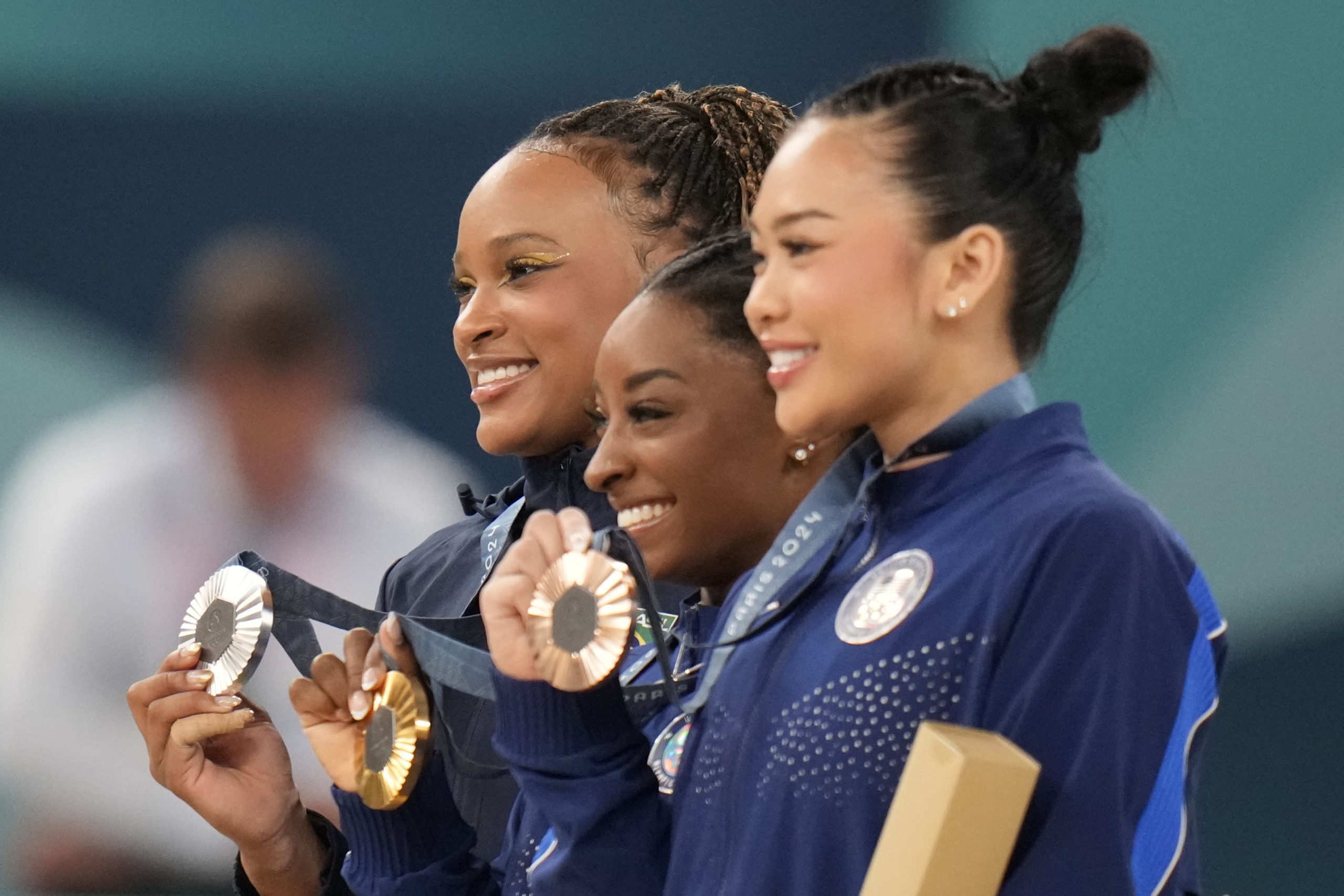
The defending Olympic all-around gymnastics champion and Indigenous Hmong Suni Lee of the USA earned the bronze medal. USA’s Simone Biles won her sixth gold medal, and she and Lee were team gold medalists from this past Tuesday.
From Olympics.com:
Lee, who has had to battle back from illness to make the Olympic Games, said: “I’m so happy right now. I feel like everything that I’ve done has paid off. I mean, literally, six months ago I didn’t even consider I would be here competing today. That was an achievement in itself.”
“Honestly, I wasn’t expecting to be on the podium. To just be here has been absolutely amazing. And I don’t know if you guys could tell, but I definitely got a little emotional after my floor routine. Just seeing the score come up was just insane.”
Team Australia was also busy.
3×3 Basketball
In the Women’s pool round, Alex “Ally” Wilson, Ngarrindjeri, and her Australia Gangurrusv team defeated the People’s Republic of China 21-15 and the USA 17-15.
Beach Volleyball
The defending silver medalists Taliqua Clancy (Wulli Wulli and Goreng Goreng) and Mariafe Artacho del Solar defeated Canada 2-0 (21-10, 21-16).
Boxing
In the Women’s 66kg preliminaries round of 16, Marissa Williamson Pohlman (Ngarrindjeri) was defeated by Anna Luca Hamori in a score of 5-0.
Callum Peters was the only Indigenous man in the Australian boxing team and he fought in the light-heavyweight round of 16 bouts. He lost to Kazakhstan’s Nurbek Oralbay in a split decision call on Wednesday morning.
Hockey
Mariah Williams (Wiradjuri), Brooke Peris (Ngarrawanji), and their Australia Hockeyroos team finished in a 3-3 draw with Argentina.
Swimming
Australia swimmer Abbey Lee Connor finished seventh in the Women’s 200m butterfly final.
The New Zealand Indigenous Olympians that competed on the sixth day included:
Hockey
Isaac Houlbrooke (Ngāi Tahu), Kane Russell (Ngāpuhi), and the Black Sticks men lost to Australia 5-0 in a Pool B game and were eliminated. It was the Black Sticks fourth consecutive loss.
Swimming
Lewis Clareburt (Tainui and Waikato) placed seventh in the 200m IM medley semifinal and 3.75 seconds back and didn’t qualify for the final. He commented in the New Zealand Herald: “Not very happy with my performance here but that’s sport. My focus now switches to taking a break from swimming and hopefully come back stronger. LA is definitely on the cards. I’m not going down this easy. You will definitely see me there.”
Erika Fairweather, Ngāi Tahu, led as the first and strongest swimmer but the team finished eighth in the 4 X 200m freestyle relay women’s final.
Taiko Torepe-Ormsby, Ngāi Tahu, didn’t advance in his 50m freestyle men’s heat.
Rowing
Logan Ullrich, Ngāi Tahu, and his team earned the silver medal in the men’s four final.
Jackie Gowler, Rangitāne, and Kerri Williams, née Gowler, Rangitāne, and their team earned the silver medal in the four women’s final. Gowler also was a silver medalist in Tokyo and Williams was a gold and silver medalist in Tokyo.
Surfing
Defending Olympic gold medalist and five-time World Champion Carissa Moore, Ethnic Hawaiian, of team USA advanced to the quarter finals from her Round 3 heat.
Indigenous Polynesian Vahine Fierro (France) was considered a favorite to medal as a Teahupo’o local in Tahiti. However, after being unable to find a strong second wave in her Round 3 heat, she was eliminated despite scoring some of the best barrels of the day at the time.
Who to watch on Day 7
Here are the Australians to watch on Day Seven on August 2 at Paris 2024 – all times AEST:
3×3 Basketball
Alex “Ally” Wilson, Ngarrindjeri, and her Australia Gangurrusv team will play Azerbaijan at 5:30 pm and Spain at 8:30 pm.
Basketball
Patty Mills (Kokatha, Naghiralgal and Duaureb-Meriam) is the first Indigenous athlete to compete in five Olympic Games. He is a professional basketball player for the NBA’s Miami Heat and he’s the captain of the Australia Boomers who will play Greece at 9:30 pm.
Rowing
Conor Nicholas, Whadjuk, and his partner Nia Jerwood will compete in the Mixed Dinghy event at 8:05 pm.
The Indigenous New Zealand Olympians to watch on August 2 include:
Athletics
Zoe Hobbs, Ngāruahine, will be competing in the 100m at 3:55 a.m. She is the Oceanian record holder for the 100-meter. Hobbs was the first Oceanian woman to break the 11-second barrier in the 100-meters. She has won 11 individual New Zealand national titles.
Swimming
Erika Fairweather, Ngāi Tahu, will be swimming in heat one of the Women’s 800m Freestyle at 4:40 am.
Apollo Hess, Blood, will be competing for Team Canada in the Mixed 4x100m Medley Relay.
Updated: 12 pm ET, Aug. 1.
Fresh from the New Zealand women’s team defeating Canada 19-12 in the 2024 Paris Olympics Rugby Sevens gold medal game, the parents of one of the gold medalists have been in communication with ICT.
Simon Waaka is the father to Stacey Waaka. The iwi, or tribe, of Simon is Tuhoe.
Simon recently told ICT in email about his and his wife Rae’s children playing rugby at an international level.
“Stacey has a brother who used to play for the New England Free Jacks in Boston,” said Simon Waaka. “He had three seasons with them and now plays rugby in Japan.”
Simon continued to talk about their elite athlete daughter. “Stacey has been part of the Blackferns 7’s program for the last nine years. She has recently signed up with NZRU for the next two years.”
According to dad, Stacey is on the move quickly after her New Zealand won their third consecutive Olympic gold medal in Rugby Sevens.
“Currently, she is flying straight to Brisbane, Australia to play for the Brisbane Broncos Women’s League team,” said Simon. “Then after her short stint in Australia, she comes back to Rugby Union.”
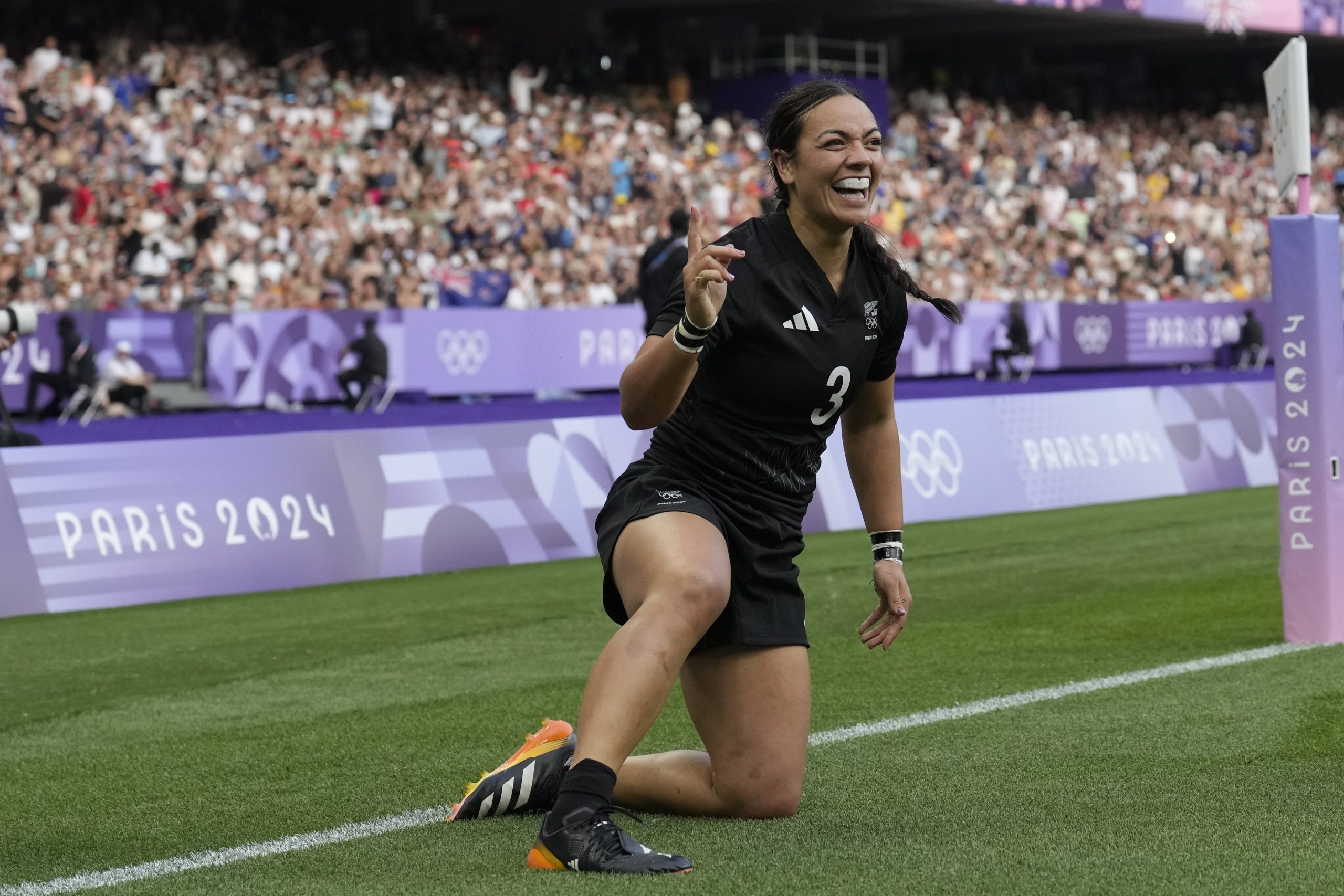
“She is hoping to be part of the World Cup 15’s tournament held in England and France in 2025. This will be her third tournament if she is selected as she has been part of the last two tournaments in 2017 in Ireland and 2021 in Auckland, NZ,” added Simon.
Rae Waaka’s iwi is Te Arawa. She also talked to ICT in recent email messages.
“Stacey was a great netballer through her earlier school years and totally blew us away when in high school she decided she wanted to play rugby,” said mum Rae Waaka.
“Stacey has worked very hard and been very loyal to her commitment to training, healthy etiquette and hard work,” added Rae.
Indigenous representation is significant to Indigenous elite athletes. There are not only little eyes always watching them on and off the field but the eyes also belong to the young and to elders.
“Stacey has always given back to those that helped her on her journey,” said Rae. “Stacey love is being a role model for the younger generation of all young women and men.”
Stacey is very proud to represent her family and the people of New Zealand.
“She’s an inspiration to her tribe,” said Simon. “When she has free time, she tries to return home to Ruatoki, a small community with a population of 300 people and shares her experience traveling overseas with the two local primary schools. She sometimes sponsors clothing and boots to local children rugby teams.”
“Stacey’s hard work has paid off as she is well respected not only by her people but the people of the world,” said Rae.
Who to watch on Day 6
Gymnastics
The defending Olympic all-around gymnastics champion and Indigenous Hmong Suni Lee will be competing head-to-head with Simone Biles. If Biles wins, she’ll become the second-oldest women’s all-around gold medalist behind Helsinki 1952’s Maria Gorokhovskaya.
The Women’s Gymnastics Schedule begins at 12:15 pm ET and includes these events: Individual All-Around Final and Individual All-Around Finals in Bars, Beam, Floor, and Vault.
These are the Australians to watch – all times AEST:
3×3 Basketball
Alex “Ally” Wilson, Ngarrindjeri, and her Australia Gangurrusv team will be playing in the Women’s pool round at 5 p.m. versus China and at 9 p.m. versus the USA.
Beach Volleyball
In the Women’s preliminary Pool B at 12 a.m., Taliqua Clancy, Wulli Wulli and Goreng Goreng, and Mariafe Artacho del Solar will compete against Heather Bansley and Sophie Bukovec.
Boxing
In the Women’s 66kg preliminaries round of 16 at 12:28 a.m., Marissa Williamson Pohlman, Ngarrindjeri, will face Anna Luca Hamori.
Hockey
Mariah Williams, Wiradjuri, Brooke Peris, Ngarrawanji, and their Australia Hockeyroos team will be competing with Argentina at 4:15 a.m.
Swimming
Australia swimmer Abbey Lee Connor, will be competing in the Women’s 200m butterfly final at 4:30 a.m.
The New Zealand Indigenous Olympians:
Hockey
Isaac Houlbrooke, Ngāi Tahu, Kane Russell, Ngāpuhi, and the Black Sticks men will play Australia in a Pool B game at 8:30 p.m.
Swimming
Lewis Clareburt, Tainui and Waikato, will be in the 200m IM medley men’s heat at 9:00 p.m.
Taiko Torepe-Ormsby, Ngāi Tahu, will be in the 50m freestyle men’s heat at 9:00 p.m.
Rowing
Logan Ullrich, Ngāi Tahu, will be in the four men’s final at 10:10 p.m.
Jackie Gowler, Rangitāne, and Kerri Williams, née Gowler, Rangitāne, will be in the four women’s final at 10:30 p.m.
Surfing
The heats have been postponed the last few days due to inclement weather conditions. Ethnic Hawaiian and defending Olympic gold medalist Carissa Moore (USA) and Indigenous Polynesian Vahine Fierro (France) are leading their initial heats and look forward to finishing their competition.
What happened on Day 4
In the men’s 200-meter butterfly, Lewis Clareburt, Tainui and Waikato, New Zealand, placed seventh in his heat in 1:57:12, and he didn’t place in the top 16 to advance to the semifinals.
In men’s volleyball, USA defeated Germany 3-2 in the preliminary round and had to play a fifth game decider. Team USA includes Micah Makanamaikalani Christenson, a Native Hawaiian professional volleyball player who plays as a setter.
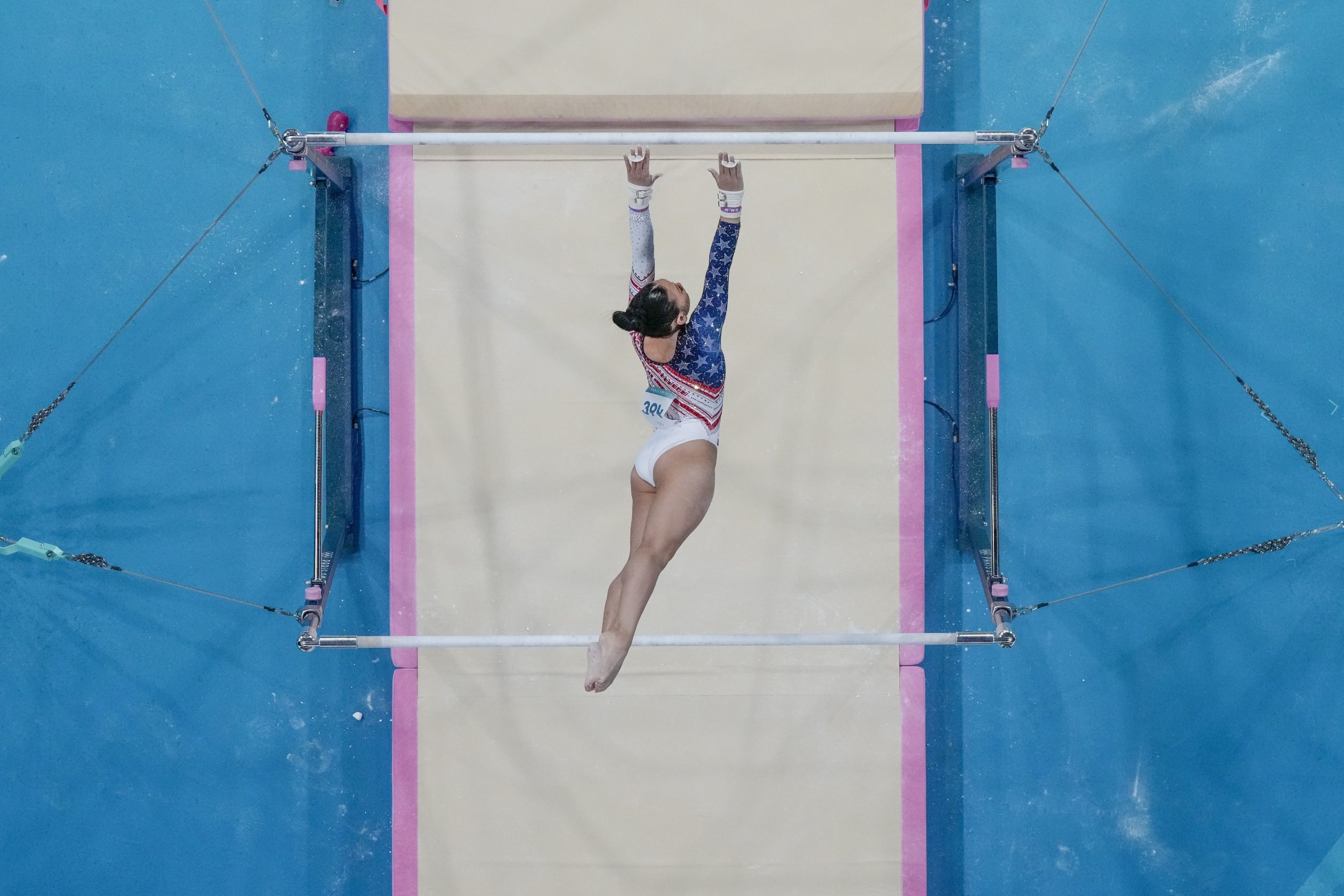
Simone Biles and her Indigenous Hmong teammate Sunisa Lee led the way for the USA Women to win the Gold Medal in Team Gymnastics.
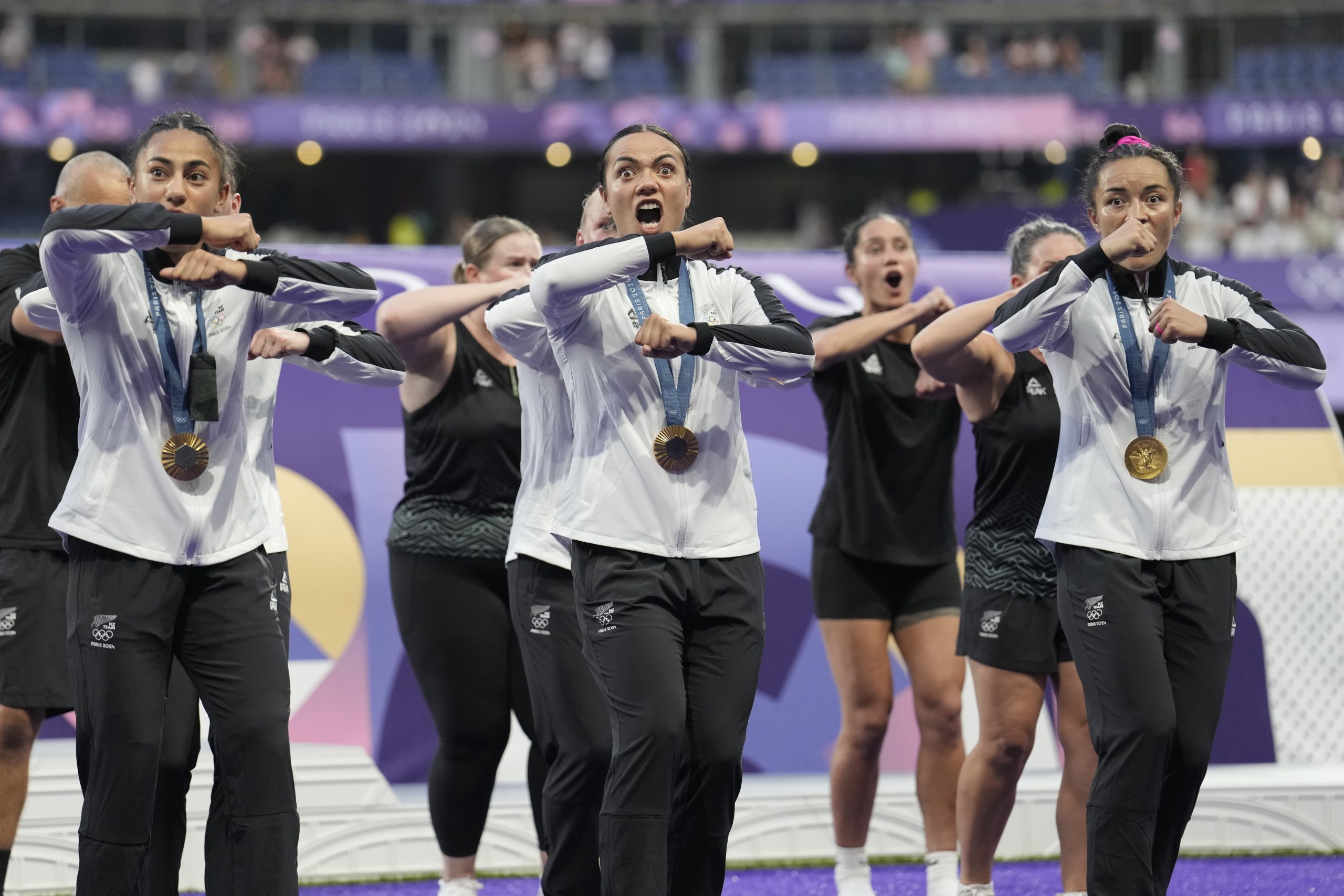
New Zealand, which includes several Indigenous players, defeated Canada (a team that includes Shalaya Valenzuela, a member of the Tseshaht First Nation) in the Rugby Sevens to earn the Gold Medal. Australia was defeated by USA for the Bronze Medal. From the Olympics.com media release:
We’ve just been speaking to Portia Woodman-Wickliffe, Ngāpuhi, the legendary New Zealand rugby player who is retiring from the sport as a two-time Olympic champion.
“Just proud of the person I’ve become, proud of the journey I’ve had, the growth I’ve had,” she said of her career.
“I’ve gone from a shy, netball girl to a rugby player who is now world renowned.
“And I’m not finished with rugby. I’ll be here. I’ll be hanging around the sidelines might be talking in the commentary, who knows? But I’m not finished with rugby. I just won’t be on the field.”
New Zealand performed a celebratory haka.
Canada beat Australia 93-83 in men’s basketball.
According to Olympics.com: Large, stormy surf with unfavorable winds have forced officials
in Tahiti to call off the surfing competition for today.
Heats were suspended yesterday due to deteriorating wave conditions after the conclusion
the Men’s Round 3. Women’s Round 3 has yet to be held.
The next scheduling announcement will be made later Wednesday.
What to watch on Day 5
There are a total of 18 medal events taking place on the fifth full day of competition at Paris 2024, on Wednesday, July 31. However, only the following may have indigenous competitors. All times listed are in Central European Summer Time.
Medal events
Canoe slalom
17:25–18:10: W C-1 final
Diving
11:00–11:50: W synchronized 10m platform final
Rowing
12:26–12:38: M quadruple sculls final A; 12:38–12:50: W quadruple sculls final A
Swimming
20:30: W 100m freestyle final; 20:37: M 200m butterfly final; 21:13: W 1500m freestyle final; 22:31: M 200m breaststroke final; 22:39: M 100m freestyle final

Our stories are worth telling. Our stories are worth sharing. Our stories are worth your support. Contribute $5 or $10 today to help ICT carry out its critical mission. Sign up for ICT’s free newsletter.