
Dan Ninham
Special to ICT
ONEIDA NATION, Wisc. — If there was ever an enchanted garden, it would be at Steve and Becky Webster’s sprawling, 10-acre farmstead on the southern end of the Oneida Reservation.
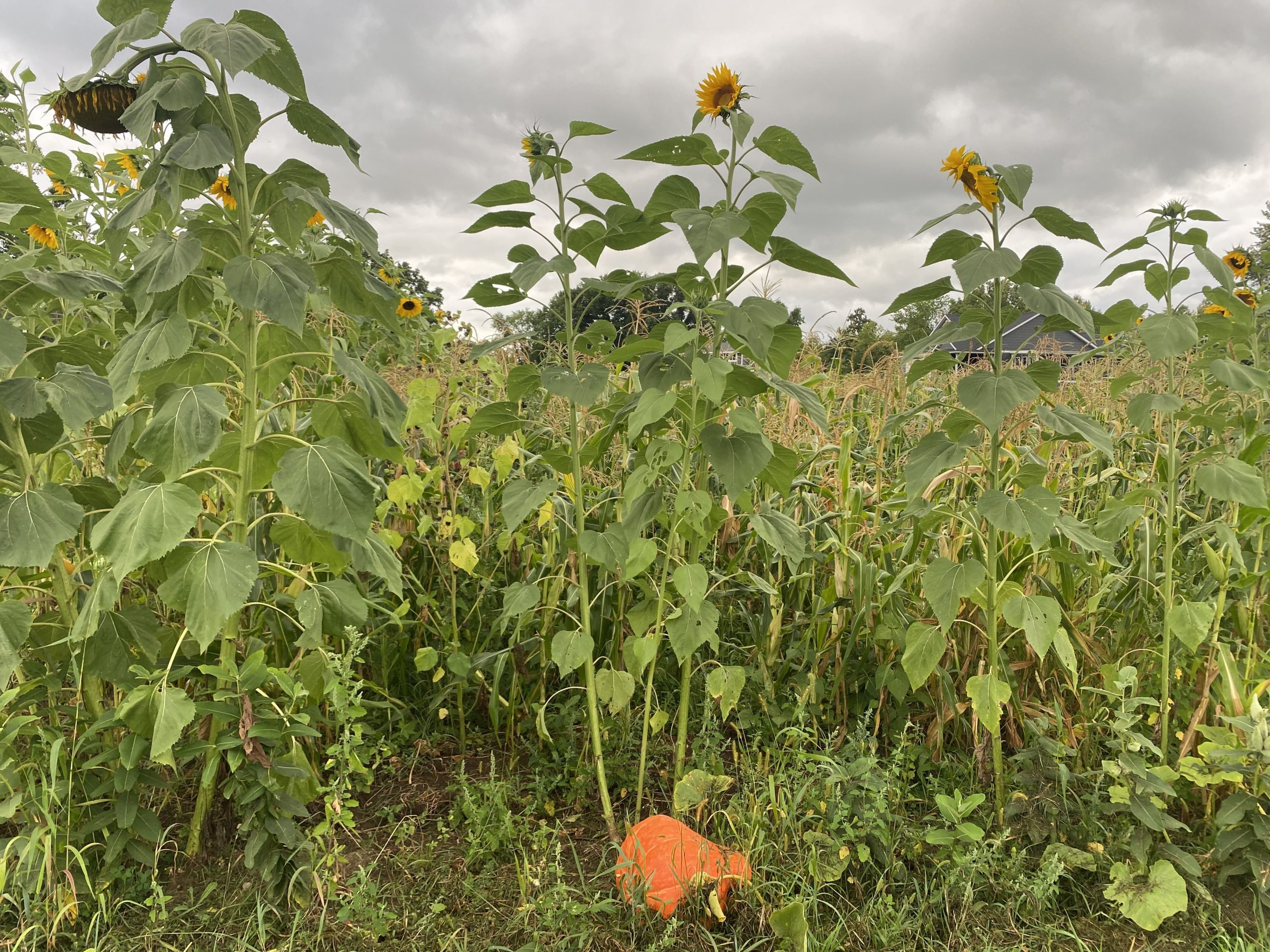
A self-guided tour of the grounds as the 2023 fall harvest season approached found three sister mounds towering with Oneida white corn, with pole beans crawling up the stalks and squash spread out like an umbrella at the base. A fourth sister, the sunflower, stretched tall above the other high-rise vegetation.
SUPPORT INDIGENOUS JOURNALISM. CONTRIBUTE TODAY.
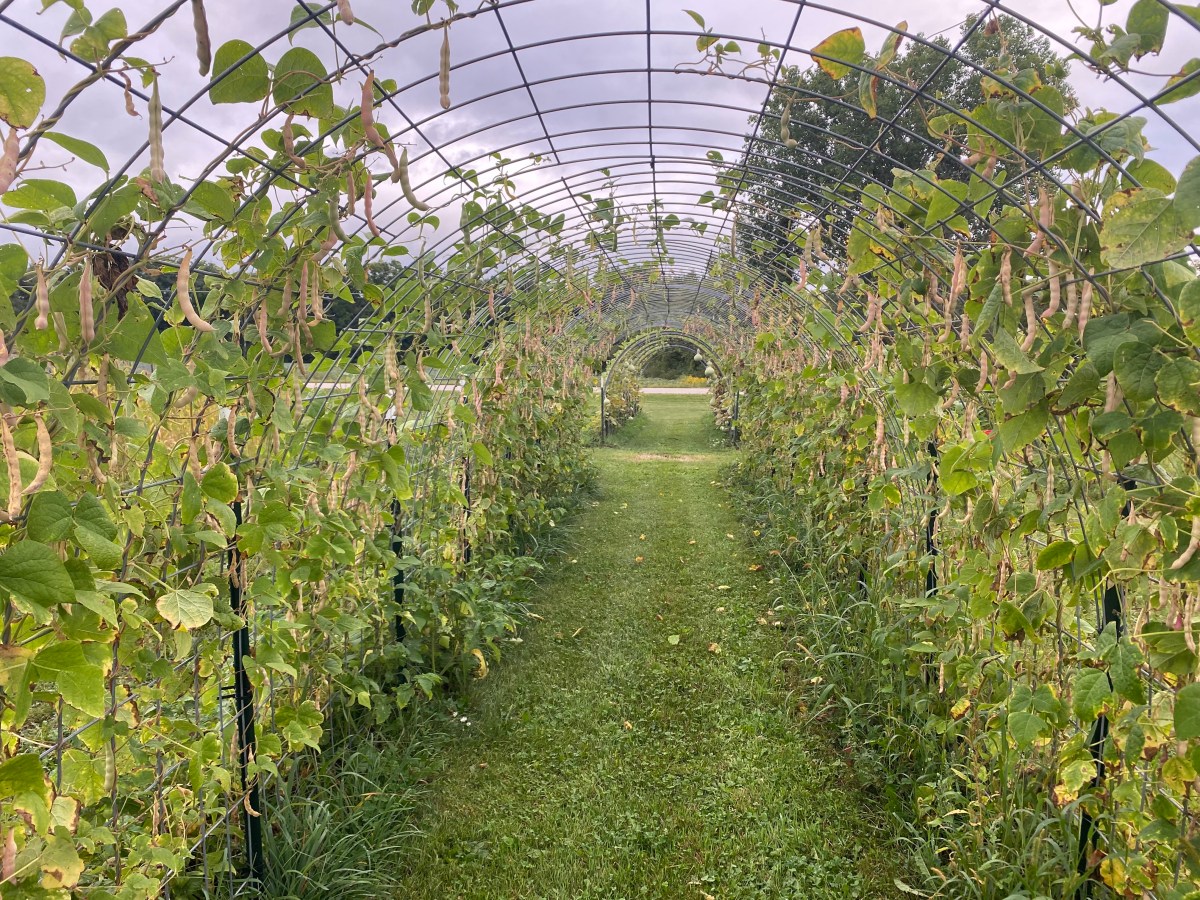
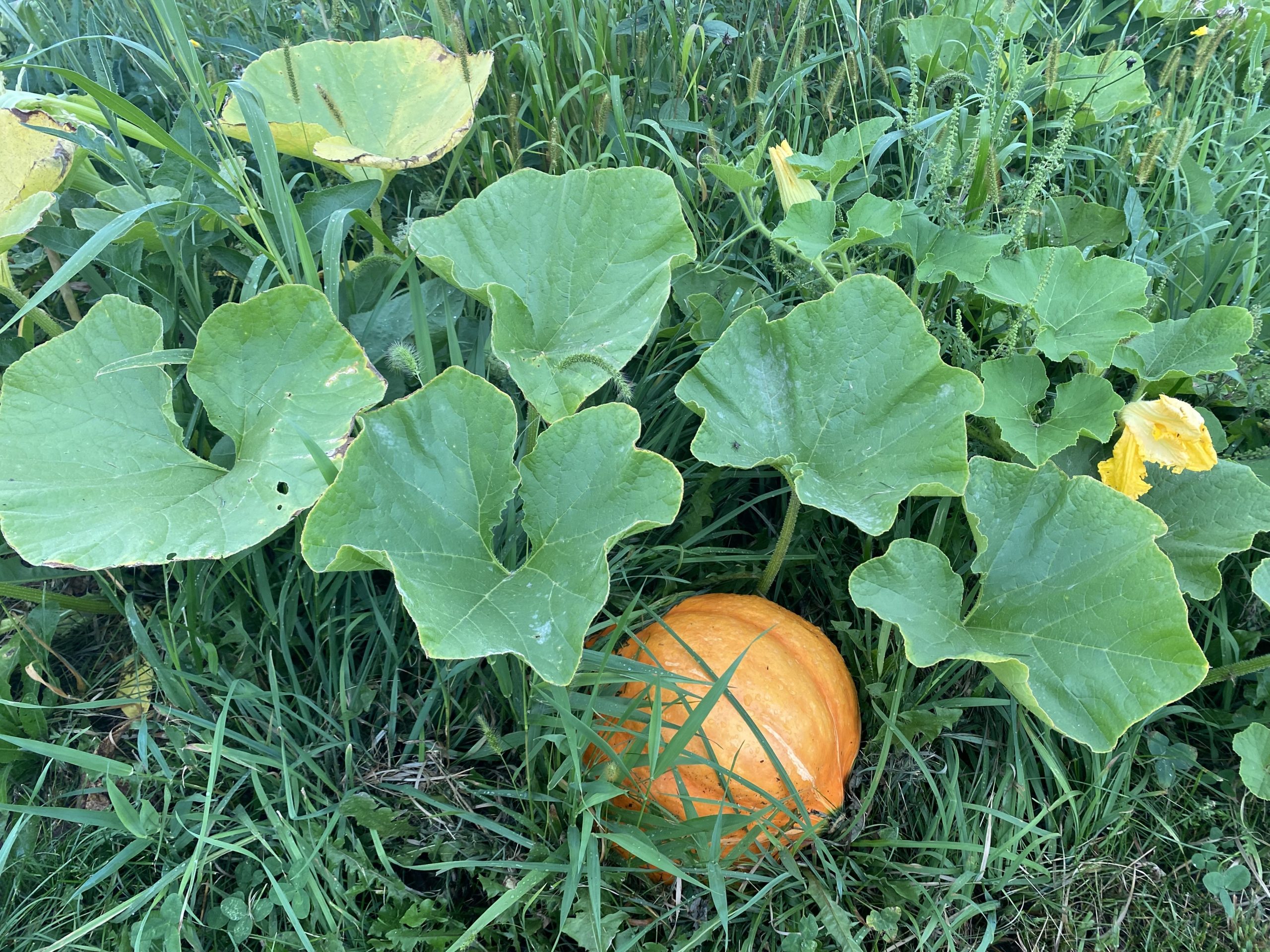
Down the garden walk, skunk beans hung down from trellis tunnels, with pumpkins growing along the ground amid rows of sweet corn.
Back at the house in a detached trading post sat the products of the garden after processing and storage. Braids of corn hung under a shelf of corn husk dolls and baskets, with corn pounders in the corner. Rows of dried beans and other dried goods lined the shelves, along with baskets and other items.
The items are offered only for trade; they’re not for sale. It’s all part of the Websters’ plan for Indigenous food sovereignty, and what it can mean for local communities.
The Websters, both citizens of the Oneida Nation of Wisconsin, are among a growing movement for Indigenous food sovereignty that is working to address hunger and health issues by teaching community members to cultivate their own traditional foods in sustainable ways.
“Our relationship with our Indigenous foods comes from our creation story, even before human beings were created,” Becky Webster told ICT. “This relationship runs deep into our daily and ceremonial lives. We see our seeds and plants as our relatives. We have a responsibility to care for them.
“In turn, they have a responsibility to care for us,” she said.
They named the farmstead “Ukwakhwa: Tsinu Niyukwayay^thoslum,” which means “Our Foods: Where we plant things.” They have since created a nonprofit organization, “Ukwakhwa,” to grow traditional heirloom foods with an emphasis on Haudenosaunee varieties of corn, beans and squash.
They also host events for community members to learn about planting, growing and preparation, and they teach how to make traditional tools and crafts.
“The philosophy is that every time an Indigenous person plants a seed, that is an act of resistance and an assertion of sovereignty,” the organization states on its website.
Becky Webster’s Oneida name is Kanyʌhtake•lu, meaning “snow scattered here and there.” Steve Webster’s Oneida name is Lohʌ·táyʌ̲, meaning “he has a field.”
Starting small
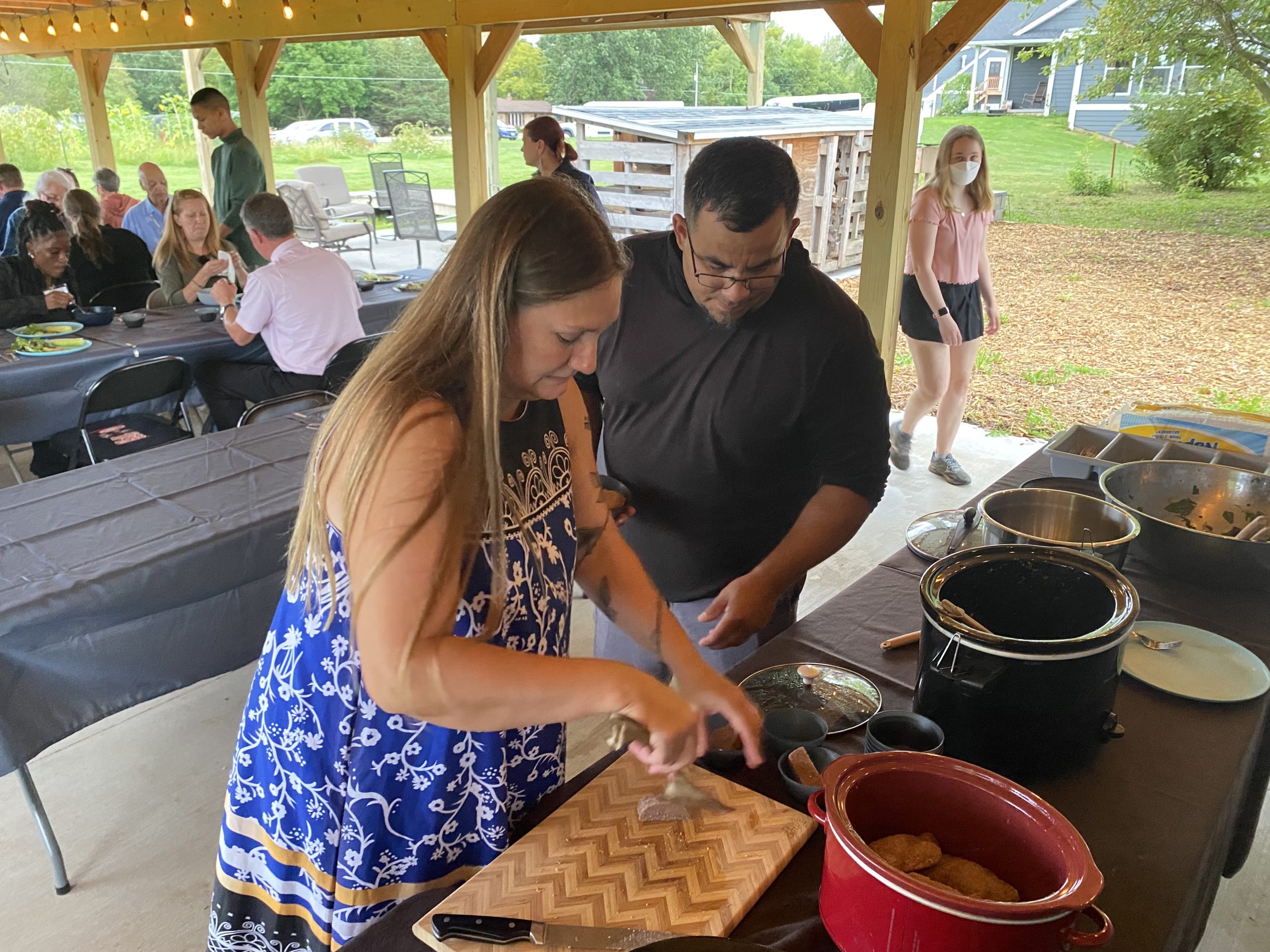
On that fall day, the Websters were hosting a picnic-style dinner in an open pavilion for the Center for Disease Control’s Tribal Advisory Committee members, who had come to Oneida for their annual meeting.
“We provided them with a tour of the Oneida Nation followed by a dinner at Ukwakhwa: Tsi Niyikwayenhohslu,” said Debbie Danforth, director of the Oneida Comprehensive Health Division.
They were served Indigenous foods from Indigenous gardens, served by Indigenous people.
The Websters bought the property in 2017 and built their home there in 2018. Their early efforts at farming started small at their previous home, while Becky Webster worked as an Oneida tribal attorney and Steve Webster worked as the tribe’s records director.
“We grew our first traditional white corn in 2015 in our backyard,” she said. “The following year, we expanded our garden.”
Steve Webster said his work in tribal government helped him realize that food security was a growing problem in the community, where it hadn’t been decades earlier.
“When it comes to our foods, I saw that during our general tribal meetings, where we had 2,000 people gathered to talk about tribal business, food sovereignty and food security came up a number of times,” he said. “As the records director, I can tell you that those things didn’t hardly surface in meeting minutes from 40 or 50 years ago. Now, it’s a common conversation that is driving policy and shaping our budget.”
They decided to make the move after Becky Webster became a professor at the University of Minnesota Duluth, and approached her husband with a plan.
“I said, ‘What would you think if we sold our house, bought 10-15 acres of land, built a smaller house, then you quit your job, and homeschool the girls?’ Our girls were 11 and 13 at the time,” she told ICT.
“It didn’t take much convincing. Steve readily agreed to this new adventure. We were fortunate to find a community member willing to sell us 10 acres of vacant agricultural land,” she said.
They talked to a faithkeeper about their plans for the property, and he gave them the name, “Ukwakhwa: Tsinu Niyukwayayʌthoslu.” Then, in 2021, they formed the non-profit organization to help them build infrastructure and hold classes for the community.
“We wanted to help the community learn about traditional Haudenosaunee agricultural methods of planting, growing, harvesting, seed keeping, food preparation, food storage, tool making, and crafting,” she said.
Their efforts are included in a webcast, “Welcoming Seeds Home: Seed Rematriation Webinar,” and in a podcast, “Seed Rematriation with Becky Webster — The Native Seed Pod.”
Becky Webster has also written a book, “Our Precious Corn: Yukwanénste,” which includes interviews with more than 50 Oneida community members about their relationships with corn. The book, which also includes traditional and modern recipes, is available on Amazon.
“For the Oneida people, yukwanénste has two meanings: our corn and our precious,” according to the book blurb posted on Amazon. “Corn has walked alongside the Oneida and other Haudenosaunee people since creation, playing an integral role in their daily and ceremonial lives throughout their often turbulent history.”
‘Farm-to-table initiative’
The Websters know all too well how Indigenous food sovereignty can heal communities by rekindling connections and sharing with each other.
“When I see how much food conventional agriculture can produce by relying on machinery, I think about how much labor must have gone into our foods when we did everything by hand,” Steve Webster told ICT.
“Our very way of life was centered around our food systems,” he said. “Transitioning to conventional agriculture disconnected us from that food system. I compare it to sitting around a campfire enjoying a meal with family and friends. Something amazing happens, but you can’t quite put it into words what is happening.”
The Oneida Nation is working to bring food sovereignty initiatives to the community, with several projects to grow, process and make Indigenous foods available to the community.
The tribe has operated a cannery for years, which serves as a food processing and preservation facility that is open for use by the public. It also provides education and training, and includes a a retail area where products are sold.
And a co-op of 15 Oneida families, called Ohelaku, meaning “among the cornstalks,” grows acres of traditional white corn. Other families, like the Websters, also operate their farmsteads to help educate the community and make traditional foods available, Becky Webster said.
Steve Webster said the new programs are helping people return to traditional ways.
“With our co-op, Ohelaku, we are getting some of that back,” he said. “We do use modern equipment to help us, but we also hand-pick and braid our corn to dry. Even if we figure out ways to mechanize that part of the process, there will still be a need to have some corn to hand-harvest and braid, so we keep that knowledge and gathering in place.”
The Oneida foodways help the larger community, they said.
“One way that Oneida foodways can lead to more food sovereignty is by providing more meals to our community members,” said Steve Webster. “I see this as a farm-to-table type of initiative.”
The efforts include lessons on growing, cultivating and harvesting traditional foods, and teaching members how to cook and preserve them.
“If I hand somebody a braid of corn or just unprocessed corn, there’s a probability they will not know how to cook it,” Steve Webster said. “Even if they do know how, they might not be comfortable enough to try it on their own. Add to that our busy schedules, and lots of people might not have time to cook the corn. It’s a very labor-intensive process.”
But community members can help each other, they said.
“I would like to see our farm delivering hot meals right to people’s houses,” Steve Webster said. “I would also like to see small gatherings where we meet up and prepare meals together to take back to our homes and cook at a later date. These activities could help us diversify the ways our community cooks with our Indigenous foods and expand our palettes.”
That knowledge can help community members shake the bonds of colonialism and make positive changes.
“Colonialism has had devastating impacts on our food system and our traditional livelihoods,” said Becky Webster. “White settlers embarked on a coordinated effort to transform our communal way of life to the nuclear family model. They emphasized agricultural ways of life, even for those communities that historically relied heavily on hunting, fishing, trapping, and gathering.”
“Now, we are regaining our power,” she said. “We are reclaiming our seeds and growing our foods on our own terms. We are hunting, fishing, trapping, and gathering more. We are sharing what we learn with our communities and extended communities.”
Looking ahead
The Websters now host well-attended gatherings regularly at their farmstead.
“One of our gatherings that really stuck out to me was when [a] crew came out here to teach how to make elm bark baskets and antler rakes,” said Steve Webster. “This was the beginning of the summer. We went out to the woods and peeled bark for the baskets and gathered saplings for the rakes. We also had three different Indigenous chefs cook meals for us over the three-day event.”
It had a distinct impact on at least one participant, a young man who had declared his candidacy for tribal government.
“He must have told me 10-12 times how he fell in love with all the things we were doing that weekend,” Steve Webster said. “He worked hard on his basket and was the first to show up and the last to leave. He got to see the possibilities of having our nonprofit and the Oneida Nation work together. He had a lot of community support and easily won a seat on tribal council.”
The Websters also encourage community members to visit the trading post.
“One way we encourage people to be a part of the Indigenous food sovereignty movement is to come and trade with us,” said Becky Webster.
“We have a trading post that has lots of items, such as corn, beans, dried squash, canned goods, loose-leaf teas, medicines, seeds, maple syrup, venison, and eggs. We also have things like jewelry, blankets, baskets, and books. We don’t accept cash, only trades. People often think that they don’t have anything of value. That’s disempowering. We want them to see that they are worth so much more than someone is willing to pay them.”
She hopes it will bring them into the fold.
“We want them to have a place in the food sovereignty movement,” she said. “We’ve traded for lots of Indigenous foods, but we also traded for things like haircuts, singing lessons, and finding medicines in the woods.
“We also recently traded some traditional tobacco for some toilet paper and iced tea,” she said. “This last one was unexpected and we were thrilled. We have a restroom in our commercial kitchen and trading post space, and we can now offer some iced tea to our guests. Those are the things that can create buy-in and give people a connection. It helps make them feel like they are a part of something, even if they thought they couldn’t.”
She continued, “Our farmstead is the direct result of support from our community, and we are overjoyed when we can turn around and make sure people feel like they are a part of it.”
More info
For more information about the nonprofit “Ukwakhwa (Our Foods),” and food sovereignty, visit the organization’s website.

Our stories are worth telling. Our stories are worth sharing. Our stories are worth your support. Contribute $5 or $10 today to help ICT carry out its critical mission. Sign up for ICT’s free newsletter.

