Update: This article has been updated to note that President Joe Biden signed the bill on Dec. 23.
Stewart Huntington
ICT
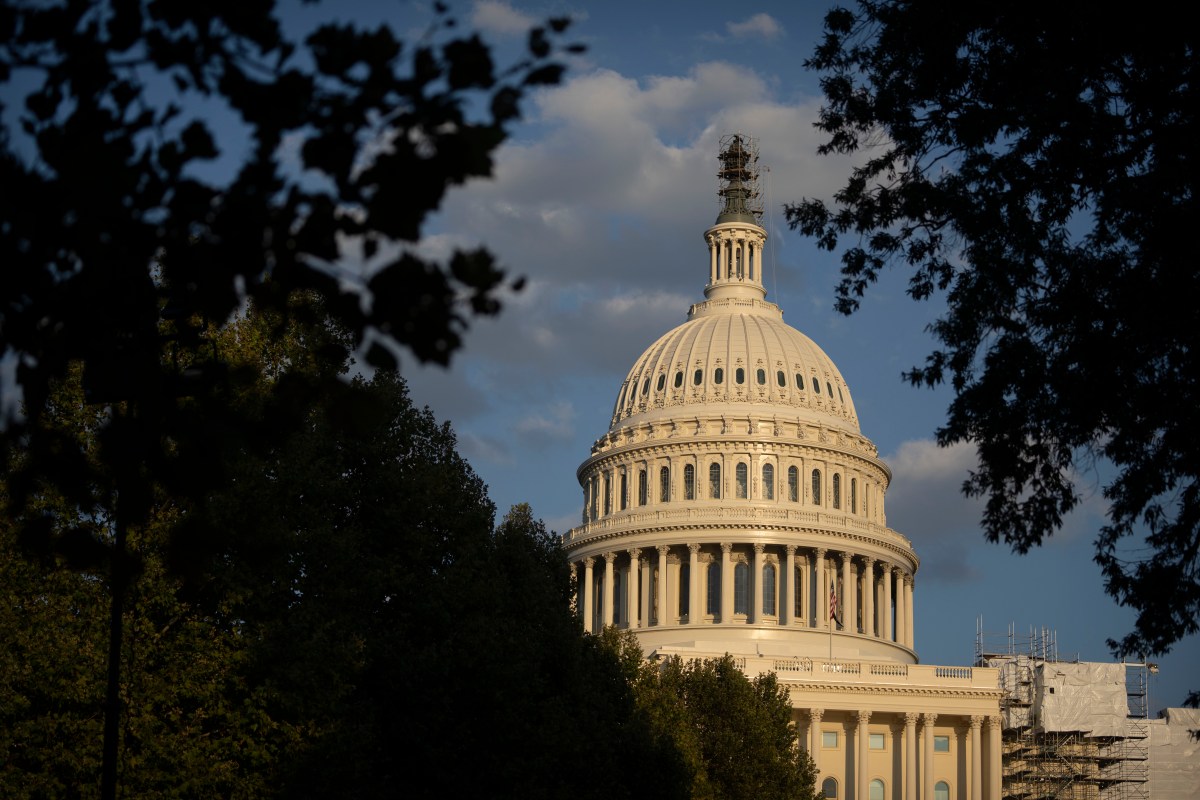
New tools and resources could be on the way for tribes and Native organizations to address child abuse and child neglect involving Indigenous children after Congress this week passed the Native American Child Protection Act.
The bipartisan bill, which cleared the House last year, passed the Senate Wednesday, Dec. 18, on a voice vote. President Joe Biden signed the bill into law on Dec. 23.
SUPPORT INDIGENOUS JOURNALISM. CONTRIBUTE TODAY.
“It is a heartbreaking fact that Native children face disproportionately high levels of abuse. It is past time the federal government steps up to address this crisis,” said U.S. Rep. Reuben Gallego, a Democrat from Arizona, the former chair of the Subcommittee for Indigenous Peoples who co-sponsored the bill in the U.S. House. Gallego was elected to the U.S. Senate in November was set to be sworn in Jan. 3.
The bill would reauthorize, revise and expand parts of the Indian Child Protection and Family Violence Prevention Act enacted in 1990. The original programs were never fully funded.
The new bill would protect Native children by:
•Creating a National Indian Child Resource and Family Services Center to offer technical assistance and training to tribes, tribal organizations, and urban Indian organizations
•Requiring intergovernmental agreements between tribes and states to prevent, investigate, treat, and prosecute family violence
•Allowing Child Protection and Family Violence Prevention Program funding to cover additional activities such as operational costs for child protective services
•Allowing urban Indian organizations to be eligible for funding under the bill
•Encouraging culturally appropriate treatment services and programs
Indian child welfare advocates were pleased with the bill.
“It’s important for the tribes to have the resources to build their own system so they don’t have to rely on state and county offices,” said Kimberly Cluff, the legal director for the California Tribal Families Coalition.
“I think anything that moves us towards tribal self-determination helps on many fronts with tribal governance, but with child welfare, it is especially important,” she said, noting that today, 46 years after the passage of the landmark Indian Child Welfare Act, large scale problems persist.
“In many places Native children are still being removed from their families and lost to their tribes at staggering rates,” she said. “So maybe it’s time to stop trying to fix the state and county systems and empower tribes to have local control. Smaller bureaucracies are good at child welfare and tribes are smaller systems. And the data tells us that tribes are, plain and simple, better at healing families.”
Sarah Kastelic, executive director of the National Indian Child Welfare Association, praised the bill when it was originally introduced
“Community-based, culturally appropriate services are essential to the overall well-being of American Indian and Alaska Native children, youth, families, and their communities,” she said. “Our children and families deserve the same opportunities to grow up healthy and strong as other populations, and this legislation will help close the gap in access to funding and services.”
Gallego said it was a step in the right direction to bring more resources to Indian Country.
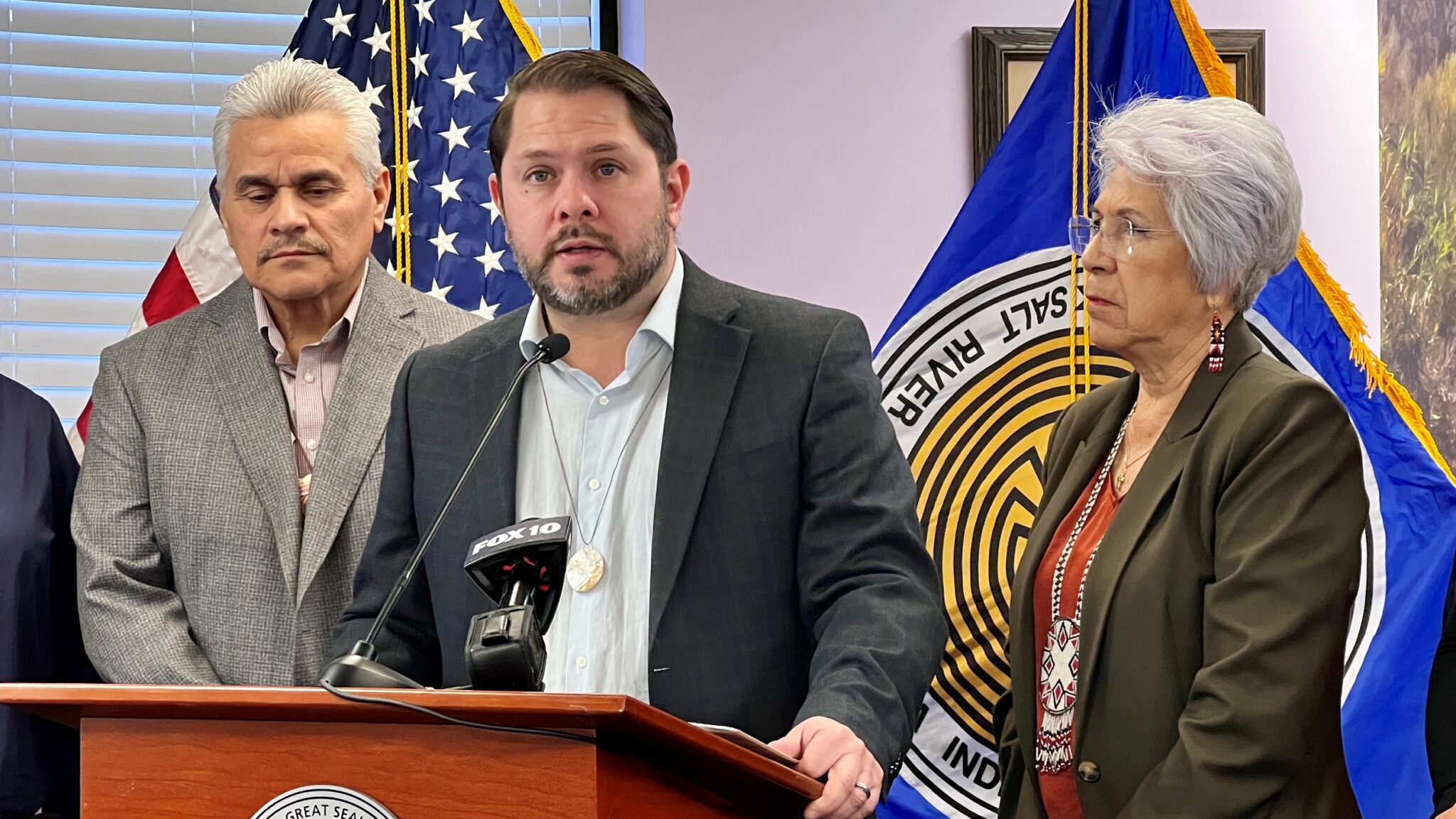
“A lot of times in our tribal nations there’s just not enough law enforcement,” he said. “And so when there are cases of child abuse, sometimes it’s not reported, sometimes it’s not prosecuted, and a lot of times it’s ignored. So by coming in, bringing in more resources, more education, we hope that we can both prevent, stop and prosecute child abuse, especially because it’s found more prevalent on our Native American lands.”
Indigenous children are seven times more likely that other U.S. children to be subjected to criminal physical abuse, sexual abuse or neglect, according to the National Crimes Against Children Investigators Association.
The bill was introduced in the Senate by Sens. Ben Ray Luján, a Democrat from New Mexico, and Susan Collins, a Republican from Maine.

Our stories are worth telling. Our stories are worth sharing. Our stories are worth your support. Contribute today to help ICT carry out its critical mission. Sign up for ICT’s free newsletter.