This story was originally published by the Nebraska Examiner.
Zach Wendling
Nebraska Examiner
LINCOLN — Nebraska Gov. Jim Pillen is “not into the mood of negotiation” for a tobacco tax compact with the Omaha Tribe of Nebraska, coming as the tribe moves forward with medical cannabis and could eventually include recreational marijuana.
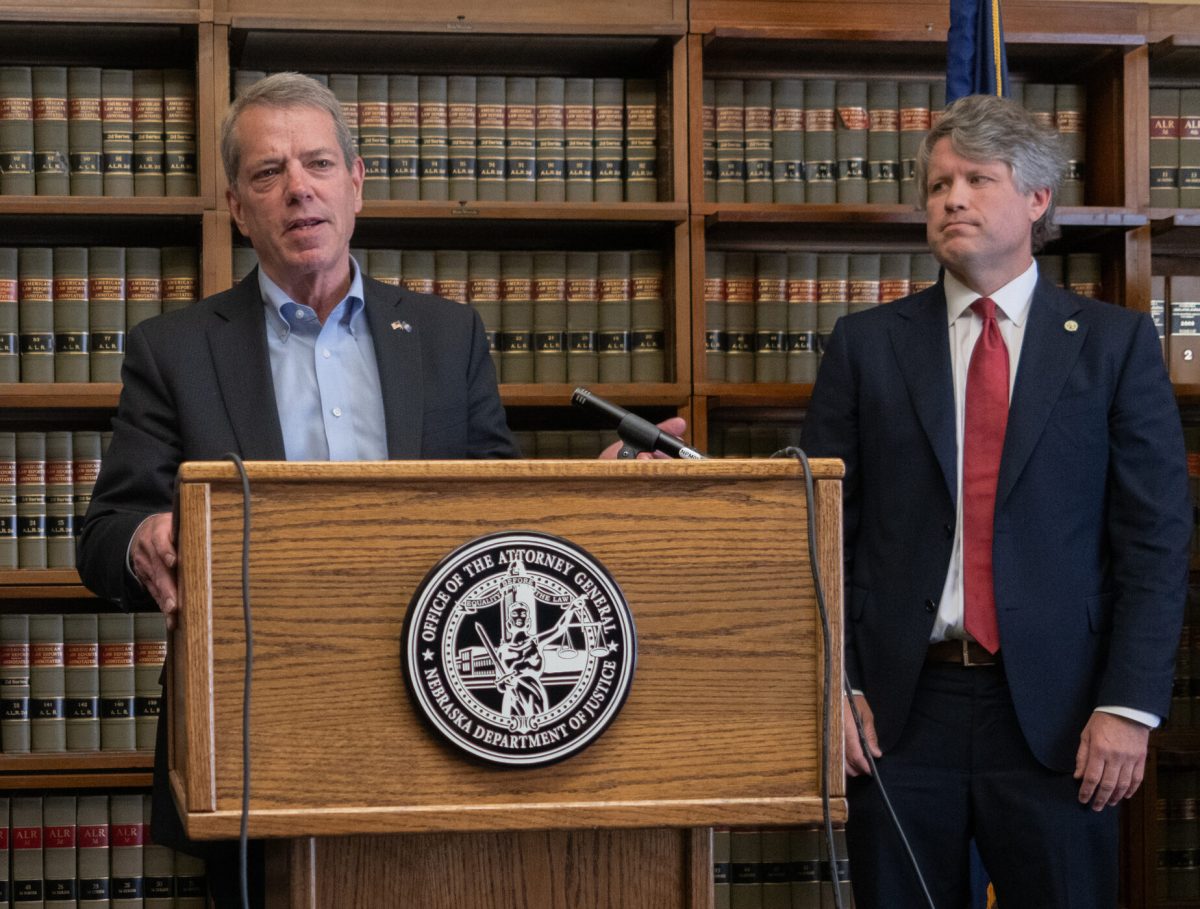
The comments came at an unrelated news conference Nov. 6 where Nebraska Attorney General Mike Hilgers, whom Pillen had appointed to negotiate a contract, also addressed the Omaha Tribe’s marijuana law and a tobacco tax compact. Pillen’s main opposition is the potential that the tribe pursues recreational marijuana after fully implementing medical cannabis.
“My view is really simple: There’s not going to be Nebraskans going into the Omaha Tribe and buying recreational marijuana,” Pillen said. “We’ll take whatever steps it is to keep our state in the values and keep that from happening.”
Asked how that would happen, Pillen directed questions to Hilgers but said the pair had some “early conversations” about dealing with the possible expansion to recreational marijuana on tribal lands. Pillen said he isn’t into “speculation.” Pillen did not say whether he wanted the state to prevent medical cannabis sales to Nebraska residents.
“When that time comes, we’ll figure out the right way and obviously make sure we’re doing it legally as well,” Pillen said of recreational marijuana.
Omaha Tribe Attorney General Cartier has alleged that in light of the tribal law on marijuana, Hilgers’ office shut down tax compact negotiations in “direct retaliation.”
‘We will defend our sovereignty’
In a statement, Carter said the state can’t dictate internal licensing on tribal lands and that the tribe would continue to work in “good faith” to find a mutually beneficial agreement.
“But we caution him [Pillen]: if he is relying solely on the attorney general’s flawed interpretation of the law, personal crusades are clouding his legal judgment as they have before,” Cartier said. “If the state continues to retaliate or attempts to block our lawful enterprise, we will defend our sovereignty through all available means.”
In July, the Omaha Tribe Council unanimously approved a law legalizing medical cannabis and adult-use recreational marijuana. Also this summer, the tribe reached out to Pillen to begin discussions on a tobacco tax compact. The state has one with the Santee Sioux Nation.
In short, such a compact would allow the Omaha Tribe to access hundreds of thousands of dollars in tobacco tax revenue currently all going to Nebraska. The Omaha Tribe has asked for 90 percent of taxes while also taking on some state regulatory duties to track tobacco sales and save the state money. The Santee Sioux have an agreement to retain 75 percent.
Cartier said that if Pillen prefers a 75-25 split similar to the Santee Sioux, the Omaha Tribe is prepared to accept that structure, which he said was already offered before. Another possible consideration could be the state budget, which already faces a significant projected deficit.
‘Poison’
Hilgers on Nov. 6 and earlier that week said the state doesn’t have to enter into a compact with the Omaha Tribe. He described the agreement as an “arm’s length transaction” that would need to be “good for both sides” to be finalized.
One of the first things Hilgers learned as a “baby lawyer,” he said, was not to talk about private conversations or risk losing his credibility. He said he didn’t want to negotiate through the media and detested the negotiation tactics he felt Cartier and the Omaha Tribe were using.
Cartier previously said the Omaha Tribe was speaking out because the tribe wants to remain in the “driver’s seat” on an issue that could lead to economic development and workforce gains. The tribe also is focused on public health compliance and product testing, Cartier said.
“The people of Nebraska and the Omaha Tribe deserve decisions grounded in the actual law, not partisan or personal crusades,” Cartier said.
Hilgers said the deal he sees is of no benefit to Nebraska and that the real proposal before Nebraska is to accept what he called an “unlawful” medical and recreational marijuana “scheme.”
“We’re going to violate your law,” Hilgers said of the tribe’s position. “We’re going to sell a poison, contrary to your law, to your citizens. You’re going to have to deal with the fallout in the State of Nebraska.”
Tribal sovereignty
On Nov. 5, Hilgers said that even if medical marijuana is available in Nebraska, it doesn’t mean “some dispensary in Alliance can just whip up a dispensary and just start selling.” Alliance, a city 334 miles west of the Omaha Tribe, is not a sovereign nation like the Omaha Tribe.
Hilgers said the Omaha Tribe was looking to “flaunt” or “thumb” its nose at Nebraska laws and “make life more difficult” in the Cornhusker State. He said he worried about “mental health fallout” from expanded marijuana and said a main concern is sales to nontribal citizens.
“If you are not a licensed dispensary or cultivator, you cannot operate in the medical marijuana world under current state statute,” Hilgers said.
Pillen and Hilgers have taken subtle differences in their approaches to medical cannabis, with Pillen providing some administrative support to the Nebraska Medical Cannabis Commission if it sticks to medical cannabis. Hilgers’ office had said it would sue the commission if it issued licenses.
Though two cultivators were licensed last month, that lawsuit threat hasn’t yet materialized. At the news conferences, Pillen focused on recreational marijuana worries, while Hilgers spoke more broadly.
‘At their own peril’
Voter-passed state law allows patients to possess up to 5 ounces of medical cannabis in any form or THC level with any health care practitioner’s recommendation.
A second law leaves the regulation of “registered cannabis establishments” in the state to the Nebraska Medical Cannabis Commission. No transporters, product manufacturers or dispensaries are yet licensed.
The tribe seeks to operate on tribal lands, and tribal leaders have been cautious that whatever actions they pursue, they know Hilgers is watching. Cartier has said tobacco and marijuana are separate issues.
Nebraska voters overwhelmingly legalized medical cannabis in Nebraska and set up a regulatory system one year ago this week. It’s a decision Hilgers has openly opposed and said his office will seek to overturn.
The AG has repeatedly argued Nebraska’s cannabis laws violate federal law, even as dozens of other states have medical cannabis programs on the books.
The federal government has not challenged Nebraska’s laws, and Congress has repeatedly barred the U.S. Department of Justice from interfering with state medical cannabis laws.
Some Nebraskans hoping to get medical cannabis have looked to the Omaha Tribe as an escape valve and told the Nebraska Medical Cannabis Commission as much.
Hilgers did not respond to a question of whether there was a difference between Nebraskans who ultimately go to the Omaha Tribe for medicine or are currently going to surrounding states for medical cannabis, including Colorado, South Dakota or Missouri.
Hilgers said anyone who goes to the tribe to buy marijuana will do so “at their own peril, and I would highly discourage them from doing that.”