Miles Morrisseau
ICT
WINNIPEG, Manitoba, Canada — Sandra Delaronde is always on guard. That’s what it means to be an Indigenous woman in Winnipeg.
“There are things that we do just as a matter of course,” Delaronde told ICT. “Thank goodness for cell phones, because you turn on your location finder, regardless of your age. You make sure that your kids or grandkids are within arm’s length. It’s a decision that you make every time you go out.
“That’s our reality.”
SUPPORT INDIGENOUS JOURNALISM. CONTRIBUTE TODAY.
Delaronde, Cross Lake First Nation with Métis roots, has been working for years to bring attention to the scourge of murdered and missing Indigenous women, girls and two-spirit people in Canada as the project leader for Manitoba’s MMIWG2S coalition.
Now the harsh spotlight is once again on Winnipeg, the capital of Manitoba, where police say a local serial killer has been targeting Indigenous women.
Jeremy Skibicki, 35, of Winnipeg, was initially charged with the death of Rebecca Contois, 24, Crane River First Nation, whose partial remains were discovered in a garbage bin on May 16 near apartments along Edison Avenue in Winnipeg. The rest of her remains were found at the Brady Road landfill in Winnipeg, according to Global News.
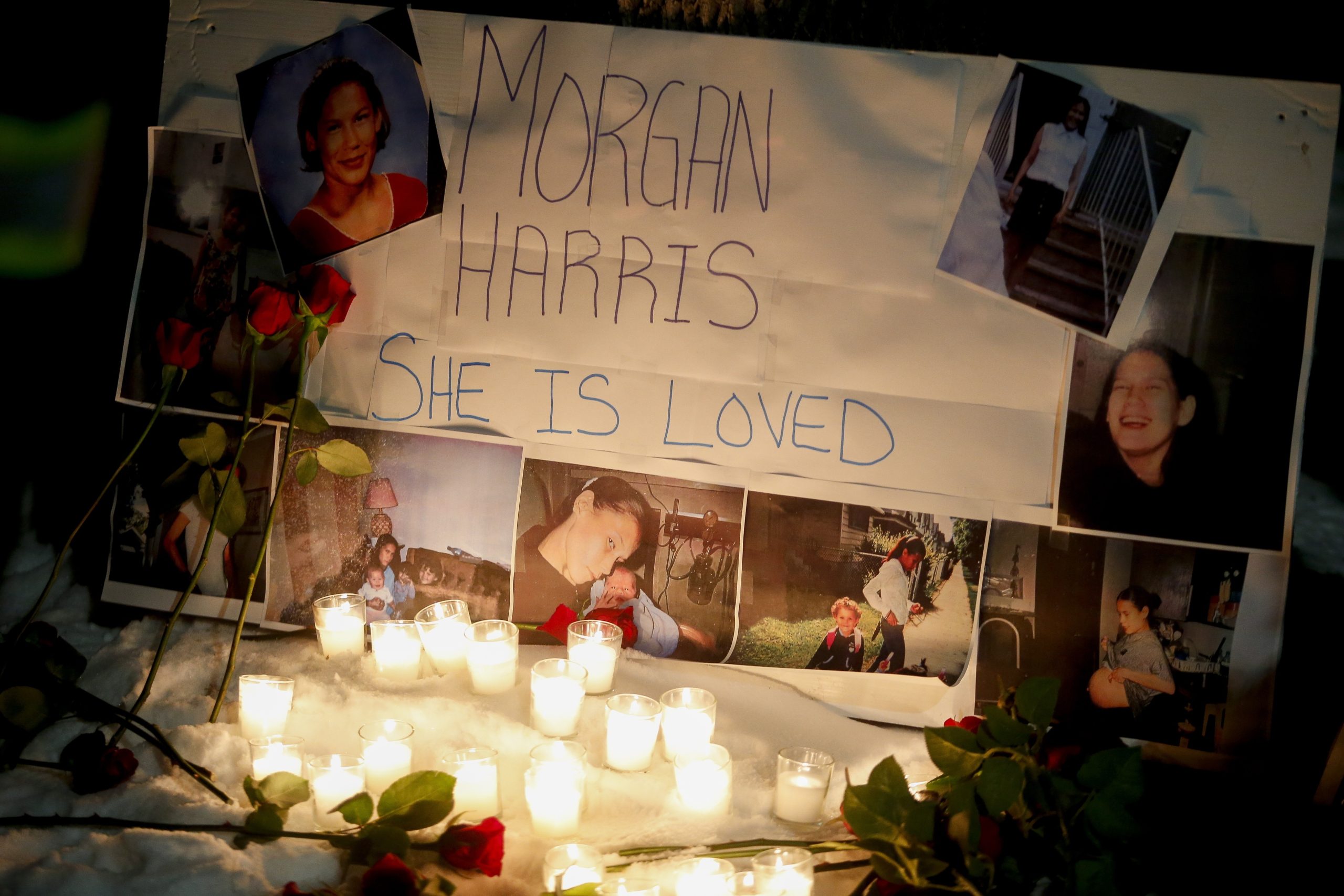
On Dec. 1, the homicide unit of the Winnipeg Police Service and Manitoba Justice charged Skibicki with additional cases of murder in the deaths of three Indigenous women who are believed to have been killed over a six-week period from mid-March to early May. All three had been living in Winnipeg, police said.
Morgan Beatrice Harris, 39, of Long Plain First Nation, is believed to have been killed around May 1. Marcedes Myran, 26, also Long Plain First Nation, is believed to have been killed about May 4.
And a fourth woman, who has yet to be formally identified, is believed to have been killed about March 15. As a sign of respect and at the request of community advocates, knowledge keepers, elders, and leadership, the Winnipeg Police Service refers to her as Buffalo Woman, or Mashkode Bizhiki’ikwe. She, too, is believed to be Indigenous.
There could well be others, police said.
“Due to the nature of the circumstances of this investigation,” noted the police statement on Dec. 1, “homicide investigators did not rule out the possibility of additional victims.”
The news comes as Canada continues to grapple with the issue of missing and murdered Indigenous women more than six years after a national inquiry found a staggering rate of violence against Indigenous women and girls.
Government records show that Indigenous women made up about one-fourth of the women killed in homicides in 2021, although they make up less than 5 percent of the population.
Looking for victims
The bodies of the three additional victims have not been found, though police have said DNA has linked Skibicki to their deaths. The local Indigenous community is calling on police to continue searching the Brady Landfill or expand to the Prairie Green landfill for their bodies.
Police Chief Danny Smyth has refused to continue searching the Brady landfill, however, prompting calls for his resignation from First Nations leaders and others.
Harris’ two daughters called for Smyth’s resignation at a press conference in Ottawa on Dec. 8.
“It’s pretty disgusting what you’re doing and the message that you’re sending out to Indigenous peoples,” said Cambria Harris. “You’re telling us that we don’t matter. And you know, you’re still dumping trash on top of us, like, we don’t matter.”
She continued, “We saw this happen with residential schools. And here you are, once again creating unmarked graves of Indigenous peoples. That’s wrong. And it needs to end … I’m angry. I am so angry, and I hope my people are too.”
Kera Harris said other victims could also be out there.
“We don’t know how many more have been dumped there over the years,” Kera Harris said. “And these women deserve our respect and recognition instead of being forgotten by the people of society, being forgotten by our nation.”
The young women were supported by many Manitoba chiefs who were in Ottawa to attend the special assembly of the Assembly of First Nations.
“To me, the message you are sending to the greater community, to the non-Indigenous community, is that Indigenous women don’t matter,” said Long Plains Chief Kyra Wilson. “That if somebody wants to target and hurt our women, that they can dump them in the landfill and no one will look for them.”
The following day, Smyth sent out a release saying he would not be stepping down.
“I am supportive of further exploring whether it is possible to recover the remains of Marcedes Myran and Morgan Harris. I will work with whomever the mayor assigns to this important initiative,” Smyth said in a statement.
“I have heard the calls from the families, the Indigenous leadership, and the community,” he said. “I understand your calls; the pain and sorrow is unimaginable. As the Chief of Police, I am committed to securing a criminal conviction for these heinous crimes. I want justice for Rebecca, Marcedes, Morgan and Buffalo Woman. I will not be resigning.”
Who is Skibicki?
Skibicki, who is non-Native, had reportedly posted extremist views on social media that included white supremacy and racist, misogynistic and antisemitic rhetoric.
He also had previously been accused of domestic violence with two previous partners, at least one of whom is Indigenous. They said he had abused them repeatedly and threatened to kill them, according to court documents.
In 2015, he was convicted of assaulting his pregnant partner by punching her, trying to strangle her and threatening to kill her. She had applied for a protection order against him earlier that year, but her application was in explicably dismissed. Skibicki served about two months in jail before being released on probation.
In 2019, another woman obtained a protection order against him, saying he had abused her and threatened to kill her. He was also charged with assaulting his estranged wife, who is Métis, but the case was not pursued, CBC News reported.
His lawyer told the media in Canada that he would plead not guilty to the murder charges, which are expected to go to trial sometime next year. He is being held at a correctional center in Manitoba pending the trial.
Looking ahead
In the meantime, the Indigenous community is working to search the landfills for other bodies.
On Dec. 14, the Assembly of Manitoba Chiefs established a feasibility study for a landfill search, and named Grand Chief Cathy Merrick as the spokesperson for the landfill searches.
Indigenous leaders have met with Winnipeg Mayor Scott Gillingham, Winnipeg police and the MMIWG2S committee to discuss logistics and coordination for a search of both the Brady and Prairie Green landfills.
“After speaking with Chief Kyra Wilson and members of the MMIWG2S+ Implementation Committee, it was clear that we need to work together collaboratively on this emergency effort and to speak with one voice,” said Chief Kyra Wilson. “First Nation leadership has asked that I be the main point of contact when dealing with governments and media going forward.”
Delaronde, however, told ICT that the arrest of an accused serial killer does not mean the streets are safe.
“This does not necessarily make us safer because there’s still women that have gone missing,” she said. “So Indigenous women in general are not letting their guard down because this guy is in jail. The violence continues.”

Our stories are worth telling. Our stories are worth sharing. Our stories are worth your support. Contribute $5 or $10 today to help ICT (formerly Indian Country Today) carry out its critical mission. Sign up for ICT’s free newsletter.