
WARNING: This story contains disturbing details about residential and boarding schools. If you are feeling triggered, here is a resource list for trauma responses from the National Native American Boarding School Healing Coalition in the U.S. In Canada, the National Indian Residential School Crisis Hotline can be reached at 1-866-925-4419.
MATTHEW BROWN
Associated Press
MISSION, S.D. — After her mother died when Rosalie Whirlwind Soldier was just four years old, she was put into a Indian boarding school in South Dakota and told her native Lakota language was “devil’s speak.”
She recalls being locked in a basement at St. Francis Indian Mission School for weeks as punishment for breaking the school’s strict rules. Her long braids were shorn in a deliberate effort to stamp out her cultural identity. And when she broke her leg in an accident, Whirlwind Soldier said she received shoddy care leaving her with pain and a limp that still hobbles her decades later.
“I thought there was no God, just torture and hatred,” Whirlwind Soldier testified during a Saturday event on the Rosebud Sioux Reservation led by U.S. Interior Secretary Deb Haaland, as the agency confronts the bitter legacy of a boarding school system that operated in the U.S. for more than a century.
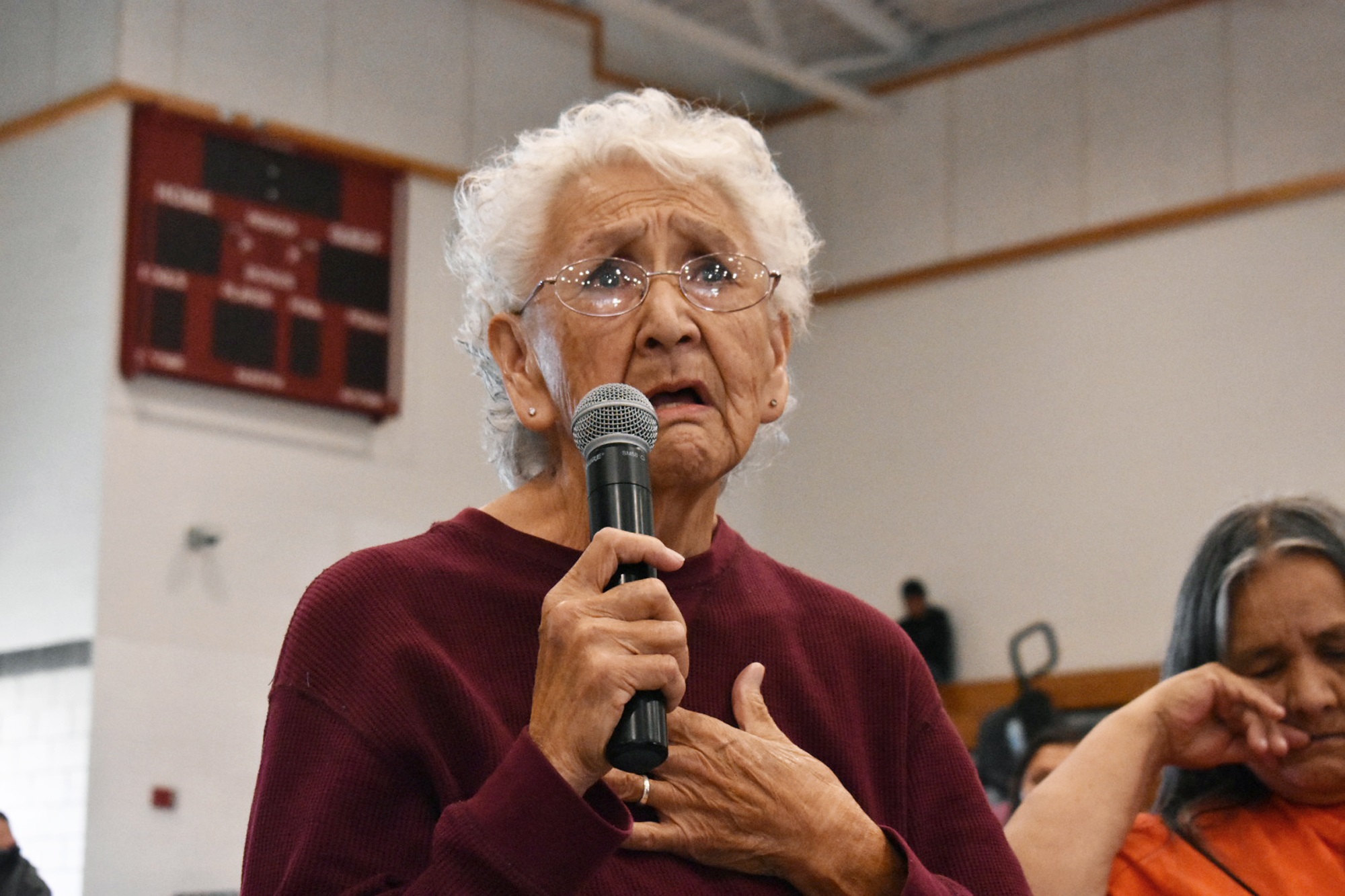
Now 78 and still living on Rosebud, Whirlwind Soldier said she was airing her horrific experiences in hopes of finally getting past them.
“The only thing they didn’t do was put us in (an oven) and gas us,” she said, comparing the treatment of Native people in the U.S. in the 19th and 20th centuries to the Jewish Holocaust during World War II.
“But I let it go,” she later added. “I’m going to make it.”
Related stories from ICT:
—Buried Secrets: Red Cloud school takes the lead in uncovering boarding school past
—Red Cloud school will dig for graves
—Catholic Church siphoned funds paid to Native people for stolen lands
—Deaths at Chemawa
—’Sometimes we hear the voices of children playing there’
—’We carry the trauma in our hearts’
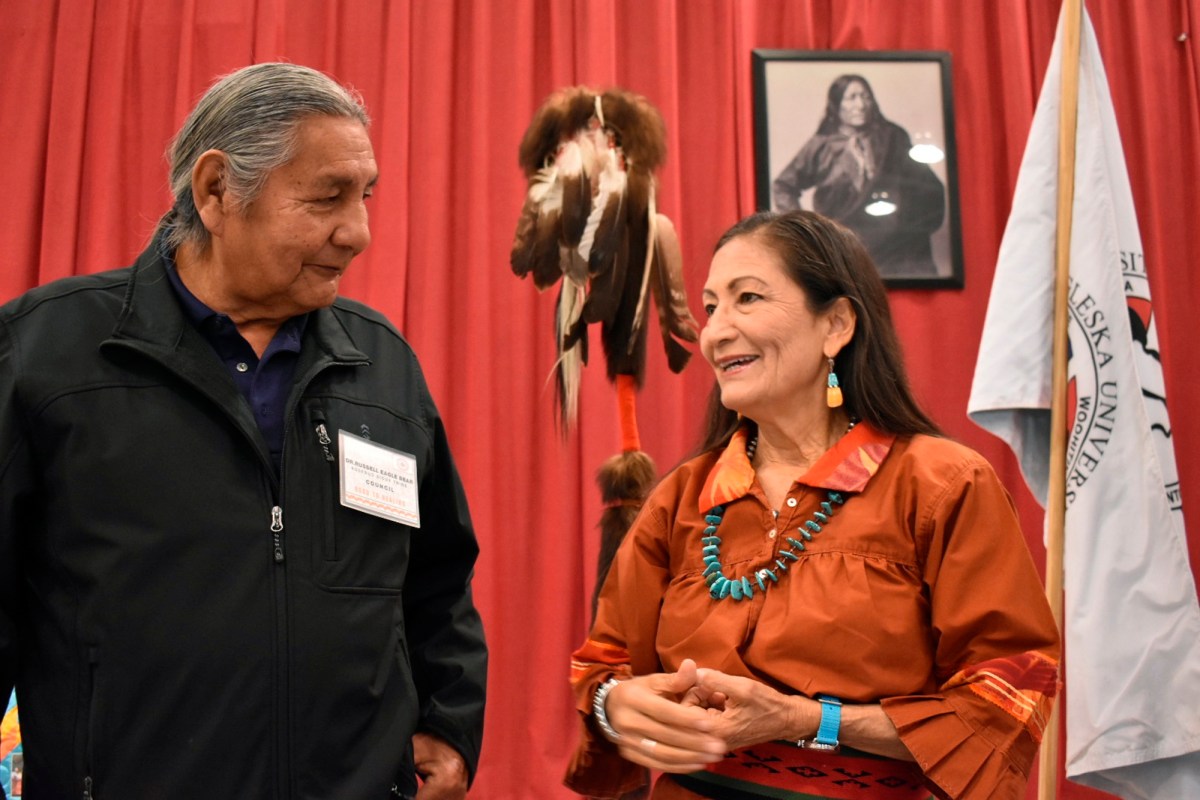
The Rosebud event was the third in Haaland’s yearlong “Road to Healing” initiative for victims of abuse at government-backed boarding schools, after previous stops in Oklahoma and Michigan in recent months.
Starting with the Indian Civilization Act of 1819, the U.S. enacted laws and policies to establish and support boarding schools. The stated goal was to “civilize” American Indians, Alaska Natives and Native Hawaiians, but that was often carried out through abusive practices. Religious and private institutions that ran many of the schools received federal funding.
Most closed their doors long ago and none still exist to strip students of their identities. But some, including St. Francis, still function as schools — albeit with drastically different missions that celebrate the cultural backgrounds of their Native students.
The first volume of an investigative report released by the Interior Department in May identified more than 400 boarding schools that the federal government supported beginning in the late 19th century and continuing well into the 1960s. It also found that least 500 children died at some of the schools, though that number is expected to increase dramatically as research continues.
The National Native American Boarding School Healing Coalition says it has tallied about 100 more schools not on the government list that were run by groups such as churches.
“They all had the same missions, the same goals: ‘Kill the Indian, save the man,’” said Lacey Kinnart, who works for the Minnesota-based coalition, citing a phrase by the founder of the notorious government-run Carlisle Indian Industrial School in Pennsylvania.
For Indigenous children, Kinnart said the intention was “to assimilate them and steal everything Indian out of them except their blood, make them despise who they are, their culture, and forget their language.”
South Dakota had 31 of the schools, including two on the Rosebud Sioux Reservation — St. Francis and the Rosebud Agency Boarding and Day School.
The Rosebud Agency school, in Mission, operated through at least 1951 on a site now home to Sinte Gleska University, where Saturday’s meeting was held.
All that remains of the boarding school now is a gutted-out building that used to house the dining hall, according to tribal members. When the building caught fire about five years ago, former student Patti Romero, 73, said she and others were on hand to cheer its destruction.
“No more worms in the chili,” said Romero, who attended the school from ages 6 to 15 and said the food was sometimes infested.
A second report in the investigation that Haaland, Laguna Pueblo from New Mexico and the nation’s first Indigenous cabinet secretary, launched is still pending and will cover burial sites and the schools’ impact on Indigenous communities, and will try to account for federal funds spent on the troubled program.
Congress is considering a bill to create a boarding school “truth and healing commission,” similar to one established in Canada in 2008. It would have a broader scope than the Interior Department’s investigation into federally run boarding schools and would have the power to subpoena records from churches and other private schools.

