You can help elevate meaningful stories from Indigenous nations when you support ICT during Arizona Gives Day! ICT is headquartered in Arizona, and covers the Indigenous world across North America. Help us reach our goal to raise $10,000 for reliable, compelling, Indigenous-led journalism in Arizona and beyond.
Jourdan Bennett-Begaye
ICT
LOS ANGELES — In the days following the 96th Academy Awards, I, as executive editor, the first woman and youngest to be in this role, received interesting feedback. Why was all of our coverage about the Oscars?
Naturally, I questioned, “Why not?” My second thought was this person had to be part of very few pool of Native people not watching Lily Gladstone go up against Emma Stone for leading actress.
My next thought, “This feedback has to be from a Boomer.” It was. (No offense to Boomers, but we have different news consumption habits.)
The following week I received counter feedback. The reader, who was also older, said he enjoyed following our coverage of the Oscars, Lily Gladstone, and all around “Killers of the Flower Moon” as it felt similar to following Deb Haaland’s journey to the secretary of the Interior Department.
This difference in opinion also means the news consumption will exist with many generations existing in Native communities. Statistics show that Native nations have a younger population than American society, so naturally we’re going to be paying attention to pop culture. Pop culture and the entertainment industry, undeniably, influence the economy, politics, and many other national conversations and sectors of our world that eventually seep into our communities.
In fact this is how I became a journalist. I’ve watched many of the big award shows for the last 15 years or so. My Facebook friends got so tired of my award show updates that I started to create virtual watch parties. Ha. I also wanted to be the next Ryan Seacrest and interview talent on the red carpet. I loved pop culture so much as a high school and college student. From there, I saw how powerful journalism could be for Native peoples and why it’s important to have more of us.
Of course, at the end of the day we always look at the numbers. According to our analytics, the top four stories were Oscars-related as of March 24. Those stories outshined our regular metrics on a monthly basis.
Top Oscar-related March stories:
— A wave of emotions after Oscars
— The real-life fight for Osage headrights
— Oscars Notebook: No statue for Lily Gladstone
— A long history of Indigenous film snubs

That meant readers wanted this material. Our editors paid attention and followed our instincts. We watch the trends and listen to conversations happening in Native communities.
From what we gathered, we knew it was going to be a big moment in history and needed to capture it for the record. And it was particularly important to capture history as Native journalists. That meant we had to be covering from all angles. From the Osage Nation watch party to the red carpet, and the emotions after.
Not alone
It was exhilarating to be a Native journalist reporting at the 96th Academy Awards as this award show was a special one for Native peoples and nations. ICT Producer Paris Wise, Zia and Laguna Pueblos, captured the journey along with me.
For Hollywood’s biggest night, Native peoples existed in every space imaginable. I’m saying this as a Native woman who finds myself in predominantly White spaces. So I mentally prepared myself to be the “only one”or among the very few. So when I say every space I mean from media to the press guide to ceremony attendees on the red carpet, and the drum group to Lily as Academy Award nominee.
The Academy held a b-roll session for press on Wednesday, March 6, where they’d literally roll out the red carpet for us so we could capture photos and video. Yup, this is where we get all the close-ups. I’ve been in journalism for a little over a decade and this was still fun to watch because, as I was taught, you have to be willing to be silly to get the good photos and videos.
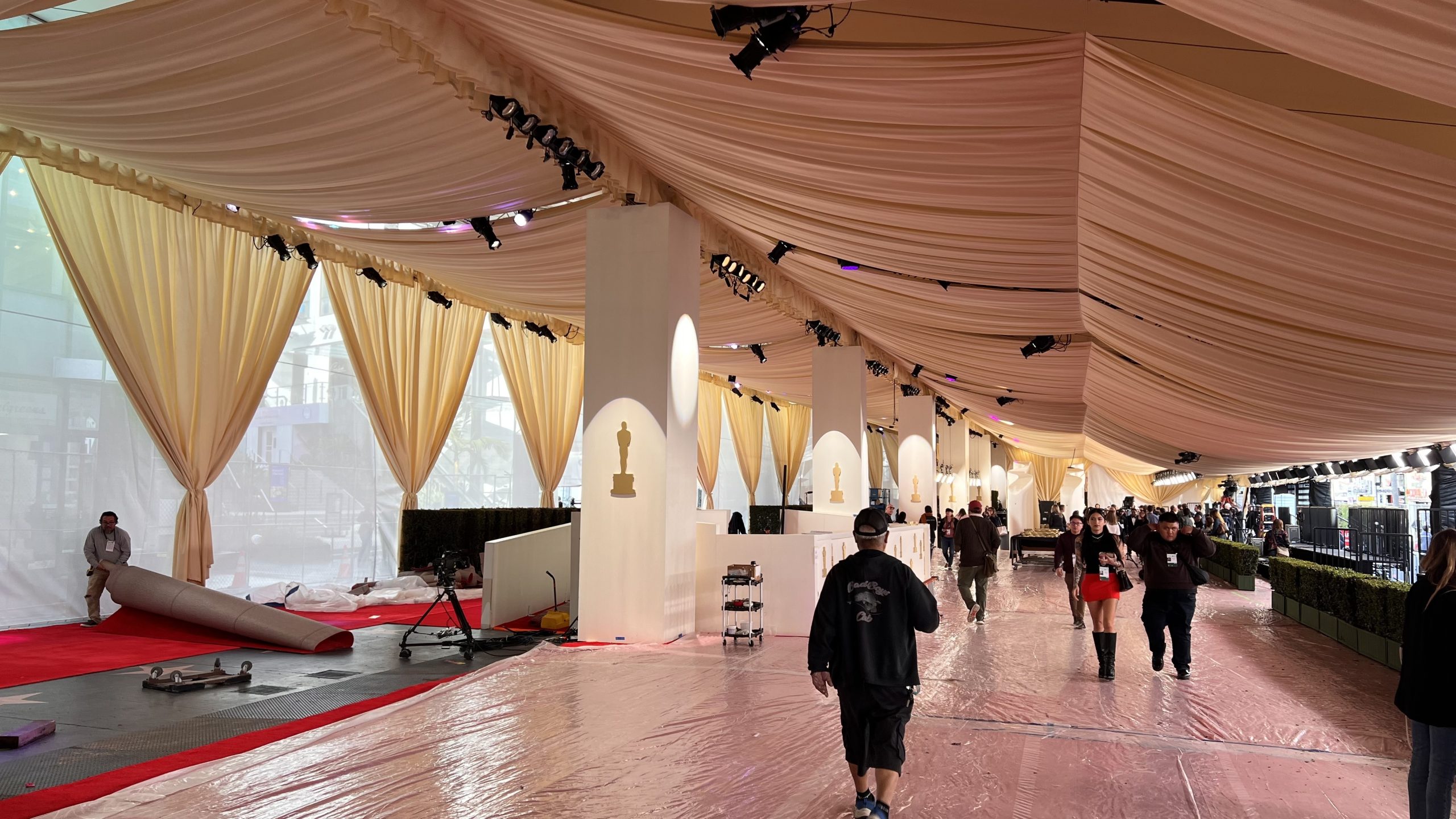
Anyway, I arrived early so I could also pick up my media credentials. We could only pick them up March 5-9, and not the day of the Oscars.
I arrived at the red carpet event and as I pulled out my DSLR camera from my green purse, a press guide on the red carpet said, “I like your bag.” I smiled and told them, “Thanks! It’s Anishnaabe made.” And they said, “Oh, I know. I lived in Anishnaabe country for some time.” The individual was Chiricahua Apache and had worked for the Academy for five years and worked on this specific award show for four years. My face lit up.
Press guides were available for press folks to ask questions about anything. So naturally I asked all the questions on what to expect from shoes to snacks, to the atmosphere.
Their last piece of wisdom before I left the carpet, “Don’t be shy and don’t be afraid to take up space.”
And I knew immediately what they meant when Oscar Sunday arrived. I’ll explain why below under Oscar Sunday.
Oscar prep
Our team prepped as much as we could for the Oscars. We had our Oscars Notebook ready. Assigned a few people to watch parties at Osage Nation and Montana. We planned stories to write and promote. On top of that plus reading and researching, Wise and I met up to figure out our game plan on coverage regarding where we would be and what we could capture. She was going to be in the ceremony and walking on the red carpet so she could take photos and video.
My positions were in the photo risers for the red carpet arrivals and in the interview room in Loew’s Hollywood Hotel. The interview room is where winners go to be interviewed by journalists. The goal was to make readers feel like they were there with us.
By this time we’ve talked to the other digital editors and broadcast’s executive producer about how to send them photos and videos. Side note: We texted them and all of us have iPhones, ha. High tech. This ensured everything got uploaded quickly. The signal was low at the venue.
The other logistics were, of course, when to arrive on Oscar Sunday, the countless emails coming in with rules, what to wear, where and when to eat, etc.
Here’s a quick look from the beginning.
Getting in: The deadline for applications was in December. We got two press passes in February and one ticket to the ceremony. Again, Wise went as the ticketed guest and captured photos and videos on the red carpet and inside the venue.
Endless emails: Leading up to the day the press received so many emails. It’s a lot but so worth it. I labeled and made a folder for all of them. There are so many rules and logistical steps to keep track of. From transportation to embargoes, to credential pick-up and the press attire for the night.
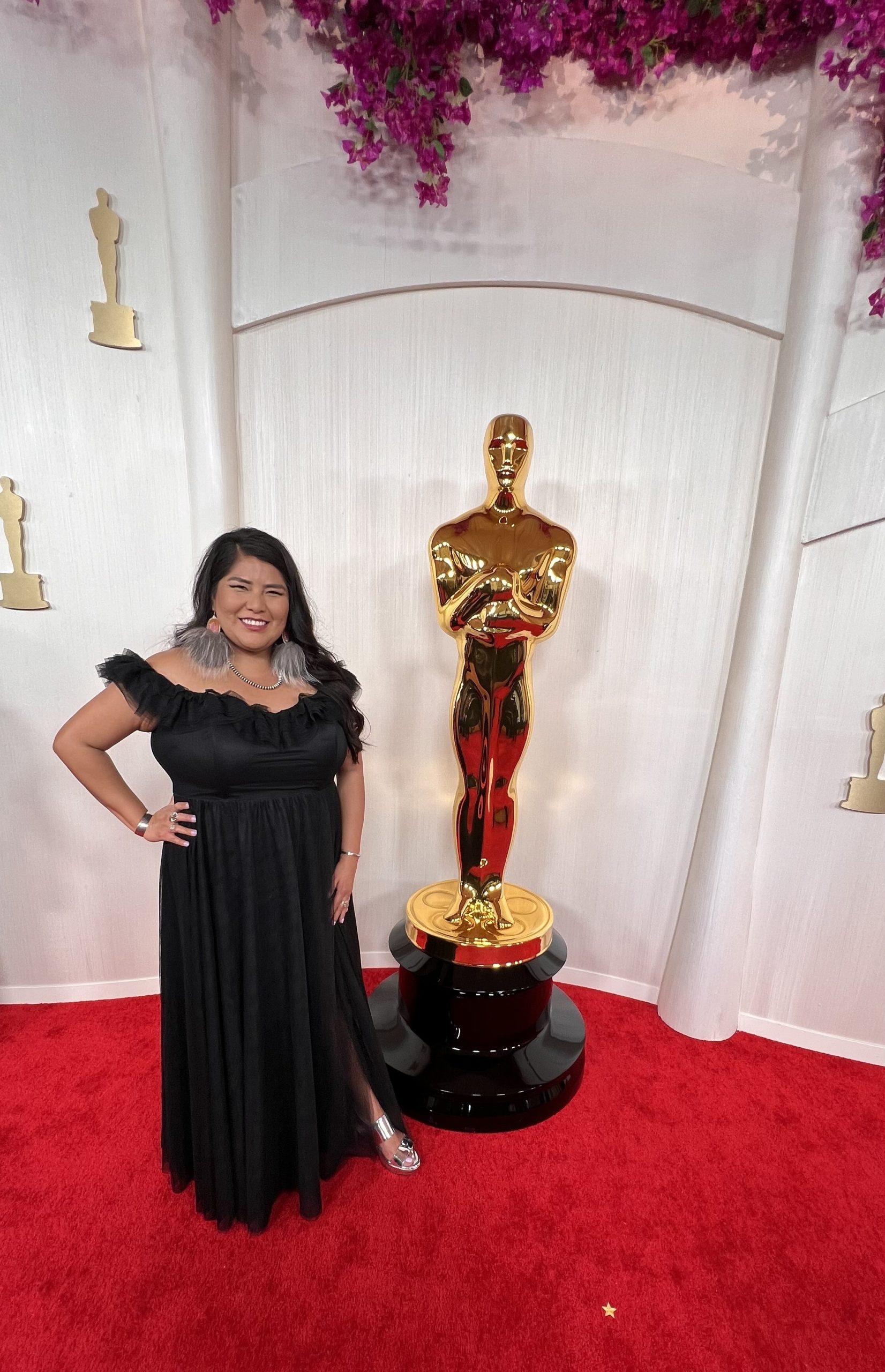
What to wear: I could not wait to wear a gown for the night. As the Academy told us, they want to create an experience for the nominees and everyone attending. So every single person had to be in black tie attire, from the press guides on the red carpet to attendees and the press. Since there would be moving around I had to think comfort and mobility. I first bought a teal dress but then we got a spot on the photo riser. I ended up having to exchange it. It is required for journalists on the photo risers to wear black or navy blue. They want the focus to be for those on the red carpet. We could wear comfy shoes but they had to be dark. No club wear they kept saying. There have been times they turned people away for wearing jeans surprisingly. I ended up buying a dress at Macy’s. The heels I already had and I brought some gold flats to change into after the ceremony. Of course, I wore Navajo pearls (something borrowed from my sister), some rings and a bracelet my late grandma made (thanks to my sister for letting me borrow them!). I also had custom-made, Alaska Native earrings made by Danae Earrings. Overall, the goal was to be mobile and comfortable for nine hours straight.
Oscar week and press rooms
Besides the red carpet rollout, the credential pick-up and rehearsals, we attended a nearly two-hour media walk-through.
During the walk-through, Academy press folks went over our 33-page media guide that covered every detail we needed to know from WiFi to equipment, to our arrival time to the pre-show time, and taking the press shuttle to the venue.
I almost didn’t attend the walk-through because I had to be in San Diego. However, since I had to move from the red carpet to the interview room, I needed to know how to get there. So for future Native journalists, it’s so helpful. We also found out that there was a large group of journalists who were covering the show for the first time. This made it less intimidating. Out of the approximately 100 journalists there, one journalist said this award show would be his 31st show he was covering.
Some details on the press rooms we were in.
Interview room: The two press passes we received were for the interview room where journalists get to ask questions to the winners after they come off stage. The interview room is maybe a 3-minute walk from the Dolby Theatre and in Loews Hotel. After the photo risers journalists could go straight to the interview room if they had a spot. They served food and drinks outside the room because it’s the Oscars and they wanted us to have a pleasant experience. Also, I’m so happy they had food as a 9 a.m. breakfast was the last meal I ate by show. The snacks didn’t hold me over and a headache creeped in. Our hope to be in this space was to ask Lily a question if she won in her category and the others.
Photo risers: We initially didn’t have a spot on the red carpet. But my mom always said, “The answer will always be no if you don’t ask.” I kindly asked about space on the red carpet since we are a visual platform for an Indigenous audience. Readers and audience deserved the best coverage from inside from Native journalists. We were given one spot to capture the red carpet arrivals. Hooray!
Ceremony rehearsals: ICT received an invitation to the ceremony rehearsals on Saturday. Paris, our producer, attended. Unfortunately, we couldn’t take photos or video. But check out her take on the Oscars in her talk back on the “ICT Newscast with Aliyah Chavez.”
Oscar Sunday
Game time. The red carpet arrivals started at 12:30 p.m. Pacific Time. Press was locked in by noon, so we had to be in our labeled spot on the photo risers.
It was suggested to arrive at our assigned press spots at the venue between 9 and 11 a.m. I figured I’d arrive at 10 and maybe 10:30 at the latest. Nope. I ended up arriving at 11:30 even after accounting for ride share wait time, finding the press shuttles, and traffic. I didn’t expect a press shuttle to break down. Fortunately the Academy was prepared and wanted everyone to be there on time.
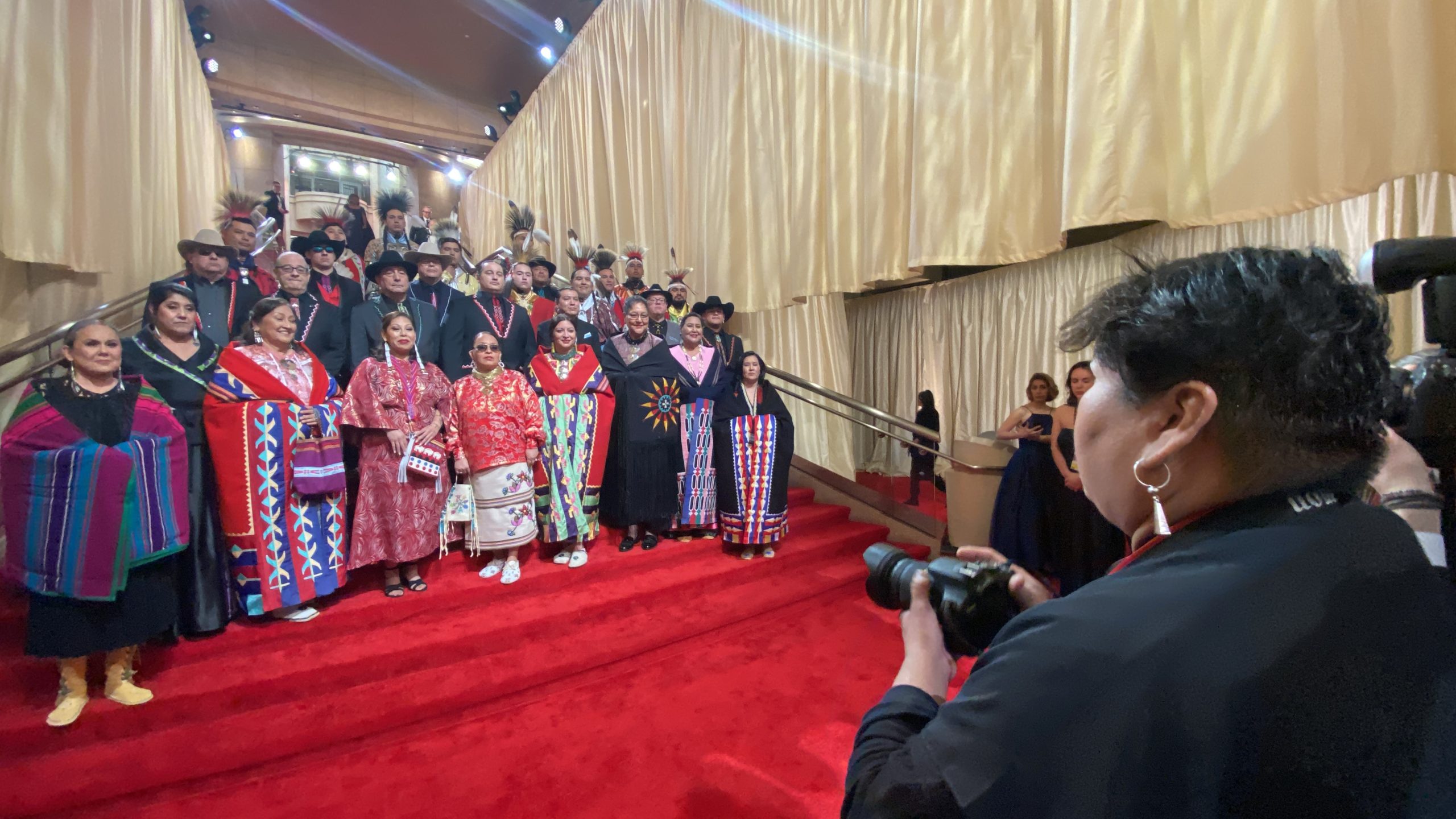
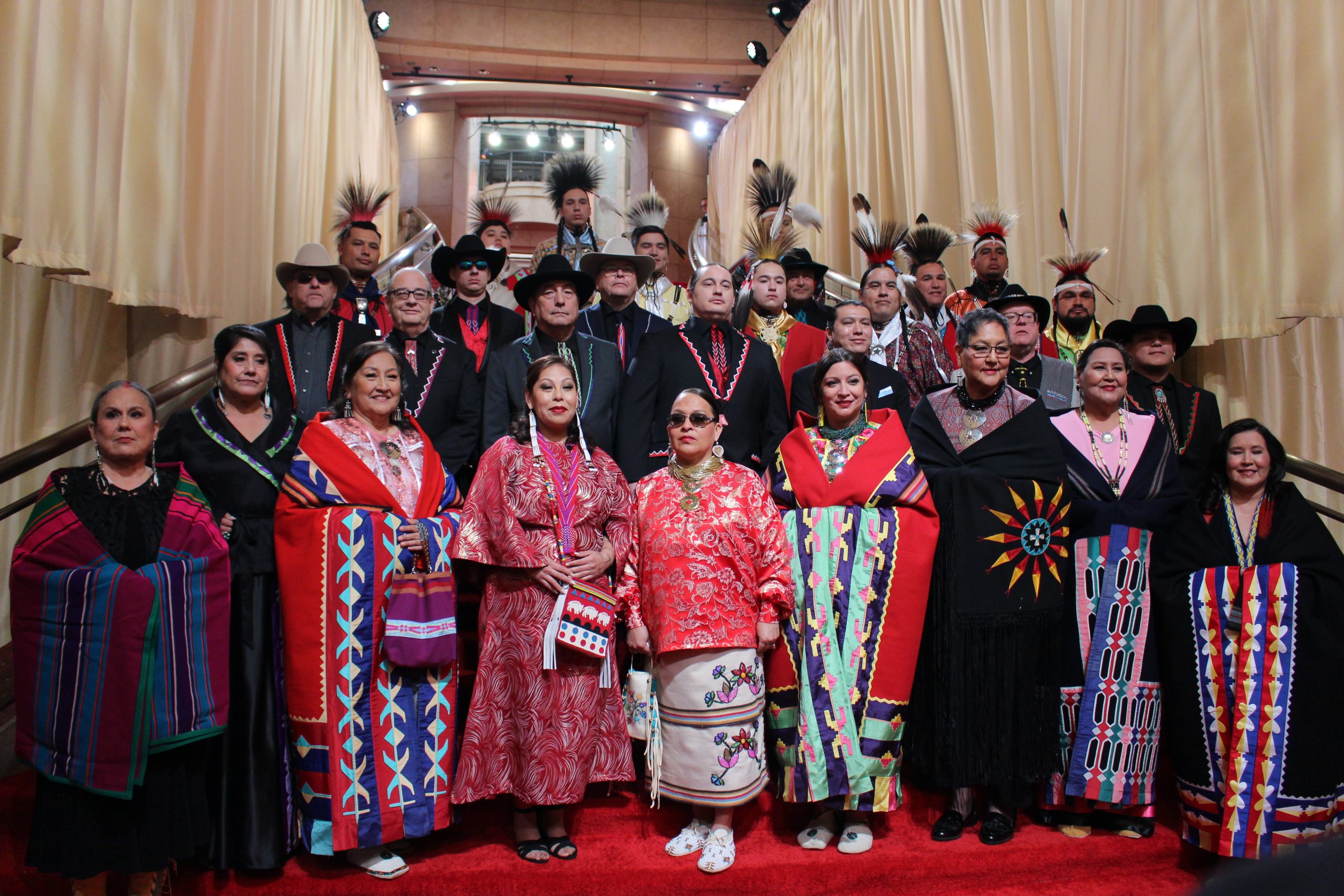
One other awesome surprise is the Academy reached out to us about a photo opportunity of the Osage drum group, singers and dancers on the grand staircase. All the more reason to be there earlier.
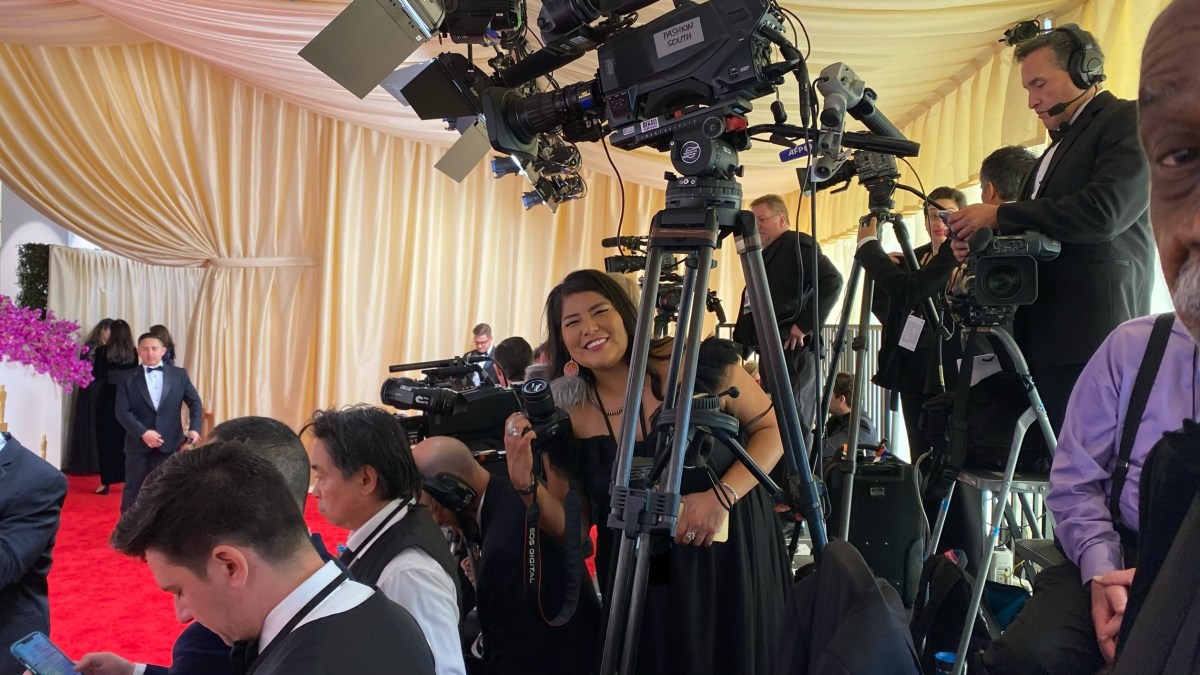
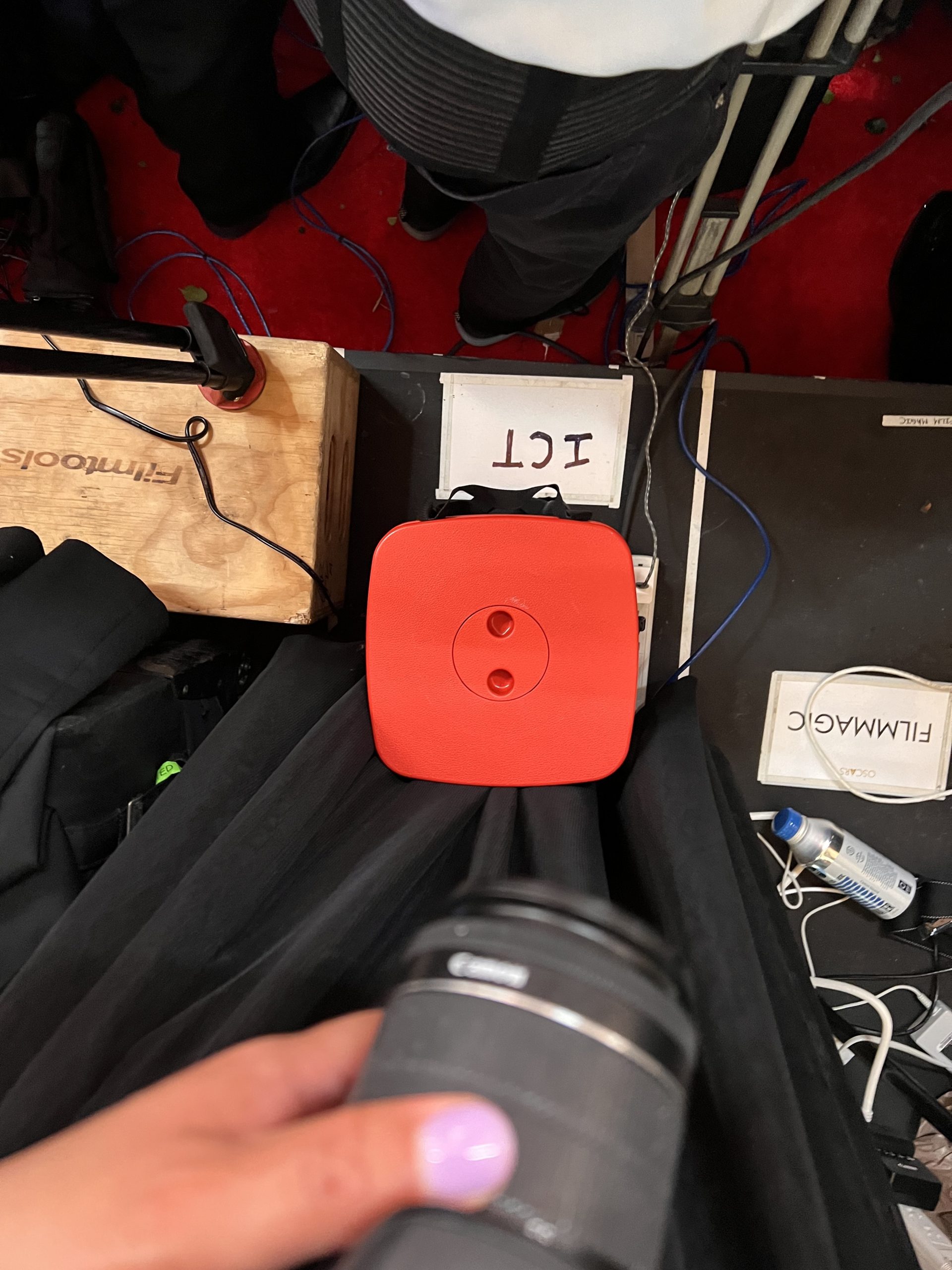
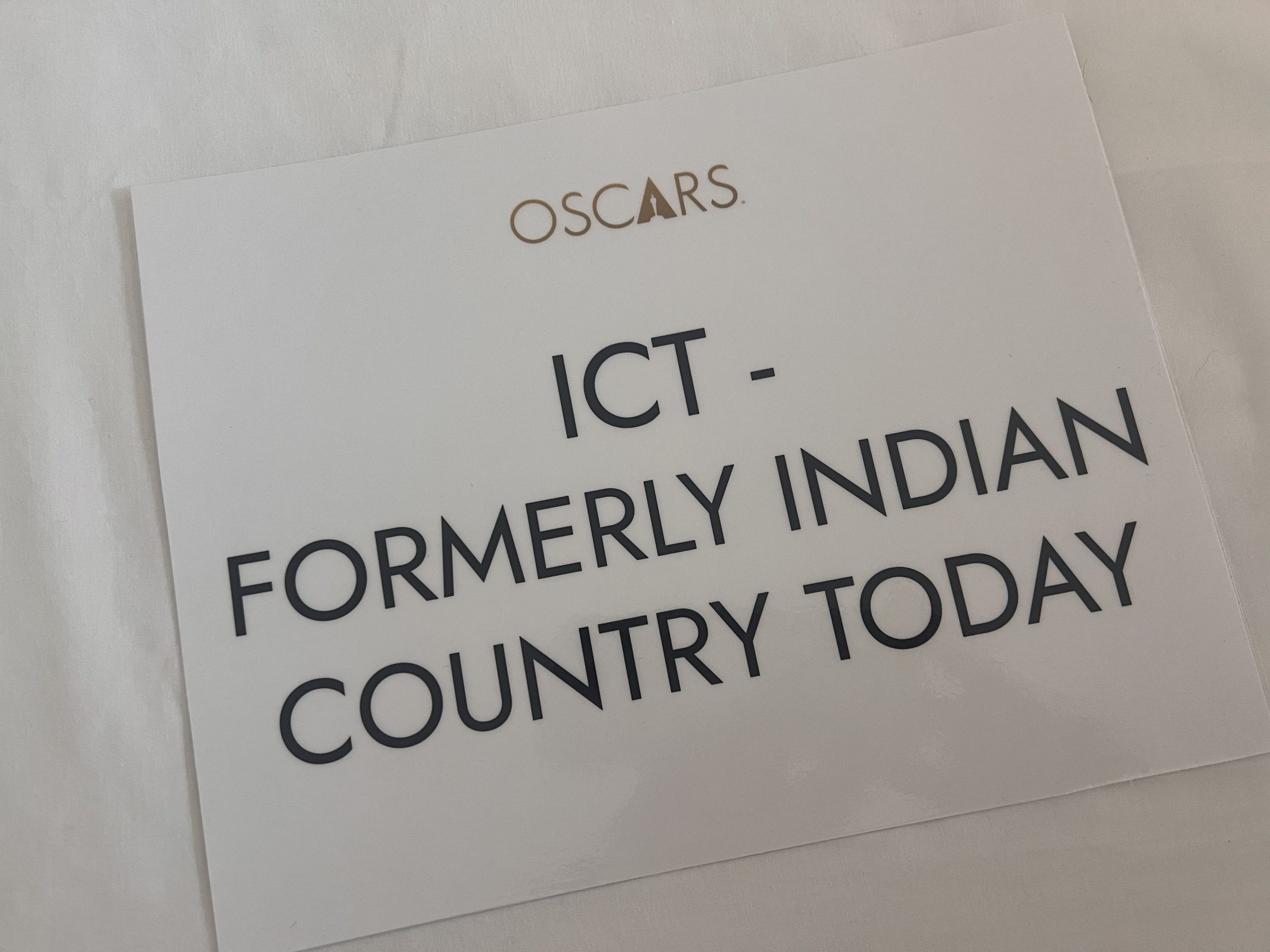
It was madness as noon got closer. The only thing I worried about was dropping off my stuff in our spot, which I had trouble finding. Luckily, I ran into Echo Reed, the Osage News photographer, and she told me where she was. I figured we had to be near her and we were! Phew. Maybe three spots over in an approximately 2-foot by 4-foot space outlined by thin white tape and labeled “ICT.”
A few surprises
The head of the Academy press escorted Echo and myself to our spots for the red carpet arrivals.
My head was spinning but this was also a chance for me to slow down with all the morning rushing.
I saw Echo setup so I yelled her name to grab a picture of her. I mean, why not? As the kids say, “No picture, it didn’t happen.” Haha. She did the same for me. A few minutes later, a couple of photographers passed her phone over to me to share my number so we could swap our photos.
How lucky we are to have each other for this experience? It was unreal.
Now this is where my experience took a left turn.


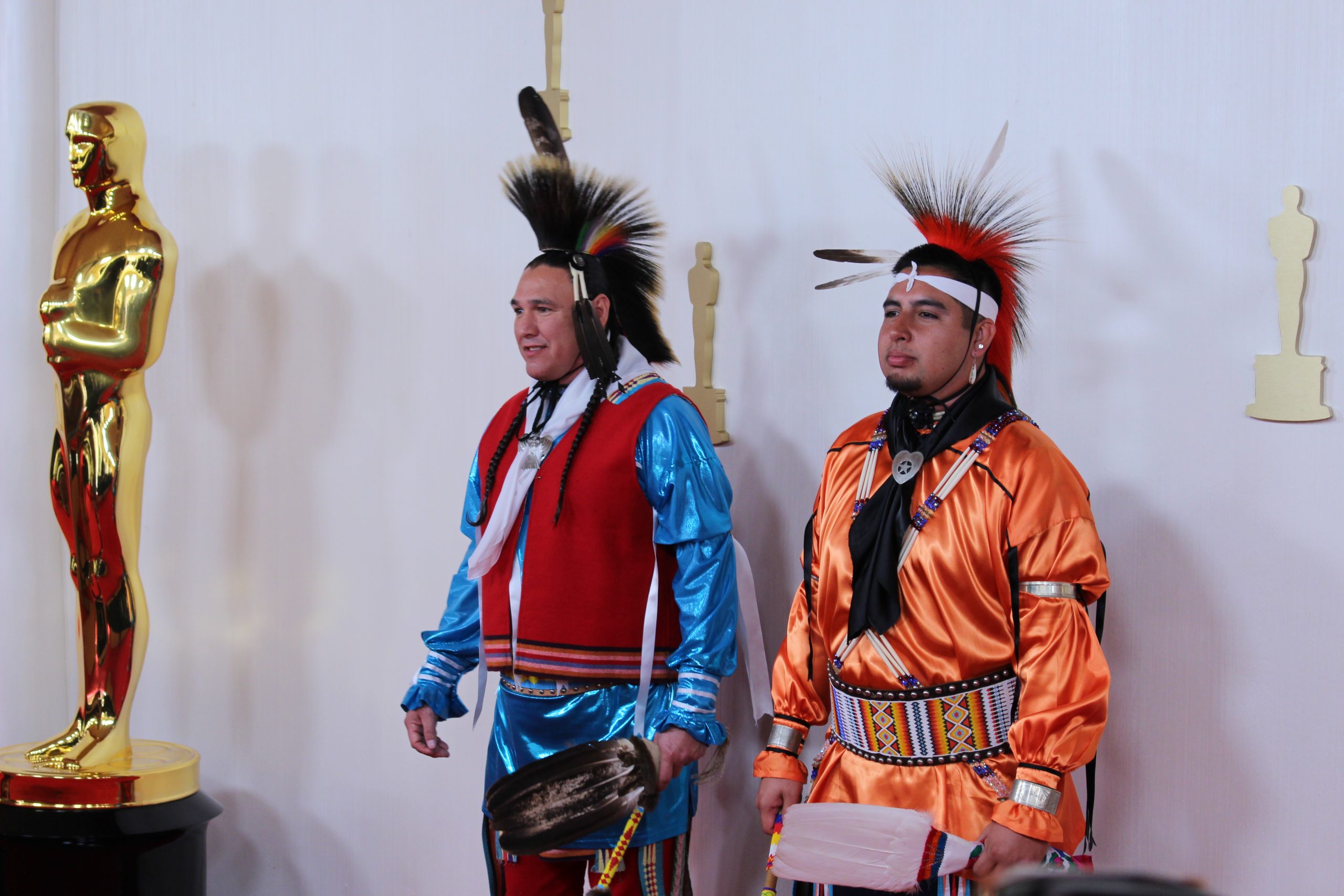
The Osage dancers started walking over to the photographers. As they made their way, the older, White photographer to my right said, “Oh look. Here come the Indians.” I cringed.
Of course, to elders this may not be a problem. But as a young person and like many other young Native people, I hate when “Indians” is used. It has a negative connotation. But the way he said it with a superior tone rubbed me the wrong way.
I thought, “Excuse me?!” Nothing came out of my mouth. I was shocked.
He followed up with, “I wonder if they can do a rain dance for us? We need it.” With a slight laugh following. I couldn’t believe it.
The dancers posed and flashes started going. I told myself, “Just get through this. Get these photos.”
Then to my left, I overheard the male videographer saying to a guy on his left, “Can we get them to dance for us?” He yelled, “Dance for us!” I immediately had enough of it and said, “No. You cannot do that. That is inappropriate.” He looked at me shocked. Who was this guy capturing video for? The Academy of Motion Picture Arts and Sciences, the very Academy itself. I knew because I saw in space labeled, “A.M.P.A.S,” the acronym. I etched it in my mind and looked it up right after. Again, I was shocked.
My skin felt hot to touch. Something felt stuck in my throat. My head focused and wow’d at the same time.
I’ve had so much practice controlling my temper (it’s the Aries in me) and talking myself down so I immediately shook it off. Plus diplomacy runs in my blood. I grew up in a border-town. So racial tensions were nothing new. But to experience it in a sea of men, more White men, in the crowd of photographers at a place where I always wanted to be was disheartening and disappointing. There were only three women in the photographer section I was at, and all of us were women of color. Echo and I were two of the three. And this photographer section included the big outlets like the Academy, Vogue, the wire, etc.
After cooling down, I made acquaintance with a couple photographers (not the ones with the gross comments). So it made the experience turn up.

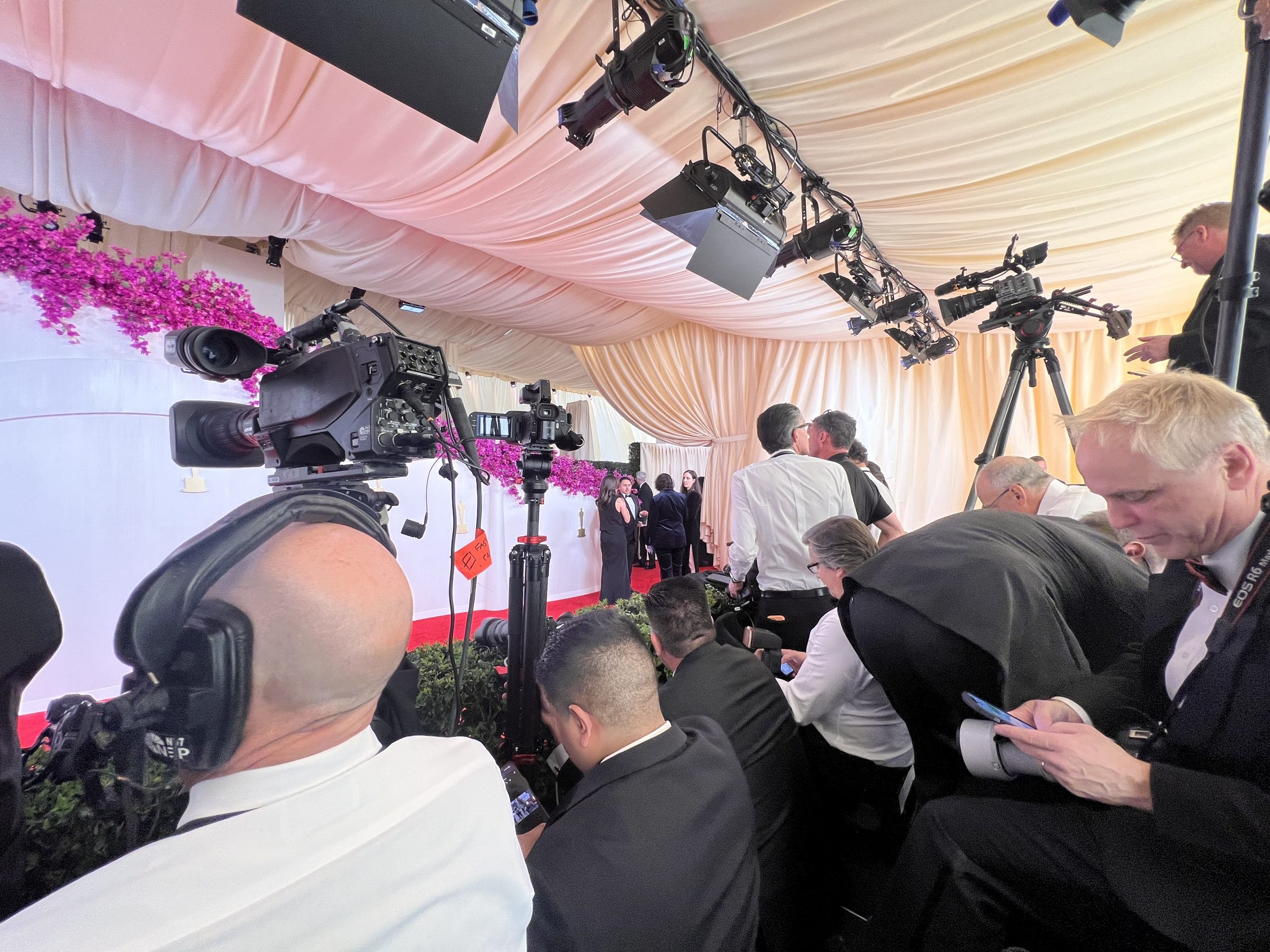
Now I’ve always wanted to be on the Red Carpet, or the sidelines of. I’ve watched award shows for the last 15 years for the fashion so you can only imagine my excitement and preparation. I had my phone in one hand and camera in the other.
Celebrities started showing up. First with Vanessa Hudgens and Mario Lopez, and then Gabrielle Union and Brandon Frazier, and so much more. When they’d show up, photographers would yell their names, telling them where to look. “Vanessa! To your left! To your right! Over the shoulder!” My favorite line: “One quick fashion!” Ryan Gosling knew what to do with that one. He posed by himself to show his watch. Zendaya rocked it with the cameras.
Tantoo Cardinal, Cree and Métis, was a queen on the carpet. This is another moment where I noticed Indigenous photographers made a difference in these spaces. No photographers knew her name and only caught on when Echo shouted, “Tantoo!”

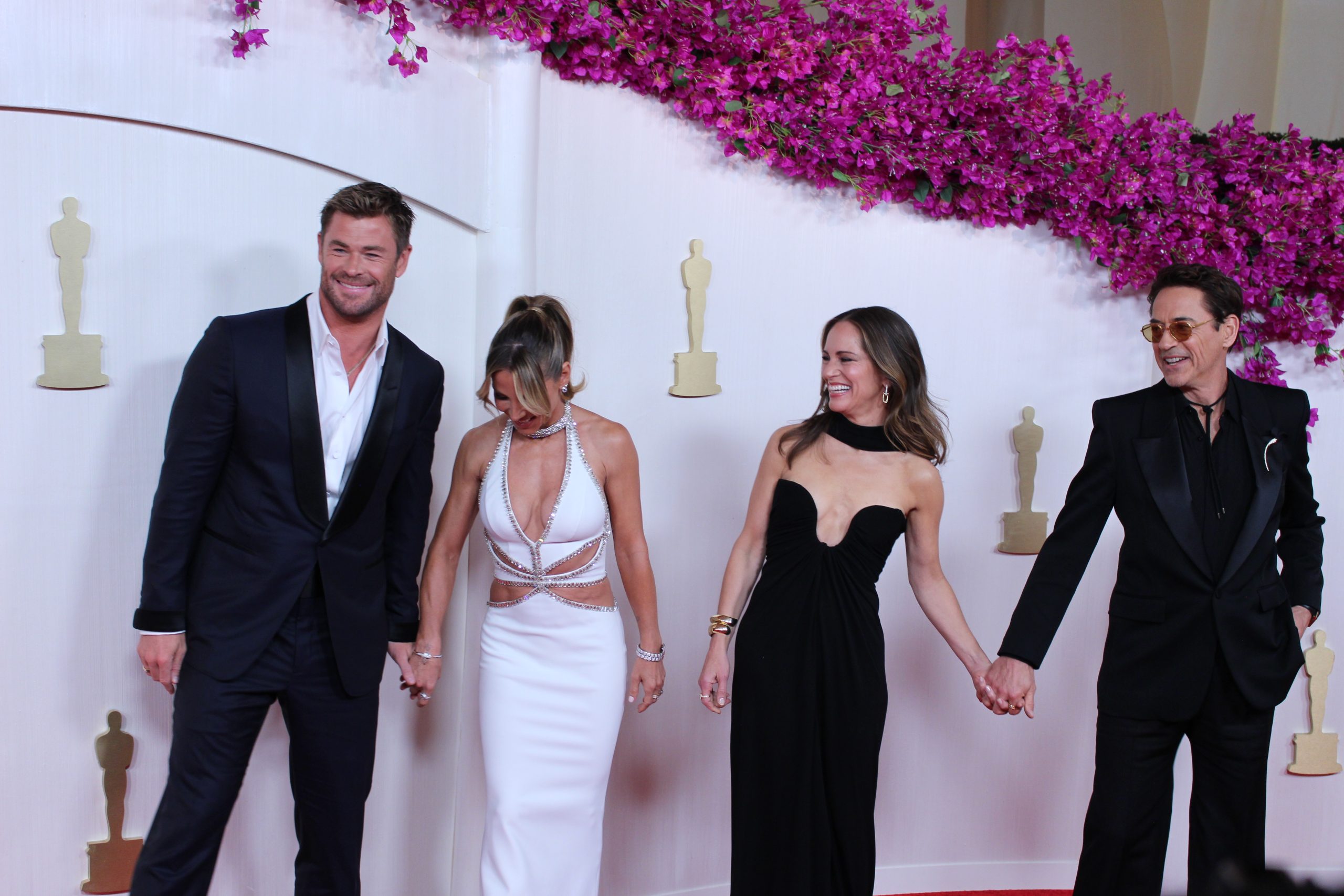
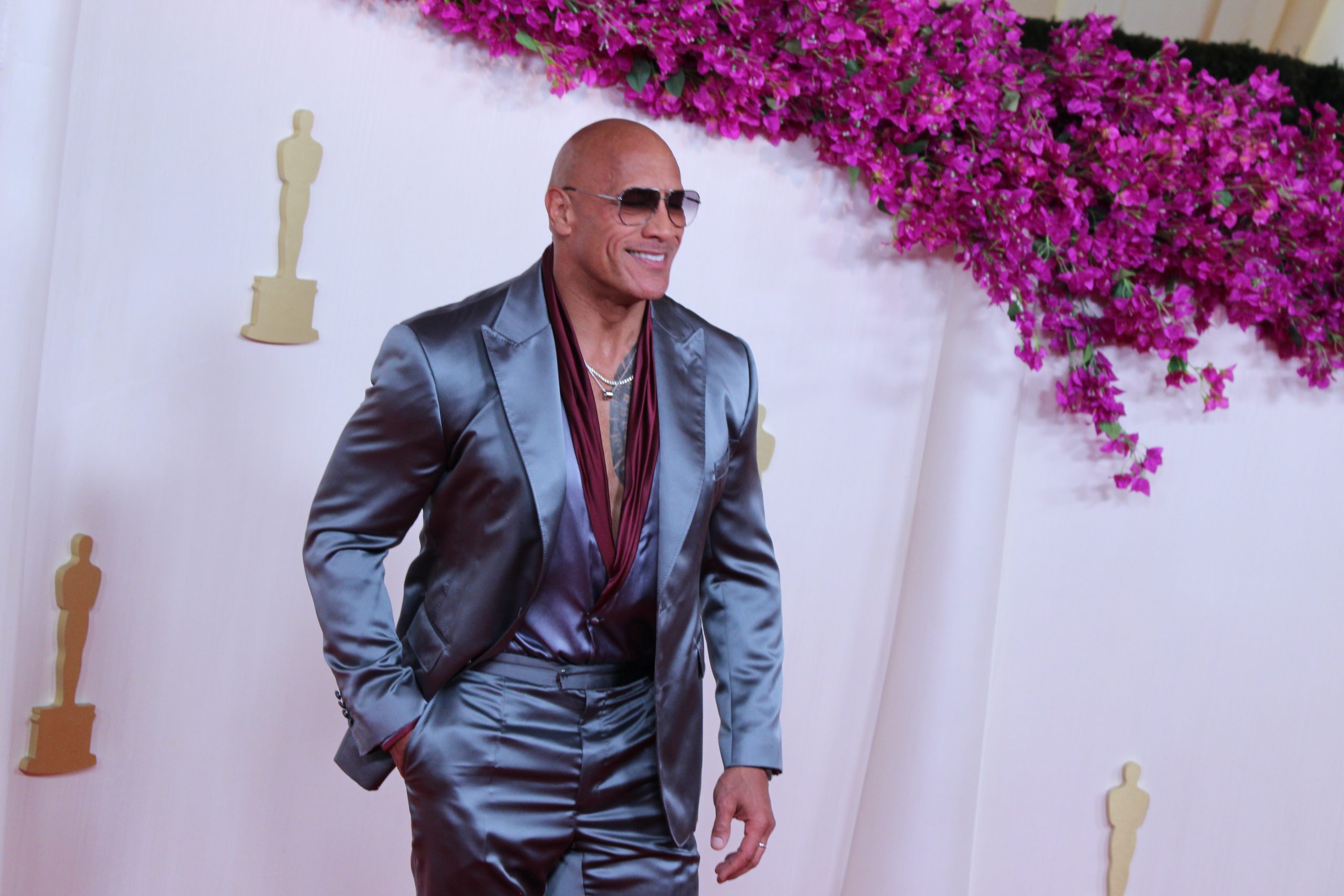
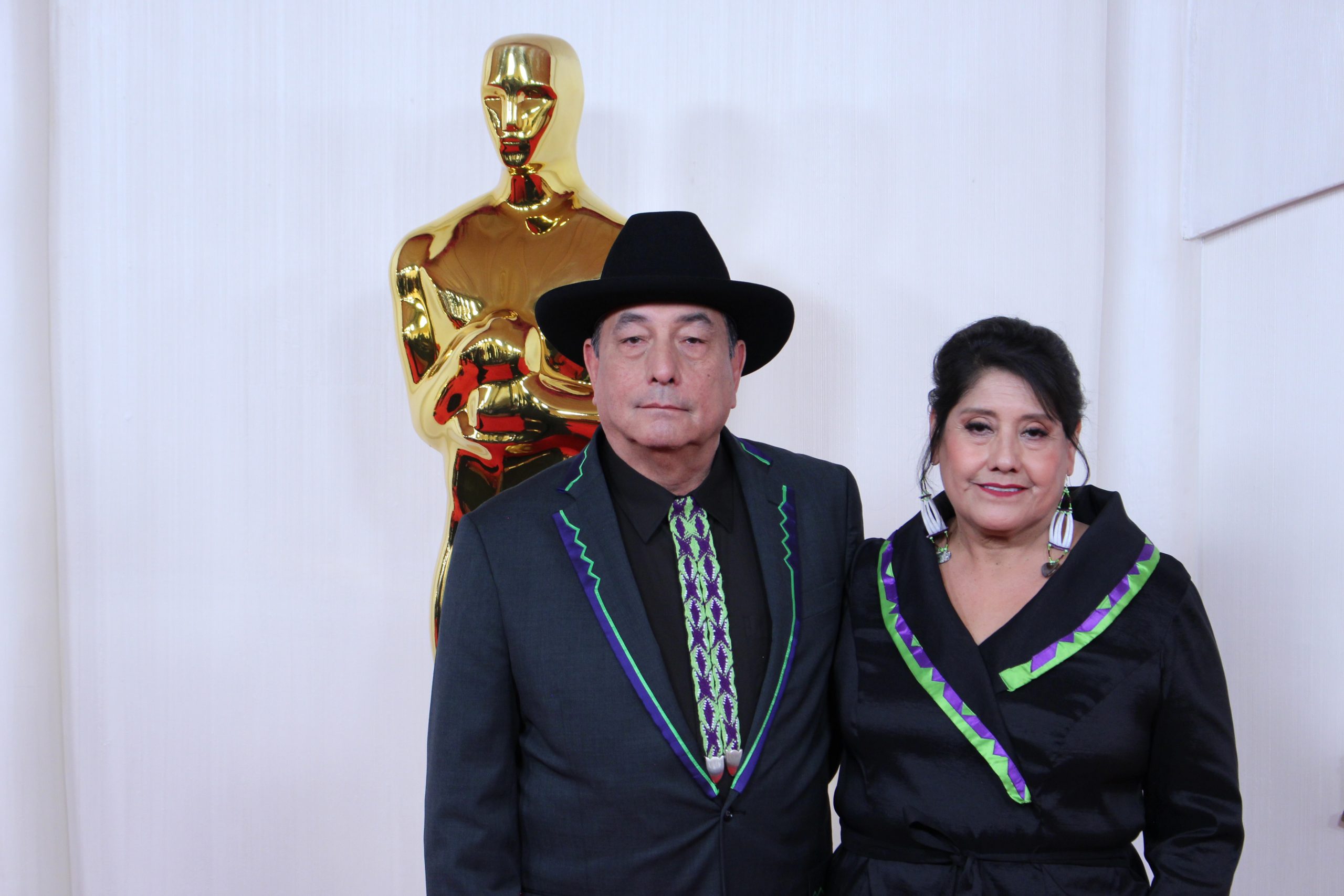
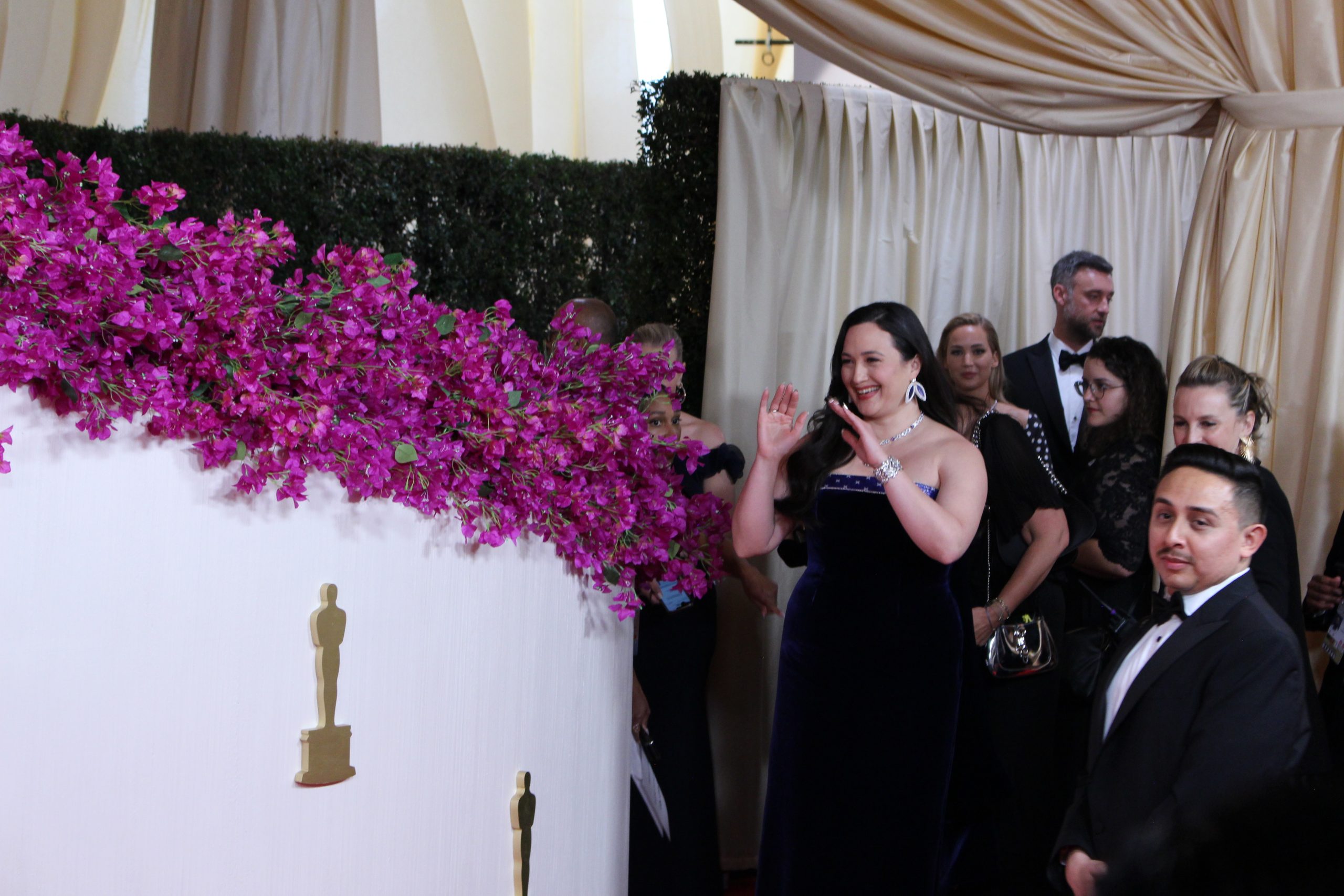
This part of the awards show was everything I imagined it would be. The starstruck feeling of seeing A-listers didn’t hit me until the following day. I’m a Marvels fan so I was awed when Chris Hemsworth and Robert Downey, Jr. showed up. One right after another. RDJ saw Chris and told photographers, “This was unplanned!” They hugged. I knew RDJ was like Iron Man but I believed it more when he interacted with us.
So many celebrities. There was a lull for a bit with the protests going on down the street and preventing limos from getting in. So we sat, drank some water and ate some snacks we brought ourselves. This was probably around 3:30 when the pre-show started.
Suddenly everyone started to come in the last 15 minutes.
I kept an eye on the entrance where celebrities waited. The Academy would direct talent which side of the Oscar partition to go to on the red carpet. From what I noticed our side had A-listers, Oscar presenters, and nominees.
Of course, I was only looking for Lily. So while I waited, I did snap some photos on my phone and camera for our archives (who knows?), our social media, and for my family, ha. I also kept the others updated via text in our group chat.
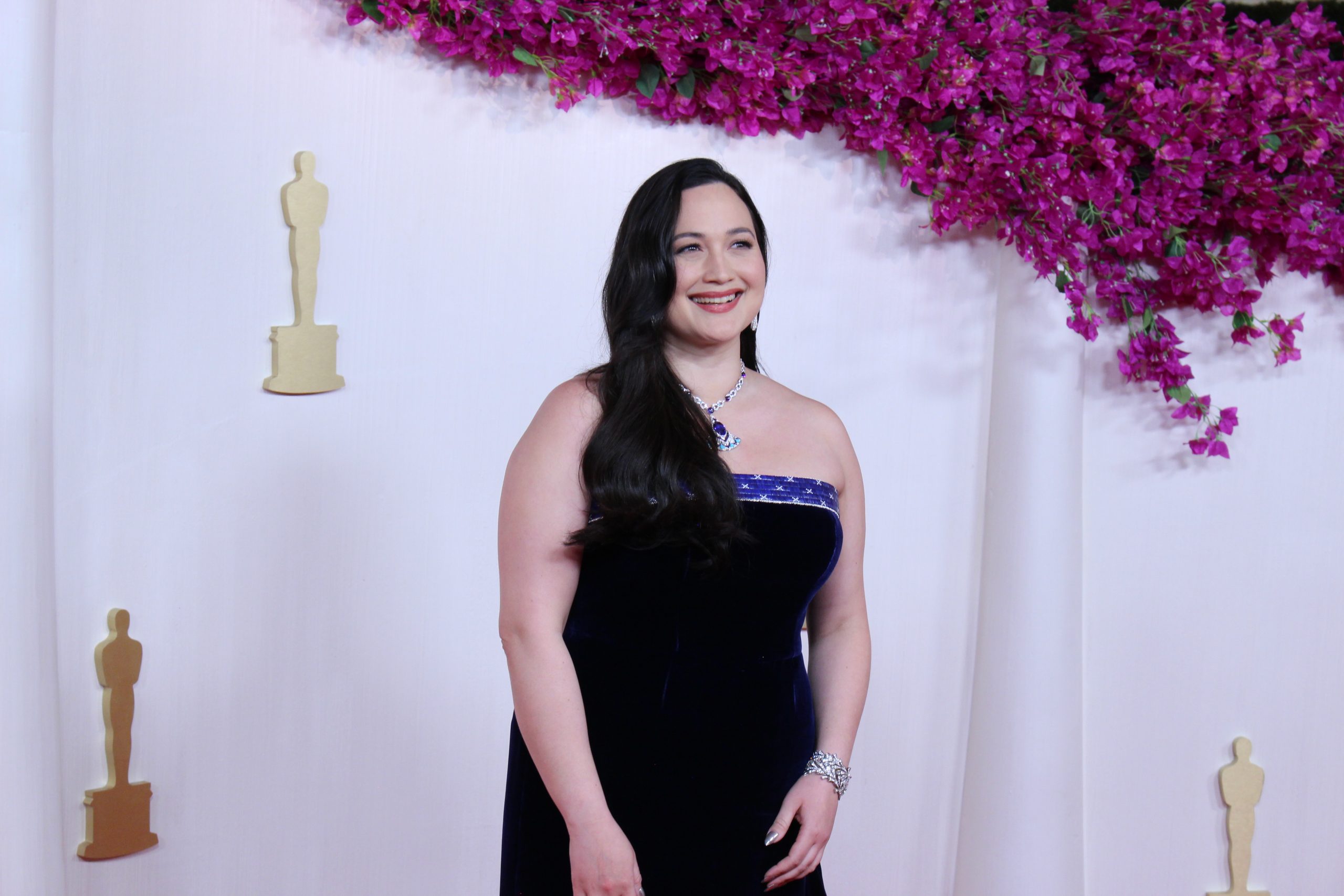
Lily appeared from behind the beige curtains. Her blue dress was so breath-taking.
“Lily! Lily! Lily!”
“Look left! To your right! Over the shoulder!”
ICT’s Newscast talked to the designer behind her dress here.
It happened too fast.
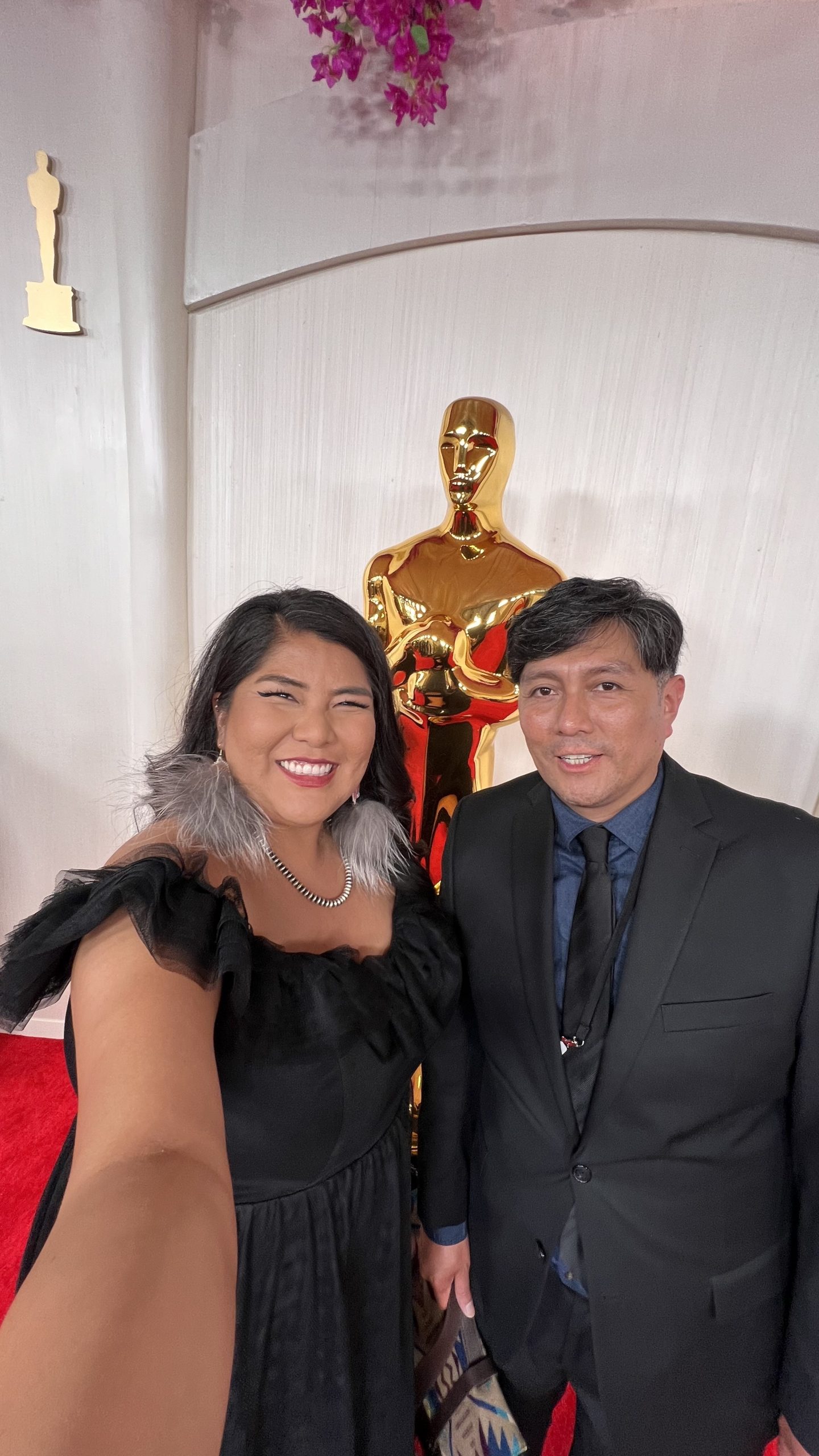
By show time, the Red Carpet closed. I spotted Osage News Reporter Benny Polacca and we snapped photos of each other with the Oscar statue in front of the partition, and then made our way to the interview room via the press route.
The Academy provided press food as they said they wanted us to enjoy the experience. I’m glad they did because Benny, Echo and myself were so hungry.
Then off we went to our assigned spots. Echo in the photo room where winners went to take photos after they got off stage. Benny and myself in the interview room.
Hoping for a win
I sat in the Academy’s interview room full of approximately 100 journalists representing 38 countries, New York Times to my left and Osage News across from me. A poetic visual of where ICT fits in the news landscape.
Headphones in my ears, listening to the show live while we looked at the dozens of screens hanging above us. One screen in the middle showed the names and categories to help us.
After or before the photo room, winners came to our room to be interviewed. The moderator would announce the winner’s name and their category. Arms holding numbers on a white paper would fly up like an auction, hoping to be one of the first to be called on to ask a question.
This room had tough rules. We couldn’t take photos or videos. The Academy provided a transcript to us via the Academy Portal online, which we had to register for ahead of time. Press could also ask questions virtually. If we had calls to talk, take them outside.
Fingers flew away at the keyboards while winners talked on stage. People whispered or continued to listen to the show during interviews. Everyone in tuxedos or floor-length gowns.
One by one we went through the program given to us, which also could change at any moment, but it was a guide.
Then the leading actress came up next.
“And the Oscar goes to…” read last year’s Oscar winner for Best Actress Michelle Yeoh. She closes the envelope with a smile. “Emma Stone.”
Loud gasps echoed in the interview room. Next to me the older, White male journalist said, “WHAT?!”
The air left my chest. I didn’t know what to say.
A few minutes later I looked at Benny and did the hashtag sign with my hands saying, “Oscars Still So White.”
The Black reporter next to him in a beautiful gown said, “The fact that everyone in this room was surprised.”
I immediately messaged our reporting and editing team, and then my sister. Collective sadness, disappointment, and shock.
I didn’t ask how Benny felt but I was extremely bummed that we weren’t going to be the first to ask Lily Gladstone, the first Native American woman to be nominated for Best Actress, questions of her win, of her journey, and so much more. The Academy gave priority to Osage News and ICT to be the first newsrooms to ask Lily questions if she won.
Emotions flooded social media.
I learned so much from this experience. To be brave. To take up space. To have fun. But also the lesson of “two things can be true at once” sunk in. We can be happy Lily made it this far in the game because she took us this far AND we can also be disappointed by the results. This world isn’t black and white. It’s extremely gray.
As I packed up and took the laminated card stock paper with our name on it, the experience began to hit me. It still does to this day. I just covered the 96th Academy Awards in-person. It was everything and more that I expected it to be.

You can help elevate meaningful stories from Indigenous nations when you support ICT during Arizona Gives Day! ICT is headquartered in Arizona, and covers the Indigenous world across North America. Help us reach our goal to raise $10,000 for reliable, compelling, Indigenous-led journalism in Arizona and beyond.
Our stories are worth telling. Our stories are worth sharing. Our stories are worth your support. Contribute $5 or $10 today to help ICT carry out its critical mission. Sign up for ICT’s free newsletter.