
Greetings, relatives.
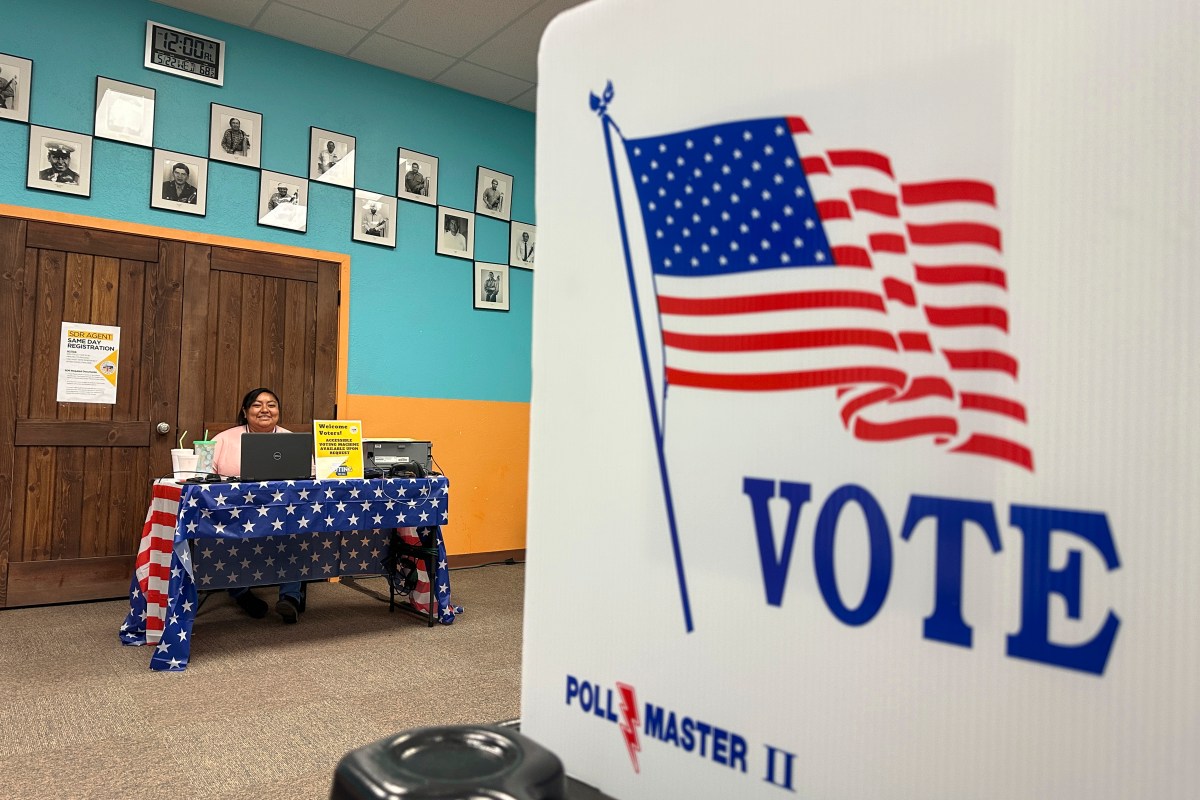
A lot of news out there. And election day is around the corner.
We gathered the election stories that we’ve been reporting on all year so you can head to the polls informed. Find all of our #NativeVote24 coverage on the “Election 2024” vertical of our website if you want more.
Also, if you like our daily digest, sign up for The Weekly, our newsletter emailed to you on Thursdays. If you like what we do and want us to keep going, support and donate here.
Don’t forget, tune-in to ICT’s live Election Night coverage on Nov. 5 from 6 p.m. to 9 p.m. PT!

Okay, here’s what you need to know today:
Abortion on the ballot in 10 states
Measures to expand access to abortion are on the Nov. 5 ballot in 10 states, with one state – Nebraska – offering dueling measures that would also give voters an option to further restrict abortions.
The initiatives – in Arizona, Colorado, Florida, Maryland, Missouri, Montana, Nevada, South Dakota, Nebraska and New York – would largely incorporate a woman’s right to access abortion into state constitutions.
The most sweeping initiative, Proposition 1, the Equal Rights Amendment, in New York, would include constitutional protections not only for abortion but also for birth control and IVF, and protections against discrimination on the basis of ethnicity, national origin, age, disability, sexual orientation, gender identity.
Even if access to abortion is approved across the 10 states, however, Native women will still face barriers to abortion access because of restrictions on federal health funding and failure to acknowledge tribal sovereignty in the wake of the U.S. Supreme Court’s Dobbs decision granting states authority to restrict abortions. READ MORE — Mary Annette Pember, ICT
Native Vote 2024: Marijuana measures could impact tribal businesses
Four states have marijuana-legalization measures on the Nov. 5 ballot that could influence current and future plans for tribal cannabis and marijuana businesses.
Ballot measures in Florida, North Dakota and South Dakota — all of which already allow medical marijuana — would legalize recreational marijuana for personal use. Two proposals in Nebraska, which has no legal marijuana use, would open the door for medical marijuana.
The measures could drive up interest among tribes to develop marijuana enterprises or expand cannabis operations, but they also could cut back on customers for the existing enterprises if competition developed. READ MORE — Mary Annette Pember, ICT
Native organizations endorse Oregon ballot Measure 117
If passed by Oregon voters in November, ballot Measure 117 would enact major changes to the statewide election system with ranked-choice voting. Native-led organizations endorsing the measure believe it has the potential to boost Native representation in elected office.
The new system would give voters the ability to rank candidates in order of preference for federal and state primary and general elections, including for president; U.S. senator and representative; governor; secretary of state; state treasurer; state attorney general; and commissioner of the Bureau of Labor and Industries. The measure would not affect state legislative elections.
Voters could still opt to just choose one candidate and not rank others.
Portland is using ranked-choice voting for the first time this year for city elections, including mayor and city council. READ MORE — Nika Bartoo-Smith, Underscore Native News + ICT
Climate change law is on Washington’s ballot
Climate change is literally on the ballot in Washington state.
Two years ago legislators in the state of Washington passed the Climate Commitment Act, a cap-and-invest system that charges oil refiners and utilities a fee for every metric ton of pollution. The investment part of the law is a $1.3 billion fund for community climate projects, including 10 percent directed toward tribal nations.
Some called the program innovative. Others dismissed it as a sneaky tax on consumers for gas and other fossil fuels.
The most sweeping initiative, Proposition 1, the Equal Rights Amendment, in New York, would include constitutional protections not only for abortion but also for birth control and IVF, and protections against discrimination on the basis of ethnicity, national origin, age, disability, sexual orientation, gender identity. READ MORE — Mark Trahant and Stewart Huntington, ICT
SUPPORT INDIGENOUS JOURNALISM. CONTRIBUTE TODAY
#NativeVote24: 9 Indigenous candidates running for Congress
WASHINGTON — Nine Indigenous political candidates are running for seats in the U.S. House of Representatives in the 2024 election cycle.
All candidates will be on the ballot in the Nov. 5 general election, including four incumbents — Josh Brecheen, Tom Cole, Sharice Davids and Mary Peltola. Former Navajo Nation President Jonathan Nez is also running in a tight race to be the first Native American person to represent Arizona in Congress.
READ ABOUT THE CANDIDATES HERE
All eyes on Jonathan Nez in Arizona
With 14 of the 22 Arizona tribes located in this hotly contested region, the Native vote may be the tipping point for former Navajo Nation President Jonathan Nez to win the election bid next week for the U.S. House of Representatives. He is up against Republican incumbent Eli Crane.
District 2 makes up 60 percent of the land in Arizona. Redistricting in 2020 changed it to a largely red voter base.
Jordan James Harvill, the program director for Advance Native Political Leadership, says it will be an uphill battle, but with hard work to get out the Native vote, Nez may find victory.
“There’s 129,000 unregistered Native voters or unregistered voters in the district. A large section of that is Native voters,” Harvill, Cherokee and Choctaw, said in a Sept. 27 interview. READ MORE — Shirley Sneve, ICT
Alaska Native makes first bid for public office
Brandon Kowalski hadn’t given much thought to holding political office until he got an unforeseen phone call from a former Alaska politician urging him to run for the Alaska House of Representatives.
The call from former Democratic state Rep. Grier Hopkins convinced him to run with three primary objectives: securing funding for schools, emphasizing subsistence lifeways, and fostering workforce development.
It was an important moment for Kowalski, Iñupiaq from Kotzebue traditionally known as Qikiktagruk.
“[I was] honored and kind of just humbled to be thought of and asked to step up into a leadership position like that,” he told ICT. “This is an opportunity to get more Native representation.” READ MORE — Shondiin Mayo, ICT
Harris-Walz campaign hits the ground running in Arizona
GILA RIVER INDIAN COMMUNITY — In a meeting with more than a dozen tribal leaders in the battleground state of Arizona, Democratic vice presidential nominee Tim Walz vowed that a Kamala Harris administration would keep a seat at the table for tribal nations in Washington, D.C.
In a unifying message that touched on the importance of the Native vote, he said the Harris-Walz campaign would build on the gains made by tribal nations over the last four years.
“We are not going back to the way it was,” Walz said, hitting a common theme in the Democratic campaign against former Republican President Donald Trump and his vice presidential nominee, JD Vance.
“I feel it across the Indian Country that people know this is an opportunity to keep this momentum going forward,” he said. “This is an opportunity that many of us have waited lifetimes for, to finally see that we’re seeing sovereignty as absolute truth.” READ MORE — Daniel Herrera Carbajal, ICT
Could we have the first Native American woman governor?
If Kamala Harris and Tim Walz win the presidential election and are inaugurated in January, the role of governor will fall to Lt. Gov. Peggy Flanagan. Flanagan, a citizen of the White Earth Nation, was first elected with Walz in 2018, becoming the first Native woman in the Lower 48 to serve as a state’s lieutenant governor. Valerie Davidson, Yup’ik, briefly served as Alaska’s lieutenant governor in 2018. READ MORE — Kadin Mills, ICT
Sign up here to get ICT’s newsletter
A presidential apology ahead of the election
For the Nov. 1 ICT Newscast, reaction from last week’s presidential apology for the federal government’s American Indian and Alaska Native boarding school assimilation policies.
Election countdown
On the Oct. 25 edition of the ICT Newscast, the general election is less than two weeks away. There are more than 200 Indigenous candidates running for office. Meet some Indigenous students who are making a difference
- And ICT’s endorsement goes to …
- What do Indigenous voters want in the 2024 election?
- Wisconsin, Michigan Native voters could decide election
- Felony disenfranchisement of Indigenous voters
We want your tips, but we also want your feedback. What should we be covering that we’re not? What are we getting wrong? Please let us know.

Our stories are worth telling. Our stories are worth sharing. Our stories are worth your support. Contribute $5 or $10 today to help ICT carry out its critical mission. Sign up for ICT’s free newsletter.
