
Greetings, relatives.
A lot of news out there. Thanks for stopping by ICT’s digital platform.
Each day we do our best to gather the latest news for you. Remember to scroll to the bottom to see what’s popping out to us on social media and what we’re reading.
Also, if you like our daily digest, sign up for The Weekly, our newsletter emailed to you on Thursdays. If you like what we do and want us to keep going, support and donate here.
Okay, here’s what you need to know today:
The Bad River Ojibwe people have defended their homelands against generations of threats to the environment and their way of life.
From the 19th century onward, when timber barons first set sights on the enormous stands of white pine in the region and government leaders sought to remove them from their vast land holdings, Ojibwe people have stood fast with their ancestors’ vision of a reciprocal relationship with the earth.
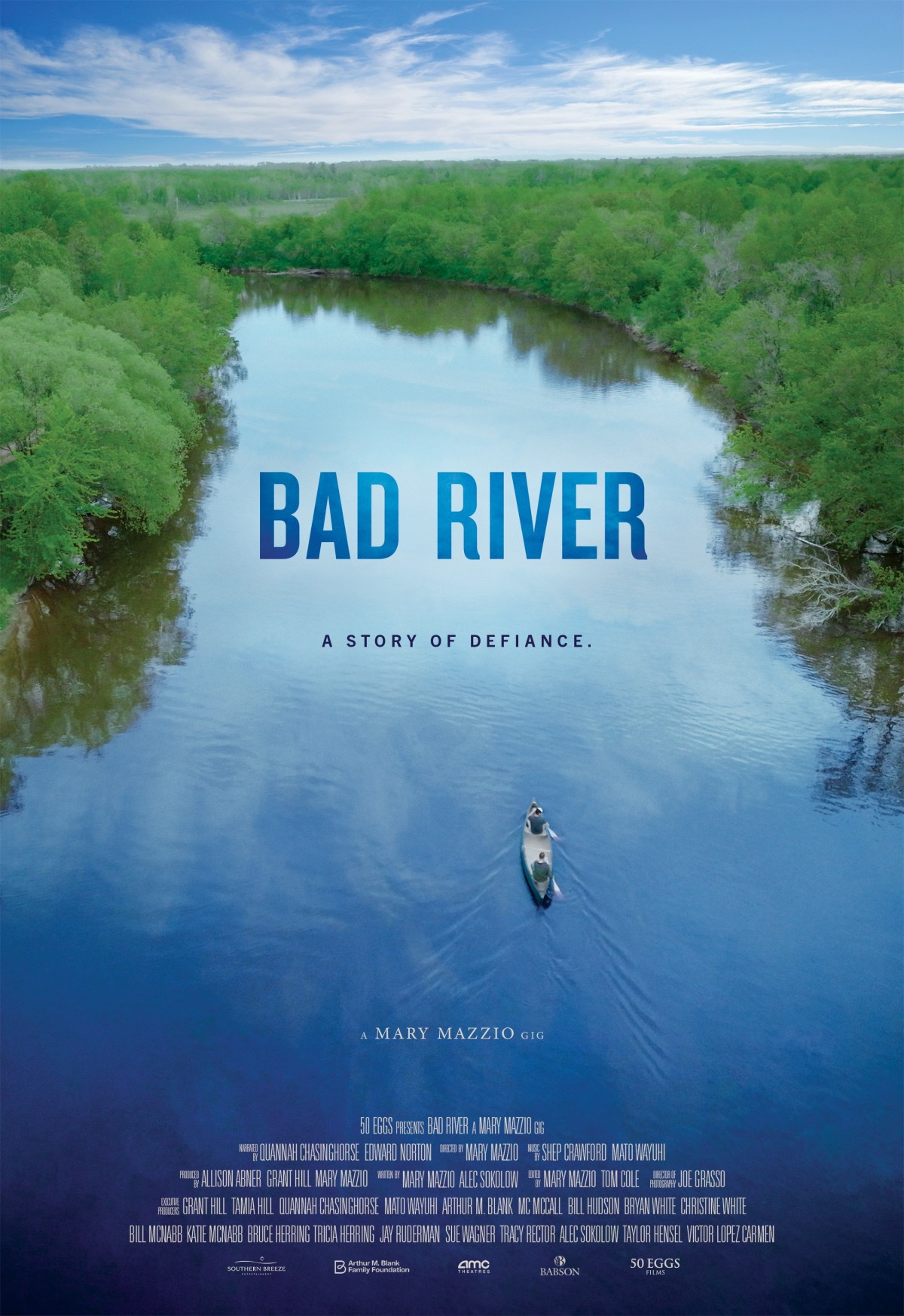
Now a new documentary film, “Bad River: A Story of Defiance,” tells the story of how resistance has shaped this small tribe, the Bad River Band of Lake Superior Chippewa, in northern Wisconsin.
The film sets out to tell the story of Bad River’s commitment to defending its homelands against the Enbridge company’s construction plans for an oil pipeline, but it also portrays a universal story of the history of Indigenous nations in the U.S. and the tribe’s generational battles to protect it lands and ways of life.
“Indian nations are in a constant state of siege,” Martin Seneca, a citizen of the Seneca Nation and a former director of trust responsibility for the Bureau of Indian Affairs, says in the film. READ MORE. — Mary Annette Pember, ICT
SUPPORT INDIGENOUS JOURNALISM. CONTRIBUTE TODAY.
Beyond acknowledging the existence of a land-grant university dwelling on historically Indigenous lands, institutions of higher learning seemingly fall short of historical teachings on the subject.
But that doesn’t mean they’re not trying to improve.
A handful of Indigenous students and recent college graduates ICT interviewed expressed frustration with the general lack of knowledge among peers and course curriculum about tribal lands upon which public institutions sit and prosper.
South Dakota State University in Brookings may be considered a case study in typical regional land acknowledgments, while balancing solid programs offered to students. At least nine tribes are represented at the institution.
Indigenous student leader Oakley Jandreau, a senior and a prestigious four-year Wokini Scholar, hails from the Lower Brule Sioux Tribe, or Khulwíčhaša, in South Dakota. From her perspective, hanging out with Indigenous peers makes all the difference.
“Being a Wokini Scholar really enforced community ever since I’ve been here,” she said. “And making sure that all of us Native students had not only a place at the American Indian Student Center to collaborate and be together. We have monthly meetings and we get to see everyone. I think now there’s over a hundred of us. So there’s quite a few of us around campus, which is really nice.”
The scholarship is part of the Wokini Initiative, which SDSU launched in 2016 to ensure land-grant revenue would be more sustainable, on top of grants to support student success. The initiative received more than $600,000 from land-grant revenue to develop Wokini.
But the initiative goes beyond a simple land acknowledgment, outreach, tribal collaboration and striving for academic success. It also explicitly advocates pro-actively embracing land revenue earmarks for such programs, plus leveraging revenue from a portfolio of other gifts and grants to SDSU — specifically to improve American Indian opportunities that support the university’s land-grant mission of access to higher education. READ MORE. — Renata Birkenbuel, ICT
Editor’s note: This story will be updated throughout the week of the Oscars. If you have Oscars-related photos or stories to share, please send those items to Kevin Abourezk, deputy managing editor for ICT, at kevin@ictnews.org.
Across the country, Native people are bracing for what is likely to be a tense night Sunday at the Oscars, while expressing love and support for Oscar-nominated Lily Gladstone.
IllumiNative shared a video Thursday on X from a first-grade classroom in a Blackfeet immersion school in which children told Gladstone to “try hard” and said “You are powerful Lily” in their traditional Blackfeet language.
“I don’t think folks outside of Indian country can really appreciate what Lily Gladstone’s nomination for Best Actress in the Oscars means to us,” said Jim Gray, former Osage chairman, Thursday on X. READ MORE UPDATES.
Sign up here to get ICT’s newsletter
SANTA ANA, Calif. — The seven U.S. states that draw water from the Colorado River basin are suggesting new ways to determine how the increasingly scarce resource is divvied up when the river can’t provide what it historically promised.
The Upper Basin and the Lower Basin states, as neighbors, don’t agree on the approach.
Under a proposal released Wednesday by Arizona, California and Nevada, the water level at Lake Mead — one of the two largest of the Colorado River reservoirs — no longer would determine the extent of water cuts like it currently does. The three Lower Basin states also want what they say is a more equitable way of distributing cuts that would be a 50-50 split between the basins once a threshold is hit.
“This is not a problem that is caused by one sector, by one state, by one basin. It is a basin-wide problem, and it requires a basin-wide solution,” John Entsminger, general manager of the Southern Nevada Water Authority, told reporters Wednesday.
The Upper Basin states of Wyoming, Colorado, New Mexico and Utah submitted their own proposal Tuesday to the U.S. Bureau of Reclamation. It includes addressing water shortages based on the combined capacity of Lake Mead and Lake Powell upstream, instead of the more expansive reservoir system suggested by the Lower Basin. The shortages would trigger various levels of cuts for the Lower Basin.
The Upper Basin proposal also shifts the timing of announcements for any reductions from August predictions for the following January to actual conditions on Oct. 1, the start of the water year. Lower Basin water users typically put in orders for water in mid-October.
The disagreement between the basins isn’t new. Reaching a consensus among the states around managing water has never been easy, but it is the ultimate goal. READ MORE. — Associated Press
- Lessons from Indigenous women who lead their nations: Five Indigenous women are heads of state and who share stories about sustainability and culture
- Will State of the Union address mention Native people?: Native educator, elected leader, advocate and others among invited guests to Joe Biden’s third address
- First Gathering of Native Weavers of Oregon: At a conference on the Oregon Coast hosted by the Portland All Nations Canoe Family, traditional weavers of all ages and skill levels shared stories and knowledge, stitch by stitch
- New Native American Health Alliance to Address Physician Shortages in Tribal Communities
- Despite delays from ‘Canada,’ Sts’ailes is taking back control over its own child welfare
- ‘I yearn for the girl I used to be’: Gaza women tell their stories
We want your tips, but we also want your feedback. What should we be covering that we’re not? What are we getting wrong? Please let us know. dalton@ictnews.org.

