Lios enchim aniavu. Greetings, relatives.
A lot of news out there. Thanks for stopping by ICT’s digital platform.
Each day we do our best to gather the latest news for you. Remember to scroll to the bottom to see what’s popping out to us on social media and what we’re reading.
Also, if you like our daily digest, sign up for The Weekly, our newsletter emailed to you on Thursdays. If you like what we do and want us to keep going, support and donate here.
Okay, here’s what you need to know today:
WARNING: This story includes disturbing details about boarding schools. If you are feeling triggered, here is a resource list for trauma responses from the National Native American Boarding School Healing Coalition in the U.S. The National Indian Residential School Crisis Hotline in Canada can be reached at 1-866-925-4419.
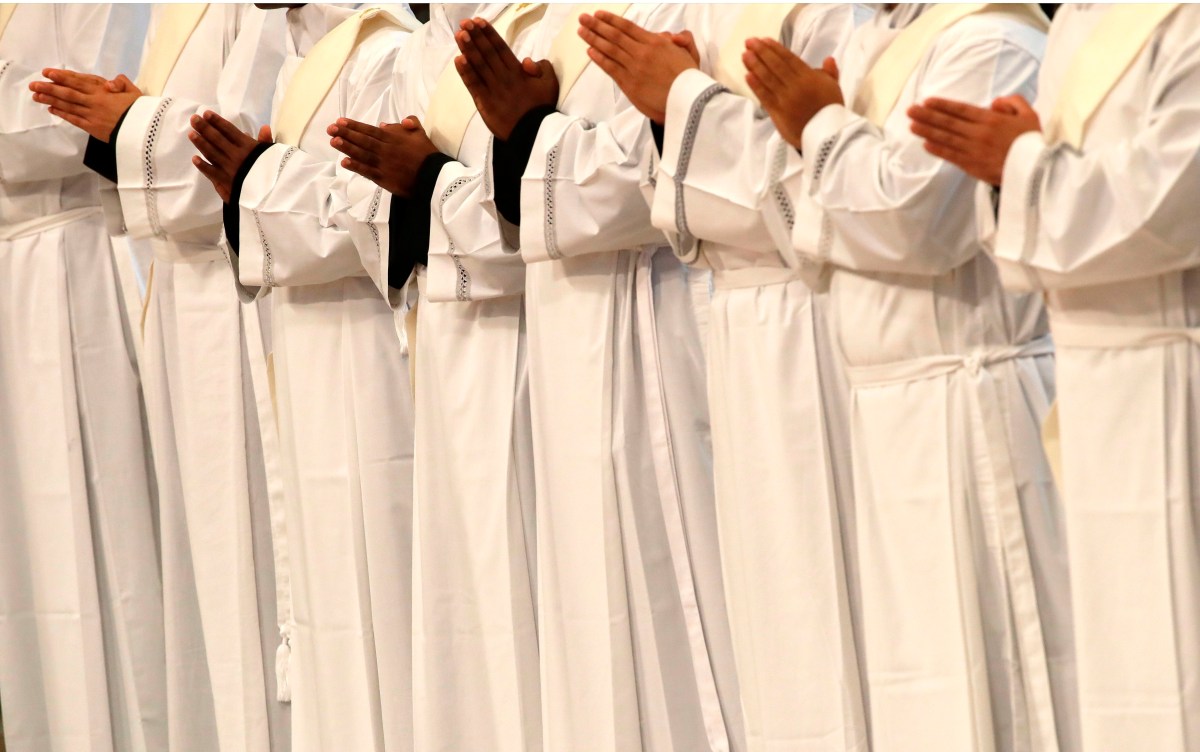
Nearly half the Jesuit priests or brothers found to be credibly accused of sexual abuse in a 10-state region in the western United States spent time working in Indian schools and missions, according to a new database drawn from Catholic data on abuse.
The new database allows users to track how priests moved within the church and supports allegations that the church used rural tribal communities as dumping grounds for “problem priests,” according to researchers Kathleen Holscher and Jack Downey, who compiled the data.
“It helps us visualize these clusters of abuse,” said Holscher, an associate professor of religious studies and American studies at the University of New Mexico. “We created a database that let us track how each priest moved over the course of his career.” READ MORE – Mary Annette Pember, ICT
SUPPORT INDIGENOUS JOURNALISM. CONTRIBUTE TODAY.
Eleven tribes gathered in Tucson, Arizona at the Casino Del Sol to discuss issues with, what many called, “imaginary border lines.”
At the second annual summit, representatives from the Department of Homeland Security announced the development of a new Tribal Advisory Committee, which was created to address many of the common issues tribes have while moving across tribal lands.
“We really value the input that we receive from communities, from individuals, from companies. It leads to more effective and efficient policy and policy making,” Deputy Assistant Secretary Brenda Abdelall said.
Although each tribe is distinctly different, tribal leaders shared stories with common themes: Indigenous people traveling across their homelands have been harassed and detained for simply being Indigenous on their lands.
“We actually flew out to the [Tohono O’odham] nation to have a consultation, to listen to Chairman Norris’s concerns,” Deputy Assistant Secretary Miriam Enriquez said. “We do care and we are genuine.”
On the northern and southern borders mobility issues started for tribal members after 9/11.
Many feel discriminated against and dehumanized.
Traditional O’odham Leaders Gov. Verlon Jose says they’re made to feel like foreigners on their own land.
They discussed the Jay Treaty, which initially outlined tribal sovereignty and the rights of tribal citizens to move freely across the border, on their tribal lands.
The Tribal Border Crossing Parity Act looks to restore the principles of that treaty.
On the final day of the summit they talked strategically about how to move forward, with one idea standing out among the rest – the possibility of creating a new, Indigenous visa category. – Carina Dominguez, ICT
The funeral requiem mass for Sacheen Littlefeather, Apache and Yaqui, is being held Friday at 1 p.m. PST in California
The building’s capacity can only accommodate 400 people and it’s expected that an overflow of people will take over the standing room.
A dinner reception will follow mass at St. Rita’s Parish Hall, catered by Crystal Wahpepah, Kickapoo.
Seating capacity for the dinner is 170 but there will be enough food for 300 people.
Everyone is encouraged to wear purple, Littlefeather’s favorite color.
In lieu of flowers Littlefeather requested donations be made to the American Indian Child Resource Center – located at 522 Grand Ave Oakland, CA 94610.
Condolences, stories and photos can be sent via email to SacheenMemorial@gmail.com
A live streamwill be available. Read Littlefeather’s obit for more on her life and activism.
When Juan Mancias was a child, his grandmother told him the story her parents told her, of the place at the Great River’s end. All good things ended up there, she said, carried from the high deserts across 1,000 miles to the sea, where they spilled across a vast delta, teeming with life.
There, Mancias’ grandmother told him, the first woman was born from all the good things that washed down the river. And there, more than 60 years later, developers now want to build two export terminals, one priced at over $15 billion, to sell fracked Texas gas on international markets. READ MORE – Inside Climate News
Sign up here to get ICT’s newsletter
On the Thursday edition of the ICT Newscast, a new series highlights the natural beauty of the Great Lakes. A Potawatomi biologist is one of this year’s MacArthur Fellows and the midterm elections are right around the corner.
Tribal nations have rich cultures and traditions that benefit their people, but they also have their own governments working to help their communities.
“The real strength and power of Indian Country is within our own nations,” said Fawn Sharp, the president of the National Congress of American Indians, a non-profit organization that advocates for policies that serve tribal governments and their communities. “Tribal nations are strongest when we are unified and create our own bright path forward together.” READ MORE– Arizona Mirror
FOLLOW ICT ON SOCIAL MEDIA: FACEBOOK, TWITTER, INSTAGRAM, TIKTOK.
- Nicole Mann: Continuing the legacy of carrying hopes, dreams: ‘I felt very proud to be on board at the space station and certainly to represent Native Americans and Indigenous people on board’.
- University of Kansas returning Native remains: The university is verifying its inventory of Indigenous artifacts it holds across campus.
- Justice: Hotel sued for denying rooms to Native Americans: According to the Census Bureau, at least 11 percent of Rapid City residents identify as American Indian or Alaska Native. The city has long seen racial tensions.
- The University of Oregon will cover tuition and fees for in-state Indigenous studentsfrom any federally recognized tribe
- Oyster shells are helping to save Native Americanhistoric sites in Terrebonne Parish
- ‘There’s more to life beyond the reservation’ – Native American teen Bryson Butterfly making mark as jockey
We want your tips, but we also want your feedback. What should we be covering that we’re not? What are we getting wrong? Please let us know. dalton@ictnews.org.