
Greetings, relatives.
A lot of news out there. Thanks for stopping by ICT’s digital platform.
Each day we do our best to gather the latest news for you. Remember to scroll to the bottom to see what’s popping out to us on social media and what we’re reading.
Also, if you like our daily digest, sign up for The Weekly, our newsletter emailed to you on Thursdays. If you like what we do and want us to keep going, support and donate here.
Okay, here’s what you need to know today:
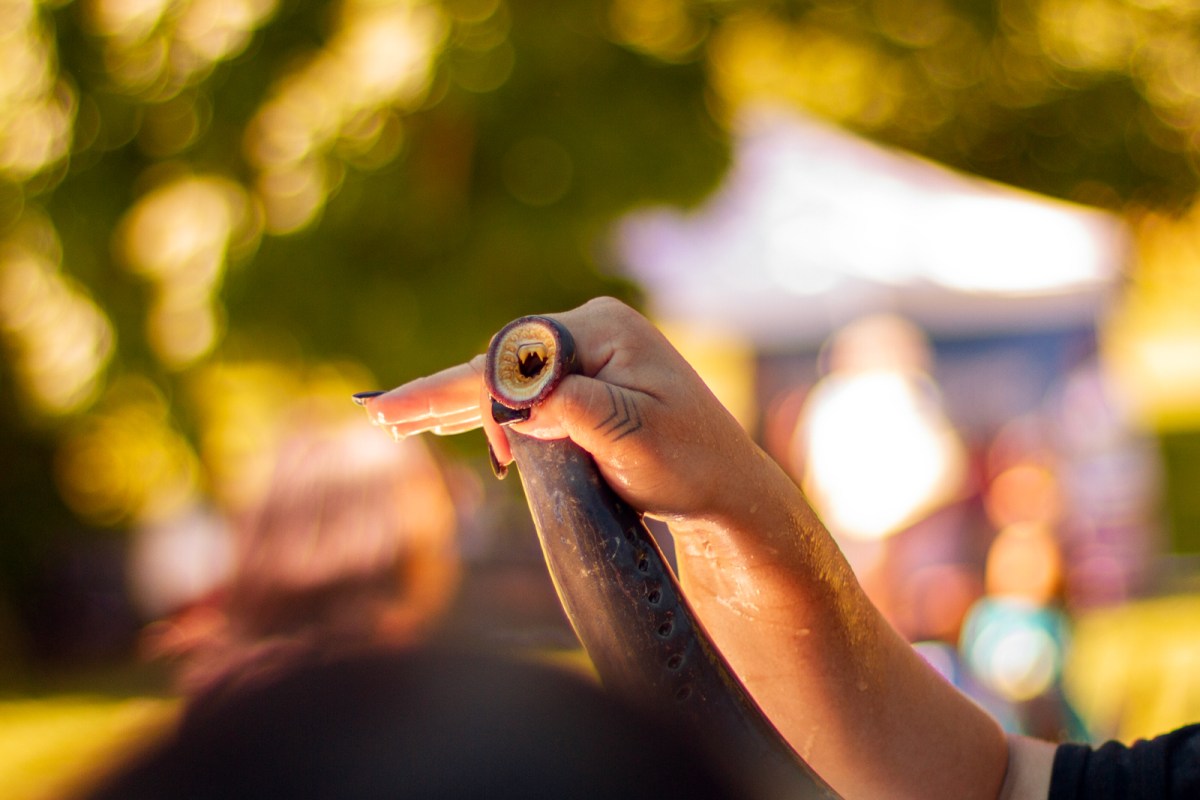
On a hot July day, Umatilla youth scrambled over the rocks at the base of Willamette Falls. There was thick moss, dry and scratchy like a Brillo pad, the smell of fish heavy in the air, and the sound of laughter carrying across the roar of the water as the kids harvested Pacific lamprey at the falls.
Umatilla tribal citizens said this was the biggest harvest in several years. That there even was a harvest underscored work the Umatilla and other tribes have led to restore the eel-like fish’s population. But there is still much to be done in the fight for lamprey to once again thrive in these waters, according to Corrine Sams, an elected member of the Umatilla board of trustees and vice chair of the board of commissioners for the Columbia River Intertribal Fish Commission.
Sams led the youth in song, honoring the lampreys’ gift of their lives, before the group began to search the base of the falls for pockets of lamprey to harvest.
“This work we’re doing, it’s not for us,” Sams told the group of children circled around her. “It’s for your grandchildren, your great-grandchildren.” READ MORE — Nika Bartoo-Smith, Underscore News and ICT
SUPPORT INDIGENOUS JOURNALISM. CONTRIBUTE TODAY
The Alaska Native Medical Center (ANMC) has received notice its status to receive Medicare reimbursement is in jeopardy over governance and emergency services. The Centers for Medicare and Medicaid Services told ANMC that as of July 12 the medical center no longer meets federal conditions of participation. Unless deficiencies are resolved, Medicare reimbursement would end in October.
Details about the nature of the deficiencies are not available because the investigation is ongoing, said a CMS spokesperson.
The loss of Medicare reimbursement for services would be a serious blow to the finances of the hospital. In the past, ANMC administrators have said Indian Health Service funding makes up 40 percent of their cost of health care. The center makes up the balance through Medicare, Medicaid, and private insurance reimbursements.
CMS said its agreement with the Native medical center will be terminated effective Oct. 20, 2023 unless the Native center can fix the problems. If the termination takes effect, Medicare would not reimburse ANMC for services for patients admitted on or after Oct. 10 and only for the following 30 days for patients admitted before Oct.10. READ MORE — Joaqlin Estus, ICT
EAST PRAIRIE METIS SETTLEMENT, Alberta — Carrol Johnston counted her blessings as she stood on the barren site where her home was destroyed by a fast-moving wildfire that forced her to flee her northern Alberta community two months ago.
Her family escaped unharmed, though her beloved cat, Missy, didn’t make it out before a “fireball” dropped on the house in early May. But peony bushes passed down from her late mother survived and the blackened May Day tree planted in memory of her longtime partner is sending up new shoots — hopeful signs as she prepares to start over in the East Prairie Métis Settlement, about 240 miles northwest of Edmonton.
“I just can’t leave,” said Johnston, 72, who shared a home with her son and daughter-in-law. “Why would I want to leave such beautiful memories?”
The worst wildfire season in Canadian history is displacing Indigenous communities from Nova Scotia to British Columbia, blanketing them in thick smoke, destroying homes and forests and threatening important cultural activities like hunting, fishing and gathering native plants. READ MORE — Associated Press
The U.S. Interior Department has tapped an official with the federal government’s water management bureau to serve as a deputy assistant secretary for water and science.
The Department announced the appointment of Michael Brain on Wednesday. He replaces Tanya Trujillo, who recently resigned after playing a key role in negotiations over the shrinking Colorado River.
The leadership change comes as the states, cities and farmers that rely on the Colorado River struggle to decide how to reduce their use. In August, the Interior Department will offer its annual analysis on the health of the river and announce if there will be additional cuts in the coming year.
In recent years the federal government has lowered some states’ water allocations and offered billions of dollars to farmers, cities and others to cut back. But key water officials — including Trujillo — didn’t see those efforts as enough to prevent the system from collapsing.
In his new role, Brain will help the Interior Department as it addresses drought resilience and funnels more money toward infrastructure projects. — Associated Press
Sign up here to get ICT’s newsletter
Artist Nicholas Galanin is no stranger to high profile installations. He gained wide recognition for his piece “Indian Land” that echoed the famous Hollywood sign. Today, he has a monumental piece under the Brooklyn Bridge in New York that simply proclaims, “Land.” ICT’s Stewart Huntington caught up with Galanin in his hometown of Sitka where he is taking some time with family to catch and smoke salmon.
In Washington State several initiatives are underway that could benefit Indigenous communities in the Columbia River basin. That includes offensive historical monuments that are getting a fresh look. Spokane Tribe of Indians historian Warren Seyler spoke with ICT’s Stewart Huntington.
Indigenous people in the Andean mountains, north of Ecuador are already welcoming winter. ICT’s Vincent Moniz has the story.
A Navajo dentist has received a prestigious award from her peers. Darlene Sorrell has been named one of 12 Health Equity Heroes in the honor given by DentaQuest. She chairs the board of Nizhoni Smiles and she’s also a co-founder of the Society of American Indian Dentists.
WATCH
A report released by the National Indian Gaming Commission showed Indian gaming generated $40.9 billion in the 2022 fiscal year, the highest in Indian gaming history and an increase of just under 5 percent from the previous year.
There are “519 gaming operations owned by 244 federally recognized tribes. Indian gaming operations are located on Indian land in 29 states,” a press release from the organization said.
Commission Vice Chair Jeannie Hovland said the success of tribal gaming operations is a reason to celebrate.
“We have cause to celebrate the opportunity successful Indian gaming operations affords tribes to invest in the future and improve the quality of life for individual Native people, and their families, and their communities,” Hovland said. — ICT
- Making sense out of ‘green’ energy mining, history: The Aspen Institute says it’s time for Congress to clarify and enforce the rights of Indigenous people when it comes to mining
- Standing Rock drops into new skatepark
- Indigenous youth leaders gather to talk MMIP, climate: More than 2,400 Indigenous youth leaders from hundreds of Indigenous nations come together at the 2023 UNITY conference to talk about issues impacting their communities
- Hollywood strike fan questions answered
- US soldier’s dash into North Korea leaves family wondering why
- Prairies are epicentre of evolving Indigenous food scene
We want your tips, but we also want your feedback. What should we be covering that we’re not? What are we getting wrong? Please let us know. dalton@ictnews.org.

ICT is a nonprofit news organization. Will you support our work? All of our content is free. There are no subscriptions or costs. And we have hired more Native journalists in the past year than any news organization ─ and with your help we will continue to grow and create career paths for our people. Support ICT for as little as $10. Sign up for ICT’s free newsletter

