
Greetings, relatives.
A lot of news out there. Thanks for stopping by ICT’s digital platform.
Each day we do our best to gather the latest news for you. Remember to scroll to the bottom to see what’s popping out to us on social media and what we’re reading.
Also, if you like our daily digest, sign up for The Weekly, our newsletter emailed to you on Thursdays. If you like what we do and want us to keep going, support and donate here.
Okay, here’s what you need to know today:
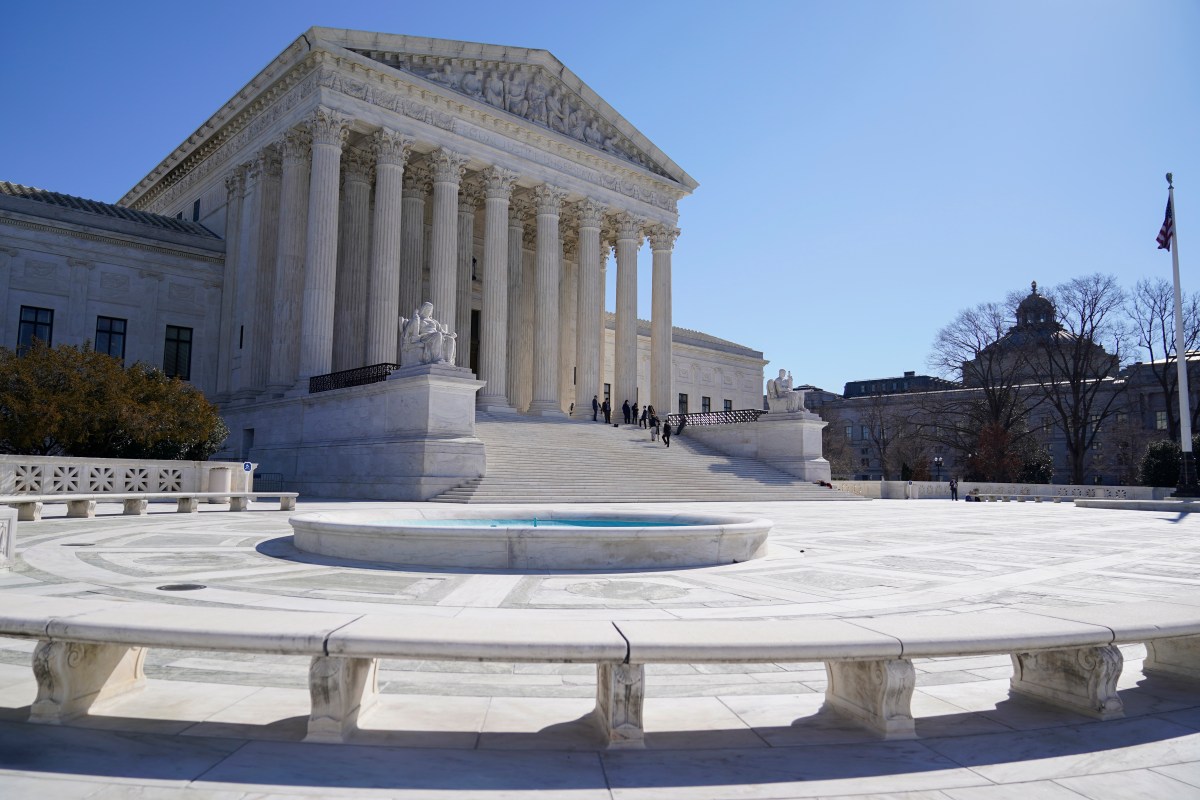
In a flurry of opinions, the U.S. Supreme Court dealt significant blows to federal agencies’ power to enforce regulations and opened the door to broad new challenges to rules long after they’ve taken effect.
The court’s decision to overturn a 1984 decision known as the Chevron deference, however, may be of greatest concern to tribes.
The court’s opinion delivers a far-reaching and potentially lucrative victory to business interests and means that the federal government could have a harder time defending its regulations.
And though the fall-out for Indian Country is still unclear, the decision could bolster challenges to tribes setting their own air and water quality standards approved by the Environmental Protection Agency, or to regulations involving toxic contamination or public health. READ MORE — Mary Annette Pember, ICT
SUPPORT INDIGENOUS JOURNALISM. CONTRIBUTE TODAY
Once Tamaya Kwii Kee Nee Puu is signed into trust with the federal government, people who are not members of the Santa Ana Pueblo and who trespass will be subject to tribal and federal law enforcement.
In June, Santa Ana Pueblo officials were joined by the Southwest Regional Office of the U.S. Bureau of Indian Affairs to host a fee to trust signing ceremony at the Prairie Star Restaurant.
But the final signatures aren’t expected until around the end of July, said Doug McKenna, director of the Santa Ana Pueblo’s Natural Resources Department.
Mckenna said the land is almost entirely fenced off and signs are posted prohibiting trespassing. READ MORE — Source New Mexico
NEW BEDFORD, Mass. — The historic whalebone and sperm whale teeth have been replaced with contemporary artwork and ceramic designs, but the centuries-old ties of northeastern Indigenous people to whaling endure in the images of a new exhibit.
The exhibit, “Breach: Logbook 24/Scrimshaw,” by Shinnecock artist Courtney M. Leonard, bridges the centuries that link the Shinnecock, Wampanoag and other coastal Native people to the development of the region’s maritime industry.
The title draws its name, in part, from the giant leap that whales make in flinging themselves high above the water.
“It is the whale as it breaches through the surface,” Leonard told ICT as she worked to install the exhibit in early June. “I thought about ‘breach’ as it relates to rising out of the waters, and I thought of the whale as our relative.” READ MORE — Dianna Hunt, ICT
When 8th grader Kilolani Smith dug in deep into her chosen Native Hawaiian history project, she unexpectedly kept advancing to the next round of state competition.
Eventually, she and seven other Native Hawaiian students gleefully landed in Washington, D.C., in early June, when they proudly showcased their hard-won projects in the Smithsonian National Museum of the American Indian.
“That was my first time competing and it was my first time being in Washington, so it was pretty cool,” said Smith, a well-spoken student who attends public charter school Ka ʻŪmeke Kāʻeo in Kaha Hilo on the island of Hawaii.
The National History Day organization hosted a special “In Language There Is Life: I ka ‘olelo no ke ola” showcase featuring five projects from eight middle school and high school students from Hawai’i. All advanced after qualifying at the Hawai’i affiliate competition. READ MORE— Renata Birkenbuel, ICT
Sign up here to get ICT’s newsletter
A First Nation in northern Manitoba is dealing with the discovery of 187 underground anomalies that may be the remains of children who died while attending residential school.
David Monias, chief of Cross Lake Band/Pimicikamak Cree Nation, revealed the findings Wednesday in the community about 800 km north of Winnipeg in an announcement streamed live online.
“For us, it’s quite shocking to hear that,” Monias told the event attended by survivors of St. Joseph’s Residential School and community elders. “You wonder how many missing children are there?”
Project coordinator Sandy Robinson said 1,240 Indigenous children from 24 communities in the region were forced to attend St. Joseph’s, also known as Cross Lake Indian Residential School. READ MORE — APTN National News
ANCHORAGE, Alaska — Forty-year-old Ben Mallot will lead Alaska’s largest statewide Native organization, the Alaska Federation of Natives, as its president.
The board of directors announced the selection June 28 and highlighted that Mallott, who currently serves as vice president of external affairs, stood out to them for his 11-plus years commitment to the organization plus his alignment with the organization’s mission and values.
“Ben understands AFN’s diversity and has demonstrated steady leadership within the organization for many years,” stated board co-chair Joe Nelson, Tlingit, in a prepared statement. The key was “Mallott’s background in Alaska Native issues and state and federal public policy.”
Mallott has served as a legislative assistant to the U.S. Sen. Lisa Murkowski, R-Alaska. She sent her congratulations in a prepared statement, saying his “empathy, dedication, cultural values, and understanding of the opportunities and challenges facing Alaska Native communities make him an ideal candidate for the job.” READ MORE — Joaqlin Estus, ICT
- Mandan, Hidatsa and Arikara Nation opposes federal methane rule: Fort Berthold conservation group supports greater regulation
- Senator wants Washington football team to revisit offensive logo: Sen. Steve Raines of Montana is threatening to block legislation until NFL and Washington Commanders pay tribute to old logo that offends many Indigenous people
- Bacone College goes bankrupt in attempt to save campus: A Utah-based company has been attempting to sue Bacone over uncompensated HVAC work done on the campus
- The US is about to get its first solar-covered canal
- South Dakota Gov. Noem’s official social media accounts seem to disappear without explanation
- Behind Upper Midwest tribal spearfishing is a long and violent history of denied treaty rights
We want your tips, but we also want your feedback. What should we be covering that we’re not? What are we getting wrong? Please let us know. dalton@ictnews.org.

Our stories are worth telling. Our stories are worth sharing. Our stories are worth your support. Contribute $5 or $10 today to help ICT carry out its critical mission. Sign up for ICT’s free newsletter.
