
Greetings, relatives.
A lot of news out there. Thanks for stopping by ICT’s digital platform.
Each day we do our best to gather the latest news for you. Remember to scroll to the bottom to see what’s popping out to us on social media and what we’re reading.
Also, if you like our daily digest, sign up for The Weekly, our newsletter emailed to you on Thursdays. If you like what we do and want us to keep going, support and donate here.
Okay, here’s what you need to know today:
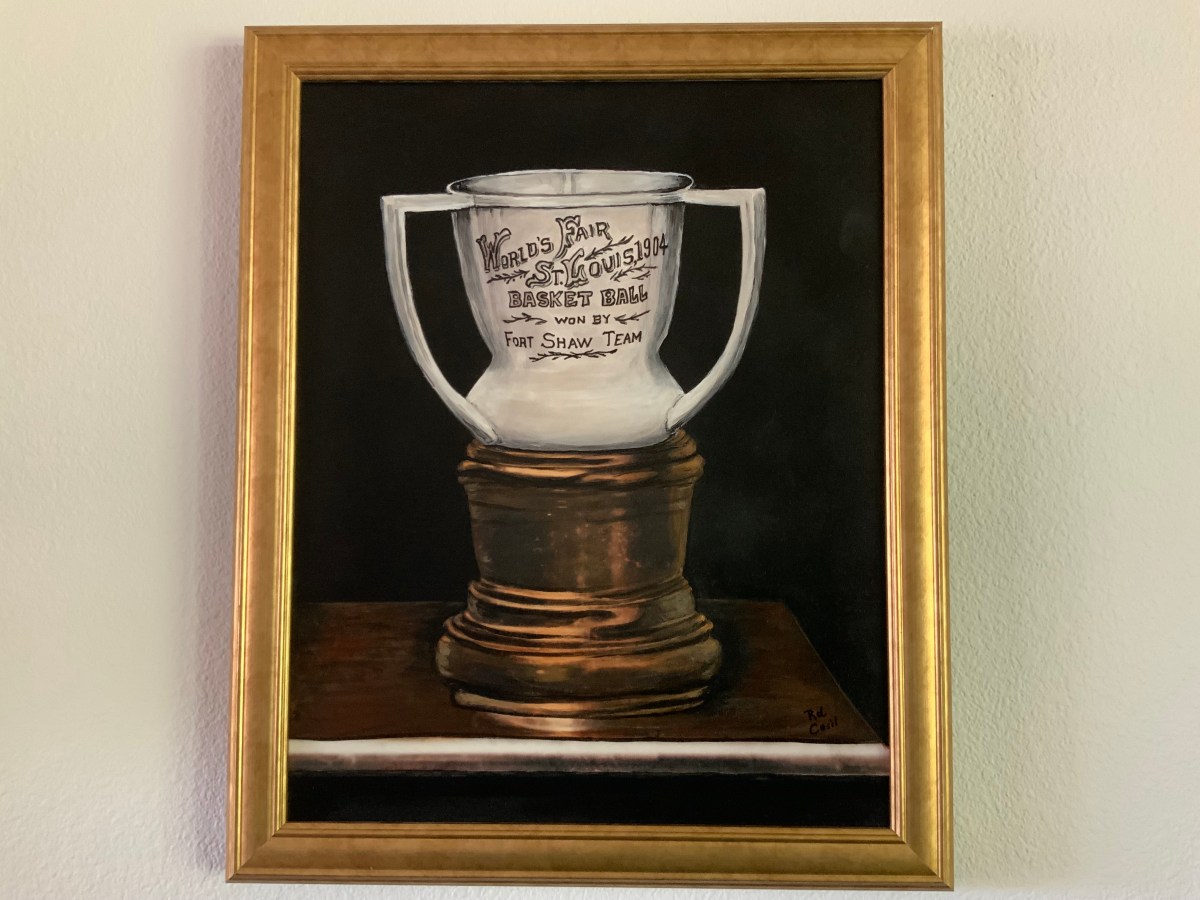
Imagine wearing a heavy, woolen, long-sleeved, sailor suit-style dress as a uniform while playing basketball outside in the stifling St. Louis, Missouri heat.
It’s 1904 and you’re a teenage girl from the government-run Fort Shaw Indian School – where the prairie meets the mountains and where temperatures are significantly cooler as the Sun River flows nearby and hefty winds from the Rocky Mountain Front blow you around in typical Central Montana fashion.
But instead you’re at the 1904 St. Louis World’s Fair, competing against – and beating – non-Native teams from Illinois and Missouri, who greatly underestimate your savvy, athletic Indian girls’ team.
At the turn of the century, it was the very early days of girls’ basketball – and the Fort Shaw team stole the spotlight as it played – and beat – Helena, Butte Parochial and even state college teams – in dance halls, armories and gymnasiums across the state of Montana, then eventually all challengers at the spectacular World’s Fair.
It’s a story of excellence, resiliency, learning and opportunism. Once the team started winning and popping up in newspaper stories, the Indian School Superintendent and eventual coach F.C. Campbell finally promoted the team and filled out their playing schedule. READ MORE — Renata Birkenbuel, ICT
SUPPORT INDIGENOUS JOURNALISM. CONTRIBUTE TODAY.
ANCHORAGE, Alaska — A village is suing to get more safeguards and a more in-depth environmental analysis of an open pit mine and transportation corridor to an ore-processing mill in Interior Alaska. The Manh Choh (or “big lake” in Athabascan) gold mine is already operating and, in fact, recently poured its first gold bar.
Tracy Charles-Smith, who is Upper Tanana Athabascan, is president of the federally recognized Native Village of Dot Lake. She told ICT, “the lawsuit is about the failure of the Army Corps of Engineers to have meaningful interaction and discussions about the potential for environmental annihilation of water, fish, food, our people, our health, and (about) the failure to do an environmental impact study prior to issuing a permit.”
The village said the Corps should rescind the permits it issued and conduct an in-depth environmental impact analysis. The analysis should include a health assessment that gives a “requisite hard look at the direct, indirect and cumulative impacts of the project on the tribe, its resources, and its subsistence uses,” the village’s lawsuit said.
“I would like safety measures in place. I’d like an environmental impact study. And I would like somebody to think about the health and welfare of Natives, their subsistence fishing and hunting and their health,” said Charles-Smith. READ MORE — Joaquin Estus, ICT
SEATTLE — Tens of millions of dollars raised by a landmark climate law in Washington state will go to Native American tribes that are at risk from climate change and rising sea levels to help them move to higher ground, install solar panels, buy electric vehicles and restore wetlands, Gov. Jay Inslee announced Tuesday.
The money — $52 million — comes from the 2021 Climate Commitment Act, which auctions off allowances for heavily polluting companies to emit carbon, with the revenue invested in education, transportation and other programs. Conservative critics who blame it for increased gas prices are seeking to repeal the law in November.
Nearly every tribe in Washington is receiving money. Among them is the 3,000-member Quinault Indian Nation on the Pacific coast of the Olympic Peninsula, which is getting $13 million to help relocate its two main villages to higher ground, away from the tsunami zone and persistent flooding. Part of one of the villages is below sea level, separated from the roaring ocean by a seawall, and high tides and storm surges have flooded homes and government buildings. READ MORE — Associated Press
PORTLAND, Ore.— Oscar Arana, Chichimeca, has served as interim CEO for over a year at the Native American Youth and Family Center and has worked at the organization for 14 years. On Wednesday, he stepped into his new permanent role as CEO.
“It’s a huge honor,” Arana told Underscore/ICT. “This is an incredible organization that I’ve been a part of for a very long time. It’s an organization and a community I care about deeply. So I’m really humbled that so many folks encouraged me to apply and that the board selected me.”
When former CEO Paul Lumley, citizen of the Yakama Nation, announced his departure in June 2023, the board of directors began a nationwide search for a new leader. While they searched, the board selected Arana to serve as interim CEO. Now, Arana will fill that role permanently.
“NAYA is in great hands with Oscar,” Lumley said. “He has done so much for the Native community.” READ MORE — Nika Bartoo-Smith, ICT and Underscore Native News
Sign up here to get ICT’s newsletter
- Leonard Peltier released from hospital after four-day stay: American Indian Movement leader Leonard Peltier was hospitalized for his diabetes, which his team says has gone untreated while in prison
- ‘Rez Dogs’ earns four Emmy nominations: Bear actor D’Pharaoh Woon-A-Tai wins nomination as outstanding lead actor
- Native advisor brings authenticity to Kevin Costner films: Dr. David Bearshield serves as the Native affairs senior development director for Kevin Costner’s four-part series about the American West
- Alex Janvier, Indigenous painter of evocative abstractions, dies at 89
- Little Shell Tribe plans community housing project

We want your tips, but we also want your feedback. What should we be covering that we’re not? What are we getting wrong? Please let us know. dalton@ictnews.org.
