
Greetings, relatives.
A lot of news out there. Thanks for stopping by ICT’s digital platform.
Each day we do our best to gather the latest news for you. Remember to scroll to the bottom to see what’s popping out to us on social media and what we’re reading.
Also, if you like our daily digest, sign up for The Weekly, our newsletter emailed to you on Thursdays. If you like what we do and want us to keep going, support and donate here.
Okay, here’s what you need to know today:
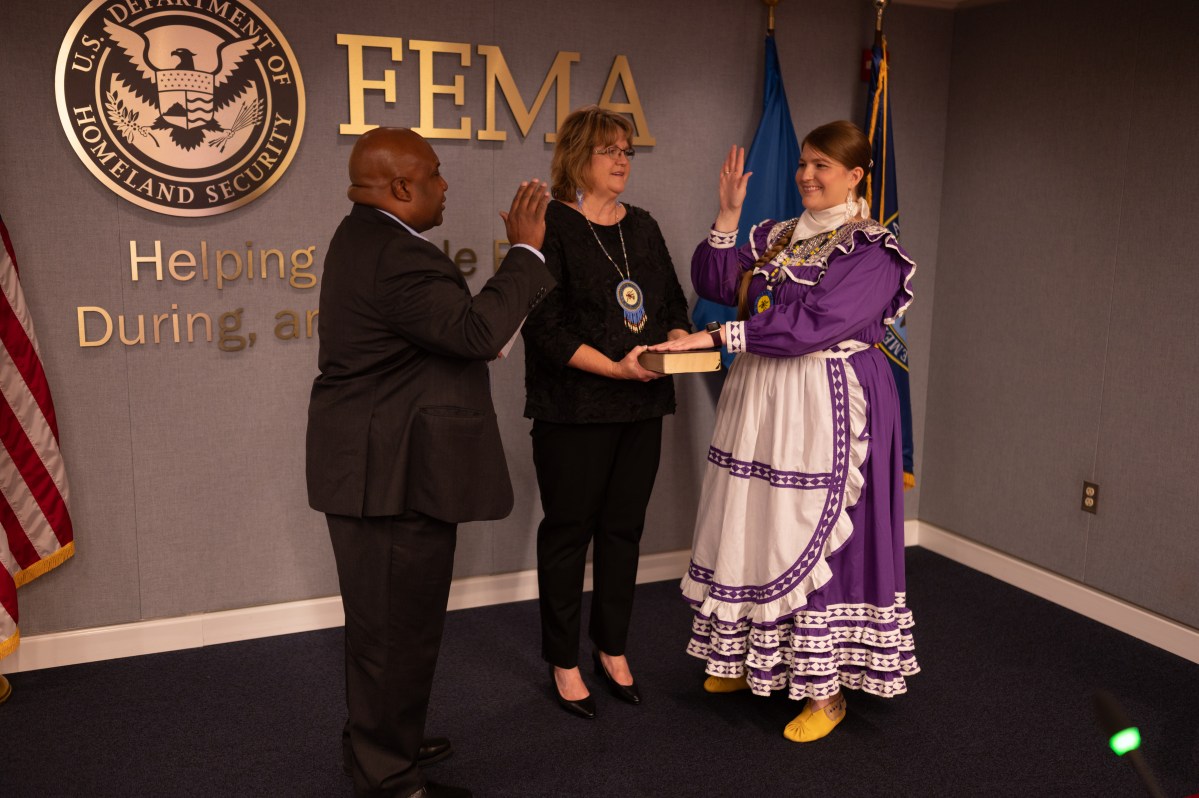
FEMA Administrator Deanne Criswell announced Wednesday that Kelbie Kennedy, Choctaw Nation of Oklahoma, will serve as the agency’s National Tribal Affairs Advocate.
“Tribal Nations and communities deserve to have their voices heard, especially when it comes to preparing for, responding to and recovering from disasters,” Criswell said in a press release. “Ms. Kennedy has spent her career working on issues related to tribal emergency management and resilience, homeland security, and public safety. FEMA and the Biden-Harris Administration will benefit greatly from her compassion and competence.”

Kennedy’s duties will be to advise the administrator and the agency on tribal affairs and ensuring FEMA’s treaty and trust responsibilities to tribal nations.
“I am honored to be the first tribal political appointee in FEMA history and will work hard to ensure that Tribal Nations and tribal sovereignty are at the forefront of our efforts,” she said. “Growing up on my Tribal Nation’s reservation in Southeastern Oklahoma, I learned firsthand that Tribal Nations are the first — and many times the only — line of defense when disaster strikes Indian Country. When Tribal Nations have the necessary resources and support they need, the entire community is better prepared and able to respond to disasters.”
Kennedy has a Juris Doctorate and certificate in American Indian Law from the University of Oklahoma, College of Law. She previously worked for the National Congress of American Indians as the policy manager and policy lead for national security and community safety. — ICT
SUPPORT INDIGENOUS JOURNALISM. CONTRIBUTE TODAY.
The U.S. Department of Transportation has awarded $8.6 million in grants to more than two dozen tribes and Alaska Native villages, the Federal Transit Administration said in a statement Tuesday. That’s in addition to some $35 million allocated for tribal transit annually. The new money was authorized in the Bipartisan Infrastructure Law, which includes nearly $46 million in grant funding that will be awarded over five years.
“With today’s announcement, we are taking an important step to help ensure Tribal residents have access to reliable, affordable ways to get around,” said U.S. Transportation Secretary Pete Buttigieg. “Using funds from President Biden’s Bipartisan Infrastructure Law, these grants will help improve transit for Tribal Nations around our country.”
“TheTribal Transit Program supports public transportation for federally recognized American Indian Tribes and Alaska Native Villages, groups, or communities. The funding is vital to help Tribes meet the needs of their citizens, including elders, people with disabilities, and youth in rural areas,” said the statement
“Today’s grant awards will improve public transportation and connections for people in communities that have been historically underserved,” said FTA Administrator Nuria Fernandez. “We want to make sure that no one is left behind as we expand and modernize transit systems.”
After issuing a notice of the funding opportunity, the Administration received 47 eligible project proposals requesting approximately $18 million from Tribes and Alaska Native Village applicants in 17 states. — ICT
The Interior announced Thursday that a review and consultation with 71 tribes and Native Hawaiian organizations will make changes to the Native American Graves Protection and Reparations Act.
A major change is museums and federal agencies will be required to make inventory and identify human remains and cultural items in their collections.
“The Native American Graves Protection and Repatriation Act is an important law that helps us heal from some of the more painful times in our past by empowering Tribes to protect what is sacred to them. These changes to the Department’s NAGPRA regulations are long overdue and will strengthen our ability to enforce the law and help Tribes in the return of ancestors and sacred cultural objects,” Bryan Newland, assistant secretary for Indian Affairs, said.
The act that was enacted in 1990 provides a “systematic process for returning human remains, funerary objects, sacred objects, or objects of cultural patrimony to Native American and Alaska Native Tribes and Native Hawaiian organizations.”
Other adjustments that will be made from the consultations are: documenting and addressing the requests immediately from tribes and Native Hawaiian organizations when human remains or cultural items are discovered on federal or tribal lands, strengthening the authority and role of tribes and Native Hawaiian organizations and addressing barriers.
Public comment will be accepted until Jan. 12, 2023 at www.regulations.gov.
From big-budget Oscar winners to indie films, actor Michael Spears has been lighting up the screen with his performances since he was in “Dances with Wolves” at age 13.
Spears, Kul Wicasa Oyate Lakota Lower Brulé, can currently be seen in a pivotal episode of “Reservations Dogs,” playing the father of a teenage boy who died by suicide, and in the western drama “1883” as a Comanche trader.
A forthcoming role in the indie film, “Year of the Dog,” found him turning a real-life conversation that came up in a script reading into a deeply affecting scene in the film.
ICT caught up with Spears on Indigenous Peoples Day as he returned from celebrations in his hometown of Bozeman, Montana. READ MORE — Sandra Hale Schulman, Special to ICT
Sign up here to get ICT’s newsletter
Alaskans adopted a new election system in 2021. Let’s compare it with the system still being used in most of the country.
Generally in the primary election, political parties — like Republicans, Democrats or Independents — pick the candidates that will go on to the general election. Parties act as gatekeepers for who gets to run.
That gate’s wide open in Alaska.
Michelle Sparck, Yup’ik, the director of Alaska’s Get Out The Native Vote, explains.
“Everyone with a dream and a hundred dollars could apply and fill out the paperwork (to run in the primary). If they were eligible, they became a candidate.” The top four vote-getters in the primary went on to run in the general election (however, after Alaska’s August primary, one of the four dropped out).
In the general election, typically, the person with more votes than any other candidate, that is, a plurality, wins, even if they fall short of a majority of 50 percent plus one.
In Alaska, candidates can only win with a majority of votes. READ MORE — Joaqlin Estus, ICT
FOLLOW ICT ON SOCIAL MEDIA: FACEBOOK, TWITTER, INSTAGRAM, TIKTOK.
- Death Row inmate gets one more chance for parole: Douglas Stankewitz will get a new hearing that could mean freedom after 44 years in San Quentin
- ‘We’re getting warmer and we’re getting wetter’: The Mississippi River basin is getting wetter as climate change brings era of extreme rain, floods
- Second pueblo to open Tesla dealership: Electric vehicle company bypasses New Mexico’s direct car sale ban by partnering with Santa Ana Pueblo
- Long-awaited ‘Spirit Rangers’ debut: Netflix’s new animated series ‘Spirit Rangers’ debuted on Indigenous Peoples Day, marking another historic moment for Indigenous representation on screen
- U.S. reaches agreement with victims of doctor who abused Native American patients
- North Coast tribes to manage, reclaim coastal land
- The Ute Indian Tribe calls Biden’s newest national monument an ‘unlawful act of genocide’

We want your tips, but we also want your feedback. What should we be covering that we’re not? What are we getting wrong? Please let us know. dalton@ictnews.org.

