
Shirley Sneve and Amelia Schafer
ICT
This Thursday marks 150 years since Custer got Sioux’d.
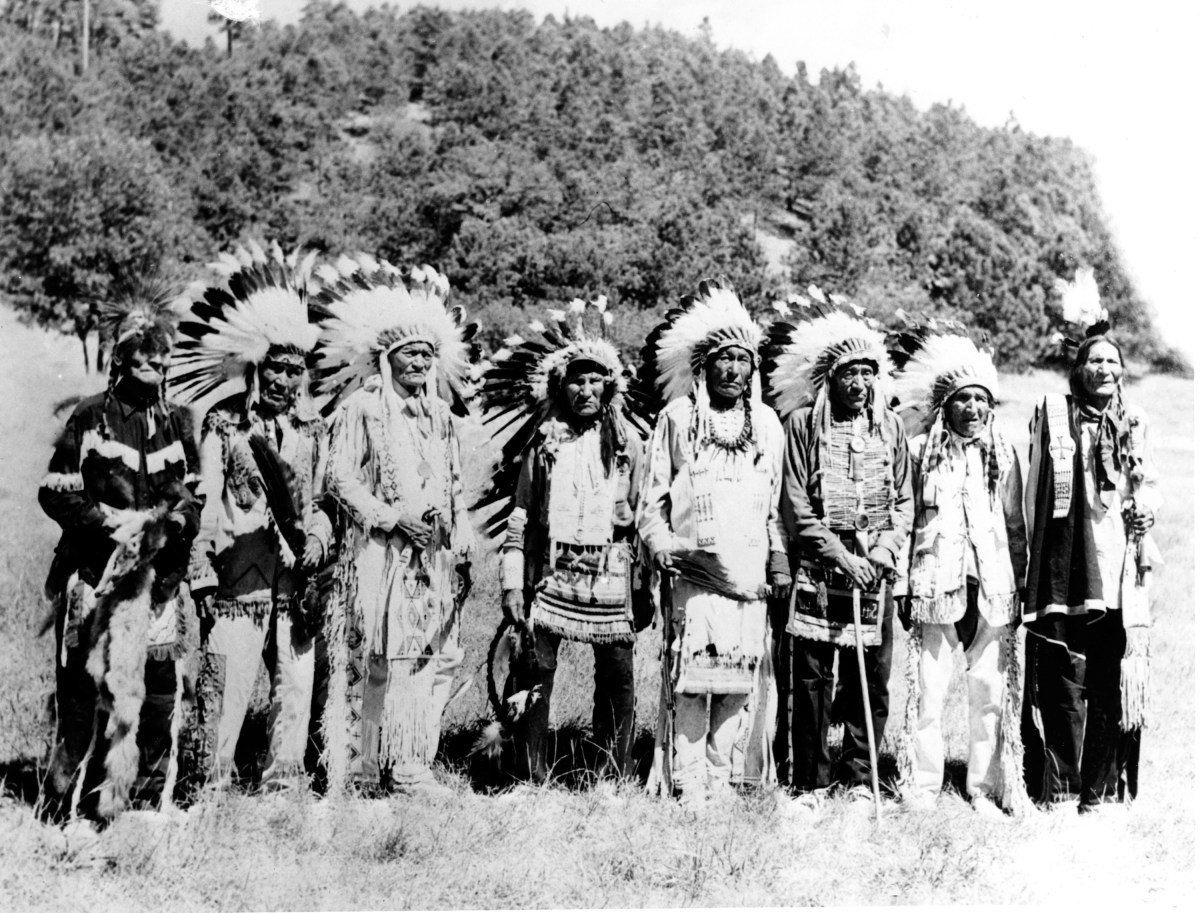
On the windswept plains of southeastern Montana, thousands of Lakota, Cheyenne and Arapaho joined together on June 25, 1876 to defeat Lt. Col. George Armstrong Custer and the 7th Cavalry at what became known as the Battle of Little Bighorn. The victory of the Indigenous forces was a major milestone in the fight against westward U.S. expansion. It continues to be celebrated each year 150 years later.
Over 10,000 people are expected this week at the Little Bighorn National Monument and surrounding area as Indigenous people celebrate not only their win against Custer but their resilience.
“Our people, our nations came together,” said Cheyenne River Sioux Tribe Chairman Ryman Lebeau. “We remember those that sacrificed themselves for this victory.”
For years the battle was referred to as Custer’s Last Stand, but to the Lakota, Cheyenne and Arapaho people it is known as the Battle of Greasy Grass, named for the long, dewy grass on the battlefield where upwards of 8,000 Lakota, Cheyenne and Arapaho fought against the U.S. Army troops.
Indigenous people had already gathered at what would be the battlefield for generations. It was a place of ceremony and trade, said Mark Van Norman, senior counsel for the Great Plains Tribal Chairman’s Association and a member of the Cheyenne River Sioux Tribe.
“Think back to that time, our people were trying to preserve our way of life and do our sun dance and our traditional gathering, and they didn’t think they were going to be attacked,” Van Norman said. “They thought maybe someone would come out and talk to them, or maybe someone would come out and want to meet with them, but they wanted to live their life.”
The lands had already been set aside to prevent settler encroachment through the 1868 Ft. Laramie Treaty so a natural question is, “Why was the army even in the area?”
The answer is simple: gold.
Two years prior, in 1874, Custer led a clandestine mission to the Black Hills, seeking natural riches.
But Custer didn’t really want to keep the mission secret. He wanted to keep his profile high as he had political ambitions. He brought along newspaper reporters from New York.
“And they reported right away, ‘gold to the grass roots in the Black Hills,’” said Van Norman.
Once those headlines hit, U.S. President Ulysses S. Grant knew that he wouldn’t be able to keep white settlers out of the area. In fact, Deadwood, South Dakota, the famous Gold Rush town, was founded in April of 1876 – before the battle of Greasy Grass. And Grant knew military strategy after his victories in the Civil War in the 1860s.
So he decided to settle the issue with the army.
“Grant’s plan was to send three armies,” said Van Norman. “He sent George Crook up from Denver, and [Gen. Alfred Howe] Terry from Montana. And Custer was coming from Fort Lincoln [in what is today North Dakota] and they were supposed to meet up and attack simultaneously.”
Part of what would be Custer’s downfall was his own cockiness and rushed planning. Wanting to be first, Custer arrived one day before Terry and planned to attack the Indigenous people gathered there in pursuit of fame and to boost to a future run for president in the next election. Custer was eyeing the possibility of being picked as the next Democratic candidate for the 1876 election. The upcoming primary was scheduled in St. Louis for the a week after what he’d hoped would be his victory in Montana territory.
“He was looking for, you know, a guts and glory story,” Van Norman said.
But it didn’t go as planned.
From their gathering place, the Indigenous people discovered the soldiers and prepared for battle. With all the dust on the prairie, it was tough to see who was coming or going. All the soldiers retreated, except Custer’s Seventh Cavalry. Every man in Custer’s command — 210 soldiers — died. His ego and political ambitions clouded his judgement.
News of Custer’s death reached Washington D.C. on July 4, 1876 — the nation’s 100th birthday, Van Norman said.
So what can people expect if they attend the celebration of the 150th anniversary?
Among other things, expect runners, motorcycles and horses.
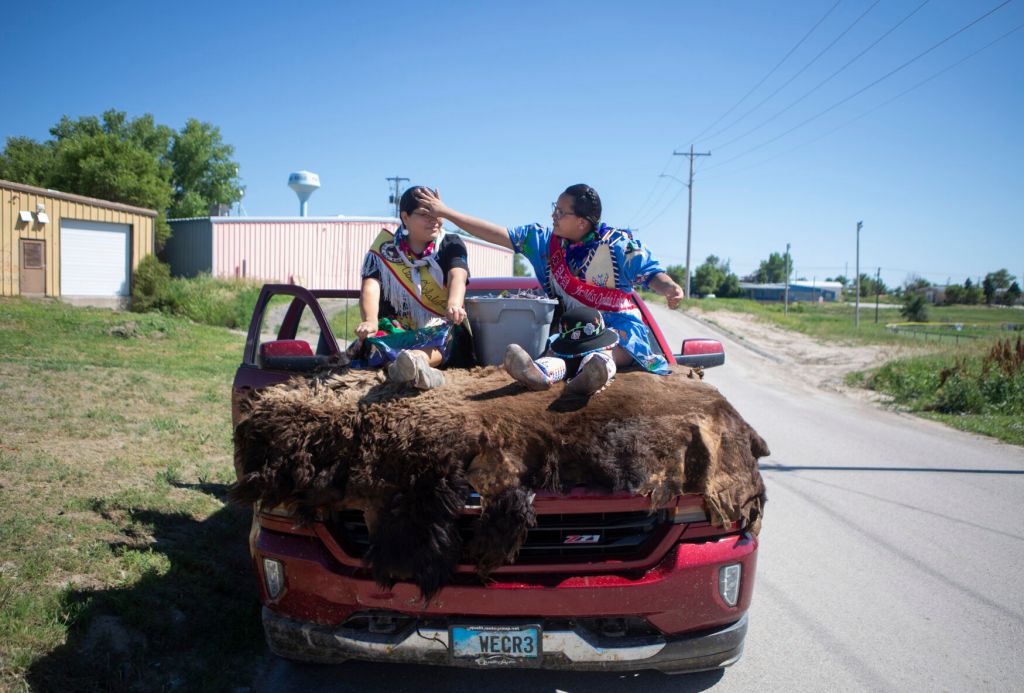
Dozens of Indigenous youth will run a relay from the Northern Cheyenne reservation to the battleground on the 25th, led by Blue Bird Lifeways, a Northern Cheyenne non-profit organization serving youth.
Additionally, dozens of Indigenous motorcycle riders are expected. With no parking at the monument site, shuttles are available to transport riders and drivers alike from the campsite near the monument to the battle ground.
And horses. Horses were – and are still – an important part of Plains culture. Hundreds of horses are expected to descend on the area from tribes across the country. Many of them will gather on the lands of the Real Bird family from the Crow Nation, or Apsáalooke.
Also planned is the annual battle reenactment, a national parks service event, and numerous tribally organized ceremonies and celebrations all weeklong.
Attendees are encouraged to bring bug spray, water bottles, sun protection and prepare for potential rain.
Over 19 tribes have been involved in celebration planning.
“It’s pretty impressive … all the response from the tribes,” said Chairman LeBeau. “Each camp is kind of preparing and planning their own activities with the youth, elders, storytelling. There will be different victory celebrations and ceremonies that’ll be happening.”
On Victory Day itself, June 25, The National Park Service has events planned with Indigenous leaders such as LeBeau scheduled to speak. Among other speakers is Chief Looking Horse, a Lakota pipe keeper, who will offer an opening prayer.
LeBeau, Kingman and Van Norman each had ancestors who fought at Greasy Grass, as did Willi Bearshield of the Rosebud Sioux Tribe who noted the battle was an important pivot point.
“I guess I wouldn’t be here if [the battle] wasn’t in our favor,” he told ICT. “So it kind of shows the resilience of our people. From that time to now, you know, I guess we weren’t wiped out, and we continue to persevere.”
The 150th anniversary of the battle also comes just before the 250th anniversary of the United States. Harvard Professor Phil Deloria, whose ancestors are Yankton Dakota, offered some context from a century and a half ago.
Deloria noted that just as the country was preparing to celebrate its 100th birthday – on July 4, 1876 – word filtered back East from Montana about the decisive defeat of the Seventh Cavalry.
“It’s a kind of an amazing moment of Native intrusion into the celebrations of the American Revolution, which I think we oftentimes don’t necessarily think about,” he told ICT.

