
Charles Fox
Special to ICT
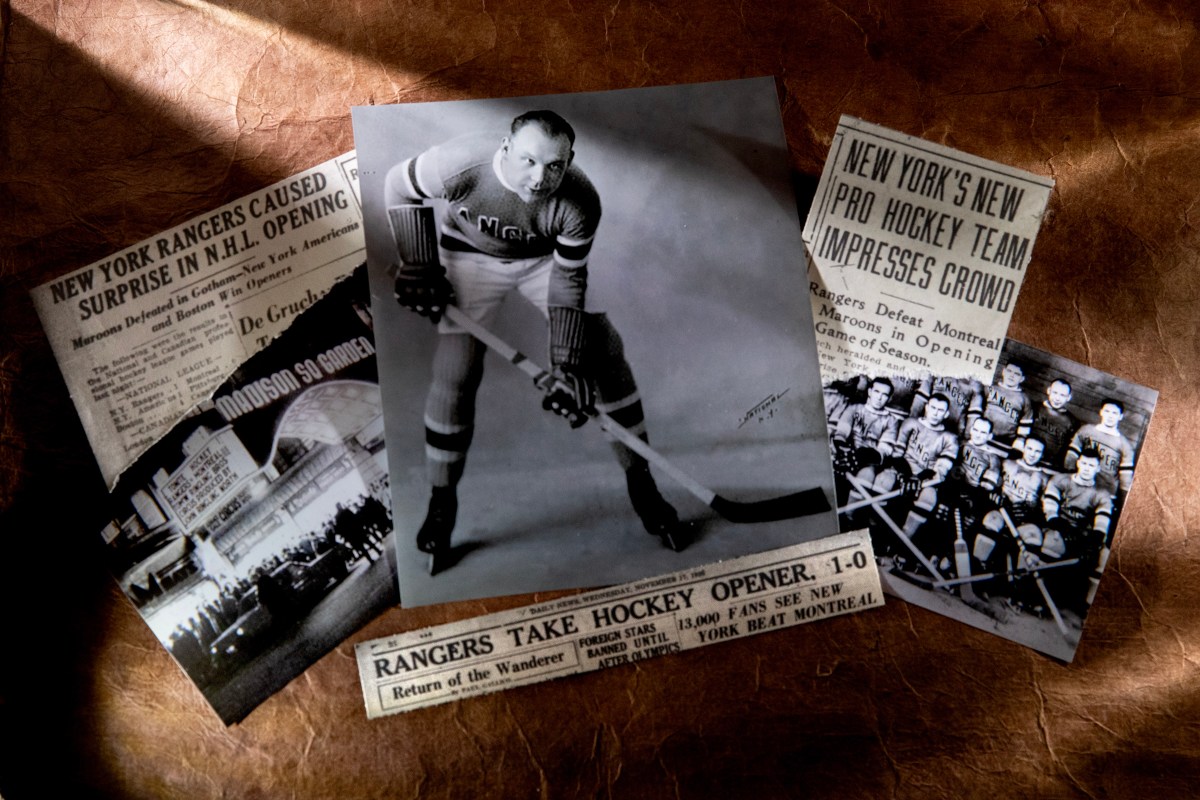
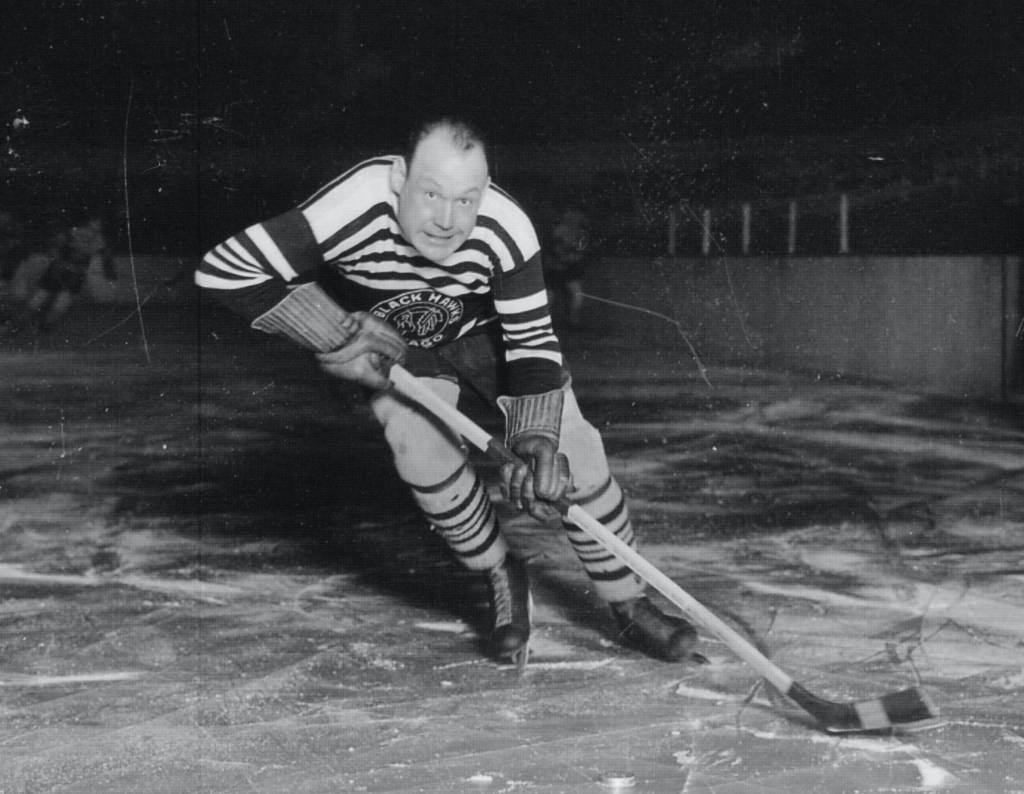
Amid the excitement of the New York Rangers hockey team’s first-ever game in Madison Square Garden on Nov. 16, 1926, no one knew that Clarence “Taffy” Abel, the large defenseman from Michigan, was keeping a secret.
With the pageantry of an ice ballet troupe, the performance of the 126-piece West Point Cadet Orchestra, and the exhilaration of a 1-0 upset over the reigning champion Montreal Maroons, no one realized they had also witnessed Abel become the first Indigenous player to take to the ice in the National Hockey League.
The historic moment would not be revealed for another 13 years, yet now, 100 years later, Abel is still not fully recognized for breaking the NHL’s color barrier.
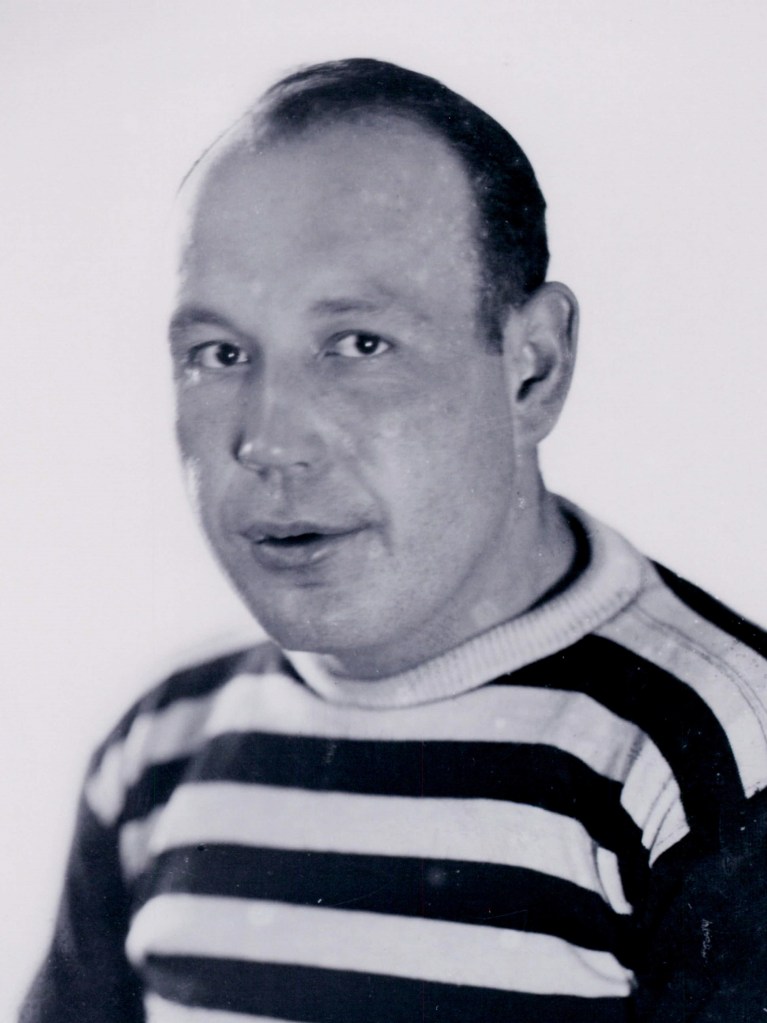
Few people knew that in 1926, however. Abel had been keeping his Ojibwe heritage hidden since his childhood, when his parents decided to racially pass as White to avoid having their two children taken to Native American boarding schools against their will.
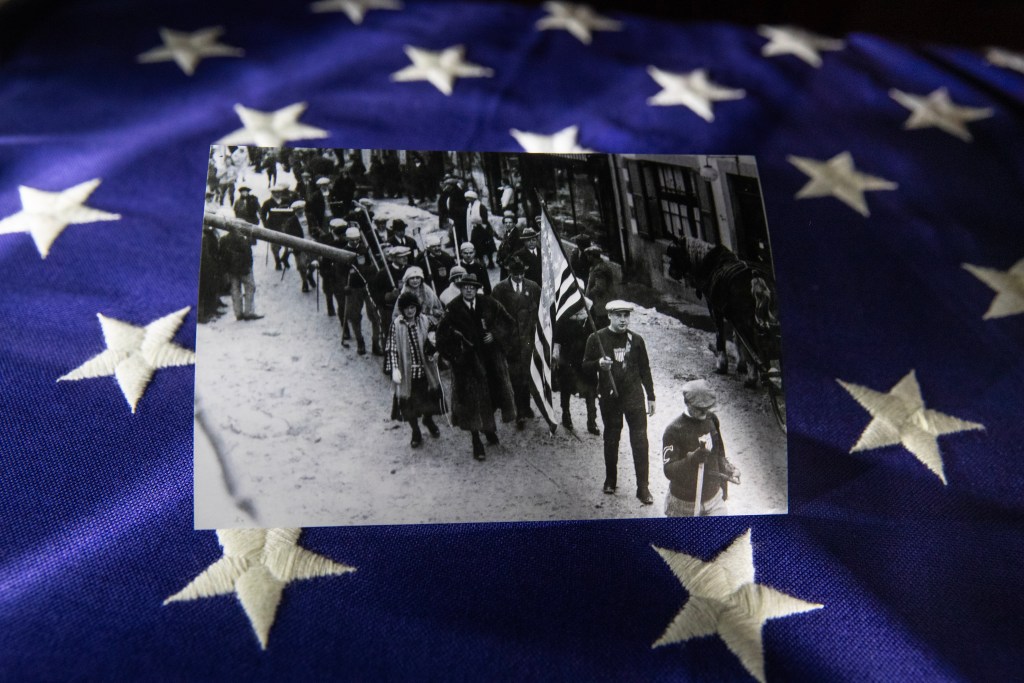
The secret would be his ticket to success on the ice during a time when opportunities were limited for an Indigenous person. He became a member of the U.S. men’s hockey team in the 1924 Winter Olympics, carrying the U.S. flag through the streets of Chamonix, France, during the opening ceremonies, and helping bring home a silver medal.
It also allowed him to play hockey at the highest level in the National Hockey League, where he would appear in 333 games over his eight-year career and be part of two Stanley Cup-winning teams.
Today, Abel is recognized as the first Native American to participate in the Winter Olympics and is a member of the Hockey Hall of Fame, but he is known for his skills and not for breaking the NHL color barrier. Abel died in 1964 at age 64.
On Monday, Nov. 16, the New York Rangers will celebrate the 100th anniversary of the team’s first game in 1926. Abel was on the roster, but the barrier-breaking moment when he steps out onto the ice as an Indigenous player is not expected to be mentioned in the celebrations.
The NHL has stated the Rangers “will commemorate the anniversary of their first team without specific references to any players,” as the team plays the Montreal Canadiens. The game is part of the Original Six Series of nationally televised games on the TNT network celebrating the six teams that made up the NHL for 25 seasons between 1942 and 1967.
The NHL has likewise not recognized Abel as the first Indigenous player in the league, though he was inducted posthumously as a charter member into the Hockey Hall of Fame in 1973 for his bruising play on the ice.
“We are at the mercy of the record keeping of the time,” the league said in a recent statement to ICT. “There simply is no way that we can verify that no player of Indigenous heritage played in the NHL before Taffy Abel.”
Abel’s nephew, George Jones, begs to differ. As a member of the Society of International Hockey Researchers, Jones examined more than 150 players who preceded Abel in the NHL for evidence of Indigenous heritage, and found none.
He believes he has made the case that Abel was the first Indigenous player in the NHL.
“If he would have said at the time, ‘Hey, I’m Native American,’…They would have said, ‘Well, I don’t think we can do that at this time. Come back in 50 years,’” Jones told ICT about the uncle he often calls the Silent Warrior.
“I can tell you, he never would have gotten into the Winter Olympics as a Native American and he never, never, never, would have gotten into the NHL,” Jones said.
The NHL’s statement emailed to ICT, nonetheless, acknowledges Abel as a “pioneer.”
“On the 100th anniversary of the franchise’s first game on Nov. 16, 1926, the National Hockey League salutes one of the original New York Rangers, Clarence ‘Taffy’ Abel,” according to the statement. “We celebrate his success and honor him as a pioneer, who, as a young man of Ojibwe heritage, surmounted the many hurdles faced by Native Americans of his day to forge a special place in hockey history.”
The New York Rangers did not respond to ICT’s requests for comments about the anniversary celebration, but the team’s website comes close to recognizing Abel’s accomplishments. A story that ran in 2023, “Red, White, and Blue,” highlighting American connections and influences on Ranger history, states that Abel is ”believed to be” the first Indigenous player in the NHL.
The issue of color barriers is complicated by the fact that each of the major sports leagues interpret their own racial barriers and how they handled race differently. Native American athletes have never been barred from Major League Baseball and the National Football League. In fact, the early NFL was dominated by Native Americans such as Jim Thorpe, who was also the league president of the American Football Professional Association, which was later renamed the NFL in 1920. And there was an entire team, the Oorang Indians in 1922-1923, that was composed entirely of Native players.
Professional basketball does not promote Wataru “Wat” Misaka, a Japanese-American, for the New York Knicks as the breaker of the color barrier even though he preceded the three credited barrier-breaking African-American players Chuck Cooper, Earl Lloyd, and Nat “Sweetwater” Clifton who would enter the league three seasons later.
A groundbreaking night
The New York Rangers hockey team was formed in 1926 by Madison Square Garden President George Lewis “Tex” Rickard after the New York Americans – the first hockey team in New York, formed in 1925 – proved to be an unexpectedly popular draw.
Nicknamed Tex’s Rangers by a New York Herald Tribune sports editor, the name soon stuck for the New York Rangers.
According to the Rangers website, Abel was the first player the team signed to a contract, on Aug. 14, 1926, as well as the first American-born player for the team. The team took to the ice for its first game — with Abel in the mix — on Nov. 16, 1926.
The first game was quite an event, according to news reports at the time.
“There was enough fur, silk, and satin in the arena boxes alone to decorate the shop windows on Fifth Avenue,” wrote Brooklyn Daily Times writer James J. Wood regarding the crowd of over 13,000 in attendance at Madison Square Garden for the first game.
Before the game and in between periods, the Garden was “transformed into a veritable winter palace,” with an ice ballet company direct from a performance in Berlin, Germany, accompanied by a 30-piece orchestra, and a performance by the 126-piece West Point Cadet Orchestra.
After actress Lois Moran dropped the ceremonial puck, the game became a hard-fought defensive battle with the Rangers upsetting the champion Montreal Maroons 1-0. Player Bill Cook scored the first goal in Rangers history at the 18:37 mark of the second period, and Hal Winkler became the first goalie to earn a shutout in his NHL debut.
Abel would go on to play in all 44 games that season. His intimidating and physical play drew 78 penalty minutes. In one of the best debuts by a sports expansion team, the Rangers shocked the hockey world by winning the American Division. The following year they won the Stanley Cup.
Because of his size and “carcass rattling” style of play, Abel was nicknamed the “Michigan Mountain.”
Bryant McBride, who was the first Black executive in the NHL, grew up in Sault Ste. Marie, Ontario, and played for the Soo Indians, the junior hockey team Abel created in 1939.
“He was amazing, you know, he was an incredible player, well ahead of his time,” McBride said. “He was just monstrous. They said he was 6-foot-2, 220, but he played closer to 250 pounds. He was just a mountain of a guy for that time. His impact was real. It was very real, and he was a force to be reckoned with.”
Jones said Abel also had a softer side, particularly with him. Abel and his wife did not have any children.
“Taffy could head up the fear league,” Jones said. “A tough man, but, you know, he was always loving and caring for me. He had a special relationship with me, and I had a special one with him, too.”
Jones saw Abel’s concealing of his heritage as a way to force the public to give him a “blind audition” based on skill and free of racial prejudices and stereotypes.
“I think what is lost is the true, hardworking development of a person that started very young. It was determination. He was a fighter,” Jones said. “I mean, how many people can you think of from that era who were … not only an Olympian but a medalist and a flag bearer? There was never another Native American flag bearer.”
After helping the Chicago Blackhawks win a Stanley Cup in 1934, Abel retired following a contract dispute with the team. He was still considered one of the best defensemen in the league. The next Native American player would not enter the NHL until Henry Boucha, an Ojibwe from Minnesota in 1972, 46 years after Abel.
While there have been more than 100 First Nations Canadian players in the league, only eight Native Americans have skated in the NHL.
Promises kept
Abel’s parents began the practice of concealing their Indigenous identity in Sault Ste. Marie, Michigan, in the early 1900s. The family was multi-racial, with Taffy’s father, John Abel, a White man originally from Fort Wayne, Indiana, and his mother, Charlotte Gurnoe Abel, from the Chippewa (Ojibwe) Sault Tribe.
The Abel family lived during a period when the U.S. government felt the best way to deal with the Native population was through methods such as boarding schools, stripping Native culture away from students and attempting to forcibly assimilate them into White society. It was a time of constant fear for Indigenous parents when a knock at the door could mean the arrival of government agents.
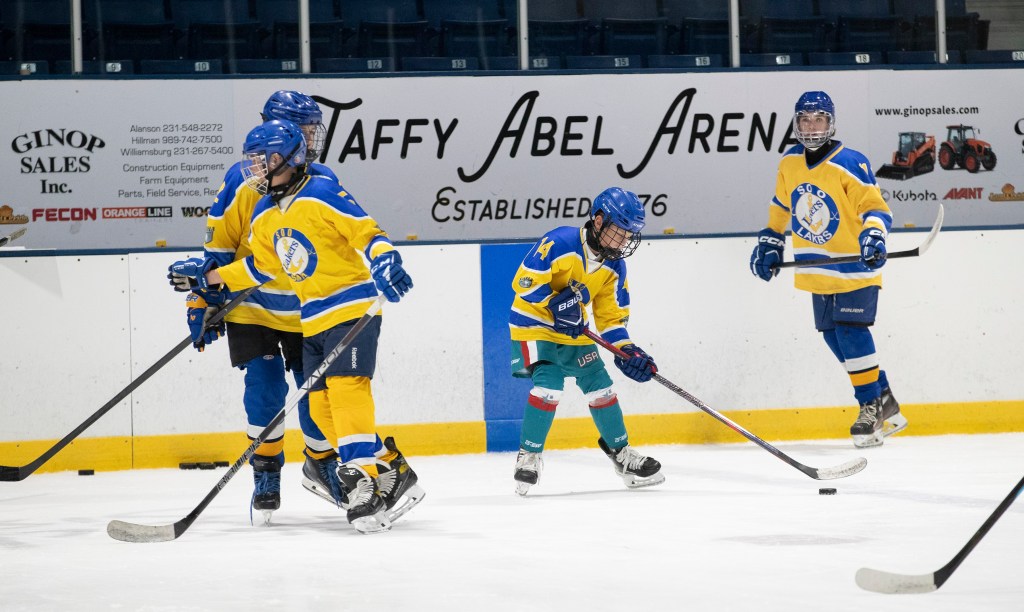
Abel took on the support of his family at age 20, when his father died. And in 1939, after the death of his mother, Charlotte, he created the Soo Indians, the junior hockey team, in his mother’s memory.
It was his first public acknowledgement of his Ojibwe lineage, which he had promised not to disclose while his mother was alive.
The secret had left him with a sense of void, and decades of depression, his nephew said.
Those feelings can be a form of survivor’s guilt, said Leora Tadgerson, a professor of Indigenous studies at Northern Michigan University and director of diversity, equity, and inclusion at the Episcopal Diocese of Northern Michigan. She is Anishinaabe, Finnish, and Saami.
“It’s mixed with a sense of imposter syndrome because they understand that they are Native, but they are not having to deal with all of the negative aspects that go along with racism in our country against Native people,” Tadgerson said. “And even back in the day, there have been stories about folks who just feel this deep, deep guilt for not enduring the same things that those folks went through when they went to boarding school.”
Inspiring new generations
The NHL has emphasized Willie O’Ree, the first Black player who entered the league on Jan. 18, 1958, when it comes to breaking the league’s racial barriers, despite Abel’s first appearance in the NHL preceding O’Ree’s by 31 years. In between there was Larry Kwong, a player of Asian descent, and seven Indigenous Canadians.
“I’ve known Willie, and he is a fine gentleman, and he should be recognized. But that doesn’t take away the fact that guys like Taffy Abel and Freddy Sasakamoose shouldn’t be treated in the same light,” said Ted Nolan, Ojibwe, a former NHL player and coach of the Buffalo Sabres and New York Islanders.
“That would hopefully inspire the next generation of players who are right on the fence of trying to hide their identity versus being proud of their identity,” he said.
Nolan grew up in Garden River First Nation near Sault Ste. Marie, Ontario. Though he suffered racial incidents as a player and coach, he was raised to be proud of his heritage, drawing inspiration from Indigenous NHL players such as Reggie Leach, Ojibwe, and Sasakamoose, Cree, as well as American Indian Movement leaders Dennis Banks and Russell Means.
Nolan, whose sons Jordan and Brandon also played in the NHL, feels the league has not made the same racial transformation as other major sports leagues. He stresses the importance of acknowledging the ground breakers who preceded him, like Abel and Sasakamoose, and telling their stories.
“It was very, very tough for those guys, and that’s why we need trailblazers to let kids know that racially profiling people in the past was detrimental,” he said. “It was very hurtful. But the truth always comes out.”
Nolan, who was awarded the Jack Adams Award as the NHL coach of the year in 1996, believes in coaching to the human spirit, making individuals proud of who they are and where they are going.
“When I played my first game in the National Hockey League, I laid tobacco for the people before me who had to fight so hard in order for me to be where I was at the time,” Nolan said.
“There’s not too much in our history books about our past. Stories change the projections of young people’s lives and who they are, and even how they treat people,” he said. “So, the more knowledge we can get out there and the more education we can get to people, the better ….
“Maybe [the negative past] hurts the league a little bit, but it could benefit the people a lot more than the [league’s] feelings getting hurt. Saving them is a lot more important.”
Not giving up
On Nov. 16, Jones will sit at his Florida home in front of his TV and watch the Rangers celebrate their centennial by playing the Canadiens. He had assumed this night — the 100th anniversary of Abel first skating onto the ice — would be the culmination of his decades-long efforts to get his uncle the recognition he felt he deserved under the bright lights of the Garden. But it will not happen.
“Let me put it like this,” he told ICT. “I didn’t get any invitation to come up and sit at their box at Madison Square Garden. You think they would’ve done that, especially since Taffy was the first player they signed on August 14, 1926.”
It was an invitation that should not have been expected, given that he has long criticized the NHL, its Commissioner Gary Bettman, and the league’s board of governors with harsh, condemning language.
“I can imagine that there’s some written record out there that went through the NHL saying, ‘You don’t even breathe the name Taffy Abel right now,’” Jones recently reflected to ICT.
The 77-year-old Jones has had a tough year. On Jan. 1, he suffered a coronary event and was dead for approximately eight minutes. In September, he had two pulmonary embolisms caused by deep vein thrombosis in his right leg that put him in the hospital for five days.
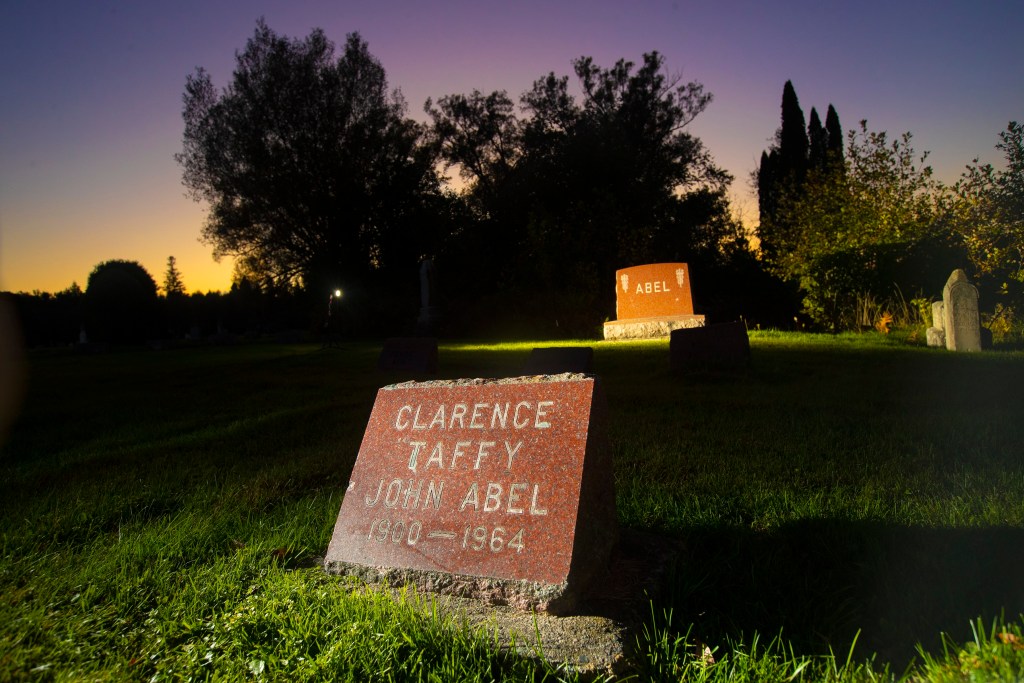
Despite his health issues, Jones has continued his crusade “faithfully telling the Taffy Abel story.” He sees himself as the underdog, David taking on Goliath, battling the owners and leadership of the NHL.
He draws inspiration from the 1924 photo of Abel carrying the U.S. flag in the first WInter Olympics, an image he feels “is beyond iconic, it is sacred to me.” To the NHL leadership, he drops the gloves and says, “Bring it on.”
But time has become a fleeting commodity for Jones. What happens when the Rangers centennial celebration ends, the fans head out to the New York City streets, and the arena lights are turned off? Will the ground-breaking accomplishments of Clarence “Taffy” Abel also disappear into the darkness, becoming a century-old footnote? Will his legacy be remembered to inspire and educate, particularly young Native American and First Nation youths, or does the story of the Silent Warrior go silent?
In February, he campaigned for President Donald Trump to award Abel the Presidential Medal of Freedom, but heard nothing. He has no intention of giving up the push for his uncle to be recognized for contributions to society.
“Taffy was a warrior in every sense of the word,” Jones said, “fighting and sacrificing for inclusion and equality of Native American people in our country.”
