
Jourdan Bennett-Begaye
ICT
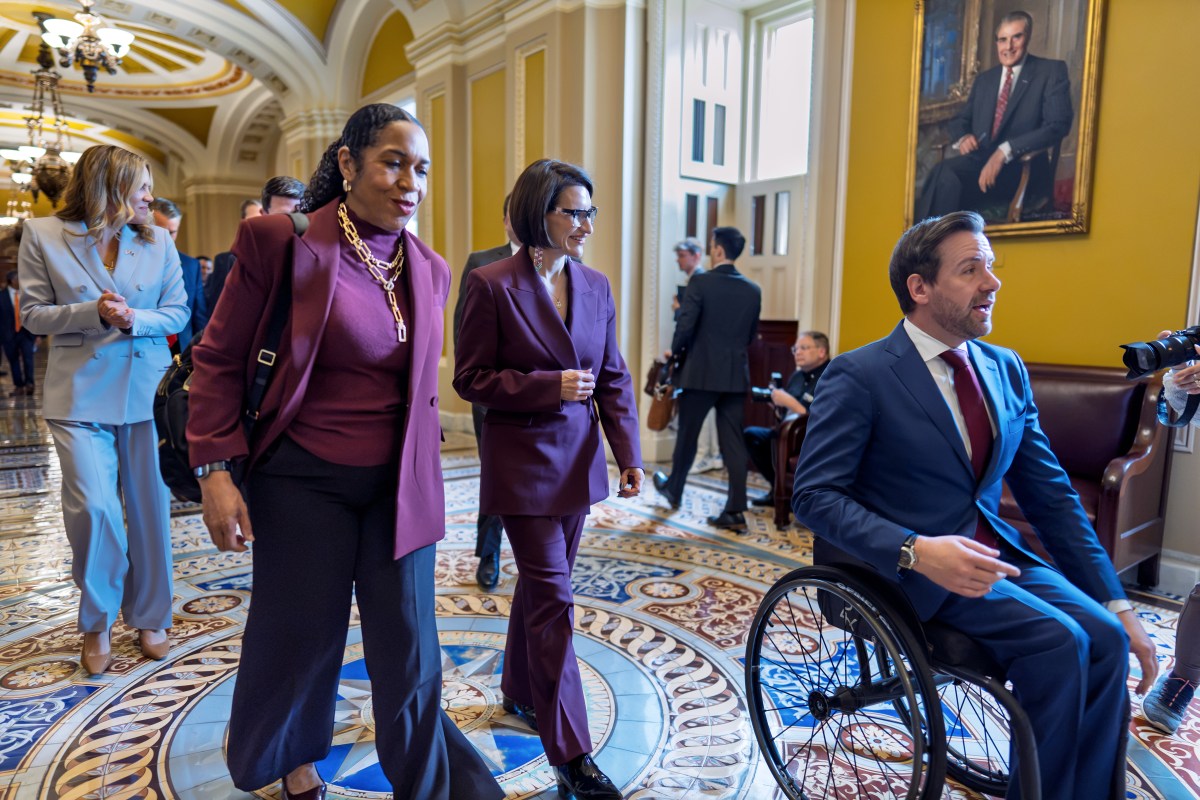
WASHINGTON — The incoming Indigenous congressional members who made history descended upon the nation’s capital this week for freshman orientation.
Minnesota Sen.-elect Peggy Flanagan’s first photo was of her by a sign that read, “This elevator is reserved for SENATORS ONLY at all times.” Her caption, “Going up!”
Comments ranged from “It’s really happening!” to “Omg YESSSS!!!” to “I wish I could like this post 100 times!”
Flanagan, White Earth Nation, will be the first Native woman elected to the U.S. Senate in American history.
New York Rep.-elect Claire Valdez, Ysleta del Sur Pueblo, posed for a photo with Reps.-elect Melat Kiros of Colorado and Darializa Avila Chevalier of New York.
Michigan Rep.-elect Sean McCann, Citizen Potawatomi Nation, stood with other freshman members from Michigan, ready to take off to Washington, D.C.
Valdez and McCann are the first Native people to represent their respective states in Congress.
The three new Indigenous members will be sworn-in at the start of the 120th Congress, joining Tom Cole who is Chickasaw, Choctaw citizen Josh Brecheen and Sharice Davids of Ho-Chunk Nation.
Alaska is still waiting on election results for Mary Peltola, Yup’ik, in the U.S. Senate race and Bill Hill, Dena’ina Athabascan, who is running for the U.S. House.
Flanagan, Valdez, and McCann were among more than 100 newly elected members of Congress arriving in Washington this week — the crush of new Democrats, many bringing a new sense of urgency after the party’s sweep of the midterm elections, and the slim new class of freshmen Republicans.
New-member orientation creates an unusual mash-up on Capitol Hill, as the newcomers are arriving and the exiting lawmakers begin to clear out, all in preparation for the peaceful transfer of power on Jan. 3, when lawmakers are sworn in and the new Congress begins.
This week’s orientation included training sessions and ritzy receptions for the newcomers, and for the defeated or those retiring it’s the start of figuring out what’s next. Briefing rooms were filled with information about office setup, payroll and benefits, and there was a room to take official portraits.
It’s also the time for the House and Senate to hold internal party elections for their new leaders, ahead of a public vote in January for the speaker of the House.
Selfies, besties and tough votes ahead
The Capitol was a changed place as the members-elect started meeting up with their colleagues and getting to know their way around the place.
Sen.-elect Abdul El-Sayed of Michigan was swarmed by young people in the Capitol basement, taking pictures with the progressive star who is also the first Muslim in the Senate.
Texas Sen.-elect James Talarico paid a visit to the outgoing Texas Republican Sen. John Cornyn, who lost his own primary for reelection. President Donald Trump backed Cornyn’s rival, Ken Paxton, who was defeated.
“I’m so grateful for his advice and his guidance as I try to fill his big shoes,” Talarico said of Cornyn as he walked through the Senate between orientation events. He said he wants to meet with Republican Sen. Ted Cruz of Texas as well.
And Sen.-elect Juliana Stratton of Illinois snapped a photo with new Democratic senators-elect including Talarico, El-Sayed, Annie Andrews, Roy Cooper, Peggy Flanagan, Josh Turek and others.
“First Freshmen Senator selfie! Couldn’t ask for a better team,” she posted as the caption.
Leadership elections test the new members
One of the first decisions the incoming lawmakers will make happens even before they’re sworn into office, as they huddle with their parties in private meetings to choose House and Senate leadership.
Congressional offices are being bombarded with phone calls and social media messages pushing Democrats to dump their current choices — House Democratic Leader Hakeem Jeffries and Senate Democratic Leader Chuck Schumer — in favor of a fresh start.
Jeffries scoffed when questioned Monday if he had support— the typically low-key leader flashing confidence he would have the votes. He is on track to make history as the nation’s first Black American to become speaker of the House.
Progressive lawmakers, in particular, are agitating for change reflective of voters’ sweeping turnout for Democrats, especially in the Senate. Sens. Bernie Sanders of Vermont and Elissa Slotkin of Michigan announced they would not support Schumer.
Sen.-elect Chris Pappas, D-N.H. — who was darting back and forth between his day job as an outgoing member of the House and his new one as an incoming senator — said their class is “a new generation of leadership that wants to do things differently and shake up Washington.”
He said he wants to meet with Schumer and will later decide who he will support, if anyone challenges him.
Republicans chose their new leaders after House Speaker Mike Johnson decided to step aside following the party’s election defeat. Ohio Rep. Jim Jordon won the race against the No. 2 Republican Rep. Steve Scalise of Louisiana to become the minority leader, continuing a rivalry stretching to 2023, before Johnson rose to power.
Senate Republicans tapped Sen. John Thune of South Dakota to stay on as leader, despite those agitating for a change.
A diverse new class arrives
As the week began, the House Chaplain Margaret Kibben opened Monday’s session with a prayer, “some of us enjoying victories and others enduring disheartening defeats.”
On the Democratic side, the new Congress will see many milestones — Flanagan will be the first Native American female U.S. senator, Pappas the first gay male senator, and more.
Rep. Suzan DelBene, the House Democrats’ campaign chief, called the party’s candidates “all very unique.”
“We had firefighters, ministers, mayors, veterans, teachers, farmers, prosecutors, union leaders, law enforcement, doctors, journalists and even a Grammy award-winning musician,” she said earlier.
“They understand that their job title is representative, not rubber stamp.”
Johnson, the outgoing speaker, hosted a reception in the Capitol’s stately Statuary Hall for the House Republicans, whose shrinking numbers left the party lopsided, their minority made up of mostly white men.
The Associated Press contributed to this report.
