
Greetings, relatives.
A lot of news out there. Thanks for stopping by ICT’s digital platform.
Each day we do our best to gather the latest news for you. Remember to scroll to the bottom to see what’s popping out to us on social media and what we’re reading.
Also, if you like our daily digest, sign up for The Weekly, our newsletter emailed to you on Thursdays. If you like what we do and want us to keep going, support and donate here.
Okay, here’s what you need to know today:
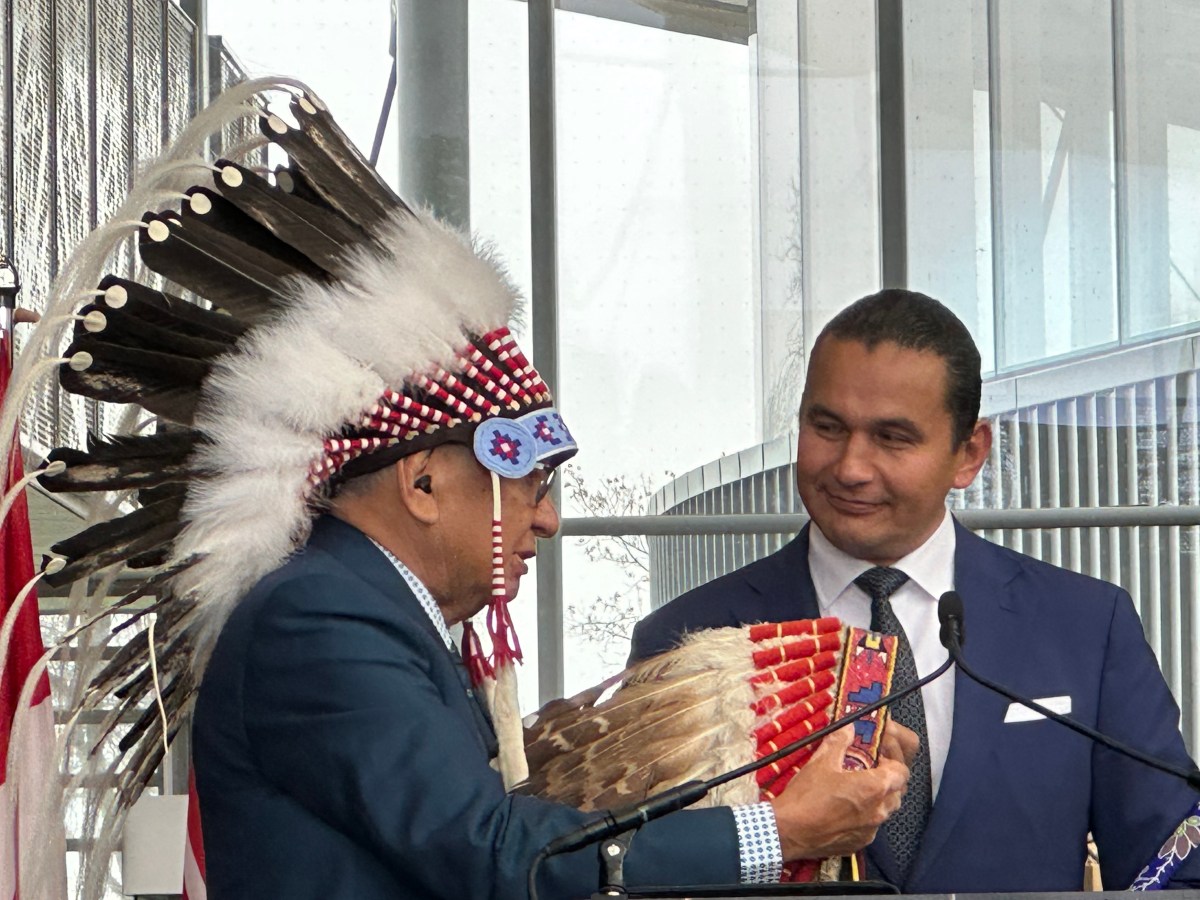
Wab Kinew, Anishinaabe, the newly elected premier of Manitoba continued to make history during his official swearing in ceremony on Wednesday, bringing in the first Indigenous women into cabinet and appointing the first Black deputy premier of the province.
Kinew named Nahanni Fontaine as families minister and as minister responsible for gender equity and accessibility. Bernadette Smith was named the new minister of housing, addictions and homelessness.
Uzoma Asagwara is the new deputy premier and health minister. It is a heavy load since health care is the main platform of the New Democratic Party campaign.
Kinew, who swept to a majority victory in the Manitoba provincial election on Oct. 3, had already made history as the first First Nation provincial premier in Canadian history. Kinew, leader of the New Democratic Party, crushed the governing Progressive Conservatives and leader Heather Stepheson.
“In our province, today, a new era begins. And today, we get to work for you, the people of Manitoba,” Kinew said following his oath of allegiance, wearing a ceremonial headdress in Winnipeg’s Assiniboine Park. “We’re committed to putting you, the people of Manitoba. First, we will devote every single day of the next four years to serve you, and the future generations who will someday walk these lands. READ MORE — Miles Morrisseau, ICT
SUPPORT INDIGENOUS JOURNALISM. CONTRIBUTE TODAY.
Founded during the mid-1800s gold rush, the Salmon River Outpost is situated along a winding road in the mountains of Northern California. Once, it was a gathering place where miners and settlers bought supplies while pursuing a dream that had brutal consequences. One of only two grocery stores for miles, the store has served the rural community of Somes Bar for generations.
After nearly two centuries of contentious relationships between historical owners and local Indigenous communities, the dynamic has shifted. In July, Indigenous husband and wife duo Joe and Elly O’Rourke bought the Salmon River Outpost.
That’s thanks in part to a new program operated by the Affiliated Tribes of Northwest Indians Economic Development Corporation. This grocery store is the first project to benefit from a new $73 million pot of federal money, intended to help small businesses in Indian Country that might not otherwise get the funding they need to flourish.
ATNI-EDC will oversee roughly a third of that money. The organization has cultivated a union of 25 tribal governments across the West working together to fund enterprises under the new State Small Business Credit Initiative Awards.
“We’re glad to be the first Native owners of an original outpost,” Elly O’Rourke said. “We’re happy to be running it and get it built back up to what our community needs.” READ MORE — Nika Bartoo-Smith and Jarrette Werk, ICT and Underscore
Aaron LaPointe sits behind a desk in the Little Priest Tribal College’s library basement, ready to speak to a class in a new program he helped develop – diversified agriculture.
He’s here, on this 100-degree August day, to show these high school and college students – the future of the Winnebago Tribe, he believes – how Ho-Chunk Farms, the tribe’s farming company, is changing the face of agriculture on their reservation.
“When you asked a student at my high school what a farmer looks like they would tell you a white guy with cowboy boots and a cowboy hat on,” said LaPointe, senior director of business operations for Ho-Chunk, Inc. “They didn’t see themselves as farmers, they just thought that’s what the white guys do. And we just let them use our land to do that.”
That perception is rooted in a century of reality. The tribe only owns roughly 27,000 acres of its 120,000-acre reservation, after U.S. government actions that directly or indirectly led its farmland to pass into non-Native hands — mostly white farmers.
But that reality is starting to change. In the past five years, three Nebraska tribes – the Winnebago, the Iowa Tribe of Kansas and Nebraska and the Ponca Tribe of Nebraska – have bought an estimated 3,000 acres, total, of farmland that was once theirs. READ MORE — Flatwater Free Press
Sign up here to get ICT’s newsletter
OKLAHOMA CITY — With the movie release of “Killers of the Flower Moon” only days away, questions still persist about Oklahoma schools’ ability to teach the historical events depicted in the film.
The source of the uncertainty is House Bill 1775, a 2021 state law regulating classroom discussions on race and gender.
Tribal leaders have called on the state Legislature to repeal the law, citing widespread confusion and fear among educators who worry teaching unvarnished American and Indigenous history could put them at risk. Educators could lose their teaching license and schools face an accreditation penalty if found in violation of HB 1775.
Former Osage Nation Principal Chief Jim Gray pointed to a Dewey High School teacher who said last year she chose not to assign the book “Killers of the Flower Moon” to her students because she feared discussing the racial dynamics of the Osage murders could prompt an HB 1775 complaint.
“We’re in a very interesting political dynamic where on one side you see the state of Oklahoma promoting this film because they gave tax credits to the filmmaker while at the same time the content of the story isn’t fit to be taught in public schools,” Gray said. READ MORE — Oklahoma Voice
- Uncovering conversations in Indian Country: The new short film ‘The Roof’ on Disney Plus tells the story of a Two-Spirit, Northern Cheyenne teenager bonding with his grandfather
- ‘Killers of the Flower Moon’ opens across US (finally!): Powerful Osage drama already generating Oscar buzz, praise for authenticity
- Joe Biden nominates Cherokee citizen to federal bench: Former Cherokee Nation Attorney General Sara Hill is the president’s fourth Native American judicial nominee
- Model and activist draws on tradition, community for healing: Quannah Chasinghorse was the youth keynote speaker at the 2023 Elders and Youth conference in Alaska
- Indigenous tribes saw the ‘Ring of Fire’ eclipse in a different light
- A 19thcentury massacre, mostly forgotten, clouds plans for a shimmering tribal casino
- The enduring family trauma behind ‘Killers of the Flower Moon’

We want your tips, but we also want your feedback. What should we be covering that we’re not? What are we getting wrong? Please let us know. dalton@ictnews.org.

